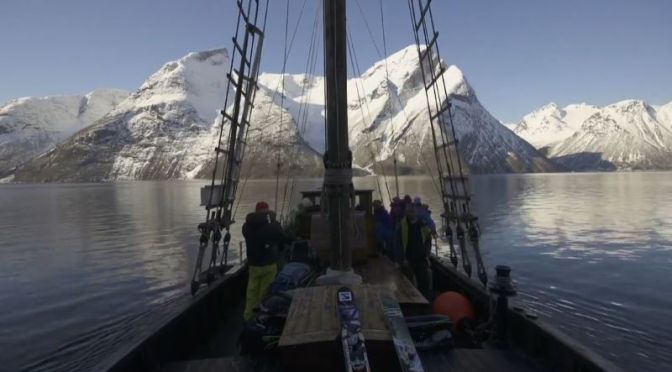
Maud is a century old fishing vessel that now carries tourists and explorers along deep fjords to the slopes of the Sunnmøre Alps. In these scenes from Switchback’s film Fjord Norway (2013), made for Salomon TV, adventure skiers Greg Hill, Andreas Fransson and Chris Rubens embark on a journey to these remote mountains in Western Norway.
Maud af Aalesund is a restored fishing cutter from 1917. The boat is 53 feet and has fished along the Sunnmør coast. It has i.a. had a base in Volda, Giske and Ålesund, – most recently as shrimp trawlers. Maud has now been rebuilt and brought back to the starting point and rigged with sails.
Lamington National Park is in southeast Queensland, Australia. It’s known for its section of the ancient Gondwana Rainforests, home to the rare Albert’s lyrebird. Trails in the park’s 2 areas, Binna Burra and Green Mountains, criss-cross the McPherson Range. The Border Track offers mountain views. The Caves Circuit overlooks the Coomera Valley. The tumbling Moran’s Falls can be seen from the Python Rock lookout.
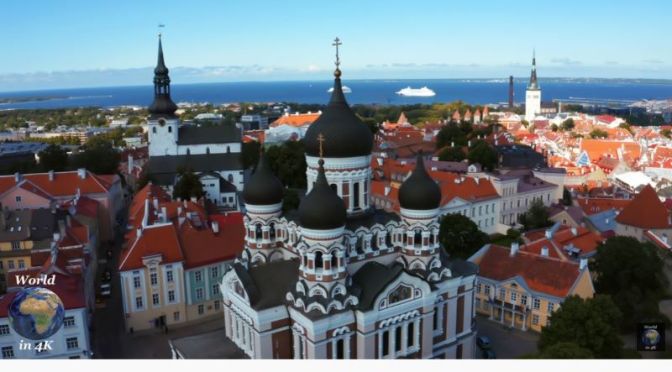
Tallinn, Estonia’s capital on the Baltic Sea, is the country’s cultural hub. It retains its walled, cobblestoned Old Town, home to cafes and shops, as well as Kiek in de Kök, a 15th-century defensive tower. Its Gothic Town Hall, built in the 13th century and with a 64m-high tower, sits in historic Tallinn’s main square. St. Nicholas Church is a 13th-century landmark exhibiting ecclesiastical art.
Estonia, a country in Northern Europe, borders the Baltic Sea and Gulf of Finland. Including more than 1,500 islands, its diverse terrain spans rocky beaches, old-growth forest and many lakes. Formerly part of the Soviet Union, it’s dotted with castles, churches and hilltop fortresses. The capital, Tallinn, is known for its preserved Old Town, museums and the 314m-high Tallinn TV Tower, which has an observation deck.
New York Times columnist David Brooks and Washington Post columnist Jonathan Capehart join Judy Woodruff to discuss the week in politics, including the Senate impeachment trial of former President Trump and the Biden administration’s response to the pandemic.
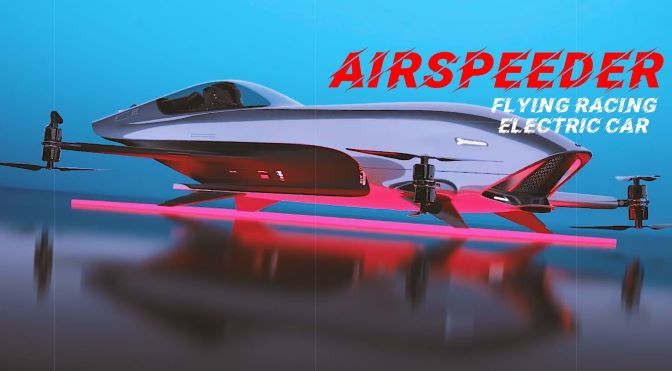
“It’s not a concept anymore, it’s not abstract anymore – it’s real.” Meet flying racing car Head Designer Felix Pierron, tasked with creating future flying machines.
Airspeeder is the world’s first racing series for electric flying cars. Our mission will accelerate eVTOL (electric vertical take-off and landing) advanced aviation technology through intense sporting competition. This mobility revolution, underpinned by future tech will transform urban air mobility (UAM), global logistics and even medical applications with a clean-air electric vehicle (EV) solution.
Our racing multicopters are developed at our advanced aerospace engineering hub in Adelaide, South Australia by engineers drawn from elite motorsports, automotive, aviation and even FPV drone, electric plane, electric vehicles and passenger drone backgrounds. Airspeeder’s vision will deliver the most exciting and future focused motorsport on the planet. Following an inaugural unmanned season, elite pilots will take to the skies to race prop-to-prop while navigating electronically governed racetracks in the skies above some of the most visually arresting scenery in the world.
These manned multirotor electric vehicles will define a new era in advanced air mobility (AAM). Airspeeder’s first unmanned air race is scheduled for 2021 and will feature a full grid of multirotor unmanned Airspeeder Mk3 racing craft. The best pilots from drone racing will utilise latest RPAS (remotely piloted aircraft systems) in aerial battles across the globe. Our innovations will hasten the arrival of new advanced air mobility (AAM) technologies. Close but safe air racing is assured through latest LiDAR and radar technologies that create virtual forcefields around the sport’s cutting edge quadcopter format flying cars.
Rapid hair-pin turning manoeuvrability is delivered using a multicopter layout. This pioneering approach to aircraft design also enhances stability while electronic speed control (ESC) systems empower pilots to exploit the full potential of our advanced electric powertrains.
Vaccines are about to change the world…again. mRNA Vaccines are currently being used to battle COVID-19, and have the potential to eradicate diseases like HIV, herpes, sickle cell anemia, and even cancer. Learn how the vaccines work and where the technology could be headed in this explainer video.
Currently, the Pfizer-BioNTech and Moderna vaccines for COVID-19 use the mRNA technology developed at Penn by infectious disease expert Drew Weissman, MD, PhD, along with longtime research collaborator Katalin Karikó, PhD, an adjunct associate professor. Dr. Weissman has been studying mRNA vaccines for decades. This technology could change the way future vaccines are made to prevent countless other diseases.
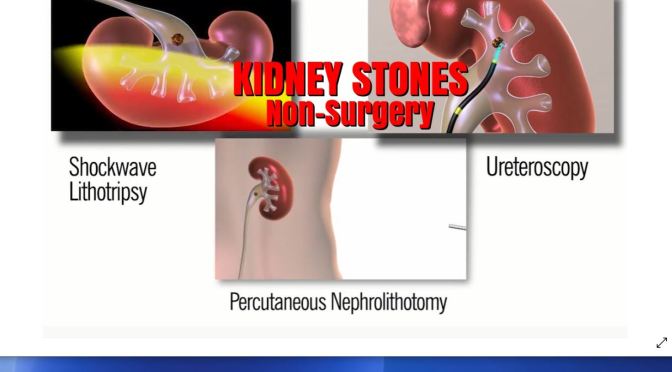
Observation is a non-surgical approach in which we allow the stone to pass on its own. The smaller the stone, the better the chance that it will pass. The benefit of observation is that you avoid having surgery.
Places visited: Valley of the Temples with the Temple of Juno and the Temple of Concordia, the Cathedral of St. Agatha, the Cefalù Cathedral, the Capo Cefalù Lighthouse, the Port of Cefalù, the Etna Volcano and the beautiful old town.
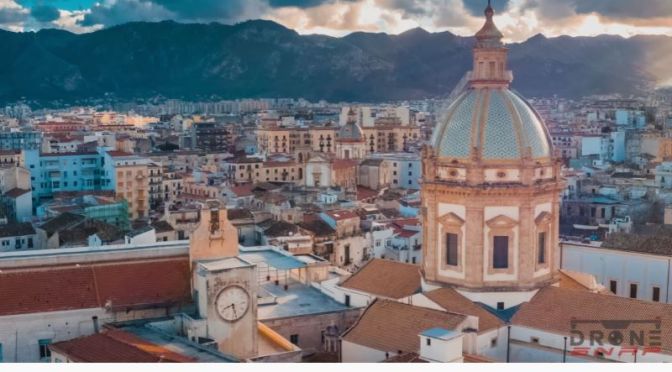
Sicily, the largest Mediterranean island, is just off the “toe” of Italy’s “boot.” Its rich history is reflected in sites like the Valley of the Temples, the well-preserved ruins of 7 monumental, Doric-style Greek temples, and in the Byzantine mosaics at the Cappella Palatina, a former royal chapel in capital city Palermo. On Sicily’s eastern edge is Mount Etna, one of Europe’s highest active volcanoes.
Can a device replace the need to learn a new language? WSJ asked Alex Rawlings, author of “How To Speak Any Language Fluently,” and an expert in over 15 languages, to test out the new Pocketalk S Voice Translator on the streets of Barcelona.






 Boomers Daily