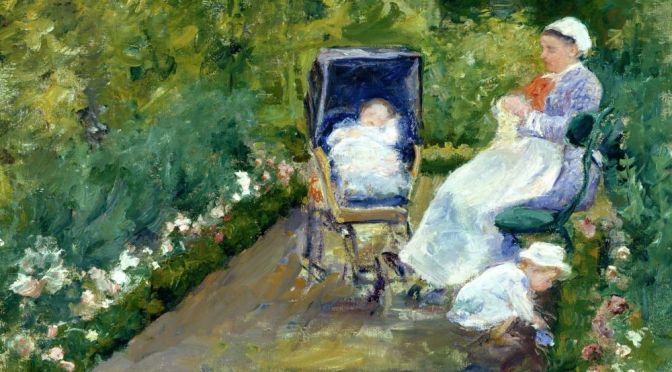
Timothy J. Standring, Curator Emeritus at the Denver Art Museum, discusses Mary Cassatt, including “Mother and Child,” one of her most important works.
James Abbott McNeill Whistler challenged traditional approaches to painting by focusing more on colors and composition rather than the subject matter. In this video, Timothy J. Standring, Curator Emeritus at the Denver Art Museum, takes a look at Whistler’s artistic journey to finding his unique style.
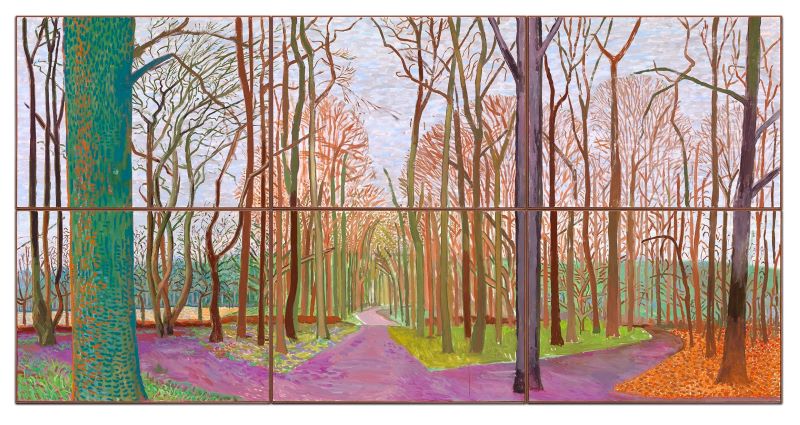
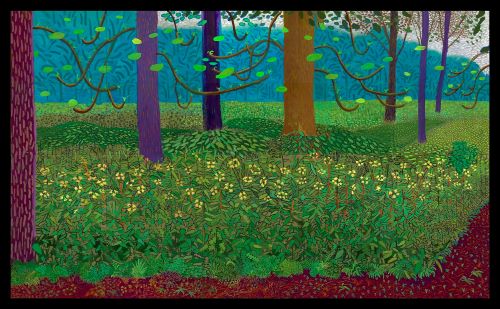
Two visionary artists, separated in time and space, are united by a shared fascination with nature. See the work of David Hockney and Vincent van Gogh side by side in Hockney – Van Gogh: The Joy of Nature.
This exhibition examines the common ground between British artist Hockney (born 1937) and Dutch artist Van Gogh (1853–1890). Both expressed their profound love of nature through brilliant color and the capacity to see the world with fresh eyes. The Joy of Nature reveals Van Gogh’s unmistakable influence on Hockney in a selection of carefully selected landscape paintings and drawings.
Through a bold use of color and experimentation with perspective, each artist crafts a painterly world that is utterly individual and true to themselves, yet offers immense universal appeal. The Joy of Nature brings together nearly 50 of Hockney’s vibrant works—ranging from intimate sketchbook studies to monumental paintings, as well as his experimental videos and iPad drawings—with 10carefully chosen paintings and drawings by Van Gogh.
Hockney – Van Gogh: The Joy of Nature premiered at the Van Gogh Museum in Amsterdam, and the Houston presentation marks the first time the two renowned artists have been paired in an American museum exhibition. The MFAH is the only U.S. venue.
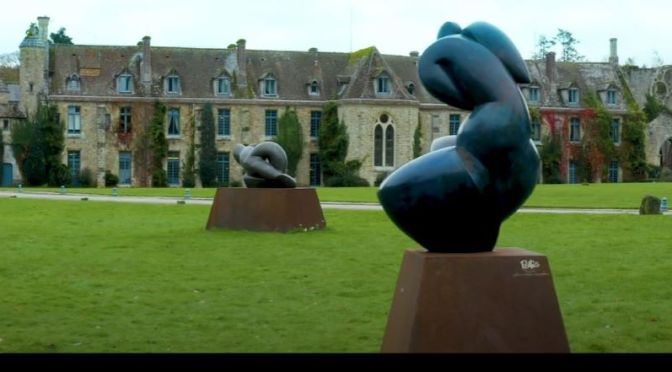
Dominique Pollès, called Pollès, is a French sculptor born in Paris in 1945. He is considered as the inventor of “organic cubism”.
Like Leonard de Vinci in an anatomical search of perfection, of representation of movement,with an almost scientifical or medical glance, Pollès holds the utmost passion of anatomy: he learns about the human body, the complicated hank of muscles, movements of members and all the bodily mechanics.
That’s why in 1964 he starts medicine school and along side goes to the Charpentier Academy where he follows art lessons. In 1966, he encountered sculpture in London where he was invited by his friend Enzo Plazota. This final step teaching him all the bases of sculpture. Pollès then decides to go to live in Italy, in Carrare, an important art place. He moved in 1970 and settled in Pietrasanta where he still lives.
His sculptures, by creating a vision of the moving being, polished and smoothed, break the pureness of aestheticism. He just knows one theme, one model: the female form. According to Pollès, this is the most beautiful one, the most harmonious one. “When we are looking at a feminine body, it is splendid, it is musical”.
His love of women, the sensuality, the complexity, the shapes and passions, brought him to explore the female form. Since the beginning he has created a singularly stylized cubist form; this becoming his signature form. All are cast in bronze by Pollès himself and made in a series of four with one artist’s proof. His masterliness of the patina is considered unparalleled. The world’s recognition of his craft is evidenced by the many awards he has won, the unique places he has shown and the prestigious private collections he is in, including that of Princess Caroline of Monaco.
Pollès was recently honored in an exhibition outside Paris, sponsored by the French Government, called “Sculptors From Rodin to The Present”. He was one of the few living sculptors to be so honored; the others include Abakanowicz, Arman, Saint-Phalle & Wesselmann. Maurice Rheims, a respected Art Critic, and a member of The French Academy, has said “I consider Pollès to be one of the outstanding sculptors of our time.”
His show in the Bagatelle Gardens in Paris in 1998 was a major honor as he was one of only two artists who have ever been allowed to present their work in the Bagatelle. The other artist is Henry Moore. – Galerie Philia is an internationally recognized contemporary design and modern fine arts gallery representing worldwide known designers and artists.
The Galerie Philia attempts in this way to build bridges between different artistic continents in order to enlighten artworks endowed with a marked artistic depth.
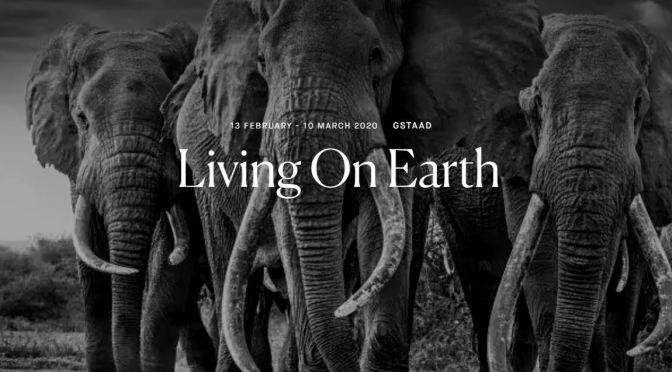
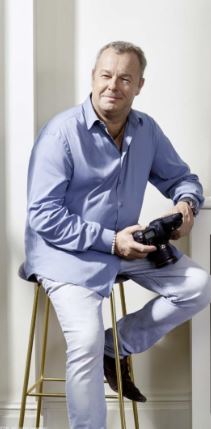
For more than two decades, legendary British photographer David Yarrow has been putting himself in harm’s way to capture immersive photography of the world’s most revered and endangered species.
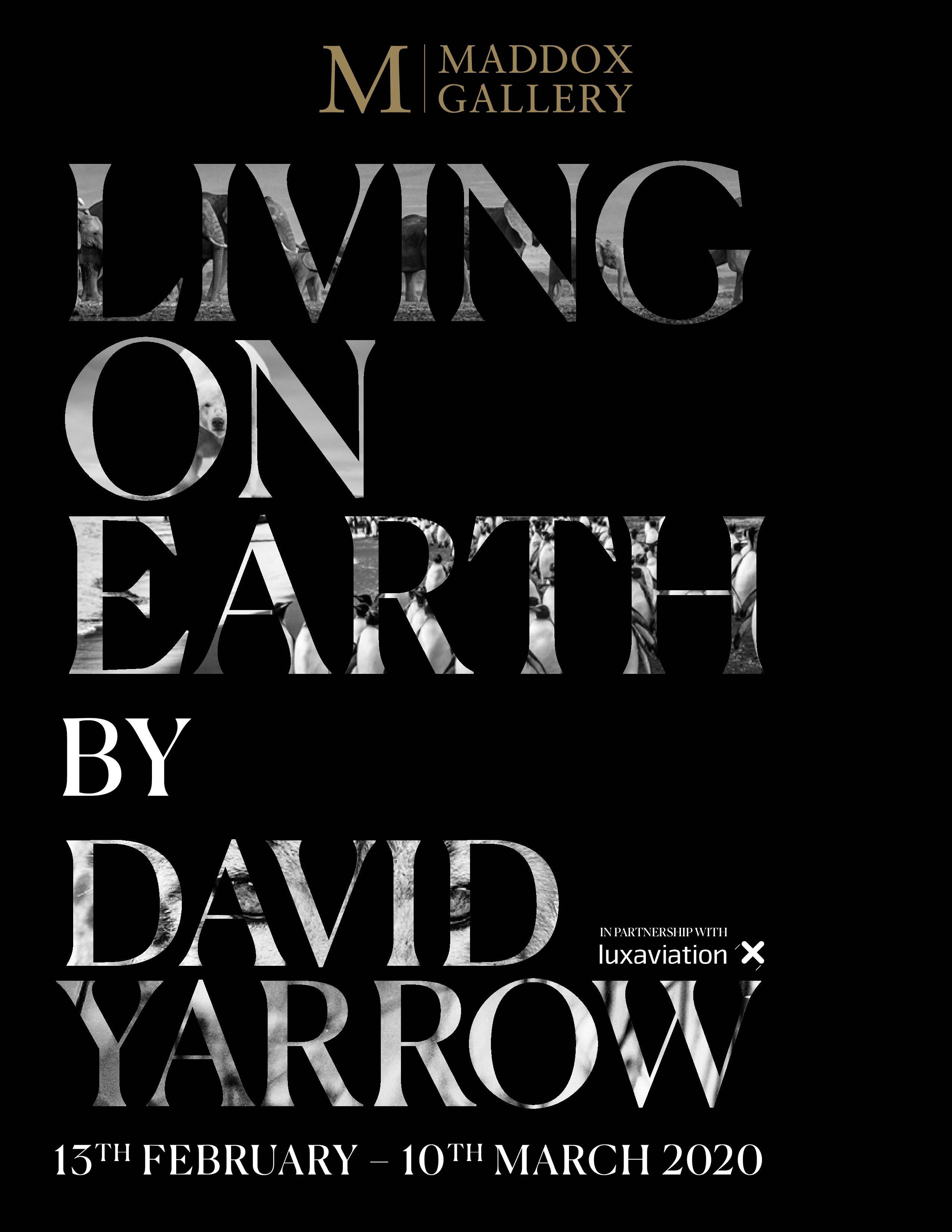
Featuring a selection of Yarrow’s most iconic photographs, ‘Living On Earth’ highlights the beauty of the endangered planet and the art of narrative as conveyed by one of the most relevant fine art photographers in the world.
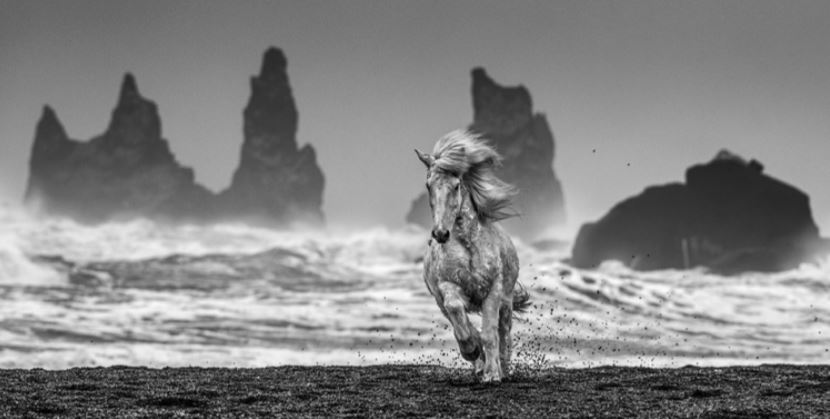
‘WHITE HORSES’
David Yarrow’s commitment to ‘capturing the splendour of what remains wild and free in our world’ allowed him to transcend wildlife photography and become one of the world’s leading fine art photographers. He has travelled pole to pole, to the world’s most remote habitats to allow us a glimpse of the truly untamed. The resulting images are unerringly iconic and connect with us on a primal level; of curiosity, desire, and fear.
Painting Edo— the largest exhibition ever presented at the Harvard Art Museums — offers a window onto the supremely rich visual culture of Japan’s early modern era. Selected from the unparalleled collection of Robert S. and Betsy G. Feinberg, the more than 120 works in the exhibition connect visitors with a seminal moment in the history of Japan, as the country settled into an era of peace under the warrior government of the shoguns and opened its doors to greater engagement with the outside world. The dizzying array of artistic lineages and studios active during the Edo period (1615–1868) fueled an immense expansion of Japanese pictorial culture that reverberated not only at home, but subsequently in the history of painting in the West.
By the early 18th century, the new shogunal capital of Edo (present-day Tokyo) was the largest city in the world. After centuries of conflict and unrest, the growing stability and affluence of the period encouraged an efflorescence in the arts. Artists creatively juxtaposed past and present, eternal and contingent, elegant and vulgar in a wide range of formats and styles, from brilliant polychrome compositions to monochromatic inkwork. Painting Edo explores how the period, and the city, articulated itself by showcasing paintings in all the major formats—including hanging scrolls, folding screens, sliding doors, fan paintings, and woodblock-printed books—from virtually every stylistic lineage of the era, to tell a comprehensive story of Edo painting on its own terms.
The works on view illustrate how Klee responded to his personal difficulties and the broader social realities of the time through imagery that is at turns political, solemn, playful, humorous, and poetic. Ranging in subject matter, the works all testify to Klee’s restless drive to experiment with his forms and materials, which include adhesive, grease, oil, chalk, and watercolor, among others, resulting in surfaces that are not only visually striking, but also highly tactile and original. The novelty and ingenuity of Klee’s late works informed the art of the generation of artists that emerged after World War II, and they continue to hold relevance and allure for artists and viewers alike today.
David Zwirner is pleased to present Paul Klee: 1939, the gallery’s inaugural exhibition of Paul Klee’s (1879–1940) work since announcing its exclusive collaboration with the Klee Family. On view at 537 West 20th Street, New York, the exhibition focuses on Klee’s art from 1939, the year before he passed away, which marked one of the artist’s most prolific periods.




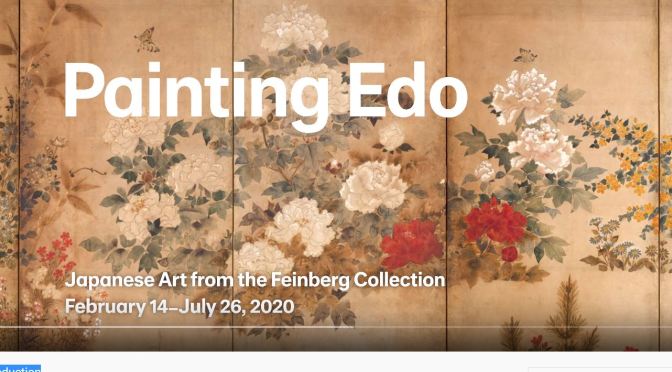
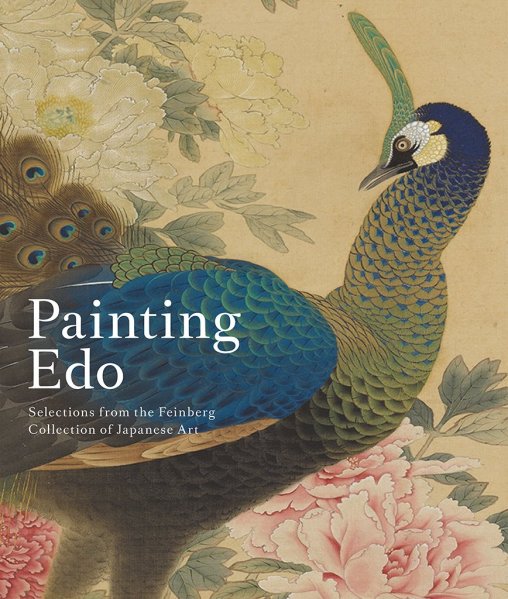 Painting Edo — the largest exhibition ever presented at the Harvard Art Museums — offers a window onto the supremely rich visual culture of Japan’s early modern era. Selected from the unparalleled collection of Robert S. and Betsy G. Feinberg, the more than 120 works in the exhibition connect visitors with a seminal moment in the history of Japan, as the country settled into an era of peace under the warrior government of the shoguns and opened its doors to greater engagement with the outside world. The dizzying array of artistic lineages and studios active during the Edo period (1615–1868) fueled an immense expansion of Japanese pictorial culture that reverberated not only at home, but subsequently in the history of painting in the West.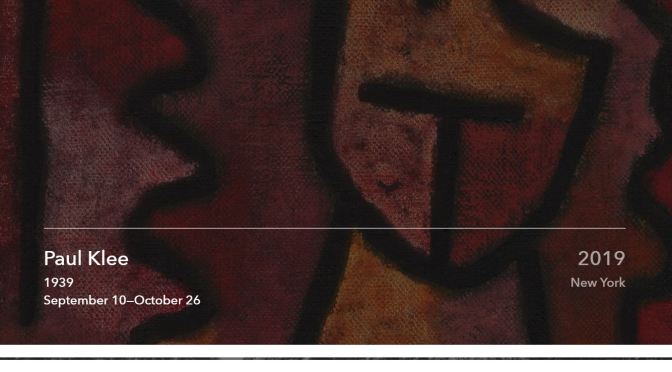
 The works on view illustrate how Klee responded to his personal difficulties and the broader social realities of the time through imagery that is at turns political, solemn, playful, humorous, and poetic. Ranging in subject matter, the works all testify to Klee’s restless drive to experiment with his forms and materials, which include adhesive, grease, oil, chalk, and watercolor, among others, resulting in surfaces that are not only visually striking, but also highly tactile and original. The novelty and ingenuity of Klee’s late works informed the art of the generation of artists that emerged after World War II, and they continue to hold relevance and allure for artists and viewers alike today.
 Boomers Daily