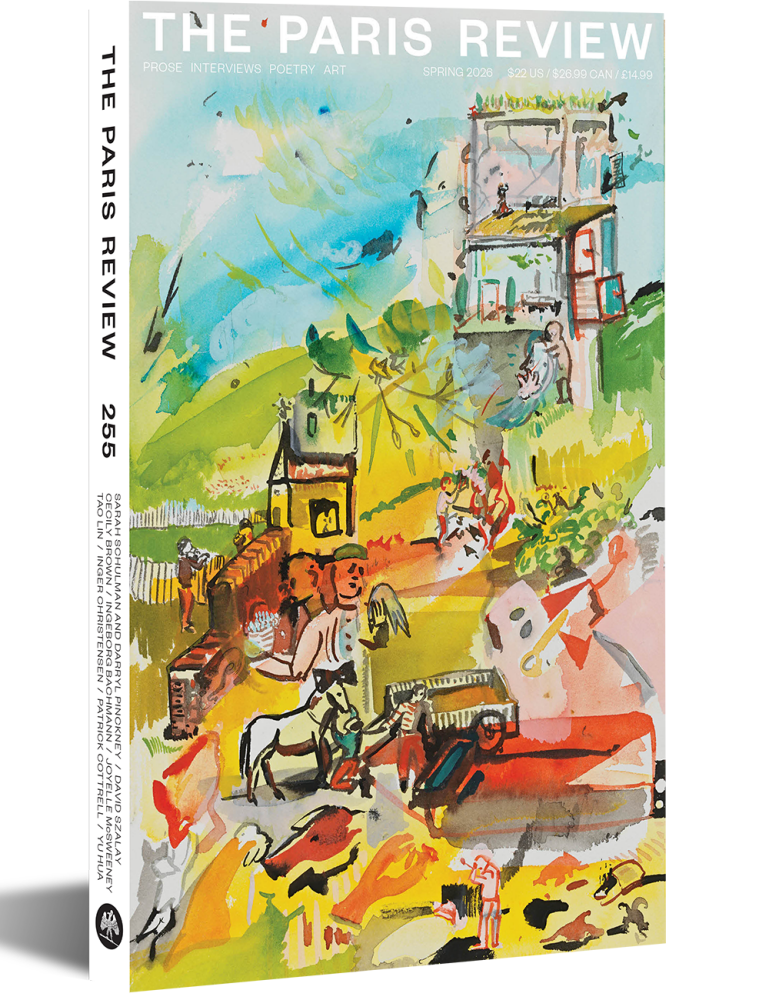
Sarah Schulman on the Art of Nonfiction: “I like to have my say, obviously. And if people would have just let me talk, some of these books wouldn’t have had to be written.”
Darryl Pinckney on the Art of Nonfiction: “There are moments when you run up against a white wall—there’s a white man, white man, white man, white man—and the story somehow has to be uncovered.”
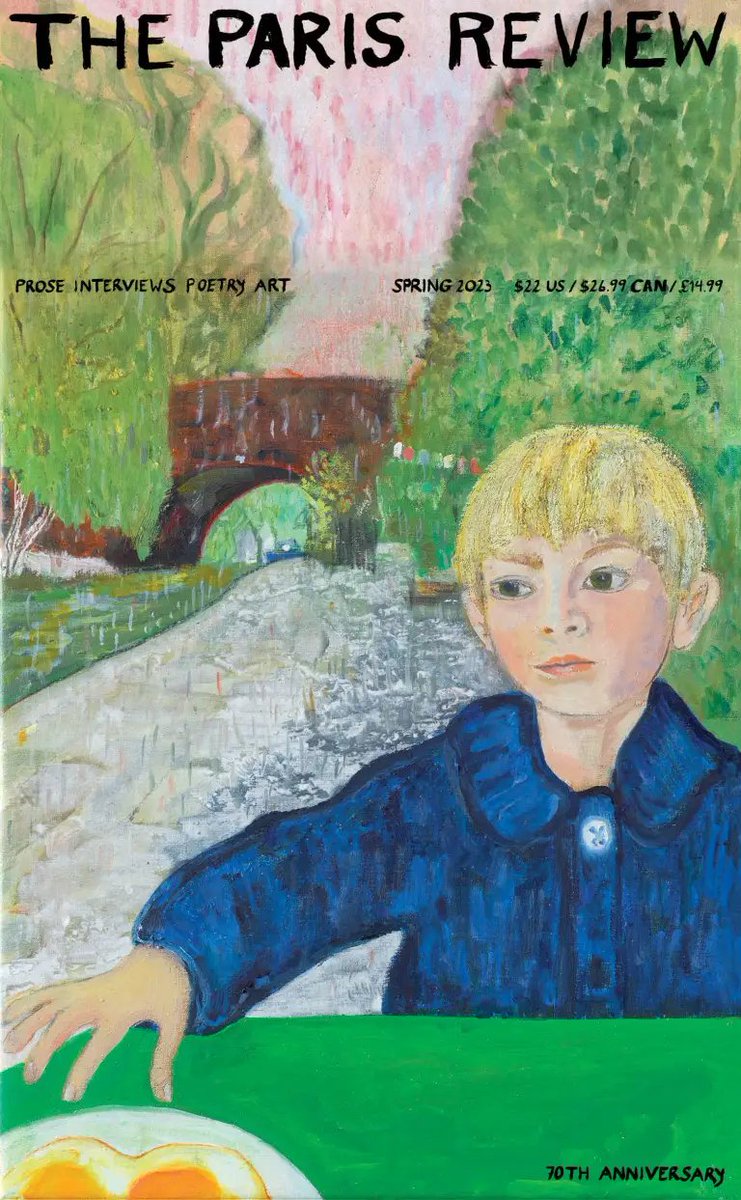
Prose by Ingeborg Bachmann, Dan Bevacqua, Patrick Cottrell, Zans Brady Krohn, Tao Lin, David Szalay, and Yu Hua.
Poetry by Inger Christensen, Rachel Lapides, Enrique Lihn, Joyelle McSweeney, Nakahara Chuya, and Asiya Wadud.
Art by Cecily Brown, Tom Fairs, and Cauleen Smith; cover by Cecily Brown.
THE PARIS REVIEW : The latest issue features Art of Criticism, Art of Poetry, Prose, Poetry and Art…
Hélène Cixous on the Art of Criticism: “There’s a feminist discourse that women can’t do it all. This is what many women experience, and it’s very difficult. But I am not like that.”
Alice Oswald on the Art of Poetry: “You come at poetry with the momentum of having failed. It’s only when other communication is absolutely impossible that a poem has to exist.”
Prose by Eve Babitz, Marlene Morgan, Alec Niedenthal, Gwendoline Riley, and Elias Rodriques.
Poetry by Millicent Borges Accardi, Monzer Masri, Alice Oswald, Jana Prikryl, and Ed Roberson.
Art by Ali Banisadr, Pippa Garner, Joan Jonas, and Mieko Meguro; cover by Adebunmi Gbadebo.
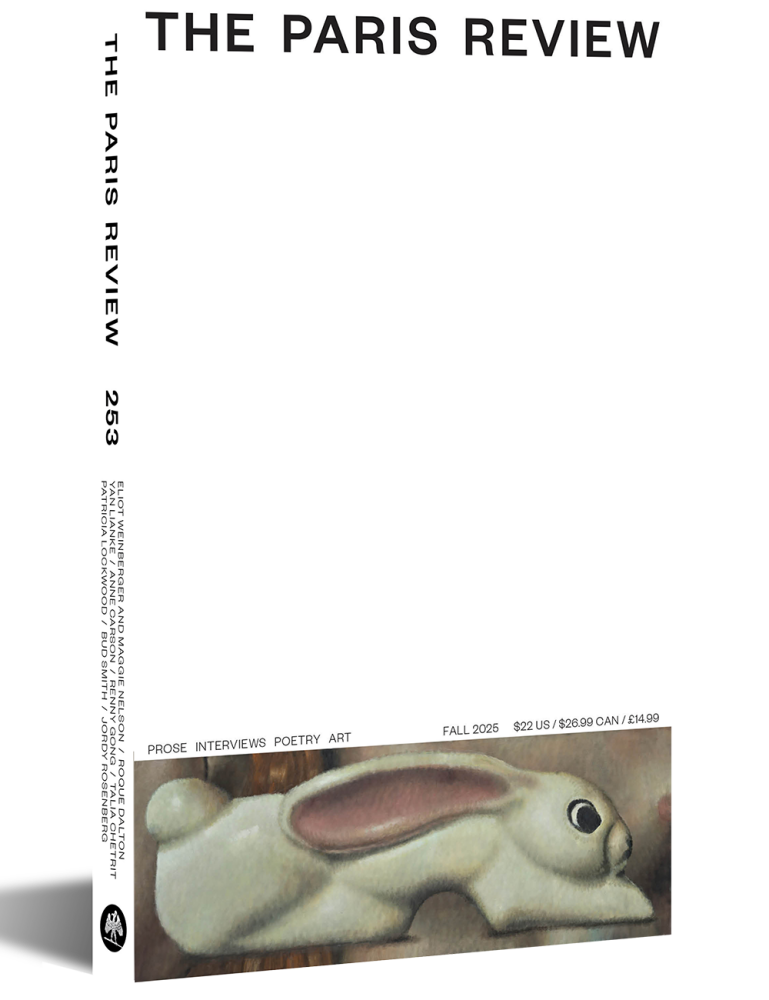
THE PARIS REVIEW : The latest issue features interviews with Maggie Nelson and Eliot Weinberger, prose by Bud Smith and Yan Lianke, poetry by Patricia Lockwood and Ishion Hutchinson, art by Martha Diamond and Talia Chetrit, a cover by Issy Wood, and more…
Eliot Weinberger on the Art of the Essay: “I have no interest in first-person investigation. Personally, I’ve never found myself an interesting person.”
Maggie Nelson on the Art of Nonfiction: “It’s important to notice when the spark of magic or curiosity is there and what snuffs it out, and being around too many writers, for me, snuffs it out.”
Prose by Anne Carson, Renny Gong, Aurora Huiza, Jordy Rosenberg, Bud Smith, and Yan Lianke.
Poetry by Roque Dalton, Ishion Hutchinson, Patricia Lockwood, Mariano Melgar, Eileen Myles, Katie Peterson, and authors unknown.
Art by Talia Chetrit, Martha Diamond, and Jamian Juliano-Villani; cover by Issy Wood.
Fanny Howe on the Art of Poetry: “If I could say I was assigned something at birth, it would be to keep the soul fresh and clean, and to not let anything bring it down.”
Marie NDiaye on the Art of Fiction: “Oh, no! Reading beautiful books can’t be traumatizing. Seeing awful things can be—but reading? I don’t believe in that at all.”
Prose by Anuk Arudpragasam, Tom Crewe, GauZ’, Zans Brady Krohn, and Joy Williams.
Poetry by Will Alexander, John Berryman, Yongyu Chen, Eugene Ostashevsky, Ricardo Reis, and Nell Wright.
Art by Anne Collier, Celia Paul, and Alessandro Teoldi; cover by Tyler Mitchell.
Ludmilla Petrushevskaya on the Art of Fiction: “Don’t you know my life story by now? I don’t experience fear.”
Margo Jefferson on the Art of Criticism: “I’m a lousy reporter. If I’m not interested in the person—and sometimes you’re not if you’re just on assignment for a magazine—I’ll think, Well, why aren’t you interviewing me?”
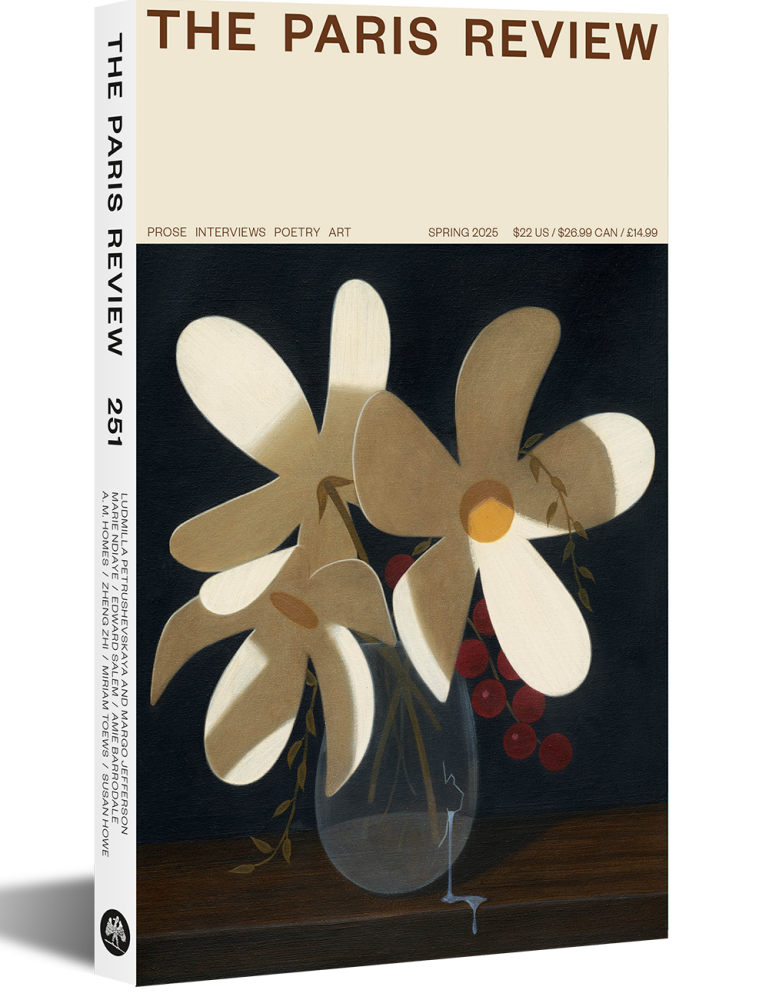
Prose by Amie Barrodale, A. M. Homes, Marie NDiaye, Domenico Starnone, Miriam Toews, and Zheng Zhi.
Poetry by Abigail Dembo, Nora Fulton, Susan Howe, D. A. Powell, Nasser Rabah, Edward Salem, and Nanna Storr-Hansen.
Art by Em Kettner, Agosto Machado, and Lady Shalamar Montague; cover by Anna Weyant.
Guernica is a digital magazine with a global outlook, exploring connections between ideas, ideals, communities, and individual lives. It rejects binary thinking and conventional wisdom, investing instead in the power of counter-narratives, especially those driven by lived experience. Across fiction, poetry, essays, reportage, criticism, and art, Guernica is a home for established and emerging writers, in conversation with each other. Guernica is committed to global literature — highlighting work from independent presses across the Global South and translating work from every continent into English, and from English into global languages. Going into its twentieth year, Guernica remains a trusted home for incisive, urgent writing and singular perspectives on critical issues of the day.
Perennially curious, eager to reckon with the world head-on, Guernica draws readers into uncharted conversations and traces the complex ligaments connecting culture, politics, art, and ecology. Over twenty years, Guernica has built an impressive record as a place of first publication for important writers and thinkers. Guernica’s ability to deepen our sense of wonder, of responsibility, and of connection is rooted in a core conviction that we must hear from diverse voices and diverse places.
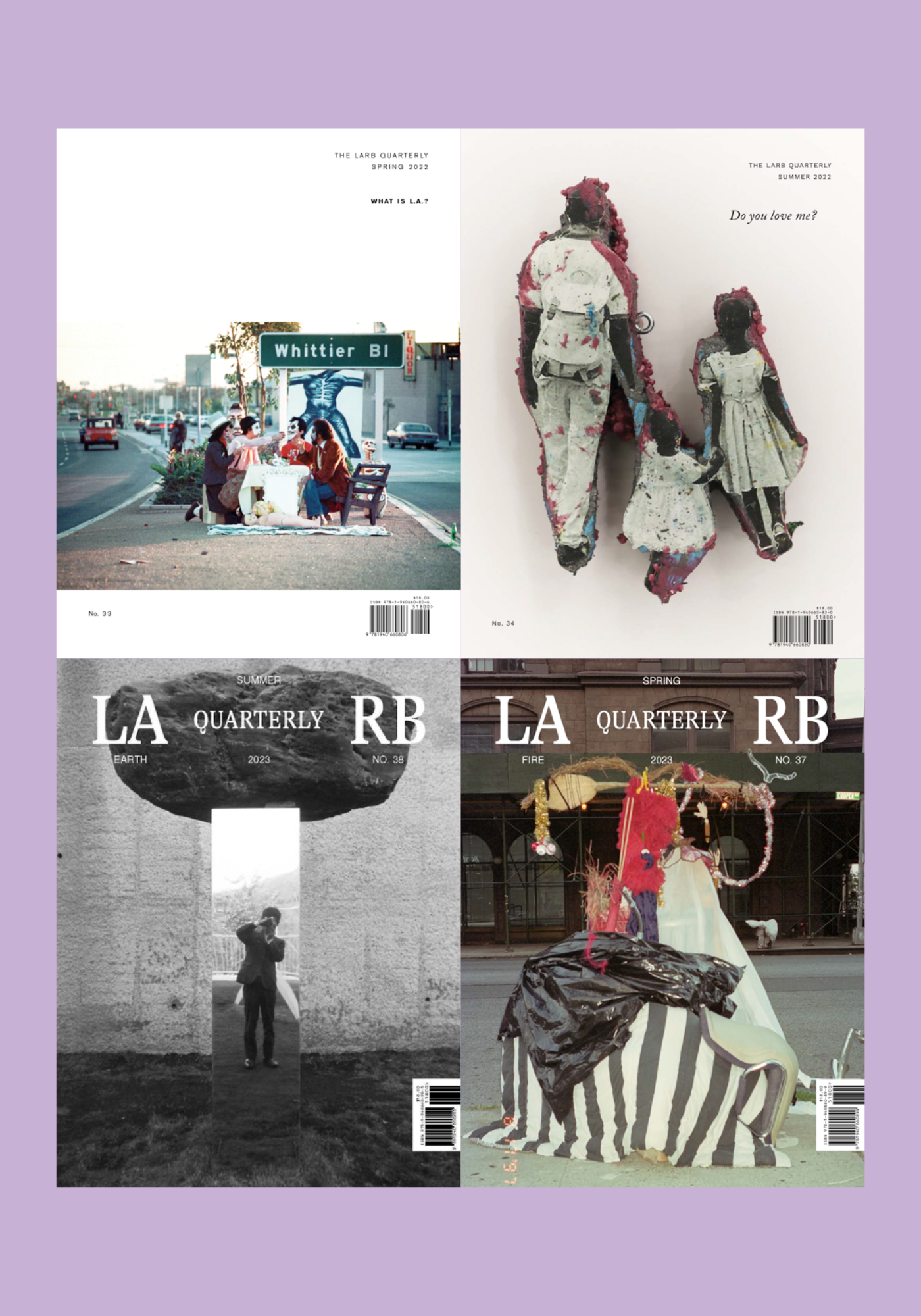
Los Angeles Review of Books
Drawing on literary tradition—and discarding it when necessary—Los Angeles Review of Books dwells in contradiction: the tension between depth and breadth, filth and glamor, destruction and creation, dream and nightmare, that L.A. lives and breathes. LARB launched in 2011 in part as a response to the disappearance of the newspaper book review supplement, and with it, the art of lively, intelligent, long-form writing on recent publications in every genre. LARB has since become a polyvocal cultural force reinventing book criticism for the internet age. It publishes new reviews, essays, and interviews online daily, as well as a print journal, LARB Quarterly, and offers events and programs that connect writers and artists to readers both in Los Angeles and across the globe.
A pillar of West Coast literary culture with national impact, Los Angeles Review of Books astounds with its scope. Its essays, reviews, and interviews are imbued with the irresistible appeal of fresh ideas and the rigor of academic inquiry. As an organization it creates and renews vital space for connection, especially through its innovative publishing workshop. New and accomplished international authors and translators cascade out of LARB, and its coverage of contemporary literature is steeped in style and substance. The commitment to history, critical thought, imagination, and to its eponymous city runs deep.
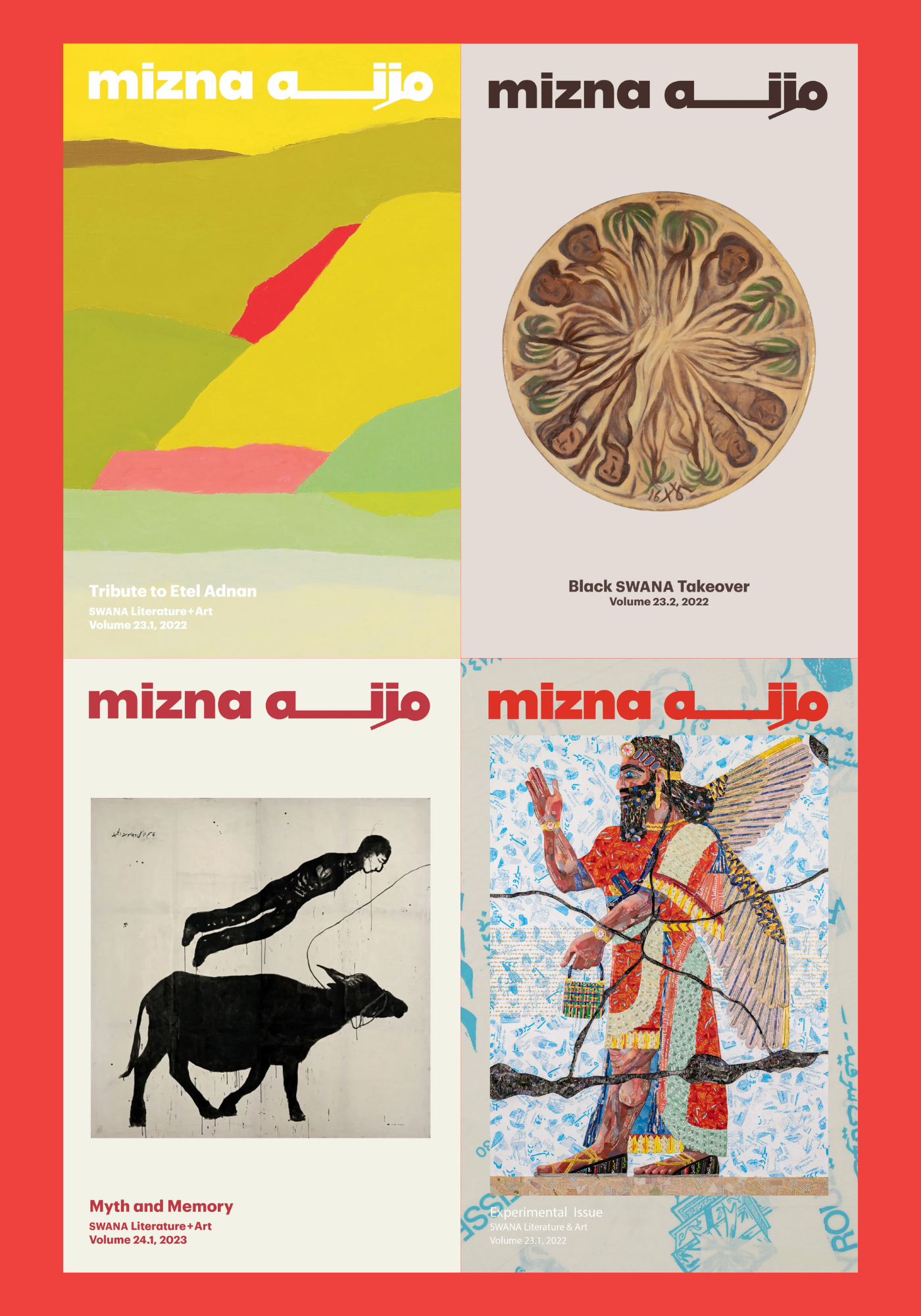
Mizna
Mizna reflects the literatures of Southwest Asian and North African (SWANA) communities and fosters the exchange and examination of ideas, allowing readers and audiences to engage with SWANA writers and artists on their own terms. It has been a critical platform for contemporary literature, film, art, and cultural production since 1999, publishing a biannual print journal of poetry, fiction, essays, comix, and visual art in addition to producing the Twin Cities Arab Film Festival, the largest and longest running Arab film fest in the Midwest. Recognizing that open cultural spaces are not a luxury but a necessity, Mizna also hosts classes, readings, and community events that offer points of connection between emerging and established SWANA artists and their local Twin Cities community and beyond.
Mizna is an absolute gem of a journal: tightly edited, gorgeously curated, and visually striking. Care and craft float off its pages of beautifully laid-out poetry and lovingly printed images. Mizna is both a grassroots community organization and an esteemed international artistic platform, furthering important intergenerational dialogue within the Southwest Asian and North African (SWANA) diaspora and showcasing thrilling new literature.
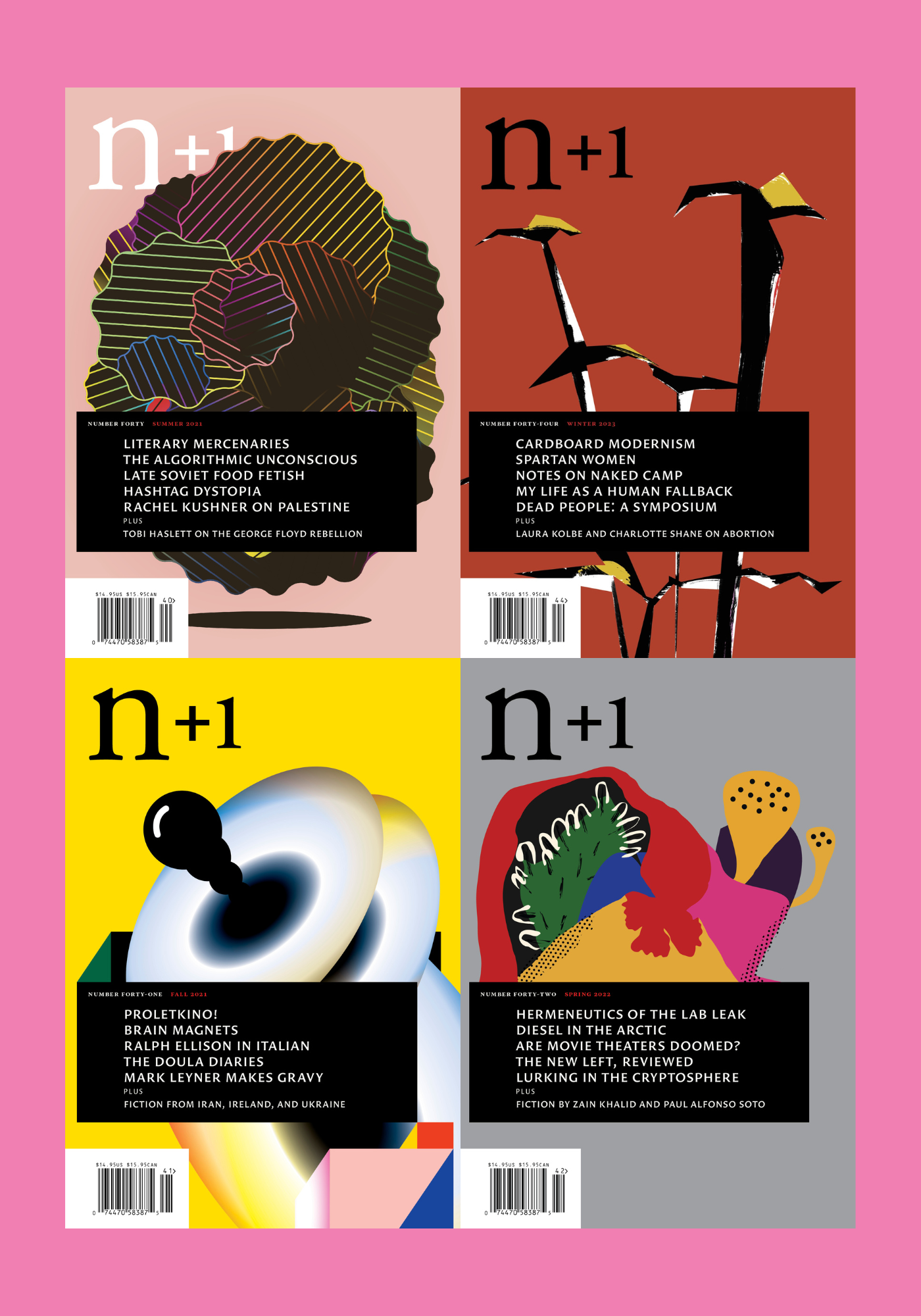
n+1
n+1 encourages writers, new and established, to take themselves as seriously as possible, to write with as much energy and daring as possible, and to connect their own deepest concerns with the broader social and political environment—that is, to write, while it happens, a history of the present day. n+1 was founded in New York City, in 2004, by six young writers and editors who wanted to make a magazine that didn’t shy away from difficult and ambitious writing and would take literature, culture, and politics as aspects of the same project. In addition to the triannual print and digital magazine, n+1 also publishes books that expand on the interests of the magazine and programs readings, panels, and events in New York City and across the US.
A distinctive, erudite editorial project overflowing with rigor and generosity, n+1 is both magnet and catapult for intellectually fearless writers. Its uniquely attentive and structural approach to editing has helped cement a reputation as a major site of discovery for new talent, and it indisputably lives on the cutting edge of literary and political discourse. n+1’s ethos is deep investment in writers and their growth. A must-read for critical engagement with pressing issues of the day.
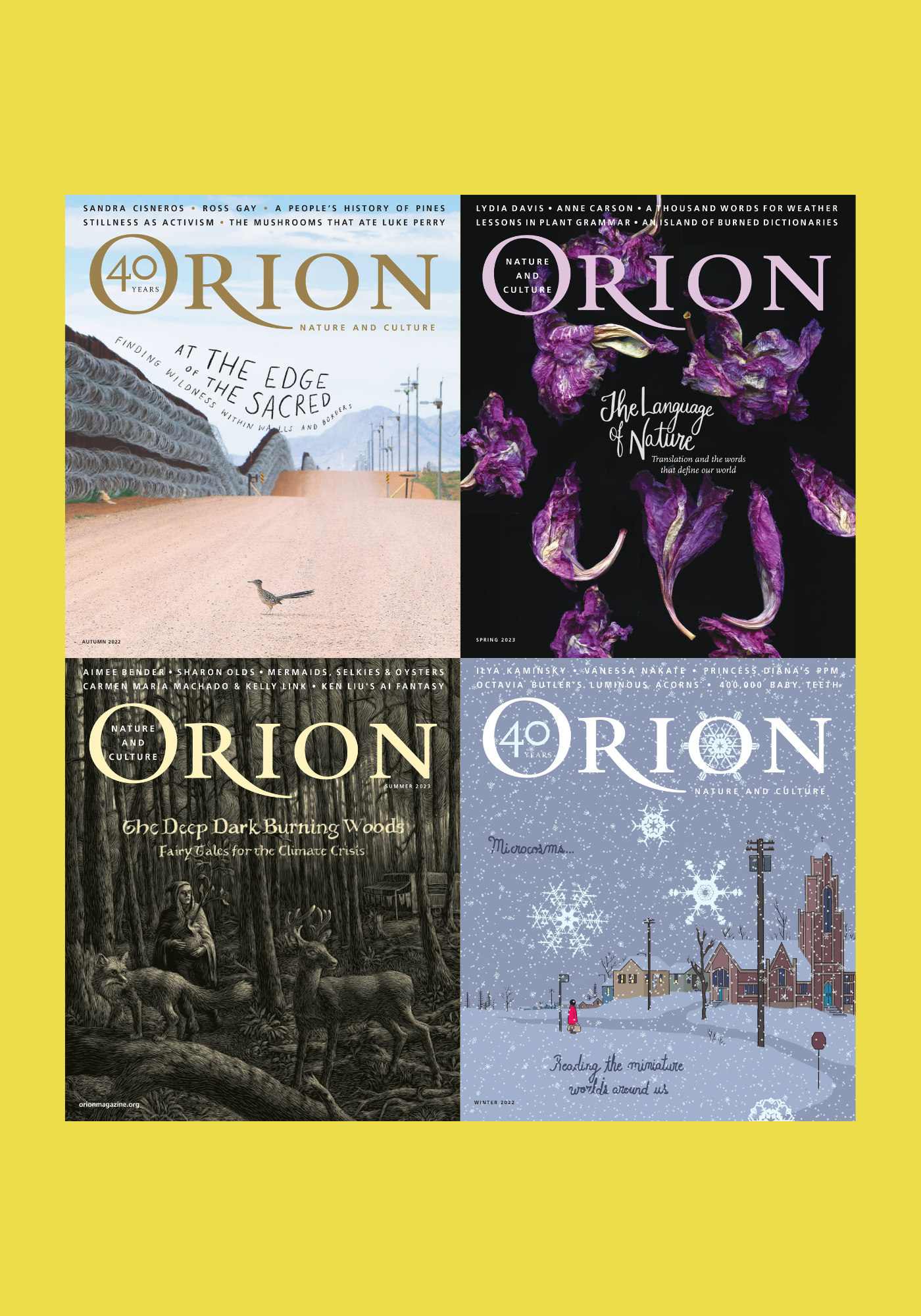
Orion
Orion invites readers into a community of caring for the planet. Through writing and art that explore the connection between nature and culture, it inspires new thinking about how humanity might live on Earth justly, sustainably, and joyously. Founded in 1982, Orion has grown into a quarterly print magazine with in-depth features, poetry, photo essays, science reporting, profiles, book reviews, and interviews. Orion also publishes full-length books as well as original work on its website that probe humanity’s ethical obligation towards and connection to our planet and hosts workshops designed to help writers deepen their relationship with nature and place.
Orion sounds out the depth and breadth of the natural world and our human experiences in it, proving over and again how necessary a publication it is in this age of climate crisis. The magazine is the nucleus of something much larger: a network of readers and contributors bound by a desire to protect and marvel at natural beauty. Each themed issue, replete with illustrations that complement and elevate the text, is a printed object to cherish. To read Orion is to feel the planet as a living organism of which we are a part.
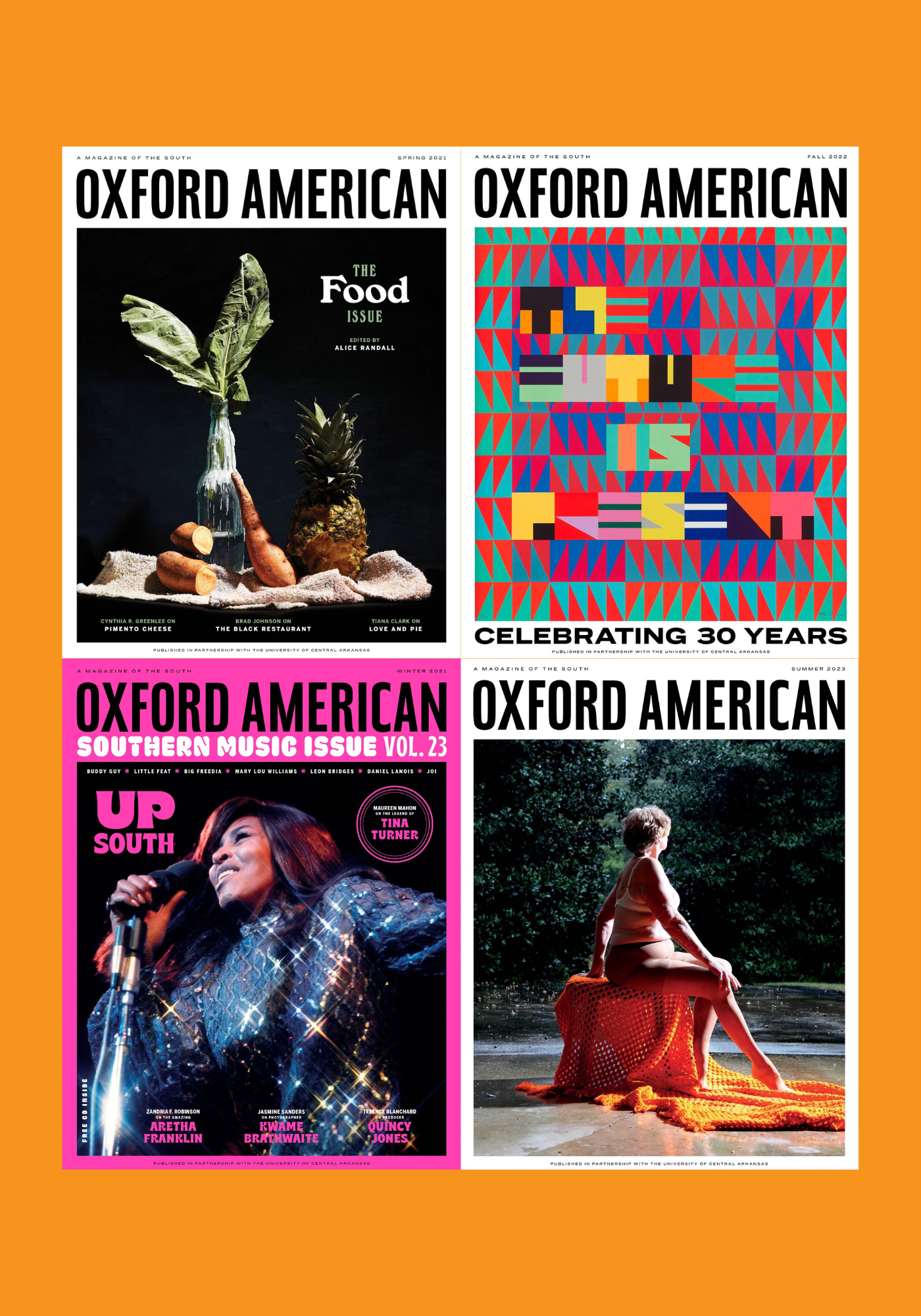
Oxford American
Dedicated to the complexity and vitality of the American South, Oxford American is a national magazine with a regional point of view. It began publishing in 1992 out of Oxford, Mississippi, and strives to reflect the multicultural tapestry of the region as it truly exists–to explore many Souths and trouble familiar, singular stereotypes. Oxford American publishes a wide array of literature written in diverse registers, including investigative reportage, memoir, cultural criticism, fiction, poetry, and book reviews, in addition to an iconic annual Southern music issue. Oxford American celebrates the South’s immense cultural impact on the nation–its foodways, literary innovation, fashion history, visual art, and music–and recognizes that as much as the South can be found in the world, one can find the world in the South.
Oxford American is our most adventurous and authoritative window on the South, pushing beyond headlines to deliver a textured, ever-evolving portrait of its cultural wealth. Drawn in by eye-catching art direction and dazzling editorial letters, readers stay to savor the unique weave of the journalistic with habit-forming fiction and vivid travel writing. A generous intellectual hospitality serves the magazine’s Southern neighbors and a broad national readership all at once. Oxford American is a spring of innovation, honoring tradition while forging something new.
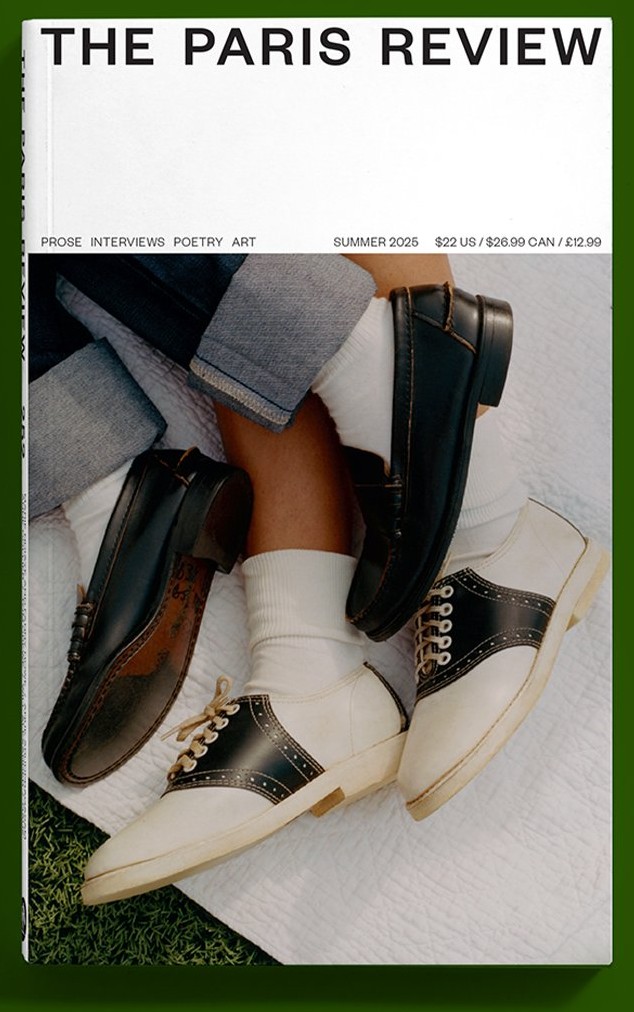
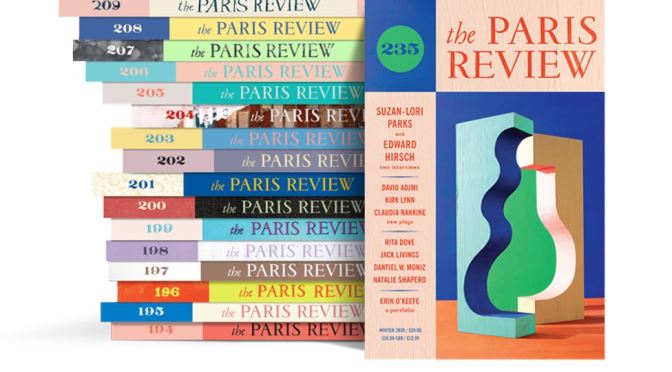
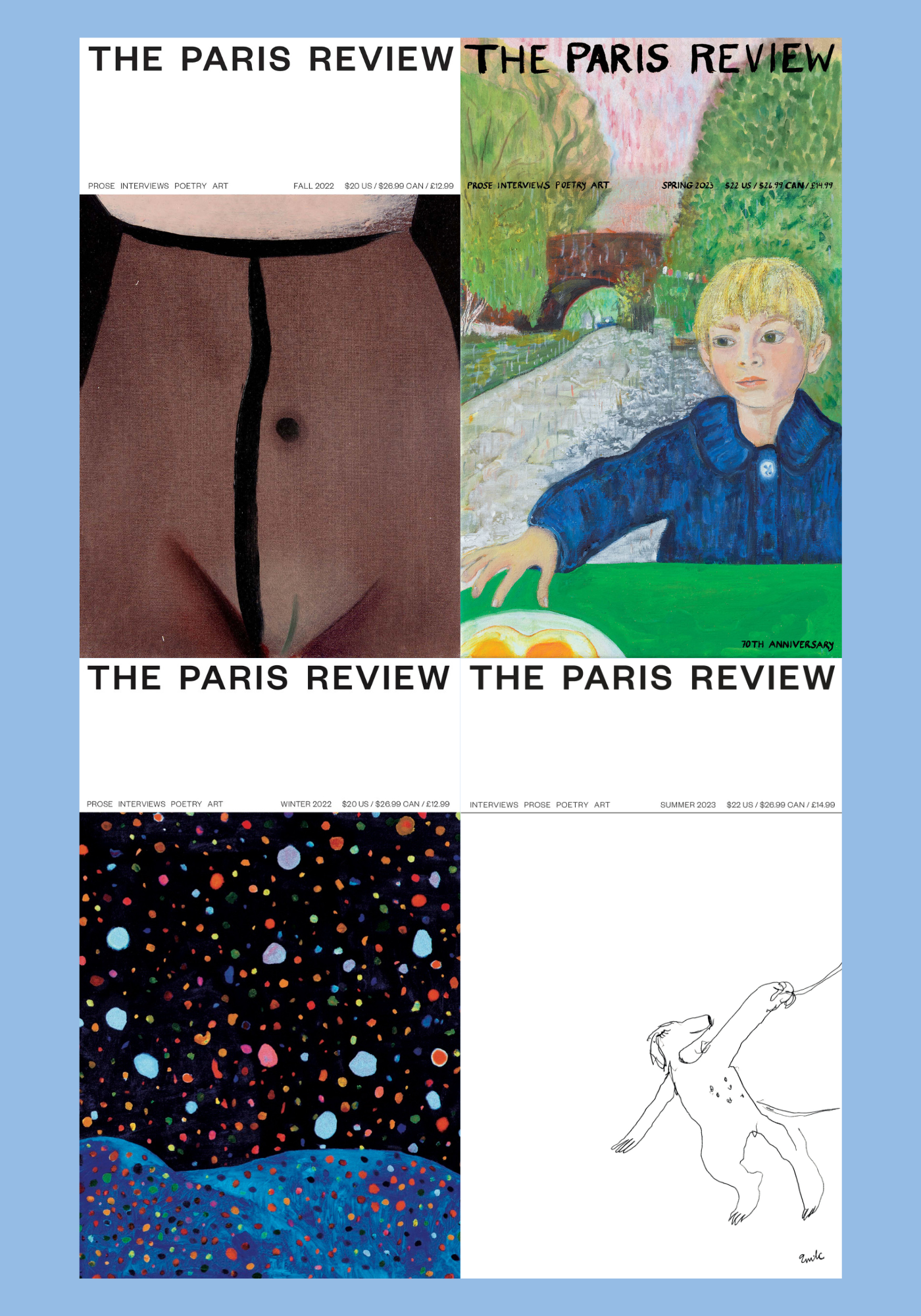
The Paris Review
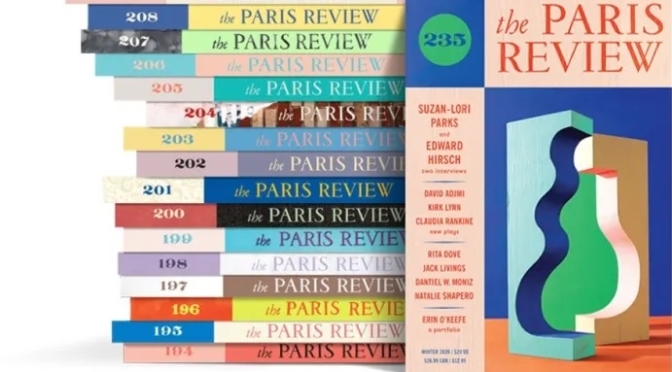
The Paris Review showcases a lively mix of exceptional poetry, fiction, and nonfiction and delights in celebrating writers at all career stages. Its “Writers at Work” series, hailed by the New York Times as “the most remarkable interviewing project we possess,” offers rich psychological portraits and a trove of practical advice for aspiring writers, and has been a hallmark of the magazine since its inception in 1953. With a quarterly print journal, a website that publishes daily, a digital archive, and a podcast featuring a blend of classic stories and poems, vintage interview recordings, and new work, The Paris Review favors daring, original writing and seeks to be the best kind of party: open, inclusive, and excitingly vibrant.
For seventy years and counting, The Paris Review has remained wonderfully distinctive and sophisticated, never short on chic art direction, impeccable curation, or international flair. The interviews make you ache to have been in the room for the conversation. Readers will find exceptional work by feted writers in every issue, but The Paris Review does not rest on its legacy: it deftly employs its footing as the standard bearer for American literary magazines to uplift talent that hasn’t yet gotten its due.
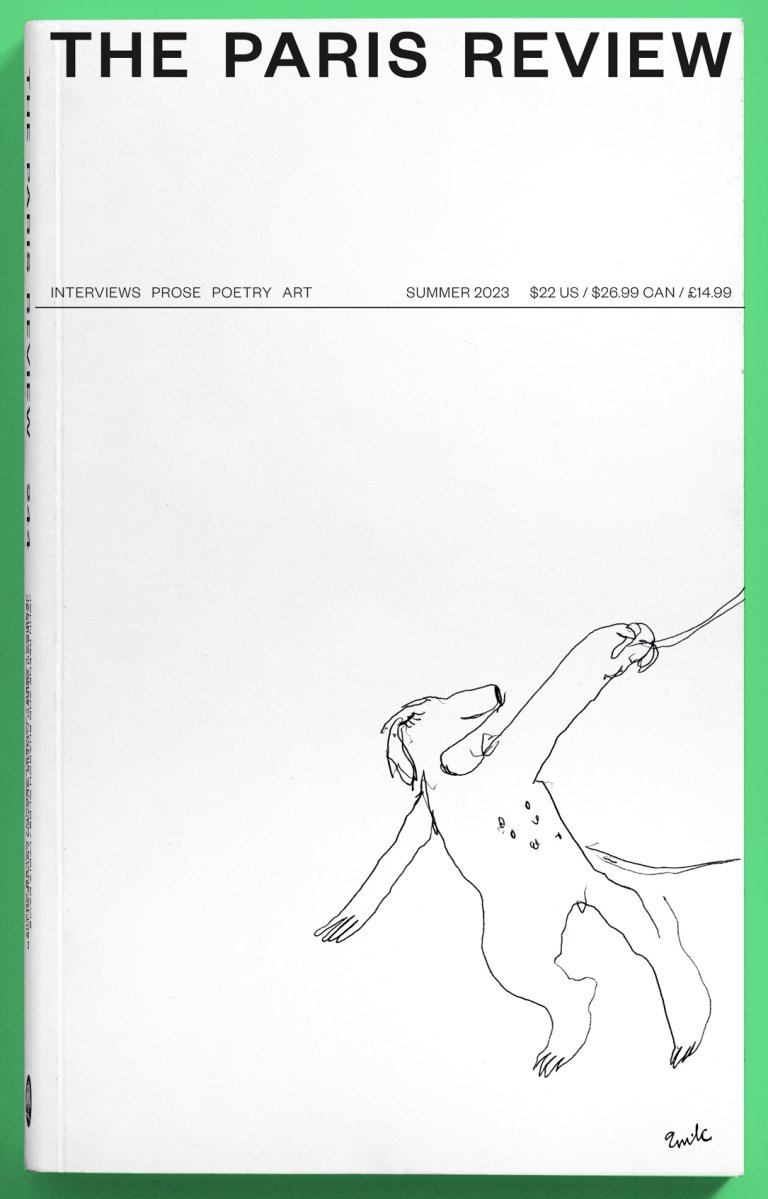
The Paris Review – Summer 2023 Issue: The Review take an especial pleasure, as readers, in the diary form: that peculiar mixture of performance and unwitting self-revelation, of shapelessness and obsessive (occasionally deranged) selectivity; that sense of a narrative unfolding in real time, almost without the author’s permission. And while the Review doesn’t do themes, as we were putting together our new Summer issue, no. 244, it was hard not to notice our partiality peeking through.
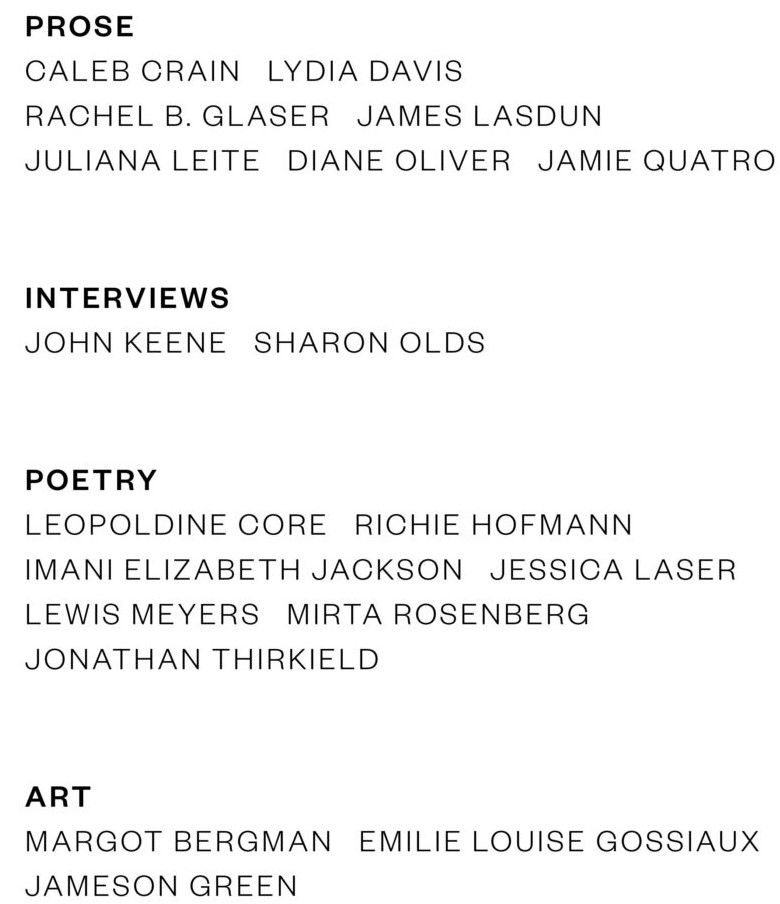
In the issue, Lydia Davis shares selections from her 1996 journal, and they often read like warm-up scales for her exquisitely off-kilter stories. (“For lunch—a huge potato and a glass of milk.”) You’ll also find masterful uses of the diary as a fictional device. The Brazilian writer Juliana Leite’s “My Good Friend,” translated by Zoë Perry, is an elderly widow’s apparently unremarkable Sunday-evening entry—“About the roof repair, I have nothing new to report”—that turns into a story of mostly unspoken decadeslong love. And James Lasdun’s “Helen” features excerpts from the journal of a woman who lives in what the narrator describes as a “state of incandescent, almost spiritual horror,” and whose crippling self-consciousness doesn’t protect her from humiliations the reader can see coming.
Also in issue no. 244, John Keene, in an Art of Fiction interview with Aaron Robertson, describes how blogging heralded his recovery as a writer after losing drafts of several of the stories that eventually became Counternarratives. And Sharon Olds, in an Art of Poetry interview, tells Jessica Laser about the need to keep one’s art and biography separate, especially when they are clearly not. Keeping a diary might be therapeutic, Olds explains, but “writing a poem to understand yourself better would be like making a cup with no clay, or maybe like having the clay but not making the cup.” She concludes, “If I had to choose between a poem being therapeutic and it being a better poem, I’d want it to be a better poem.”
March 1946. Albert Camus has just spent two weeks at sea on the SS Oregon, a cargo ship transporting passengers from Le Havre to New York City. He’s made several friends during this transatlantic passage.
In his poem “After Avery R. Young,” the Pulitzer Prize–winning poet Jericho Brown writes, “The blk mind / Is a continuous mind.” These lines emerge for me as a guiding principle—as a mantra, even—when I consider the work of Black poetry in America, which insists upon the centrality of Black lives to the human story, and offers the terms of memory, music, conscience, and imagination that serve to counteract the many erasures and distortions riddling the prevailing narrative of Black life in this country.
As I was going to enter college that fall my parents felt that I should build myself up at a summer camp of some sort. They sent me down to a place in the Ozarks on a beautiful lake. It was called a camp but it was not just for boys. It was for both sexes and all ages. It was a rustic, comfortable place. But I was disappointed to find that most of the young people went to another camp several miles down the lake toward the dam. I spent a great deal of time by myself that summer, which is hardly good for a boy of seventeen.
Colm Tóibín on the Art of Fiction: “No matter what you do in a novel there’s a secret DNA of whatever it is that you’ve suffered.” N. Scott Momaday on the Art of Poetry: “I was writing lines that looked like lines of poetry, recollecting my early days on the reservation, but I didn’t know the difference between a spondee and a dactyl.”





 Boomers Daily