Tag Archives: The Local Project Videos

Sustainable Architecture: TMRW Home In Melbourne

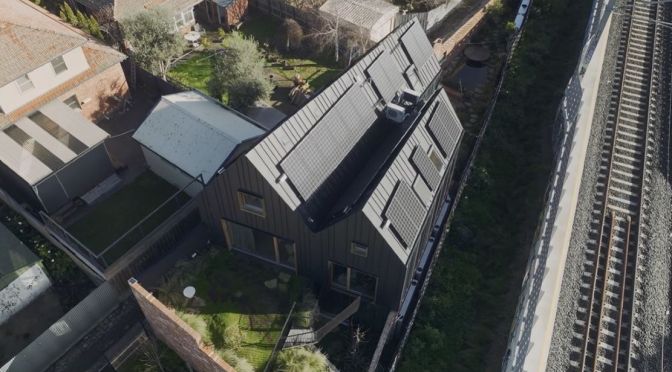
The Local Project – Passionate about creating a small home that considers a sustainable future, Marc and Felicity Bernstein at Hütt Homes collaborated with Blum to bring functionality into their family’s sustainable home.

Video timeline: 00:00 – Introduction to the Small, Sustainable and Timeless Home 00:48 – The Shape of the Land 01:12 – A Walkthrough the Home 01:41 – Making the Most of the Small Space 02:00 – Blum Addicts 02:14 – Blum’s Input 02:45 – Blum Storage Options 03:10 – The First Floor 03:38 – The Top Floor 03:54 – 5 Principles of a Passive House 04:44 – Creating a Carbon-Neutral Home 05:13 – A Home That Ticks Every Box

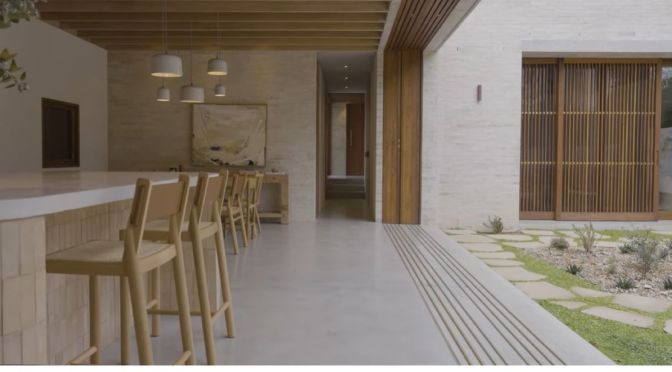
From the exterior of the small home, the architecture considers brick and concrete as main elements of the design, while the interior uses timber as a key material to minimise the home’s carbon footprint. Utilising an open plan approach in the small home allows for a connection to the rear and first-floor gardens. Throughout the residence, a sense of communal living has been infused alongside sustainable elements.

In the sunken living room – where the sense of the communal spirit of the small home is evoked – the surrounding timber edges allow for extra seating for larger gatherings. At the other end of the house, the kitchen and dining room showcase the collaboration with Blum through storage units and cupboards. Helping to provide functionality, organisation and ergonomics while increasing the home’s passive living, Blum specified products such as the LEGRABOX in the kitchen and first-floor bedrooms to enhance storage and aesthetic function.

Moving upstairs to the private spaces, Blum has assisted with the home’s organisation and ergonomics with floor-to-ceiling cupboards in the master to staircase storage systems in the children’s rooms. Additionally, a net has been installed in the children’s rooms, hanging over the ground level and allowing for extra play space without taking away from liveable areas. Further assisting with the passive living of the home, a garden has been installed on the first level and a living green wall in the bathroom adds a natural flow of oxygen. Continuing the importance of indoor air quality, a mechanical heat recovery system has been installed to capture fresh air and remove any stale air.

Furthermore, a heat exchanger allows for temperature stability all year while maintaining energy efficiency. Throughout the small home, an emphasis on creating a carbon neutral project is referenced in the architecture and interior design choices. From the use of timber to the living green wall and connections to the gardens, sustainability is the key focus of Blum and Hütt Homes’ collaboration. An inspiration for upcoming architects and designers to think and design responsibly, TMRW Home is a responsible family residence that considers the present and the future.
Home Tours: The ‘Dolphin Sands Studio’ In Tasmania

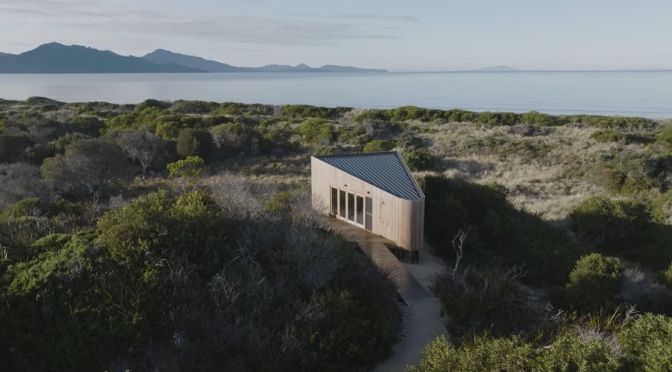
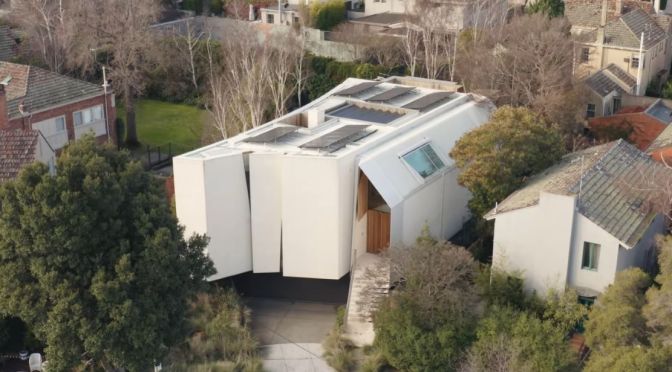
The Local Project – At the end of an undulating path is Dolphin Sands Studio, a small cabin that floats atop the dunes and looks out to The Hazards mountain range and the Peninsula beyond. From the open deck of the cabin, the doors open up to the main living spaces of the studio cabin.

Video timeline: 00:00 – Introduction to the Tiny Cabin on a Hidden Beach 00:31 – The Location of Dolphin Sands 00:45 – A Walkthrough and Around the Cabin 01:04 – The Spacial Components 01:24 – Conceived as a View Finder 01:59 – Utilising as Few Materials as Possible 02:20 – Room for Two 02:48 – Providing Protection 03:05 – The Triangular Form 03:28 – The Architects Proud Moments

Consisting of a kitchen, living space and bedroom – with an adjacent bathroom – the cabin home holds everything the occupants need in one space. Located on a hidden beach in Tasmania, Australia, Dolphin Sands Studio by Matt Williams Architects has been conceived as a viewfinder – giving the occupants unmatched views across the bay. Completing the architecture and interior design, the architect worked alongside the builder to consider how the triangular form of the remote cabin could embrace its surroundings.

This was done by employing a large south-southeast facing window and using as few materials as possible to create a calm space for the occupants. Built on an exposed site, Dolphin Bay Studio embraces its surroundings by inserting itself as one with the landscape. Conceived as a solid tent, the cabin home allows for protection from the elements while maintaining an immediacy with the landscape.

Employing sustainable materials, Matt Williams Architects establishes that the materials work in tune with the weather while not taking away from the experience of living in the unique beach cabin. Capturing the golden sunrise every morning, the position of the cabin home allows the occupants to completely embrace the spectacular views and become one with the community. Though Dolphin Sands Studio is small in scale, the location and proximity to the bay brings external space for the occupants to enjoy.

With a desire to reduce the impact on the terrain, as well as flora and fauna, the architect and builder created a minimally impactful home that inserts itself into the bay. Also offering an escape from the worries of everyday life and the bustling cityscape, the cabin is a uniquely designed home that considers more than its occupants. With an offer of serenity, sustainability and waterside living, Dolphin Bay Studio pushes towards what is possible when designing and living sustainably.

Architectural Tours: Off-Grid ‘Limestone House’ In Melbourne, Australia

The Local Project – Crafted by John Wardle Architects, this sustainable off-grid house is best explored by means of a house tour. Combining seamless interior design and architecture with a minimal environmental impact, Limestone House forms a cohesive celebration of functionality.

Video timeline: 00:00 – Introduction to the Sustainable Off-Grid House 00:41 – The Location and The Vacant Lot 01:22 – Architects Declare 01:39 – The Living Building Challenge 02:06 – Passive House Standards 02:40 – The Shading Systems 03:04 – What’s Behind the Walls 03:19 – The Energy Supply 03:35 – Requirements of the Living Building Challenge 03:50 – The Two Main Materials Used 04:12 – An Interesting History Behind the Timber 04:42 – The Handmade Aspects 05:01 – Floating on a Sea of Native Grasses

Located in the Melbourne suburb of Toorak, Limestone House rests on the Wurundjeri Land of the Kulin Nation. Initially vacant, the project site excited the clients with the possibility of building a sustainable off-grid house. Paying homage to the environmental agenda, the landscape design of Limestone House sees the building float above a sea of native grass. Guiding the design of Limestone House is the Living Building Challenge and Passivehaus, two rigorous standards of sustainability.

In order to satisfy the standards, John Wardle Architects ensures that the home operates as a sustainable off-grid house, harvesting its own water and disposing of all of its waste water. Externally, a set of edible plantings on the terrace meets the requirement for food production on site. The Passivehaus standard sees a tightly-sealed, sustainable off-grid house emerge. While a passive ventilation system consistently delivers fresh air into the home at a slow speed, an airtight barrier seals heat into the dwelling, maximising energy efficiency.

Similarly, high-performance insulation is applied to the walls, roof and floor and the home features triple-glazed windows. Shading systems take the form of motorised venetian blinds to the northeast and west, as well as operable timber louvres at roof level over the courtyard. Internally, the material palette of Limestone House consists primarily of stone and timber. Concrete benchtops and Queensland siltstone complement the calming tonal character of the scheme alongside hydrowood oak. Many of the trees used for the oak come from a valley that was flooded during a 1940s hydroproject – now the timber comprises a bespoke dining room table.

A sustainable off-grid house, Limestone House produces its own energy and a surplus of five per cent that is exported to the grid. While meeting the design brief, John Wardle Architects ensures that the residence forms a unique embracement of natural serenity, in distinction from other sustainable dwellings of the past.

Architecture: The Jervois Apartments In Auckland

The Local Project – With breathtaking views across Herne Bay, the architect designs a modern apartment that takes elements of suburban life and introduces them into apartment living. Allowing for an evolving brief, Artifact Property approached Monk Mackenzie to collaborate on a mixed-use development that positively contributed to Auckland’s built environment.

Video timeline: 00:00 – Introduction to the Modern Apartment 01:05 – The Brief 01:28 – Similarities of a Jigsaw Puzzle 01:44 – Contributing in a Positive Way Through Architecture 01:58 – The 8 Apartments 02:20 – The Layout of the Building 02:45 – Separation of Functions 03:45 – The Site Itself 04:16 – The Material Palette 05:06 – The Kitchen Design and Appliances 05:28 – Minimalistic Features of Fisher & Paykel 06:01 – Proud Moments

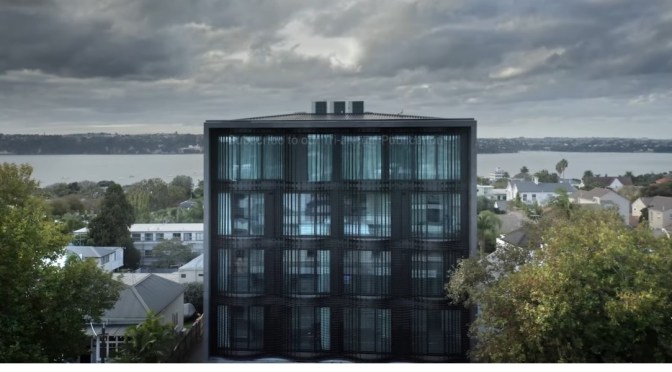
Encompassing eight units in total – one commercial space, six apartments and a penthouse – Jervois Apartments is simple, elegant and timeless. Due to the location of the site, the architect designs a modern apartment to fit a 33-metre length block that rises 15 metres above. Taking advantage of as much space as possible, the project uses the length of the site to its benefit and, in turn, offers occupants the opportunity to live spaciously.

Sitting high on the ridgeline and facing north, each apartment has been cleverly planned out. From the façade, a winter garden deck with views of nature greets those who enter and sets the scene for what is to come. From this, a long view of the apartment imbues a similarity to the openness that suburban homes offer. Positioned at the southern end of the apartment, the street-facing bedrooms and private spaces offer a unique placement that defers from other apartment designs.

Monk Mackenzie and Artifact Property employed an interface between private and public domains with metalwork screens. By employing the screening on the façade, the exterior design offers varying degrees of transparency and opacity. Through this unique use of materials, the architect designs a modern apartment that offers a different experience from opposite sides of the building. From the bedroom, a direct sightline of the surrounding landscape is offered to the occupants through the screens, whilst from the street below, the façade strikes a wave-like form that seamlessly blends into the built environment.

At the north end of the apartments are the living and dining spaces, kitchen and enclosed deck where the occupants can sit outside during winter whilst being sheltered from the elements. Though Jervois Apartments sits on a narrow site, the architect designs a modern apartment that optimises space to create a spacious interior environment. In the kitchens, the incorporation of natural stone, oak and metal work into the material palette has been seamlessly styled together with Fisher & Paykel appliances – such as the vertical column fridge-freezer, wine fridge and ovens.

With the insertion of minimal and clean appliances, Fisher & Paykel products blend into the kitchen without taking away from other elements of the apartments. Contributing to Auckland’s built environment, an architect designs a modern apartment that allows the occupants to live a city life whilst being surrounded by suburban comfort.

Design: Northside House In Clifton Hill, Australia

The Local Project – Through warm and inviting additions, Northside House becomes a dream house for the clients of Wellard Architects. In partnership with Artedomus, Wellard Architects have carefully considered the owners’ personalities with the selection of colours, tones and materials.

Video timeline: 00:00 – Introduction to Dream House 00:39 – An Alterations and Additions Project 00:51 – The History Behind Northside House 01:10 – Layout of the Dream House 02:01 – The Overarching Theme of Compression and Release 02:50 – Joining Forces with Artedomus 03:17 – The Main Materials Utilised Throughout The Home 05:02 – Artedomus’ Involvement 05:37 – The Architect’s and Artedomus’ Favourite Aspects 06:13 – Proud Moments from the Architect’s

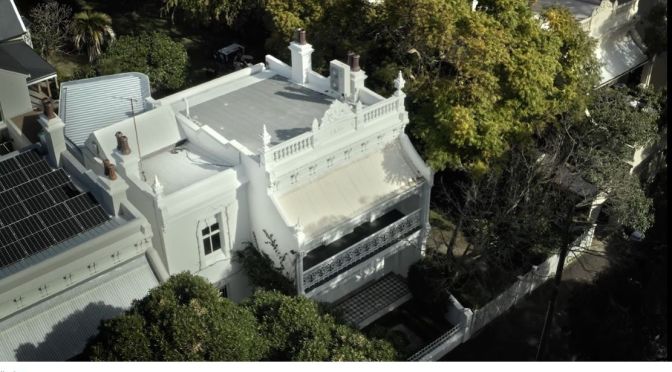
Located on a corner site of Clifton Hill, Northside House is an existing heritage home that once housed an Italian plasterer and showrooms. However, with carefully considered alterations and additions, the dream house becomes a space for private family dwelling that also opens to the surrounding community. From the front of the Federation-era home, the house tour leads guests past the principal bedrooms and bathrooms of the original home.

Wellard Architect’s alterations and additions become evident with the double-height hallway that marks the transition between the old and new. Located upstairs is a lounge and study, which offer a warm and light-filled retreat where one can find some privacy in a busy household. On the ground floor, the living and dining spaces have been subtly zoned so no space feels too cavernous. From the blonde timber walls and ceiling to the terrazzo flooring, the dream house encompasses a natural form of living.

Desiring a cosy interior, the clients and Wellard Architects worked closely in the selection of decor, furniture, finishes and fixtures for the interior space. During these project development stages, Artedomus was approached for its robust materials that would fit the brief of a busy family’s dream house. In the ensuite bathroom, porcelain tiles from Portugal infuse warm tones, while the vanity and basins use Travertine Zena and INAX tiles to establish calmness throughout.

Additionally, the main bathroom uses Verde Bardini granite and Fiandre Maximum porcelain tiles which meld with the selected Agape Vieques steel bath that sits sculpturally in the centre of the bathroom. Flowing throughout the rest of the dream house, Artedomus products can also be appreciated in the generously-sized kitchen, where Nerofino Brushed Quartz has been employed for the splashback.

Alongside the creation of a cosy atmosphere, the kitchen further instils the clients desire to have a home that can be used for entertaining – with space for intimate family cooking or a gathering of friends and neighbours. Opening up to the back garden courtyard, the orange-bricked façade of the garage seamlessly balances the terracotta shingles of the dream home and merges the heritage home with the modern additions.

Home Design: Pavilion House In Avalon, Australia

The Local Project – An interior designer’s own holiday home, Pavilion House reflects a studious approach to the relationship between architecture, landscaping and the internal environment. Crafted by Nina Maya Interiors and Maya Sternberg Architects, the home captures an escapist experience using an array of sculptural forms.

Video timeline: 00:00 – Introduction to the Interior Designer’s Family Holiday Home 00:35 – Introduction to Nina Maya Interiors 00:55 – The Location of the Home 01:11 – A Brief Based Around That Holiday Feeling 01:47 – Pavillion Style Architecture 02:06 – A Walkthrough of the Home 02:23 – Evoking a Ubiquitous Feeling 02:43 – The Connection Between Indoor and Outdoor 03:15 – The Landscape Architecture 04:05 – A Light-filled Home 04:27 – The Hand Carved Coffee Table 05:14 – Organic, Round Soft Forms 05:34 – Nina’s Favourite Features

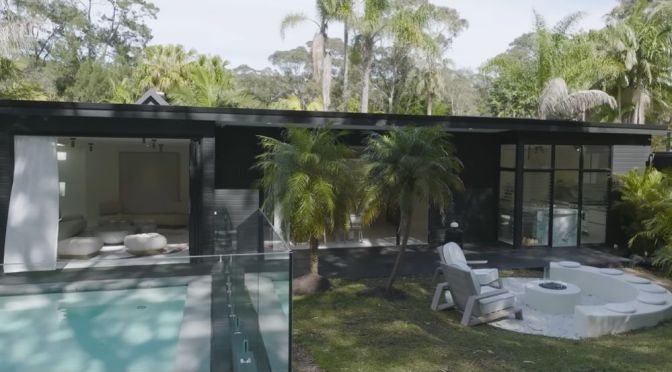
Situated in Avalon, a coastal suburb of Sydney, Pavilion House stands as an interior designer’s own holiday home, settled in close proximity to the beach. As the beach house sits far back on a 1000 square-metre block, a house tour of the residence begins with a sense of land, space and privacy reminiscent of a luxury hotel. Architecturally, the building champions a pavilion style with an orderly spatial layout and front façade comprised of glass.

Entering Pavilion House, occupants find the kitchen and dining room, followed by the living quarters and, further back, all bedrooms and bathrooms. As an interior designer’s own holiday home, the residence effortlessly proposes a luxury living experience influenced by hotel designs from around the world. A seamless connection between indoor and outdoor space is maintained using doors which stack to their sides – opening the home to the external environment – and a sophisticated treatment of landscape.

Balancing aesthetics and functionality, Pavilion House is a prime example of an interior designer’s own holiday home. Having excavated a large portion of the front of the property, Nina Maya Interiors builds a refined outdoor dining area surrounded by palm trees, white pebbles and a custom marble table. In addition, the landscape features a firepit area and outdoor spa space, complete with a bar, vanity, free-standing bathtub and rain shower. The lighting of Pavilion House also nods towards its status as an interior designer’s own holiday home. In the lounge, a continuous skylight runs seven metres across the length of the room, inviting natural light to play across the plaster wall.

Raw finishes combine with a restrained colour palette to enhance the calming quality of the sunlight and sculptural furniture within the interior design. Exuding a sense of relaxation, Pavilion House is an uplifting iteration of an interior designer’s own holiday home. Nina Maya Interiors forges a strong connection between both the internal and external aspects of the home, establishing a coherent place of retreat.

Architecture Tour: Grove House In Sydney, Australia

The Local Project = Located in Sydney’s east, Grove House is a garden home that possesses a sense of community through its connection to the shared grove between the surrounding heritage houses. Supplying architecture and interior design, Clayton Orszaczky delivers a family home that wraps around its occupants like a cocoon.

Video timeline: 00:00 – Introduction to the Inner-City Garden Home 00:27 – The Architects 00:47 – Preservation of the Heritage Aspects of the Home 01:02 – A Walkthrough of Grove House 01:44 – The Clients 02:09 – Connecting to the Garden 02:27 – The Grove, A Community Garden 02:54 – The Landscape Designers 03:06 – A Contrast Between Old and New 03:34 – The Use of Concrete 04:06 – The Key Relationship Between Form and Lighting 04:30 – The Architects Favourite Moments

As the house tour begins, the desire to keep the original fabric of the house – while sensitively connecting to the new additions – can be seen through each design choice of the garden home. Inside, a careful consideration of materials and space has been infused from the original formal rooms to the dining and family living room and into the extensions.

However, it is the original timber staircase greeting guests from the entrance that establishes a graceful connection between the original home and new additions. Directly responding to the clients’ desire to connect to the gardens and grove beyond, Clayton Orszaczky encourages the new additions of the garden home to directly respond with the original fabric. A core aspect of the home, the kitchen and dining space connects to the gardens through large glass doors and windows which directly draw in both northern and eastern light.

A further dialogue between the existing home and the new was addressed by specifically choosing to emphasise the contrast of eras through the use of off-form concrete, steel windows, timber veneer, black porcelain and modern furniture. Collaborating with Tanya Wood Landscape Architect on the ground level and roof garden design, Grove House establishes a renewed connection between home and garden. Looking at the garden home from the grove, it can be seen that the soft form of the exterior contributes to the grove and the shared community space.

Continuing the house tour from the back fence to the shared grove, an immediate connection with the landscape, surrounding greenery and neighbours can be experienced. Throughout the house tour, the transition between the existing and new areas of the garden home are seen through the proportional ratios. Specifically choosing to speak to this dialogue between old and new additions, Clayton Orszaczky has used concrete for mass – similarly to how masonry was used in the original home.

Additionally, continued references to the terrace house form is seen within the new additions and the renewed relationship between light and form further contributes to the connection within the home and to the garden and grove.

Tours: Lower Shotover House In New Zealand

The Local Project – In crafting Lower Shotover House, the architect designs a hidden home that offers a dramatic interior landscape to complement the impressive external context, ensuring it was built for residing in place. Crafted by Bureaux, the home embraces a natural materiality as the means to connecting to the outdoors.

Video timeline: 00:00 – Introduction to the Hidden Home 00:26 – Bunkering Into the Side of the Hill 01:00 – The Materials Used 01:40 – The Importance of Creating A Robust Home 02:10 – The Soft Pools of Light Throughout the Home 02:30 – Creating a Warm and Dramatic Feel 02:58 – The Building Aspect 03:29 – The Views from the Upstairs Bunk Room 03:51 – The Green Roof 04:17 – A Dramatic Kitchen 04:29 – Finding Joy in the Movement Between the Tight Spaces 04:51 – Creating A Timeless Masterpiece

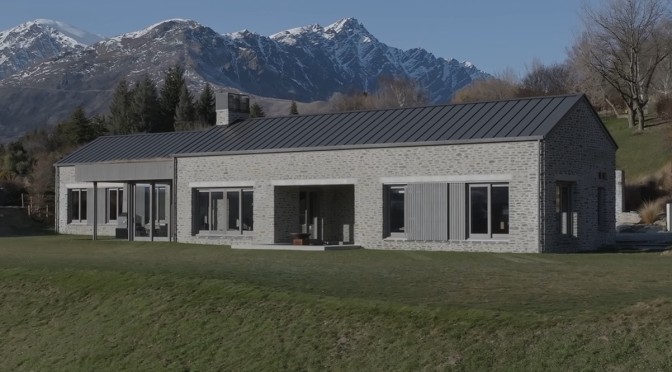
Based in Queenstown, Lower Shotover House faces north, overlooking the Shotover River and Coronet Peak. The architect designs a hidden home that takes inspiration from the old musterer’s huts settled on the mountainside. Capitalising on the protective quality of the hill, the structures look out upon the landscape with a feeling of safety. Importantly, the architect designs a hidden home that utilises a stone composition and a house tour reveals the resulting echo of the rugged surrounds, as well as the proposition of permanence.

In materiality, Lower Shotover House reflects a playful interpretation of the natural context. The architect designs a hidden home that sees stone, black travertine and charcoal timber interior linings combine to establish a cosy interior design. Crafted in recognition of the clients’ lifestyle, Bureaux enforces a robust material palette that can withstand the markings of an active family in a timeless fashion. A dramatic home, Lower Shotover House features rich timber walls, carefully framed windows and pools of soft lighting.

The architect designs a hidden home in which residents are led through the interior with ease; a project where nothing is over-lit and the architecture captures both the compression and expansion of space. Residents must ascend a step in order to enter the kitchen, suggesting an element of theatricality within the experience of the home. As the architect designs a hidden home, they consider the relevance of orientation to the outcome. Lower Shotover House faces north and, as such, measures are put into place to retain heat and maximise the impact of the sweeping views.

While stone walls and a green roof influence the thermal quality of the building, doors measuring three metres high can be pushed back in order to control the thermal climate of the interior. The green roof also engages the surrounding hillside mass, blurring the boundary between landscape and home. Immersing occupants in the mountainside experience, Lower Shotover House forms the ideal place of retreat. Through a process of consideration, the architect designs a hidden home that, though contemporary, is ultimately defined by a prevailing sense of timelessness.

Home Design: Curl Curl House, Sydney, Australia

Afforded the freedom of an open design concept, interior design practice Folk Studio crafts Curl Curl House. Showcasing the collaborative work of architectural practice TRIAS, the magical home captures the spirit of the Australian coast.

Video timeline: 00:00 – An Introduction to the Magical Home 00:38 – The Collaboration of Folk Studio and TRIAS 01:51 – Adding Intentional Gestures to the L-Shaped Floor Plan 02:32 – A Beach, Bush and Coastal Palette 02:51 – Watching Visions Come to Life 03:22 – Having the Garden as an Integral Piece of the Design 03:46 – Seeing Green from all Areas 04:11 – The Hit and Miss Brickwork Screens 04:38 – Creating a Sanctuary and an Oasis for the Clients 04:58 – Finding Joy in the Client’s Comfort

Settled into Curl Curl, the coastal suburb of Sydney located just north of the Central Business District, the same-named house reflects its immersive environment. The natural character of the local context sees bush meet coast and a beachside lifestyle cohere with suburban influence. Upon accepting the design project, Folk Studio promptly met with architectural firm TRIAS in order to solidify the creative vision – a residential sanctuary – and ensure that the architecture and interior design of the home work together to form the ideal domestic experience.

Featuring an L-shaped spatial plan, Curl Curl House encloses a collection of communal zones on its ground floor, including a living room on each end. The position of each living room marks a change from the spatial arrangement of a typical house, which sees kitchen, living and dining spaces continue on from one another. Purposefully located, the living rooms function as calming areas within the magical home, removed from the bustle of the communal zones.

Inspired by the Australian beach, bush and coast, the aesthetic palette of Curl Curl House reflects a sense of natural serenity, enhanced by contrasting injections of brickwork that pay homage to the suburban context. Integral to the design of the magical home is the garden space growing along its perimeter. As a result of TRIAS condensing the architecture of the home, the garden space is maximised and enables a natural vista to be accessed from every room of the house.

Hit-or-miss brickwork screens adorn the upper levels of the façade, intercepting the incoming natural light to create shifting visual patterns within the magical home. Achieving a residential oasis, Folk Studio and Trias craft a magical home that serves as an escape from the hectic nature of everyday life. Curl Curl House stands as a residence in which its owners can take pride, rewarded by the sense of careful curation permeating the dwelling.

Tours: Light Mine House In Northern New Zealand

Sitting above the dunes on a plateau, Light Mine is an extraordinary home by Crosson Architects that embraces expansive views of the Coromandel Peninsula. Entering from the southern end of the house, the Light Mine house tour unfolds like a book, seeing Crosson Architects offer a carefully planned story from beginning to end.

Video timeline: 00:00 – Introduction to the Extraordinary New Zealand Home 00:43 – An Extraordinary Site 01:12 – A Choreographed Journey 01:30 – The History Behind the Gold Mining 02:10 – The Light Shafts 02:48 – Tying the Material Palette into Context 03:02 – Cladding Built From the Land 03:32 – Moulding and Blending into the Location Overtime 03:48 – The Extraordinary Craftsmanship 04:33 – A Reference to the Interior of a Gold Mine 05:08 – The Variations of Light Quality

Separated into interconnecting pods, Light Mine is a single level family home that takes inspiration from the dunes and headlands behind and becomes a unique structural form for future generations to enjoy. In designing the home, Crosson Architects looked to the gold mining history of the area, finding inspiration from a historical drawing of a gold mine shaft. As such, the architects have designed a series of geometric pods. Serving as unique structural elements, these inserts work together to break up the horizontal design of the extraordinary home.

Embraced by the clients after many conversations with Crosson Architects, the diagonal inserts offer a sense of scale and character to the home that relates to the surrounding landscape. From within, the diagonal shafts bring a playful and unique movement of light that instils changing characteristics; placed strategically over the living and dining areas, they offer variations of light as the sun shuffles through the extraordinary home.

Notably, the light shaft in the main bedroom offers glimpses of the night sky, capturing the Milky Way and stars above. Understanding that the extraordinary home needed to meld and blend into its surroundings over time, Crosson Architects has used reclaimed local native tōtara timber for the exterior cladding, enhancing the home’s horizontality and settling it into its surrounds. Overall, a cohesive approach to colour and materiality ensures the home reflects the surrounding landscape. Dark timber has been employed on the exterior, referencing the rock of the headland behind; inside, the use of light timber speaks to the sand dunes beyond.

The band sawn timber used extensively throughout the interior design creates a warm reprieve from the outside. In contrast, the kitchen and bathrooms feature dark timber veneer, which also nods to the gold mines while creating visual interest in each internal space. Challenged to design something that was both memorable and laid back, Crosson Architects has delivered an extraordinary home, which references Light Mine’s historical context and incorporates the changing colours of the day to emphasise its unique character.