Tag Archives: The Guardian Weekly

Politics: The Guardian Weekly – May 19, 2023

Image

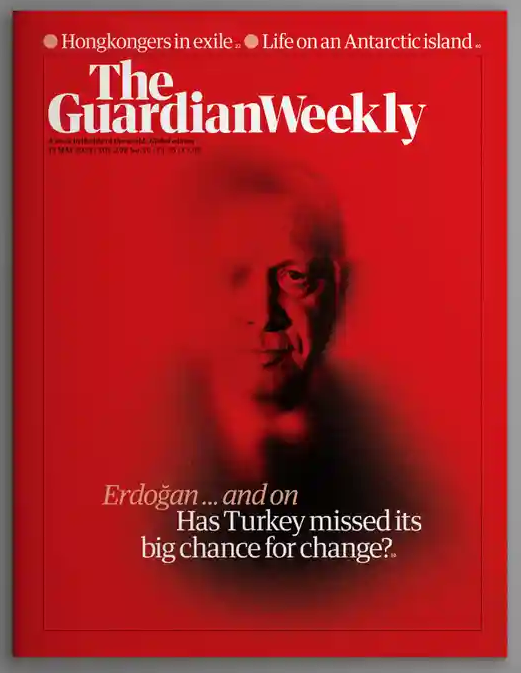
The Guardian Weekly (May 19, 2023) – This week’s issue considered the end of Recep Tayyip Erdoğan’s long political career. But it soon became clear that predictions of the Turkish president’s demise had been greatly misjudged. A first-round victory over his secular opponent, Kemal Kılıçdaroğlu, did not come by a wide enough margin to prevent a runoff vote on 28 May. But, barring a remarkable swing back to Kılıçdaroğlu, the indications are that Erdoğan will further extend his 20-year authoritarian brand of rule over Turkey.

As Ukraine’s president, Volodymyr Zelenskiy, toured European capitals to drum up support this week, speculation continued over when and where Ukraine’s long-anticipated counteroffensive against Russian forces would begin – or if indeed it had already done so. From Kherson, Luke Harding hears from a frontline commander why Kyiv is happy to bide its time, while defence editor Dan Sabbagh outlines four possible scenarios in which a Ukrainian counterattack might develop.

Two environmentally slanted features bring fascinating insights into very different parts of the world. From Kenya there’s the uplifting story of the waste picker who is lobbying for his colleagues’ working rights to be enshrined in a UN treaty. Then, John Bartlett reports from Antarctica on how the climate crisis, geopolitical tensions and booming tourism are straining relations at a remote scientific research station.
Politics: The Guardian Weekly – May 12, 2023

Image

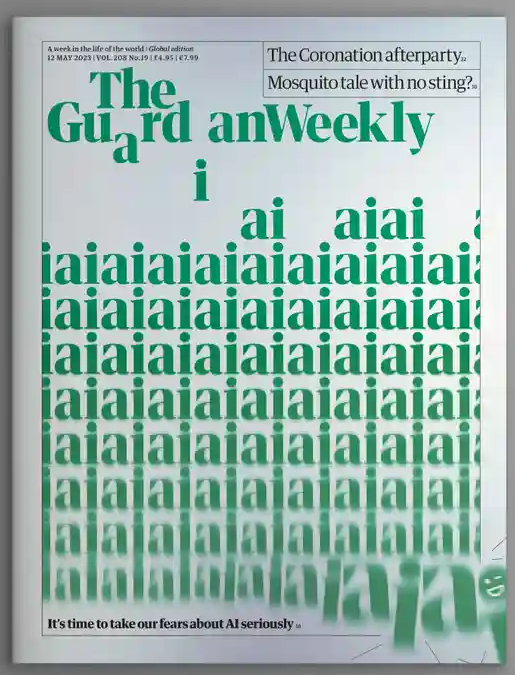
The Guardian Weekly (May 12, 2023) – The name Geof frey Hinton was little known outside the tech industry until last week, when the so-called “godfather of AI” gave an interview after leaving Google in which he warned that machine learning is leading us into uncharted territory.

So is now the time to get properly frightened about the capabilities unleashed by machine learning? Technology writer John Naughton in this week’s big story says an unequivocal yes as he explores a worrying near future, and what prompted Hinton to speak out. 

Britain spent last weekend watching avidly or determinedly avoiding the exuberant display of ancient ceremony around the coronation of King Charles III. Our coverage takes a fondly amused look at all the pageantry, personalities and gold braid with Rachel Cooke, while columnist Nesrine Malik unpicks the game of divide and rule, display and disguise through which the institution hangs on to popular support. We also visit Belize to find out how arguments about reparations for slavery are linked to its relationship to the British crown.

Politics: The Guardian Weekly – May 5, 2023

Image

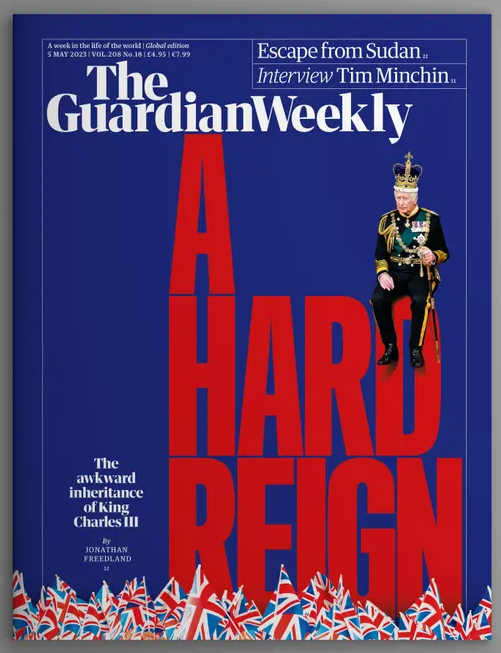
The Guardian Weekly (May 5, 2023) The awkward inheritance of Charles III. Plus: Ukraine readies for the counter-offensive

Seventy years have passed since Britain last held a royal coronation. But, with polls suggesting public support for the monarchy is at a historic low, Charles’s big day this weekend comes at a moment when Britain feels more generationally divided than ever.

At 74, Charles is the oldest person ever to be crowned as a new British king. Opinion polls suggest 78% of the nation’s over-65s still strongly support the monarchy. But, in the 18-24 age bracket, enthusiasm dips to just 32%.

As Jonathan Freedland argues in an essay for our cover story this week, the new king faces an uphill challenge to establish his own legacy in the shadow of his mother, Elizabeth II, “who, even the staunchest republicans had to admit, barely put a foot wrong over seven decades”. Can he really offer a compelling vision to reunite the realm, and should he even try? It may be that his best hope is simply to lay the foundations for the next generation.

A calm before the storm has been felt in Ukraine ahead of a widely expected counter-offensive on the frontline with Russia. Emma Graham-Harrison and Artem Mazhulin report on a critical moment looming for the country and the war.

Politics: The Guardian Weekly – March 31, 2023

Image

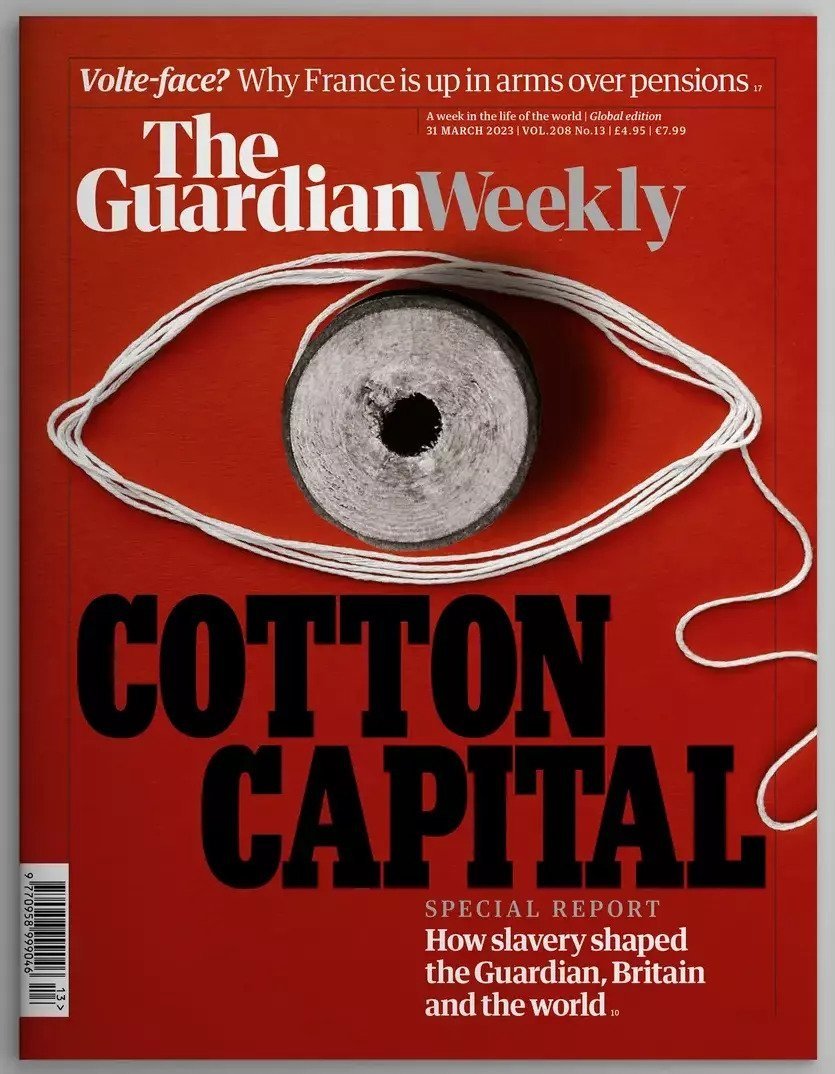
The Guardian Weekly (March 31, 2023) – This week sees an important moment in the history of the Guardian with the launch of Cotton Capital, a series revealing the links between the 19th-century Manchester founders of the newspaper, the transatlantic cotton industry and the enslaved labour upon which the trade was built.

In France, national protests against the proposed increase to the pension age have become so inflamed that a state visit by Britain’s King Charles had to be postponed. Kim Willsher reports on a wave of anger and how women are at the forefront of the demonstrations.

As if life wasn’t pressurised enough already for top-level football referees, the advent of video assistant technology only seems to have made the job even harder than ever, leading to a slew of controversial decisions. From hotel breakfasts to being holed up in front of TV monitors, William Ralston goes behind the scenes with the men and women in black.

On the Culture pages, there’s also a great interview with the indie supergroup Boygenius, whose band members Phoebe Bridgers, Lucy Dacus and Julien Baker talk to Laura Barton about songwriting, friendship and group therapy.

Politics: The Guardian Weekly – March 24, 2023

Image

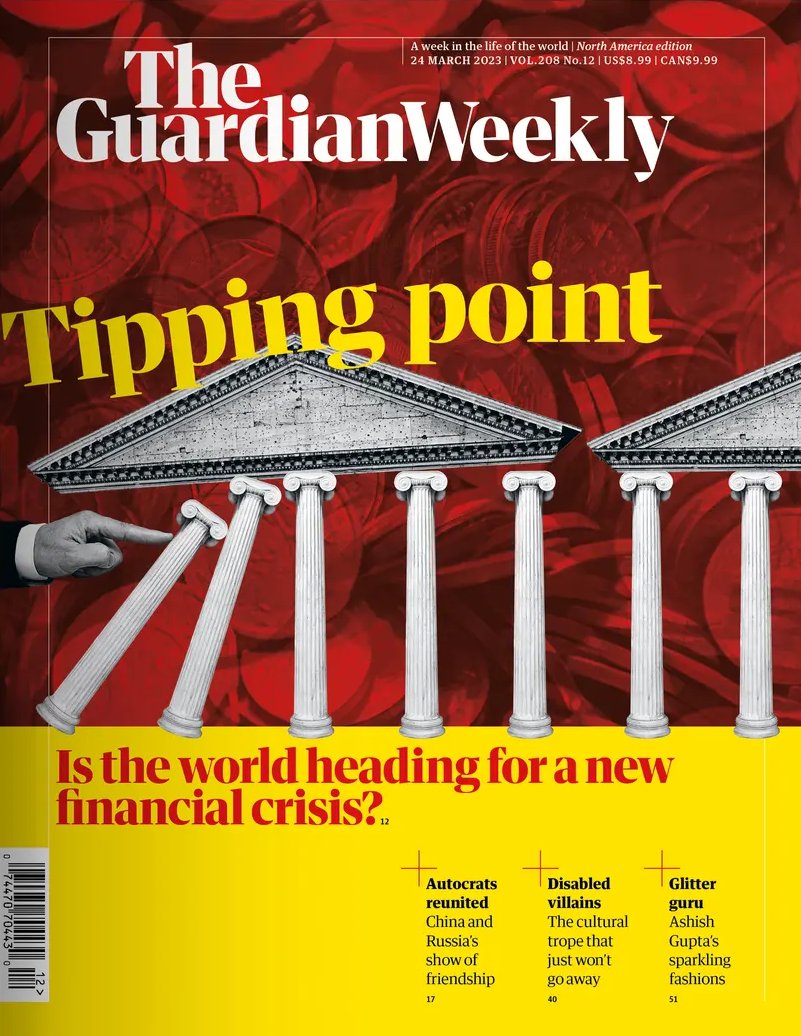
The Guardian Weekly (March 24, 2023) – You’d be forgiven for having allowed the collapse of the tech industry lender Silicon Valley Bank, earlier this month, to pass you by. Even the news that SVB’s UK operation had been salvaged in a deal brokered by the British government might not have registered too much. But the rescue this week of Switzerland’s second-largest lender Credit Suisse had a more ominous feel to it, a sense of fiscal dominoes cascading slowly into one another.

For our big story this week, Anna Isaac and Kalyeena Makortoff report on a week that brought back anxious memories of the 2008 financial crash, while economics editor Larry Elliott argues that only the era of ultra-low interest rates that followed the previous crash has prevented a further correction happening sooner.

Chinese president Xi Jinping’s visit to Russia this week had the feel of a pivotal moment for global diplomacy. Russian affairs reporter Pjotr Sauer and senior China correspondent Amy Hawkins look at what the strengthening of the Sino-Russian alliance signifies for Moscow, Beijing and the rest of the world.

This week also saw the 20th anniversary of the US invasion of Iraq. Diplomatic editor Patrick Wintour reflects on a botched intervention that still haunts global politics to this day, while on the Opinion pages Randeep Ramesh argues that the US foreign policy debacle still serves to underline what he describes as “the capricious and self-centred nature of American global power”.

Politics: The Guardian Weekly – March 17, 2023

Image

The Guardian Weekly (March 17, 2023)

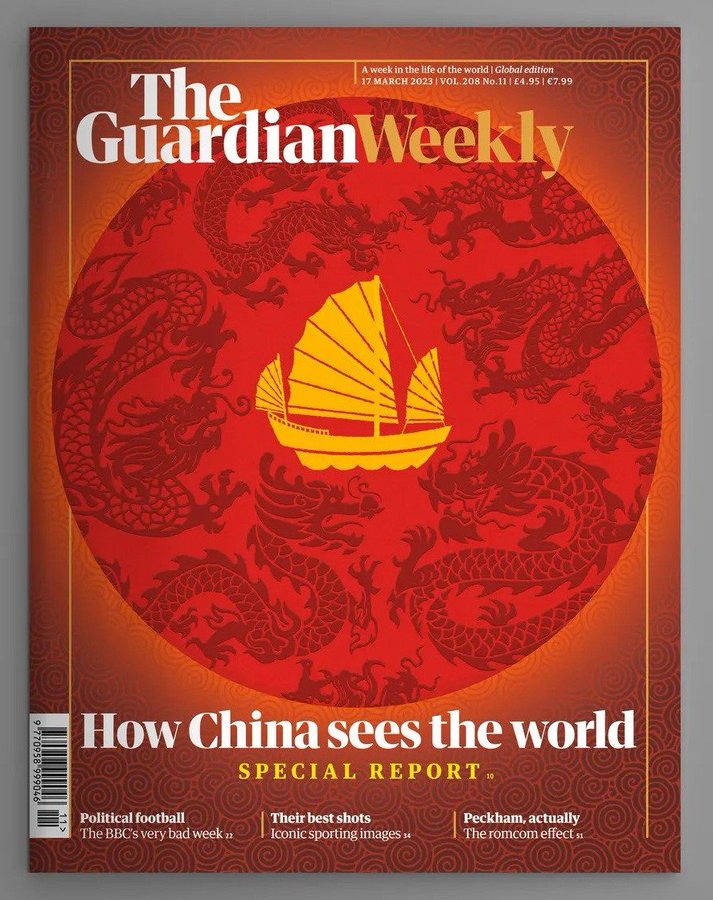
In his closing speech at China’s annual parliamentary meeting on Monday, Xi Jinping, the country’s most powerful leader in generations, had an ominous message for his people and for those listening beyond its borders. “After a century of struggle, our national humiliation has been erased … the Chinese nation’s great revival is on an irreversible path,” he warned.

The UK was gripped this week by a saga that started off about controversial government plans to deter migrants crossing the Channel in small boats, and ended with Gary Lineker, host of the BBC TV football highlights show Match of the Day, being taken off the air. We reflect on a furore that revealed much about the contradictions of modern Britain.

From the buzzer to the finish line, the finest sports photography reveals human achievement and emotion at the extremes. In a feature special this week, Simon Hattenstone talks to award-winning Guardian sports photographer Tom Jenkins about capturing the perfect picture – followed by 20 of the most iconic sports pictures ever taken and the stories behind them.

Previews: The Guardian Weekly – March 10, 2023

Methane leaks: inside the 10 March Guardian Weekly | Climate crisis | The  Guardian

The Guardian Weekly (March 10, 2023)

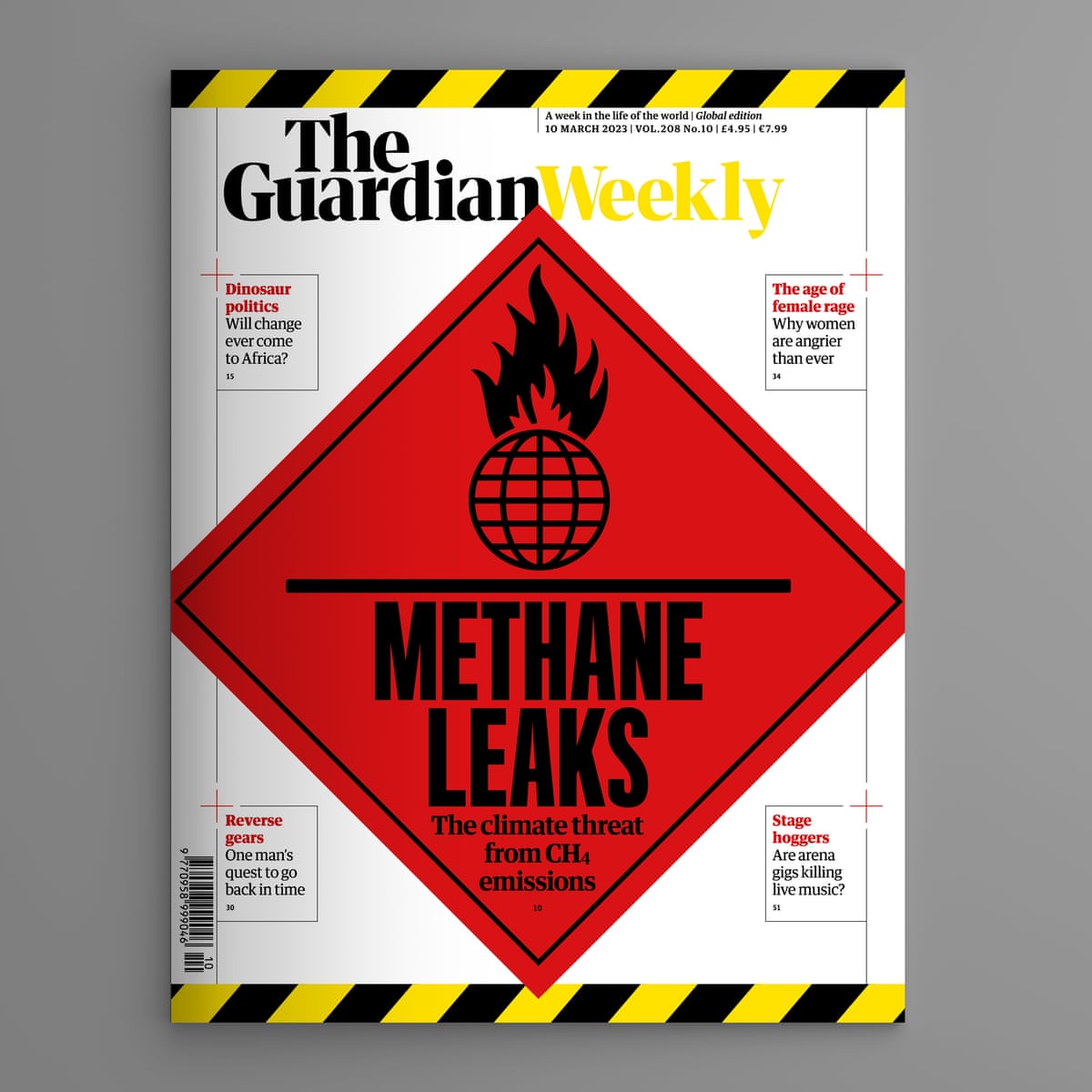
It’s no secret that methane is one of the most potent greenhouse gases, with scientists attributing 25% of global heating to its atmospheric release. A new Guardian analysis by environment editor Damian Carrington lays bare the extent of the problem, identifying more than 1,000 of the world’s worst emitters.

But methane is also a double-edged sword: while it traps 80 times more heat than carbon dioxide, it fades from the atmosphere in about a decade, far faster than the century or more taken by CO2, which is why urgent action to tackle leaks would be so effective in the push to limit global heating. Find out more in Damian’s Big Story report for us this week.

Previews: The Guardian Weekly – March 3, 2023

The ruin of Mariupol: inside the 3 March Guardian Weekly | Ukraine | The  Guardian

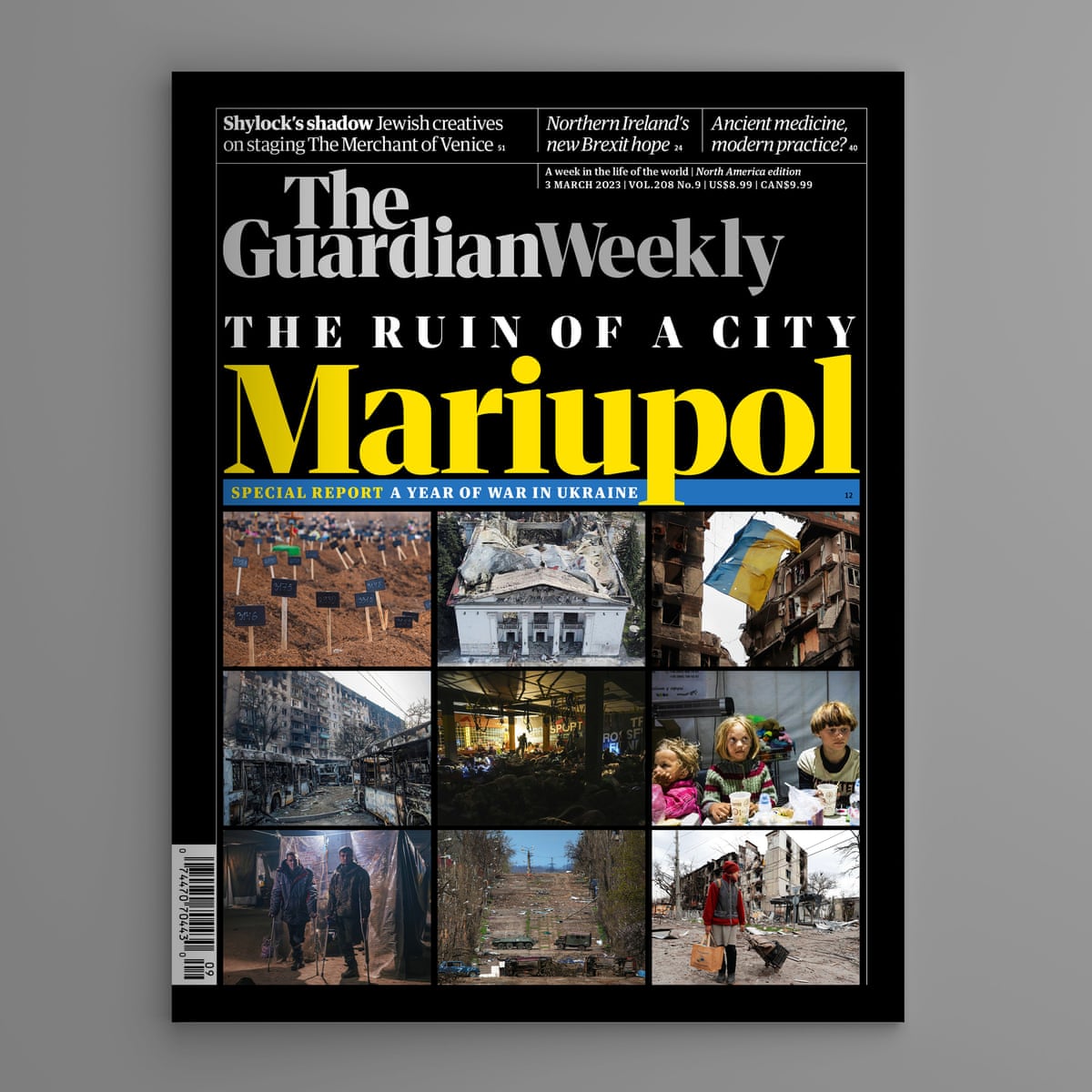
The Guardian Weekly (March 3, 2023) – A year on from the invasion of Ukraine and there seems little end in sight to a conflict that has, unquestionably, changed the world. The Guardian Weekly’s big story this week outlines five possible routes to peace (some more hopeful than others), but the main focus is a stunning collaboration from Guardian reporters detailing the fate of the port of Mariupol, the battle for which has perhaps been the bloodiest and most shocking chapter of the war to date.

It’s an extraordinary account of the devastation, partial reconstruction, and Russification of a thriving city. “You learn to only voice your opinions with those you know you can trust,” says Darya, a student opposed to the occupation. “Otherwise, you keep your thoughts to yourself.”

On Monday the UK government finally agreed a deal with the EU to end a long-running Brexit dispute over customs arrangements and legal oversight in Northern Ireland. Our Brexit correspondent Lisa O’Carroll unpicks the key points of the new agreement and what it means for the region.

In 2003, when the US army occupied Iraq after the fall of Saddam Hussein, the Guardian writer Ghaith Abdul-Ahad was aged 28 and living in Baghdad. He recounts his front-row view of the fall of the regime, the arrival of the so-called liberators and the unfolding of a sectarian war.

Previews: The Guardian Weekly – February 24, 2023

Image

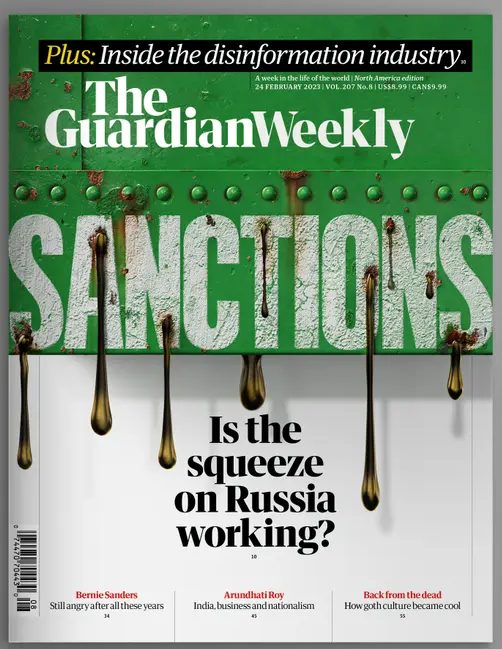
The Guardian Weekly 24 February 2022 – exactly a year since the date of this week’s Guardian Weekly magazine – Vladimir Putin unleashed his brutal offensive on Ukraine. As our senior international affairs correspondent, Emma Graham-Harrison, wrote in the following day’s Guardian newspaper: “The continent awoke to the shock of scenes it once believed it had left in the 20th century: helicopters strafing homes outside the capital, long lines of tanks ploughing ever deeper towards Ukraine’s heartland, roads choked with refugees, and civilians huddled in underground stations to escape bombardment.”

Much has been written since then about the state of the war and how it might end, but this week we focus on a key plank of the west’s response: the wide-ranging economic sanctions against Moscow that it was hoped would throttle Putin’s war effort.

Previews: The Guardian Weekly – February 10, 2023

Image

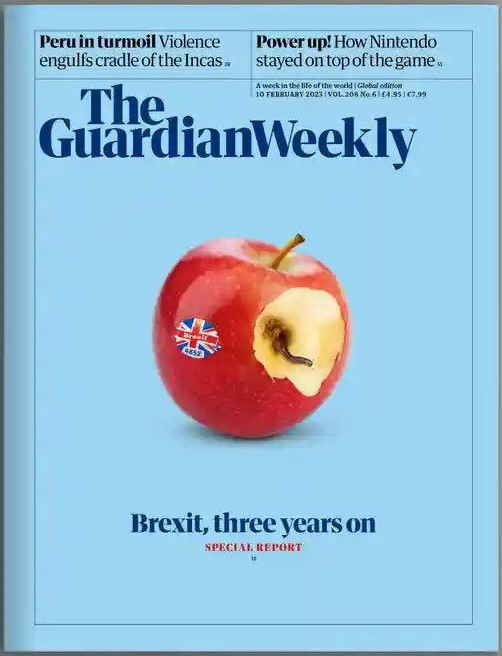
The Guardian Weekly (February 10, 2023) – Three years have passed since Britain officially left the European Union, but the country feels a long way from the “sunlit uplands” once memorably envisioned by Boris Johnson. Indeed, according to several polls released last week, more of the British population than ever are unhappy with the outcomes of Brexit – including, crucially, those who voted for it in the first place.

The Observer’s Michael Savage and Toby Helm consider what’s behind the upsurge in “Bregret” and ask what realistic hopes exist of Britain ever returning to the bloc. Then, opinion writer Nesrine Malik warns that, while many on the left may see validation in the current trends, it’s important to understand many of the UK’s structural problems stem from before the time of the Brexit referendum in 2016.