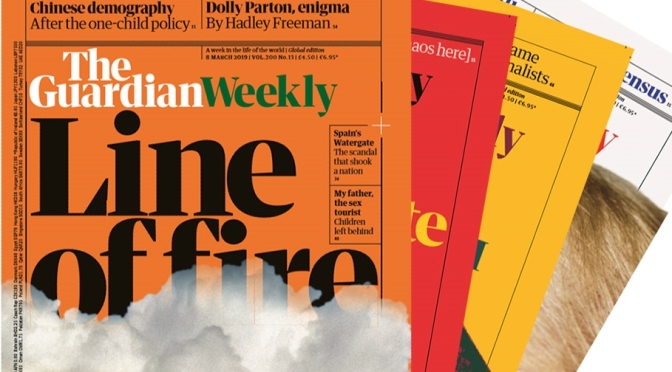
The Guardian Weekly (October 2, 2024) – The new issue features ‘ 7 OCTOBER 2023’ – The day that changed the world. The Anniversary foreshadows a region on the brink. Plus: the shapeshifting Giorgia Meloni.
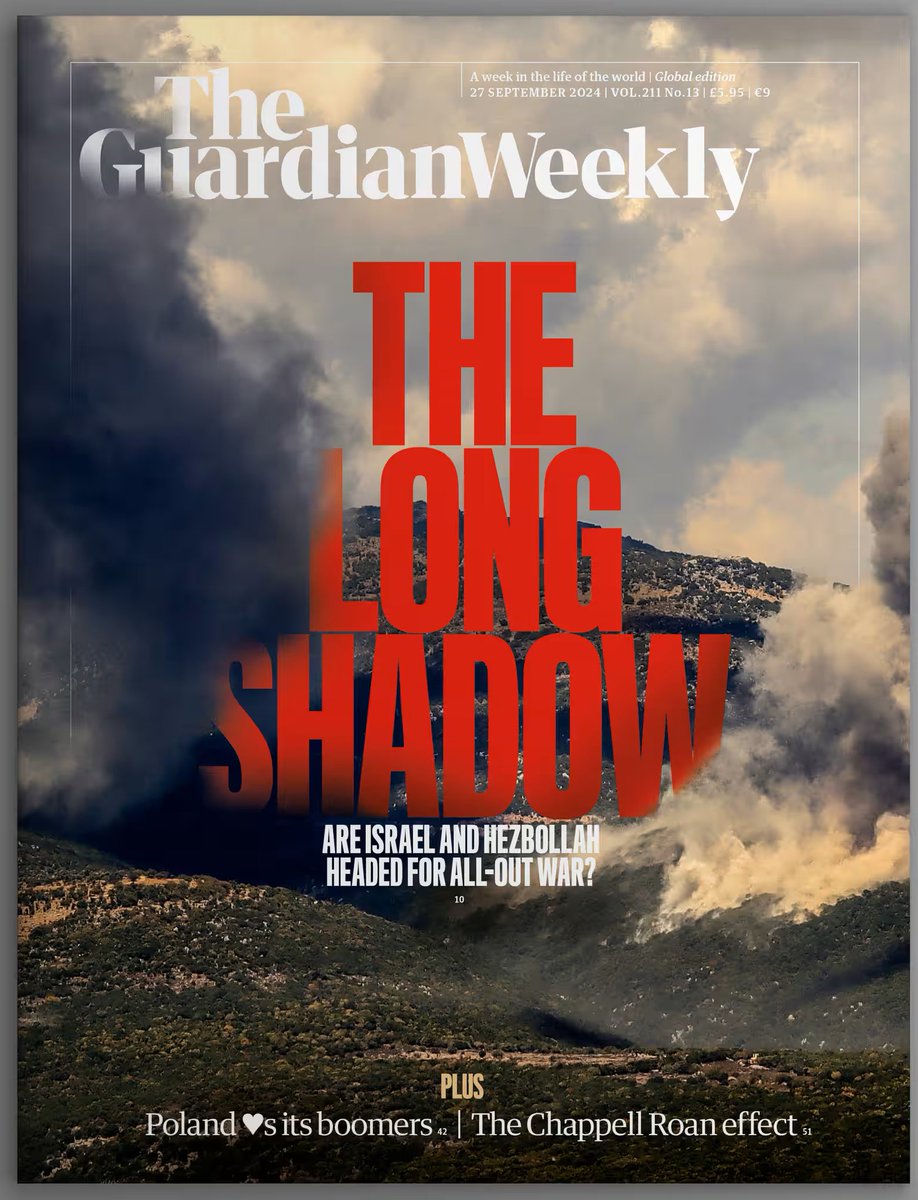
Events in the Middle East were moving so rapidly this week that the stunning assassination of the Hezbollah leader Hassan Nasrallah in Beirut last Friday, killed by an Israeli heavy bombing raid, already feels quite distant. By Tuesday morning Israeli forces had launched what was called a “limited, localised and targeted” ground operation against Hezbollah in southern Lebanon. Hours later, Iran responded with a barrage of ballistic missiles aimed at targets across Israel.
To put things in some kind of perspective, the coming week also marks the first anniversary of Hamas’s attack on Israel, setting in motion the brutal chain of events leading to the deaths of more than 41,000 Gazans by Israeli bombing, last week’s dramatic events in Lebanon and Iran’s military response which many now fear leaves the region close to full-blown war.
Five essential reads in this week’s edition
1
Spotlight | The ‘marriage competition’ that divided South Sudan
Underage marriage is illegal in South Sudan yet so commonplace it rarely attracts attention. But the case of Athiak Dau Riak, who her mother says is only 14, has gone viral, polarising her family and the country. From Juba, Florence Miettaux reports
2
Science | Telescopes that could save us from death by asteroids
The existential threat from a large meteor is real, but two next-generation telescopes are about to make us safer, writes Robin George Andrews
3
Feature | The shapeshifter: who is the real Giorgia Meloni?
She’s been called a neo-fascist and a danger to her country. But the Italian prime minister has won over many heads of Europe. Should we be worried? By Alexander Stille
4
Opinion | Trump v Harris and a battle between the sexes
There are clear reasons why women are running from Trump, but men are flocking to him – and it’s vital to understand why, argues Jonathan Freedland
5
Culture | Will Ferrell’s road trip of trans discovery
Saturday Night Live writer Harper Steele came out as a trans woman in 2022 at the age of 61. Her friend of 30 years Will Ferrell had questions. So what else to do but jump in a van, cross the US, and make a documentary about it? Guy Lodge reports











 Boomers Daily