Costa Rica is a rugged, rainforested Central American country with coastlines on the Caribbean and Pacific. Though its capital, San Jose, is home to cultural institutions like the Pre-Columbian Gold Museum, Costa Rica is known for its beaches, volcanoes, and biodiversity. Roughly a quarter of its area is made up of protected jungle, teeming with wildlife including spider monkeys and quetzal birds.
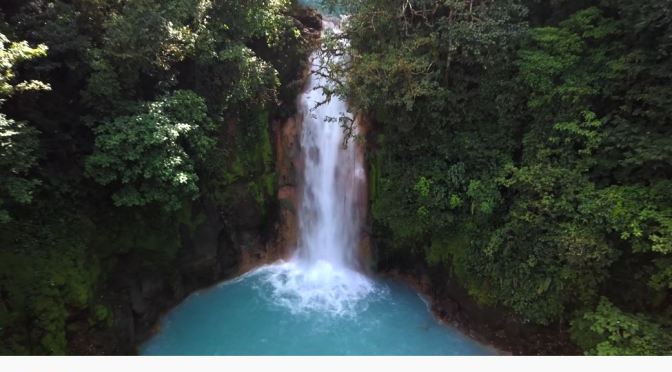
Video timeline: 0:00 intro of costa rica 0:03 Yellow snake curled 0:06 Aerial view of irazu volcano 0:08 Snake python 0:11 Cinematic view of oak tree 0:16 Close up view of iguana 0:22 skydiving in Costa Rica 0:26 nauyaca waterfalls 0:31 galloping horse 0:39 Aerial view of pavon bay 0:46 waterfall rio celeste 0:50 Close up iguana 0:53 Drone view of palm oil 0:58 tree frog 1:01 Trachycephalus 1:04 Montezuma Beach 1:09 Oka tree 1:13 naped snake 1:18 Blue Yellow Macaw 1:23 Green Python 1:28 Rio celeste waterfall 1:35 meanders river 1:45 Bilobatum 1:49 punta banco Beach 1:57 irazu volcano 2:05 Close up view of butterfly 2:08 Corcovado 2:13 Playa Zancudo 2:21 manuel antonio 2:32 Green iguana 2:46 tortoiseshell 2:59 Costa Rica rainforest 3:05 quetzal Bird 3:11 Sloth 3:16 Irazu volcano 3:22 paragliding 3:29 skydiving 3:34 la paz waterfall 3:43 whales 3:50 Coto river Aerial view 4:02 Aerial costarica 4:10 Beautiful parrots 4:18 Forest Frog 4:25 Rain forest 4:29 iguana 4:35 Wild lizard 4:40 flamingos 4:47 capucinus 4:55 Rain forest 5:02 capuchin 5:09 Violetear
Your ability to find your way may depend on where you grew up and how coastal storminess is changing.
00:47 Your ability to find your way may depend on where you grew up
Researchers have long been trying to understand why some humans are better at navigating than others. This week, researchers show that where someone grew up plays an important role in their ability to find their way; the more winding and disorganised the layouts of your childhood were, the better navigator you’ll be later in life. Research article: Coutrot et al.
Coastal flooding causes billions of dollars in damage each year. Rising sea levels are known to be a key driver, but the importance of another factor, storm surges, is less clear. Typically after accounting for increasing sea level, they’re not thought to make much of an impact. However new research suggests that this may not be the case. Research article: Calafat et al.
Inoculation or testing requirements are spreading nearly as fast as the Delta variant. But it is not clear they will actually drive more people to get vaccinated.
A broad semiconductor shortage has hit plenty of industries; we examine supply-chain subtleties that have made it particularly bad for carmakers. And why Mumbai is suffering from a plague of snakes.
Online News Editor David Grimm joins host Sarah Crespi to discuss a controversial new paper that estimates how many rodents are used in research in the United States each year.
Though there is no official number, the paper suggests there might be more than 100 million rats and mice housed in research facilities in the country—doubling or even tripling some earlier estimates.
Next, Staff Writer Jennifer Couzin-Frankel talks with Sarah about a new theory behind the cause of irritable bowel syndrome—that it might be a localized allergic reaction in the gut. Sarah also chats with Taline Kazandjian, a postdoctoral research associate at the Centre for Snakebite Research & Interventions in Liverpool, U.K., about how the venom from spitting cobras has evolved to cause maximum pain and why these snakes might have developed the same defense mechanism three different times.
News, Views and Reviews For The Intellectually Curious







 Boomers Daily