

In 2019, members of the National Geographic and Rolex Perpetual Planet Everest Expedition set out to install five new weather stations on Mt. Everest, including the highest weather station on Earth. Follow along as the team climbs into the mountain’s “death zone” to complete the network of weather stations in order to improve our understanding of climate change.
Tag Archives: Science
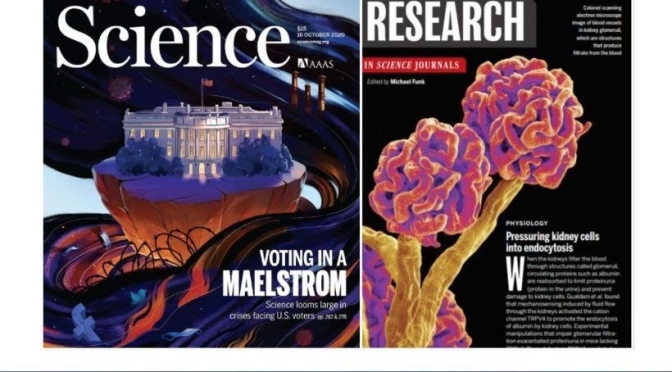
TOP JOURNALS: RESEARCH HIGHLIGHTS FROM SCIENCE MAGAZINE (OCT 16, 2020)



Science: American Indian Covid-19 Cases, Healthy Heart Diets (Podcast)

First up, host Meagan Cantwell speaks with Abigail Echo-Hawk, director of the Urban Indian Health Institute and chief research officer for the Seattle Indian Health Board. Echo-Hawk shares what inspired her journey in public health and explains the repercussions of excluding native people from health data.
This story was originally reported by Lizzie Wade, who profiled Echo-Hawk as part of Science’s “voices of the pandemic” series. Next, host Sarah Crespi interviews Danielle Murashige, a Ph.D. student at the University of Pennsylvania, about her Science paper that attempts to quantify how much fuel a healthy heart needs.
Science Podcasts: Room-Temp Superconductors, Covid-19 Mask Benefits

A high pressure experiment reveals the world’s first room-temperature superconductor, and a method to target ecosystem restoration.
In this episode:
00:44 Room-temperature superconductivity
For decades, scientists have been searching for a material that superconducts at room temperature. This week, researchers show a material that appears to do so, but only under pressures close to those at the centre of the planet. Research Article: Snider et al.; News: First room-temperature superconductor puzzles physicists
08:26 Coronapod
The Coronapod team revisit mask-use. Does public use really control the virus? And how much evidence is enough to turn the tide on this ongoing debate? News Feature: Face masks: what the data say
19:37 Research Highlights
A new method provides 3D printed materials with some flexibility, and why an honest post to Facebook may do you some good. Research Highlight: A promising 3D-printing method gets flexible; Research Highlight: Why Facebook users might want to show their true colours
22:11 The best way to restore ecosystems
Restoring degraded or human-utilised landscapes could help fight climate change and protect biodiversity. However, there are multiple costs and benefits that need to be balanced. Researchers hope a newly developed algorithm will help harmonise these factors and show the best locations to target restoration. Research Article: Strassburg et al.; News and Views: Prioritizing where to restore Earth’s ecosystems
28:40 Briefing Chat
We discuss some highlights from the Nature Briefing. This time, a 44 year speed record for solving a maths problem is beaten… just, and an ancient set of tracks show a mysterious journey. Quanta: Computer Scientists Break Traveling Salesperson Record; The Conversation: Fossil footprints: the fascinating story behind the longest known prehistoric journey

Technology: The World’s Top Science Megaprojects
Opening new frontiers, vaccinating billions and unlocking the secrets of our universe these are the world’s most incredible science megaprojects. This video is powered by Bluebeam.
See how Bluebeam Revu was used at the European Spallation Source – https://bit.ly/312O4nk

Travel & Science Videos: ‘Everest Glaciology – Truth In The Ice’ (NatGeo)
As part of the National Geographic and Rolex Perpetual Planet Everest Expedition, a team of scientists and Sherpa guides sets out to collect information about glacial change in the Himalayas. By extracting ice cores from the highest glacier in the world, the team has begun to uncover details about climate change that have – until now – been hidden in this hard-to-reach ice. The National Geographic Society uses the power of science, exploration, education, and storytelling to illuminate and protect the wonder of our world.
Learn more at http://www.natgeo.org
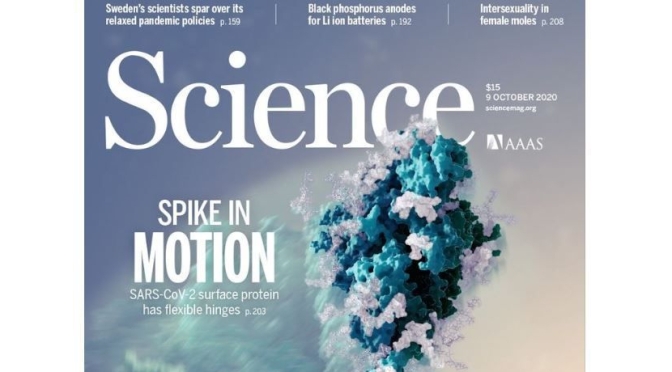
TOP JOURNALS: RESEARCH HIGHLIGHTS FROM SCIENCE MAGAZINE (OCT 9, 2020)


Extreme Sports: ‘The Art Of Skydiving’ (Video)
Skydiving is one of the most dangerous extreme sports someone can participate in. Here is some of the science behind doing it successfully.
New Science Podcast: U.S. Election Science Imapct, Trump Covid, Black Holes
A conversation about the US election and the possible fallout for science, Covid-19, black hole mergers and are maternal behaviours learned or innate?
In this episode:
00:46 US election
In the United States the presidential race is underway, and Nature is closely watching to see what might happen for science. We speak to two of our US based reporters to get their insight on the election and what to look out for. News Feature: A four-year timeline of Trump’s impact on science; News Feature: How Trump damaged science — and why it could take decades to recover; News: What a Joe Biden presidency would mean for five key science issues
12:36 Coronapod
With news of the US President Donald Trump contracting coronavirus, the Coronapod team discuss the treatments he has received and what this might mean for the US government. News: Contact tracing Trump’s travels would require ‘massive’ effort
25:33 Research Highlights
How binary stars could become black hole mergers, and a prehistoric massacre. Research Highlight: The odd couple: how a pair of mismatched black holes formed; Research Highlight: A bustling town’s annihilation is frozen in time
27:36 Are parental behaviours innate?
Nature versus nurture is a debate as old as science itself,and in a new paper maternal behaviours are innate or learned, by looking at the neurological responses of adult mice to distress calls from mice pups. Research Article: Schiavo et al.
33:03 Briefing Chat
This week sees the announcement of the Nobel Prizes, so we chat about the winners and their accomplishments. Nature News: Physicists who unravelled mysteries of black holes win Nobel prize; Nature News: Virologists who discovered hepatitis C win medicine Nobel
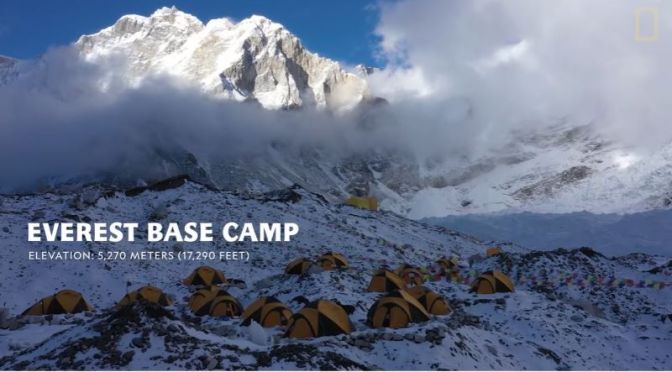
Science & Exploration: ‘High Altitude Biology On Mount Everest’ (Video)
“Even near the highest peak in the world, life manages to thrive. Follow a global team of scientists on the National Geographic and Rolex Perpetual Planet Everest Expedition as they measure the biodiversity in Nepal’s Khumbu Valley and investigate how high alpine species are adapting to global climate change.”
 Boomers Daily