
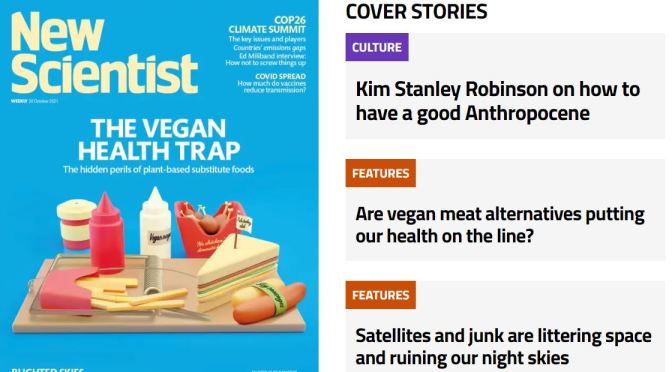
In this week's issue, we investigate whether vegan meat alternatives are putting our health on the line.
— New Scientist (@newscientist) October 28, 2021
Grab a copy from newsstands now or get our app to download digital and audio editions. pic.twitter.com/x1BMaYtvfG
Tag Archives: Science
Science: 4000-Year-Old Mummies, Digital-Hygiene Checks, Ancient Snakes
The unexpected origins of a 4000-year-old people, protecting your ‘digital presence’ and what to expect from COP26.
In this episode:
00:48 The origins of the mysterious Tarim mummies
For decades there has been debate about the origins of a group of 4000-year-old individuals known as the Tarim Basin mummies. Their distinct appearance and clothing has prompted scientists to hypothesise they had migrated from the North or West. Now, a team of researchers have used modern genomics to shed new light on this mystery and reveal that migration was not the mummies’ origin.
Research article: Zhang et al.
News and Views: The unexpected ancestry of Inner Asian mummies
08:59 Research Highlights
Making wood mouldable, and how ancient snakes diversified their diets.
Research Highlight: Moulded or folded, this wood stays strong
Research Highlight: Finicky no more: ancient snakes ate their way to success
11:09 How a regular ‘digital-hygiene’ check can protect your reputation
Attaching a researcher’s name to a paper without them knowing is an unscrupulous practice that can have serious repercussions for the unwitting academic. To prevent this, computer scientist Guillaume Cabanac is advocating a once-a-month ‘digital-hygiene’ check, to identify incorrect acknowledgements, and help prevent research malpractice.
World View: This digital-hygiene routine will protect your scholarship
18:51 What to expect from COP26
This week sees the start of the 26th UN Climate Change Conference (COP26), with an estimated 20,000 people — including world leaders, scientists and activists — expected to be in attendance. Jeff Tollefson, senior reporter at Nature, joins us to explain what’s on the agenda for the conference.
News Explainer: COP26 climate summit: A scientists’ guide to a momentous meeting
Covid-19: How BioNTech Used Its Cancer Research To Create A Vaccine (CNBC)
Over a month and a half before the World Health Organization officially declared a pandemic, BioNTech CEO Uğur Şahin met with his wife, BioNTech’s co-founder and chief medical officer Özlem Türeci, and together they agreed to redirect most of the company’s resources to developing a vaccine. Up until that point, BioNTech was little-known internationally and primarily focused on developing novel cancer treatments. The founders were confident in the potential of their mRNA technology, which they knew could trigger a powerful immune response. That confidence wasn’t necessarily shared by the broader medical community. No mRNA vaccine or treatment had ever been approved before. But the couple’s timely breakthrough was actually decades in the making. CNBC spoke with Şahin and Türeci about how they, along with Pfizer, created a Covid-19 vaccine using mRNA.
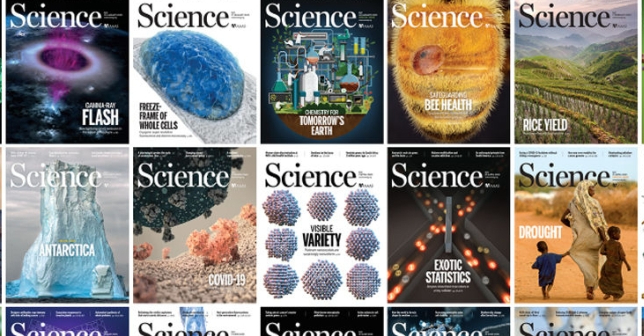
Front Covers: Science Magazine – October 22
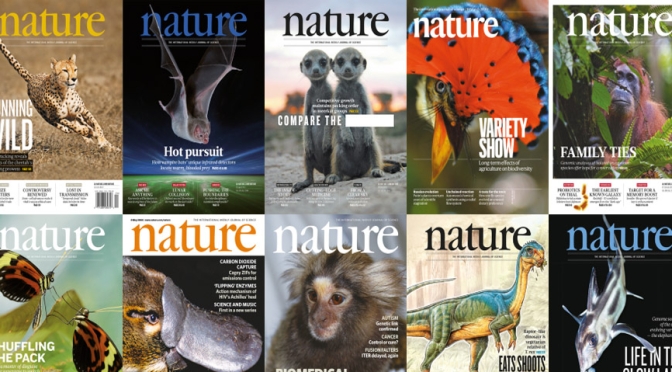
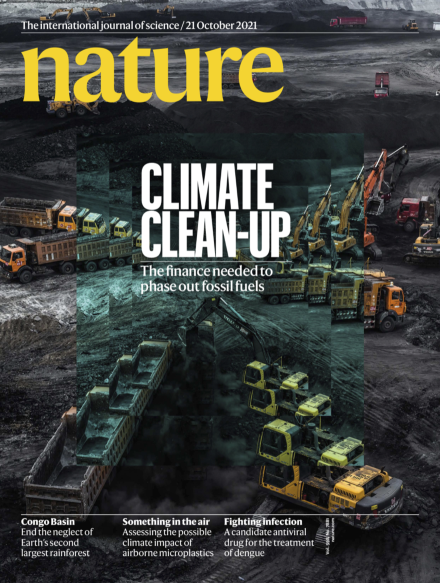
Front Covers: Nature Magazine – October 21
Science: Vikings In North America, Magnets Moving Non-Magnetic Metals
An ancient solar storm helps pinpoint when Vikings lived in the Americas, and using magnets to deftly move non-magnetic metals.
In this episode:
00:53 Pinpointing Viking presence in North America
It’s well-understood that Vikings went to North America around a thousand years ago. However, working out a precise date has proven difficult. Now, thanks to an ancient solar storm, researchers have been able to identify an individual year when Vikings were definitely living on the continent.
Research article: Kuitems et al.
14:57 Research Highlights
How shoulder muscles gave Pterosaurs an aerodynamic edge, and mysterious radio waves coming from near the centre of the Milky Way.
Research Highlight: How ancient reptiles were streamlined for flight
Research Highlight: A mysterious radio signal object is beaming radio waves into the Milky Way
17:45 Magnets move non-magnetic metals
Scientists have created an array of magnets capable of moving non-metallic objects in 6 dimensions. They hope their new approach could one day be used to clean up debris in space.
Research article: Pham et al.
News and Views: Non-magnetic objects induced to move by electromagnets
27:06 What Francis Collin’s retirement means for the US NIH
After 12 years, Francis Collins announced plans to retire from his role as Director of the United States National Institutes of Health. We discuss his legacy and what this means for the world’s biggest public funder of biomedical research.
Editorial: COVID, racism, China: three tests for the next NIH leader
News: Francis Collins to step down at NIH: scientists assess his legacy
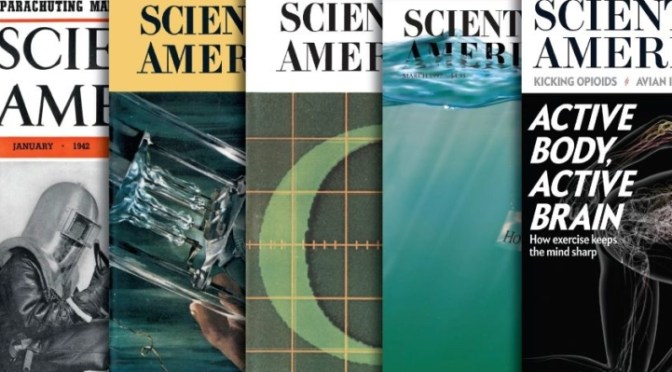
Cover Previews: Scientific American – November 2021
Science: Ripple Effects Of Mass Incarceration, Dog-Sniff Evidence Reliability
This week we are covering the Science special issue on mass incarceration. Can a dog find a body? Sometimes. Can a dog indicate a body was in a spot a few months ago, even though it’s not there now?
There’s not much scientific evidence to back up such claims. But in the United States, people are being sent to prison based on this type of evidence. Host Sarah Crespi talks with Peter Andrey Smith, a reporter and researcher based in Maine, about the science—or lack thereof—behind dog-sniff evidence.
With 2 million people in jail or prison in the United States, it has become incredibly common to have a close relative behind bars. Sarah talks with Hedwig Lee, a sociologist at Washington University in St. Louis, about the consequences of mass incarceration for families of the incarcerated, from economic to social.
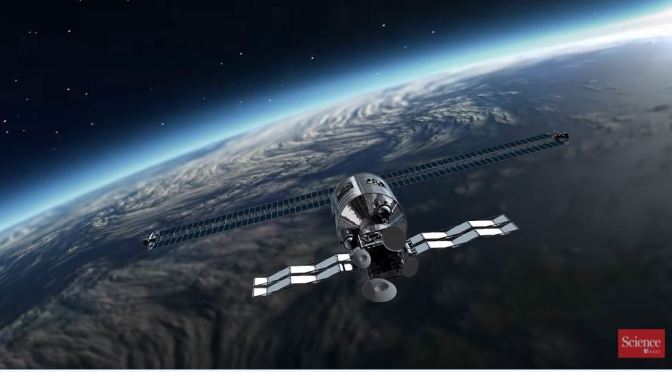
Science: Satellite Swarms Block Astronomers Gaze
For millennia, bright lights sprinkled across our celestial sphere have guided great explorers, passed on storied traditions, and lent insight into the nature of our universe. Now, they have competition: thousands of satellites circling the globe in low orbit. Read the story: https://www.science.org/content/artic…
 Boomers Daily