Tag Archives: Science Magazine

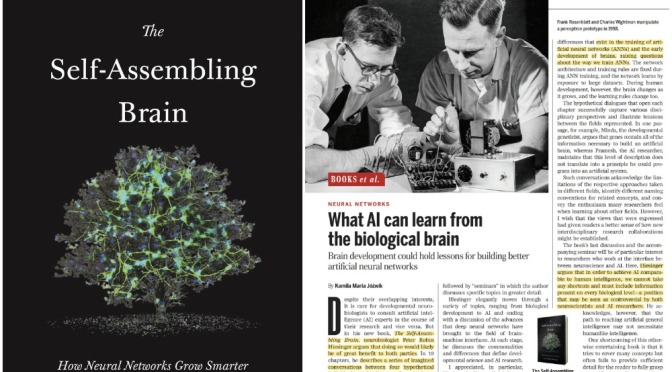
Book Reviews: ‘The Self-Assembling Brain’ – The Future Benefits For AI

As Peter Robin Hiesinger argues, “the information problem” underlies both fields, motivating the questions driving forward the frontiers of research. How does genetic information unfold during the years-long process of human brain development―and is there a quicker path to creating human-level artificial intelligence? Is the biological brain just messy hardware, which scientists can improve upon by running learning algorithms on computers? Can AI bypass the evolutionary programming of “grown” networks? Through a series of fictional discussions between researchers across disciplines, complemented by in-depth seminars, Hiesinger explores these tightly linked questions, highlighting the challenges facing scientists, their different disciplinary perspectives and approaches, as well as the common ground shared by those interested in the development of biological brains and AI systems. In the end, Hiesinger contends that the information content of biological and artificial neural networks must unfold in an algorithmic process requiring time and energy. There is no genome and no blueprint that depicts the final product. The self-assembling brain knows no shortcuts.
Read book review here

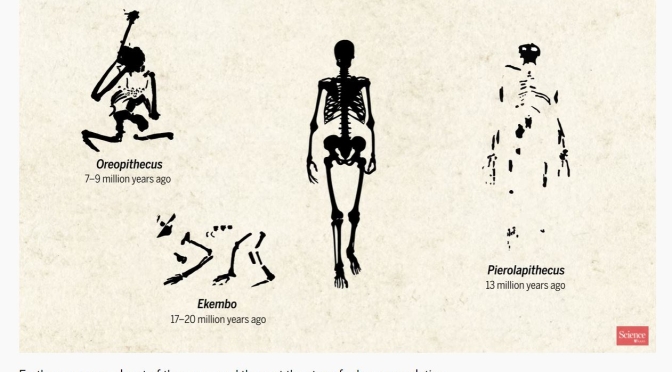
Science: Miocene Apes And Human Evolution (Video)

More than ten million years ago, the world was brimming with a wide variety of apes. Scientists studying the ones that are still alive today can learn a lot about human evolution—but they miss out on many clues that can only be found from the apes that went extinct. Watch to learn how fossil apes have strengthened ideas about how humans evolved, and what steps we can take to learn even more about our ancient ancestors. Read the review: https://scim.ag/3hw5PVx

Science Podcast: Storing Wind As Gravity Batteries, Donkeys Digging Wells

Contributing Correspondent Cathleen O’Grady joins host Sarah Crespi to talk about a company that stores renewable energy by hoisting large objects in massive “gravity batteries.” 

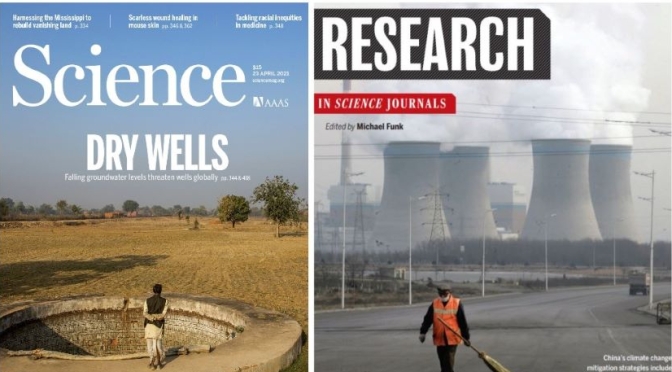
Also on this week’s show, Erick Lundgren, a postdoctoral researcher at Aarhus University, talks about how water from wells dug by wild horses and feral donkeys provides a buffer to all different kinds of animals and plants during the driest times in the Sonora and Mojave deserts. 

Wildfires: New Forests In Alaska Have Increased Carbon Sequestration

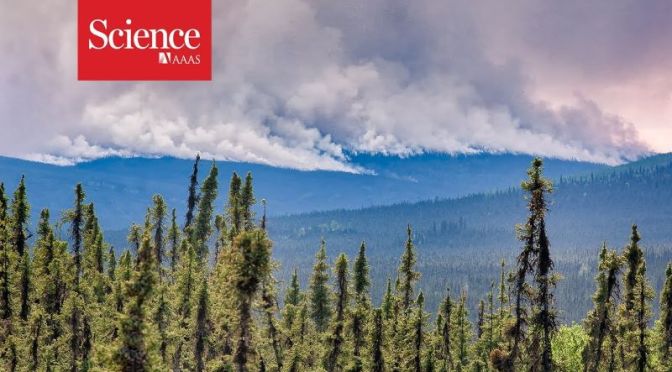
It’s no secret that warming temperatures are transforming landscapes in extreme northern regions. In Alaska, where wildfires have burned through many old-growth spruce forests in the past half decade, deciduous trees—such as aspen and birch—are starting to take over. But little is known about the impact these changes will have on how much carbon the forests release and store.

To find out, researchers trudged through the Alaskan taiga, seeking out wildfire sites where spruce once dominated. They mined these sites for information on carbon and nitrogen stores and forest turnover over time. What they found surprised them: In the long run, their estimates suggest that intensifying heat and more wildfires may lead to more carbon sequestration in Alaskan forests, they report today in Science. It’s impossible to know for sure that the flames will subside, but it’s a bit of good news as the fires burn out the old growth and bring in the new.

Read the research: https://scim.ag/3soUc4e