
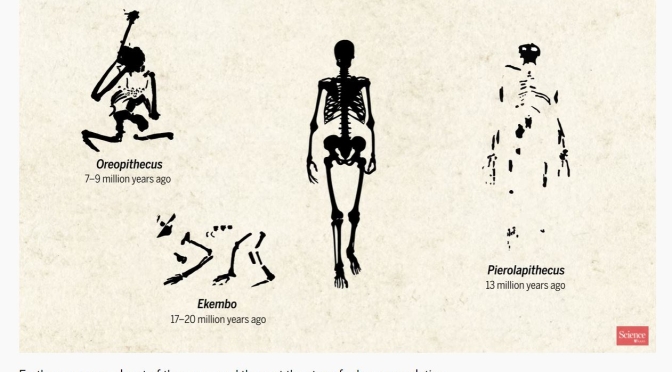
More than ten million years ago, the world was brimming with a wide variety of apes. Scientists studying the ones that are still alive today can learn a lot about human evolution—but they miss out on many clues that can only be found from the apes that went extinct. Watch to learn how fossil apes have strengthened ideas about how humans evolved, and what steps we can take to learn even more about our ancient ancestors. Read the review: https://scim.ag/3hw5PVx
Contributing Correspondent Cathleen O’Grady joins host Sarah Crespi to talk about a company that stores renewable energy by hoisting large objects in massive “gravity batteries.”
Also on this week’s show, Erick Lundgren, a postdoctoral researcher at Aarhus University, talks about how water from wells dug by wild horses and feral donkeys provides a buffer to all different kinds of animals and plants during the driest times in the Sonora and Mojave deserts.
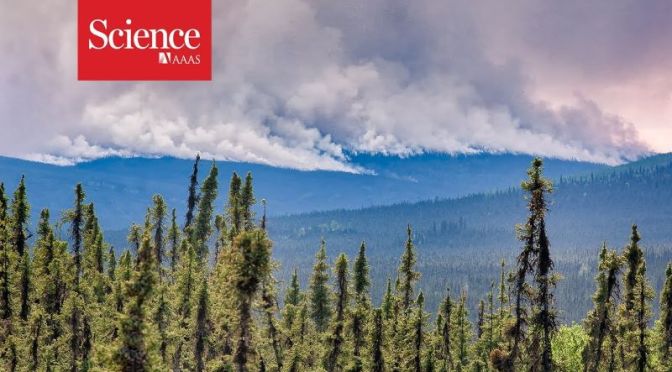
It’s no secret that warming temperatures are transforming landscapes in extreme northern regions. In Alaska, where wildfires have burned through many old-growth spruce forests in the past half decade, deciduous trees—such as aspen and birch—are starting to take over. But little is known about the impact these changes will have on how much carbon the forests release and store.
To find out, researchers trudged through the Alaskan taiga, seeking out wildfire sites where spruce once dominated. They mined these sites for information on carbon and nitrogen stores and forest turnover over time. What they found surprised them: In the long run, their estimates suggest that intensifying heat and more wildfires may lead to more carbon sequestration in Alaskan forests, they report today in Science. It’s impossible to know for sure that the flames will subside, but it’s a bit of good news as the fires burn out the old growth and bring in the new.
Read the research: https://scim.ag/3soUc4e
Host Sarah Crespi talks with Staff Writer Adrian Cho about a new measurement of the magnetism of the muon—an unstable cousin of the electron. This latest measurement and an earlier one both differ from predictions based on the standard model of particle physics. The increased certainty that there is a muon magnetism mismatch could be a field day for theoretical physicists looking to add new particles or forces to the standard model.
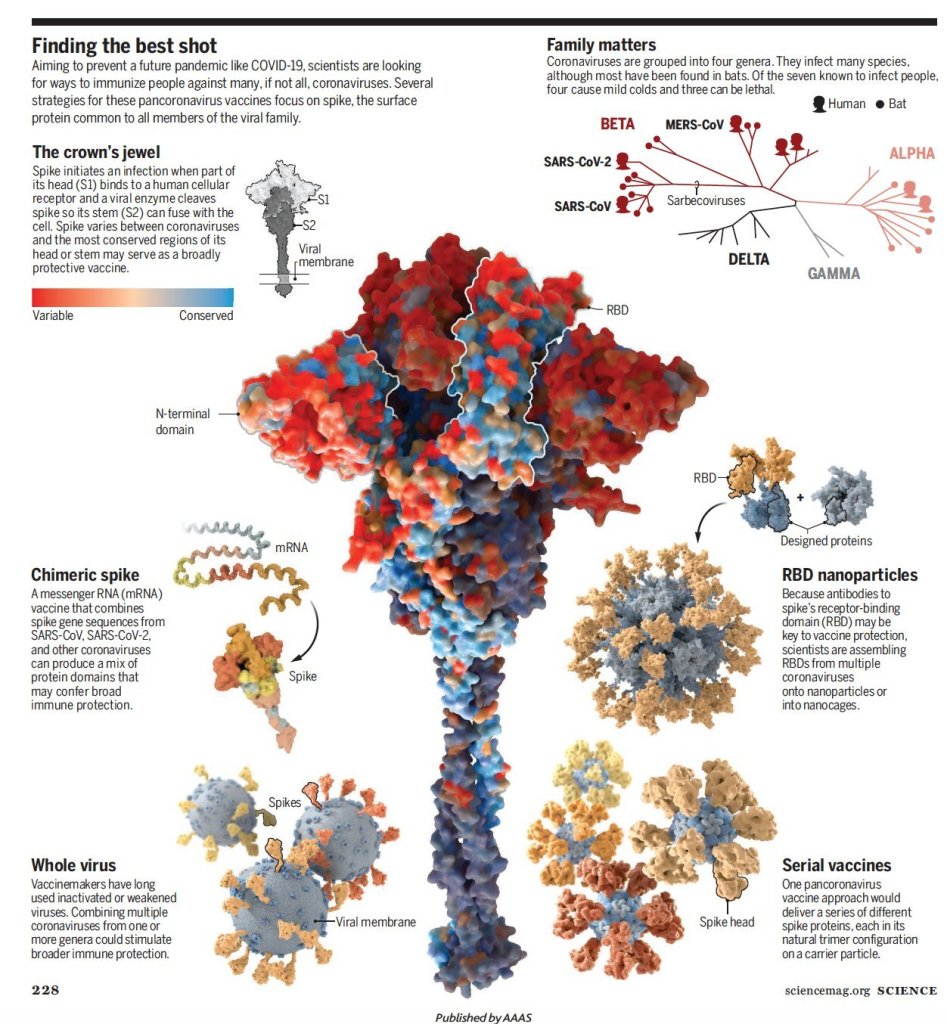
Also on this week’s show, Charles Marshall, director of the University of California Museum of Paleontology and professor of integrative biology, joins Sarah to talk about his team’s calculation for the total number of Tyrannosaurus rex that ever lived. In a sponsored segment from the Science/AAAS Custom Publishing Office, Sean Sanders interviews Imre Berger, professor of biochemistry at the University of Bristol, about his Science paper on finding a druggable pocket on the spike protein of SARS-CoV-2 and how the work was accelerated by intensive cloud computing. This segment is sponsored by Oracle for Research.







 Boomers Daily