Tag Archives: Salzburg

River Cruises: Budapest, Salzburg And Bamberg

TRACKS – Travel Documentaries (August 31, 2024): Travel down the Main-Danube Canal and immerse yourself in a breathtaking European adventure, where every river bend reveals a tapestry of history and culture.

Video timeline: 00:0050:34 – Salzburg 50:3501:40:36 – Budapest 01:40:3702:36:08 – Bamburg

Stroll the romantic streets of Salzburg, famous for the backdrop to the beloved ‘Sound Of Music’, to the historic town of Bamburg with it’s beautiful architecture.

Travel: A Winter Walking Tour Of Salzburg, Austria

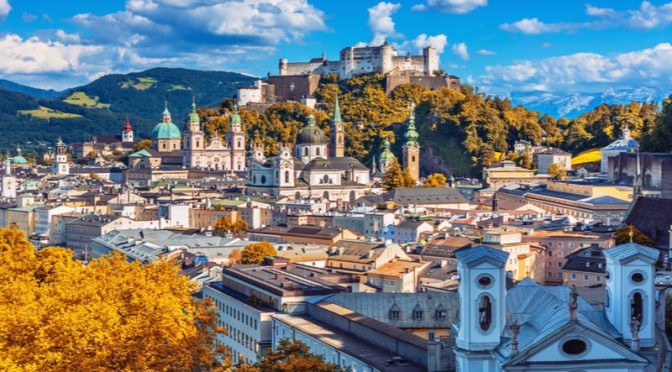
POPtravel (February 3, 2024) – Salzburg is an Austrian city on the border of Germany, with views of the Eastern Alps. The city is divided by the Salzach River, with medieval and baroque buildings of the pedestrian Altstadt (Old City) on its left bank, facing the 19th-century Neustadt (New City) on its right. The Altstadt birthplace of famed composer Mozart is preserved as a museum displaying his childhood instruments. 

Christmas 2022 Events: Krampuslauf In Salzburg

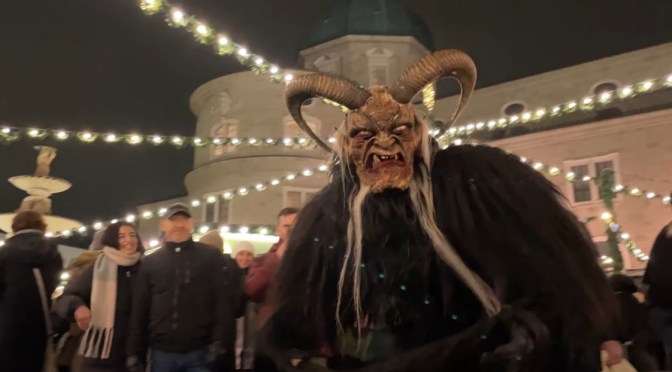
Travel and Adventure Studios (December 2022) – The wild jangling of bells, shaggy pelts, curved horns and terrifying masks: When Krampus and Perchten run down the street, growling, half dancing, half stamping, every single spectator is left just a little unsettled.

Krampus- and Perchten parades truly are an unforgettable experience, as much a part of Salzburg’s Christmas season as the famous Christkindlmarkt and the almost meditative Advent Singing. From the end of November until the beginning of December, you can also experience this unique folk custom in the City of Salzburg itself.

While no one would claim Perchten parades are peaceful, they will definitely leave you with lasting memories. An ancient tradition you can only experience in this part of the Alpine world.

Travel Tours: A Day In Salzburg, Austria (4K)

Salzburg, city, capital of Salzburg Bundesland (federal state), north-central Austria. It is situated in a level basin on both sides of the Salzach River near the northern foothills of the Alps and the Bavarian (German) border. The historic centre of the city, with its rich mix of art and architecture, was added to the UNESCO World Heritage List in 1996.

Salzburg was originally the site of a Celtic settlement and later of the Roman town of Juvavum. About 700 CE the Benedictine Abbey of St. Peter and the Nonnberg Nunnery were founded there by St. Rupert. Salzburg was made a bishopric by St. Boniface in 739 and was raised to an archbishopric in 798. Its archbishops were acknowledged as princes of the Holy Roman Empire in 1278, and the city became the seat of their powerful ecclesiastical principality. Among the most notable of the prince-archbishops were Wolf Dietrich von Raitenau (reigned 1587–1612), who brought Italian Renaissance architecture and styles to the city, notably by offering commissions to the Italian architect Vincenzo Scamozzi for public squares, a cathedral, and other buildings; Markus Sittikus von Hohenems (reigned 1612–19), who continued to rebuild the city with another Italian architect, Santino Solari; Paris, Graf (count) von Lodron (reigned 1619–53), who founded the city’s university (1622); and Leopold Anton von Firmian (reigned 1727–44).

Filmed in October

Travel Guide: 15 Things To Do In Salzburg, Austria

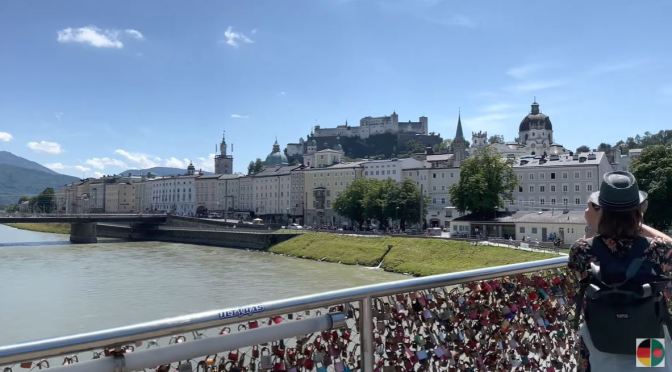
Salzburg is an Austrian city on the border of Germany, with views of the Eastern Alps. The city is divided by the Salzach River, with medieval and baroque buildings of the pedestrian Altstadt (Old City) on its left bank, facing the 19th-century Neustadt (New City) on its right. The Altstadt birthplace of famed composer Mozart is preserved as a museum displaying his childhood instruments.

In this video, we’ll be showing you some of the things you can do in Salzburg during your visit. We’ll tour the cliff top fortress and all the museums it holds within, we’ll explore cemeteries and early Christian catacombs carved into the rock, we’ll enjoy views of the old town with its Baroque architecture, domes and spires. Plus we’ll also give you a few ideas of some Austrian foods to try and some easy day trips you can go on.

00:53 – Ride the funicular 01:06 – Hohensalzburg Fortress 04:42 – Petersfriedhof and Catacombs 06:49 – Salzburg Cathedral 07:54 – Sphaera Sculpture 08:48 – Mönchsberg 09:47 – Austrian foods to try 12:13 – Mozart’s Home 12:35 – Mozart Square 12:45 – Kollegienkirche 13:25 – Stroll along Salzach River 13:57 – Mirabell Palace and Gardens 15:57 – Salzach Island Bar 16:35 – Werfen Day Trip 17:28 – Gaisberg Hiking Day Trip 18:08 – Transportation in Salzburg

Views: Krimml Waterfalls – Western Austria (4K)

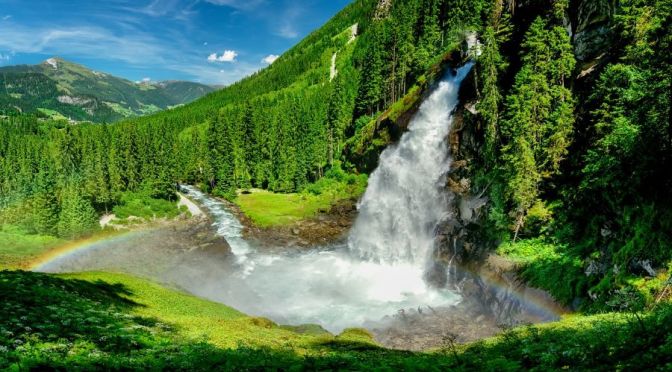
The Krimml Waterfalls (in German: Krimmler Wasserfälle) are the highest in Austria with a total height of 380 metres (1,247 feet). The falls are on the Krimmler Ache river, located near the village of Krimml in the High Tauern National Park (State of Salzburg) Krimmler Waterfalls is a tiered waterfall which begins at the top of the Krimmler Ache valley, and plunges downward in three stages. The upper stage has a drop of 140 metres, the middle of 100 metres, and the lowest a drop of 140 metres. The highest point of the waterfall is 1,470 metres above sea level.

Video Timeline: 0:00 Introduction 4:28 to the lowest part of the Waterfalls 5:43 View as the water touch the ground 8:13 Second Stage of the Waterfalls 10:26 Third Stage of the Waterfalls

Walking Tour: Salzburg – Northwestern Austria

Salzburg is an Austrian city on the border of Germany, with views of the Eastern Alps. The city is divided by the Salzach River, with medieval and baroque buildings of the pedestrian Altstadt (Old City) on its left bank, facing the 19th-century Neustadt (New City) on its right. The Altstadt birthplace of famed composer Mozart is preserved as a museum displaying his childhood instruments.

Top Virtual Walk Videos: ‘Sigmund Thun Klamm’ Natural Park In Austria

Sigmund Thun Klamm Virtual Walk in 4K

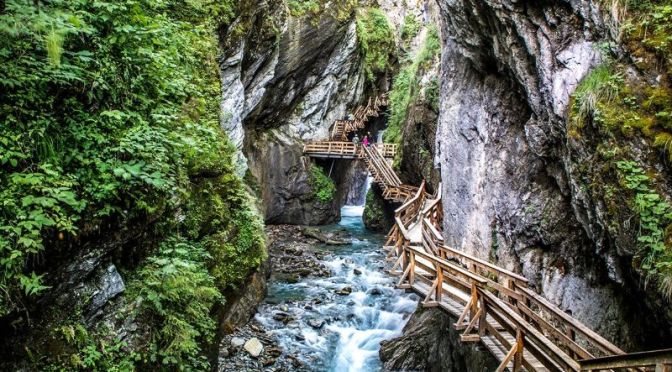
Sigmund Thun Klamm is a natural spectacle that illustrates the effect of elemental forces in a fascinating manner. The powerful tide of the Kapruner Ache cut its way through sturdy rock and stones creating a 320-m-long path lined with vortexes, gradings and pools. A footpath with sturdy wooden footbridges invites guests of all ages on a journey through this magical gorge in Kaprun. Feel the force of the water at every step and learn fascinating facts about the gorge lake near Kaprun on the natural history walk. Don’t forget to visit Kaprun Museum in a 400-year-old farmhouse and immerse yourself in the history of the village.

Kaprun gorge and the museum are located in one of the most beautiful regions in all of Salzburg, and are just perfect for a trip for the whole family. Captivating events in summer top off this truly special experience. Discover the impressive force of water!

OPENING HOURS: 29 May – October | 8.30am – 5.00pm

Website: http://www.klammkaprun.at

New Exhibitions: “Wilhelm Thöny – Dreaming In Times Of Crisis” (Salzburg, AT)

Museum der Moderne Salzburg LogoThe motifs of Thöny’s art are informed by the pervasive unease of the interwar years, whose apprehensions he portrayed in the grotesque and nightmarishly somber drawings he created around 1920 for his unpublished Buch der Träume (Book of Dreams). Other works, however, render serene and idyllic landscapes and urban views as well as scenes from social life.

This slideshow requires JavaScript.

Wilhelm Thöny (1888 Graz, AT—1949 New York, US) was a restless cosmopolitan and indefatigable networker whose peripatetic career took him far beyond Austria’s borders. A cofounder of the Secession in his native Graz, he made friends along the way—he spent time in Munich and Paris, on the Côte d’Azur and in New York, among other places—but zealously guarded his creative independence, building an oeuvre that did not align with any of the major tendencies of the period.

The Museum der Moderne Salzburg’s first exhibition devoted to Thöny’s oeuvre since 2010 presents around two hundred works from the museum’s own collection. One highlight in the show are the (letter) illustrations in the artist’s Scrap Book from the 1930s. Observations from everyday life captured with lighthearted humor are interspersed between reflections on the increasingly oppressive political situation. It is the first time that this body of work, which is of outstanding value both for its artistic quality and as a document of its time, is shown in its entirety in Salzburg.

Website