
Tag Archives: Research

Preview: Science News Magazine – Dec 3, 2022

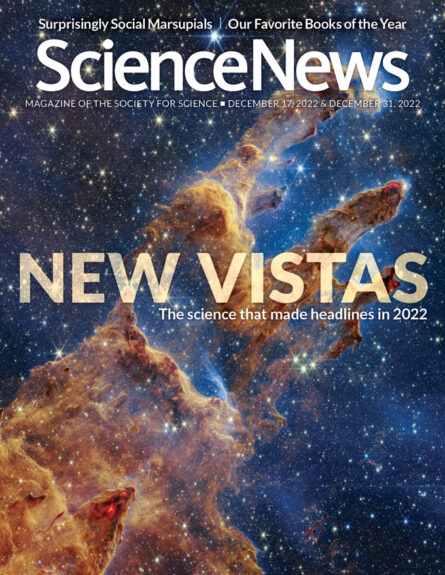
Cover of the December 3, 2022 issue

@ScienceNewsDecember 3, 2022 issue:

Artemis missions will usher in a new, more diverse crew of astronauts

Space agencies are preparing to send the next generation of astronauts to the moon and beyond. Here’s how the next crews will be different from the last ones.

Some harlequin frogs — presumed extinct — have been rediscovered

A new treatment for debilitating nightmares offers sweeter dreams

Research Preview: Science Magazine – Dec 2, 2022

Current Issue Cover

@ScienceMagazine December 2, 2022:

Madagascar’s extraordinary biodiversity: Evolution, distribution, and use

Early snowmelt and polar jet dynamics co-influence recent extreme Siberian fire seasons

Monitoring of cell-cell communication and contact history in mammals

The human signal peptidase complex acts as a quality control enzyme for membrane proteins

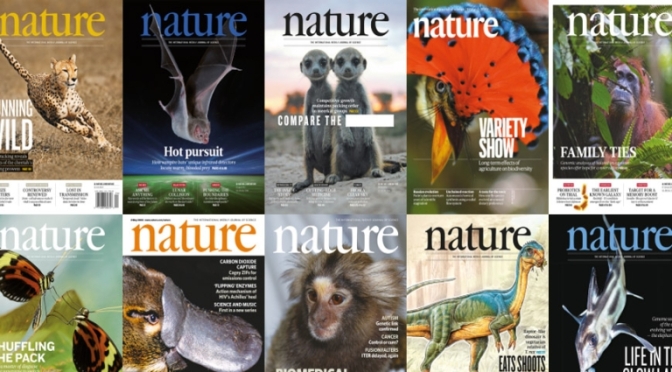
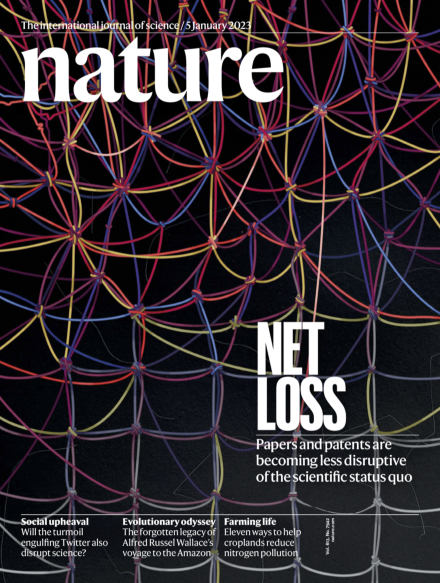
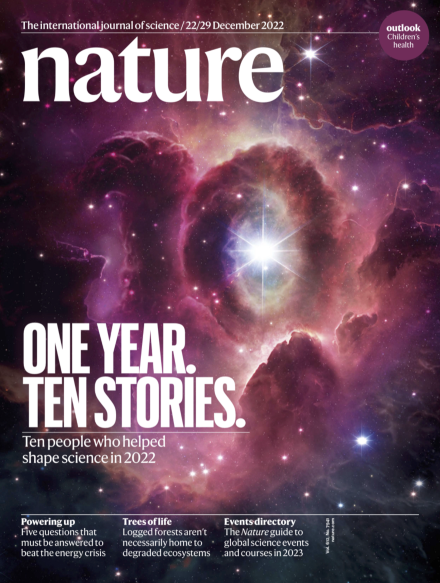
Research Preview: Nature Magazine – Dec 1, 2022

Volume 612 Issue 7938

Science Magazine – December 1, 2022 issue:

Research Highlights

Fast-evolving genome regions point to DNA that sets humans apart

The collection of 1,500 rapidly changing segments is rich in sequences associated with brain development and disease.

Prehistoric rubbish hints that early cooks cared about flavour

Ancient chefs made bitter plants taste better with techniques such as grinding and soaking.

Off the hook: electrical device keeps sharks away from fishing lines

Such interventions could greatly reduce accidental catches of threatened species.

Devastating drought in East Africa is traced to nearby seas

Understanding the weather pattern known as the Indian Ocean Dipole might help to predict lack of rainfall in countries such as Kenya.

Research Preview: Science Magazine – Nov 25, 2022

Image

Science Magazine – November 25, 2022 issue:

Cell engineering

The successful use of engineered white blood cells (cells that are removed from the human body, modified with receptors that allow them to recognize cancer cells, and then returned to the body) to fight and eliminate tumor cells has frequently been called revolutionary and has even allowed researchers the rare opportunity to refer to a cure for certain cancers.

How to regrow a forest? Scientists aren’t sure

Reforestation has become a global priority but evidence on what works is still scant

‘Ancestry problem’ sends CRISPR astray in some people

Reference genomes used to direct the gene editor fail to account for human diversity in those of African descent

AI learns the art of Diplomac

Meta’s algorithm tackles both language and strategy in a classic board game that involves negotiationNASA mulls end for long-lived climate sentinels

NASA mulls end for long-lived climate sentinels

Drifting satellites could still yield insights into wildfires and storms, researchers argue

Research Preview: Nature Magazine – Nov 24, 2022

Volume 611 Issue 7937

nature – November 24, 2022 issue:

Research Highlights

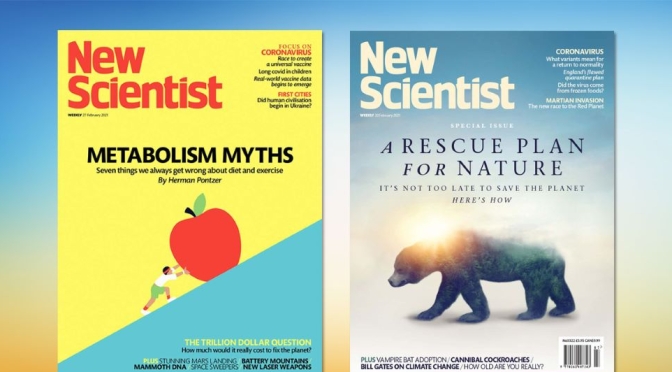
Research: New Scientist Magazine – Nov 26, 2022

New Scientist Default Image

New Scientist – November 26, 2022:

COVER STORIES

  • FEATURES – The hunt for the lost ancestral language of Europe and southern Asia
  • FEATURES – Why the Colorado river is drying up – and what we can do about it
  • FEATURES – Will artificial intelligence ever discover new laws of physics?
  • NEWS – Drug that delays onset of type 1 diabetes gets approval in US

Research Preview: Science Magazine – Nov 18, 2022

Image

Science Magazine – November 18, 2022 issue:

Moore’s law: The journey ahead

High-performance electronics will focus on increasing the rate of computation

Tumors can teem with microbes. But what are they doing there?

New study suggests microbiomes can promote cancer by suppressing immune response and seeding metastase

Booming trade in mammoth ivory may be bad news for elephants

Paleontologists are urged to take a stand against a market that may provide cover for continued poaching

Defining the onset of the Anthropocene

Twelve sites are considered for defining the Anthropocene geological epoch

Preview: New Scientist Magazine – Nov 19, 2022

New Scientist Default Image

New Scientist – November 19, 2022 issue:

What is pain, how does it work and what happens when it goes wrong?

With a growing number of people living with pain, we desperately need to understand it – but we are still unravelling the mysterious mechanisms behind the phenomenon

  • FEATURES – Roger Penrose: “Consciousness must be beyond computable physics”
  • FEATURES – Why emotions can feel so painful – and what it means for painkillers
  • FEATURES – We are only just beginning to understand what causes nociplastic pain

Science: Kurt Vonnegut’s Ethical Vision, Tuna And Shark Extinction Risks

On this week’s show: How sci-fi writer Kurt Vonnegut foresaw many of today’s ethical dilemmas, and 70 years of tunas, billfishes, and sharks as sentinels of global ocean health

First up this week on the podcast, we revisit the works of science fiction author Kurt Vonneugt on what would have been his 100th birthday. News Intern Zack Savitsky and host Sarah Crespi discuss the work of ethicists, philosophers, and Vonnegut scholars on his influence on the ethics and practice of science. Researchers featured in this segment:

Peter-Paul Verbeek, a philosopher of science and technology at the University of Amsterdam and chair of the World Commission on the Ethics of Scientific Knowledge and Technology David Koepsell, a philosopher of science and technology at Texas A&M University, College Station Christina Jarvis, a Vonnegut scholar at the State University of New York, Fredonia, and author of the new book Lucky Mud & Other Foma: A Field Guide to Kurt Vonnegut’s Environmentalism and Planetary Citizenship Sheila Jasanoff, a science studies scholar at Harvard University

Next, producer Kevin McLean discusses the connection between fishing pressure and extinction risk for large predatory fish such as tunas and sharks. He’s joined by Maria José Juan Jordá, a postdoc at the Spanish Institute for Oceanography, to learn what a new continuous Red List Index using the past 70 years of fisheries data can tell us about the effectiveness and limits of fishing regulations. Finally, in a sponsored segment from the Science/AAAS Custom Publishing Office, Sean Sanders, director and senior editor for custom publishing, interviews Joseph Hyser, assistant professor in the Department of Molecular Virology and Microbiology at Baylor College of Medicine about his use of wide-field fluorescence live cell microscopy to track intercellular calcium waves created following rotavirus infection. 

Research Preview: Science Magazine – Nov 11, 2022

Science Magazine – November 11, 2022 Issue:

Invasive mosquito adds to Africa’s malaria toll

Anopheles stephensi may dramatically increase the number of people at risk

As Musk reshapes Twitter, academics ponder taking flight

Many researchers are setting up profiles on another social media service known as Mastodon

Scientists on trial after speaking out on harassment

Astrophysicist Christian Ott filed a criminal complaint after job offer withdrawn

Perennial rice could be a ‘game changer’

Long-term study in China shows yields hold up and farmers save money and time