

Times Literary Supplement (April 24, 2024): The latest issue features ‘The Mormon Conquest’ – Seth Perry on a people of the book; Is ‘green growth’ a mirage; Virginia Woolf’s rural retreat; China’s Shakespeare…

Times Literary Supplement (April 24, 2024): The latest issue features ‘The Mormon Conquest’ – Seth Perry on a people of the book; Is ‘green growth’ a mirage; Virginia Woolf’s rural retreat; China’s Shakespeare…
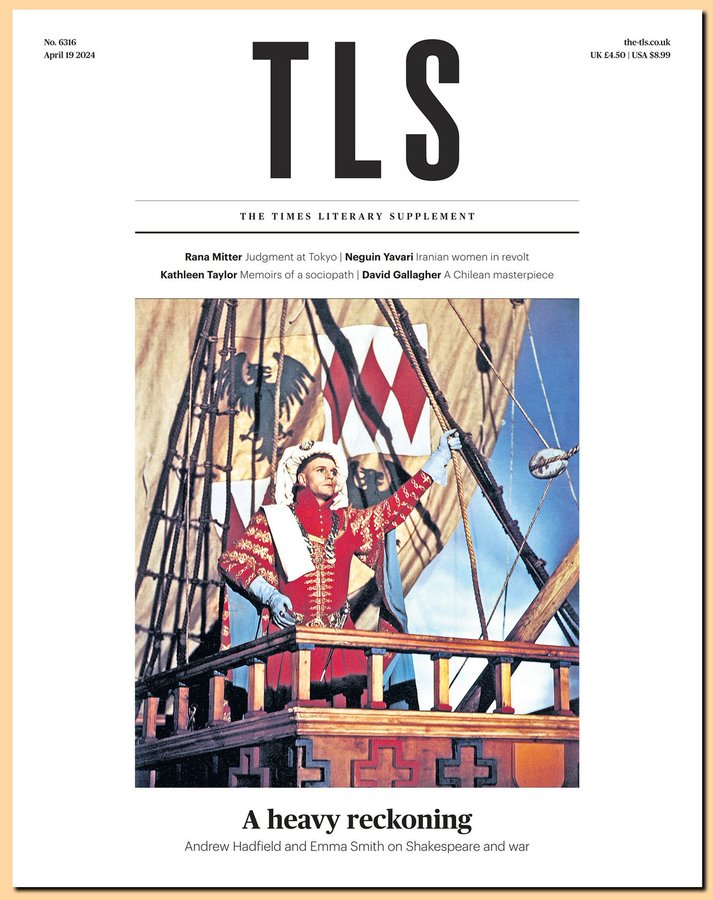
Times Literary Supplement (April 17, 2024): The latest issue features ‘A Heavy Reckoning’ – Shakespeare and War’; Judgment at Tokyo; Iranian women in revolt; Memoirs of a sociopath and A Chilean masterpiece…
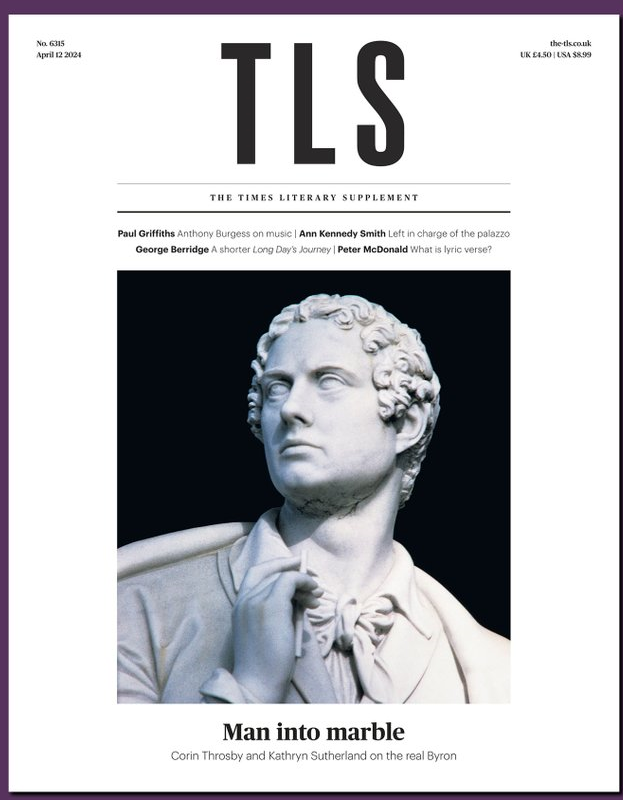
Times Literary Supplement (April 10, 2024): The latest issue features ‘Man Into Marble’ – Corin Throsby and Kathryn Sutherland on the real Byron; Anthony Burgess on music; Left in charge at the palazzo; Revolutionary Russia; A shorter Long Day’s Journey and What is lyric verse?…
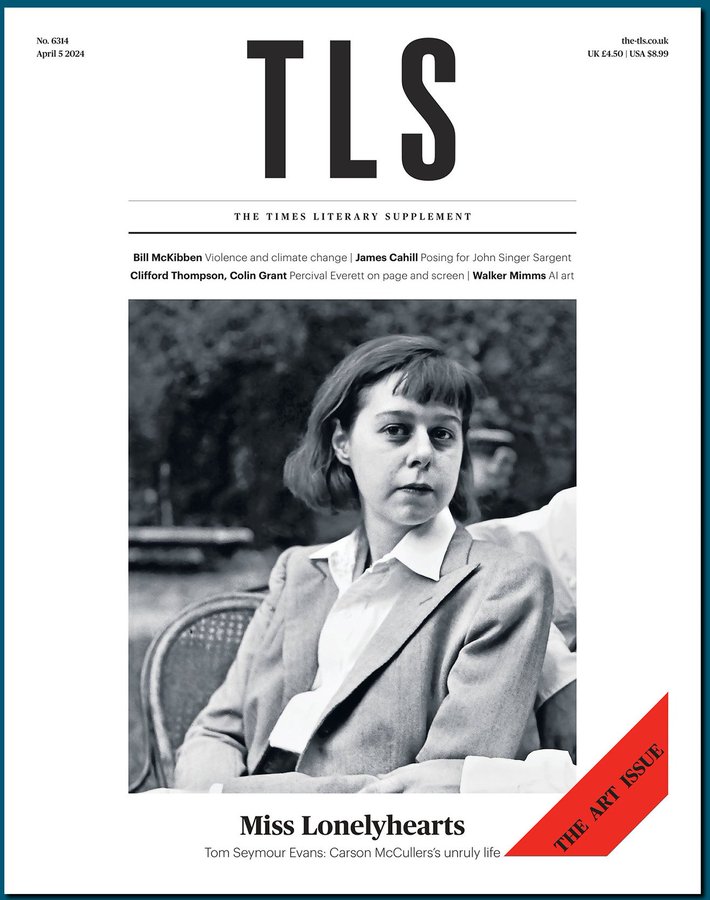
Times Literary Supplement (April 3, 2024): The ‘The Art Issue’ features ‘Miss Lonelyhearts’ – Tom Seymour Evans: Carson McCullers’s unruly life; Violence and Climate Change; Posing for John Singer Sargent and Huckleberry Jim – Mark Twain’s escaped slave wrests control of his story…

Carson McCullers: a novelist of the marginalized and ‘those struggling to understand who they are’

Mark Twain’s escaped slave wrests control of his story

Percival Everett’s wry, provocative novel on the publishing world brought to the screen
By Colin Grant
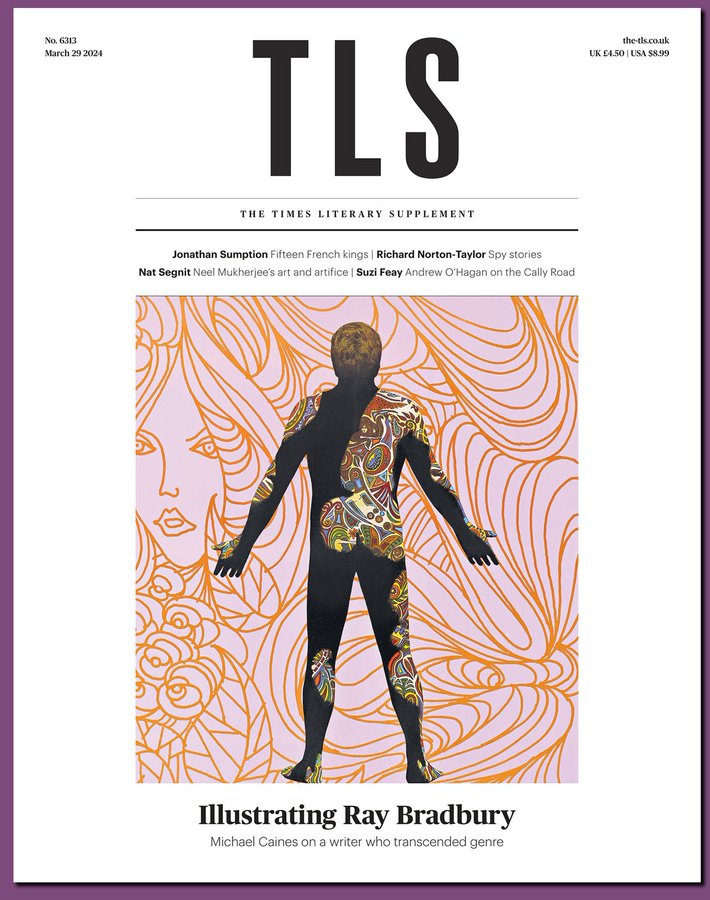

Times Literary Supplement (March 27, 2024): The latest issue features ‘Illustrating Ray Bradbury’ – Michael Caines on a writer who transcended genre; Fifteen French Kings; Spy stories; Neel Mukherjee’s art and artifice; Space colonization and Andrew O’Hagan on the Cally Road….
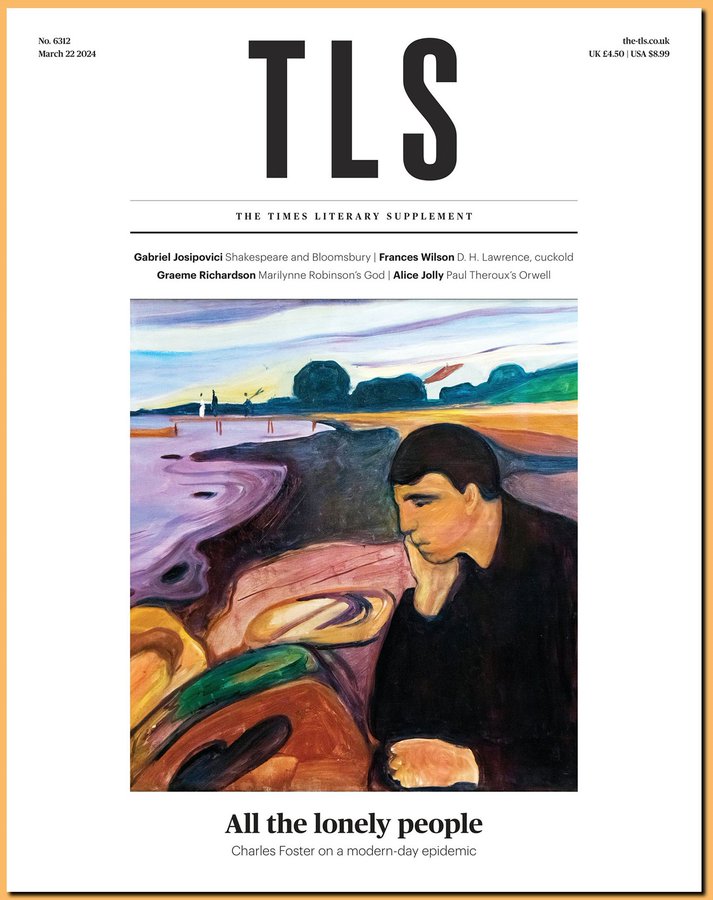
Times Literary Supplement (March 22, 2024): The latest issue features ‘All the Lonely People’ – Charles Foster on a modern-day epidemic; Shakespeare and Bloomsbury; D.H. Lawrence, cuckhold; Marilynne Robinson’s god; Paul Theroux’s Orwell…
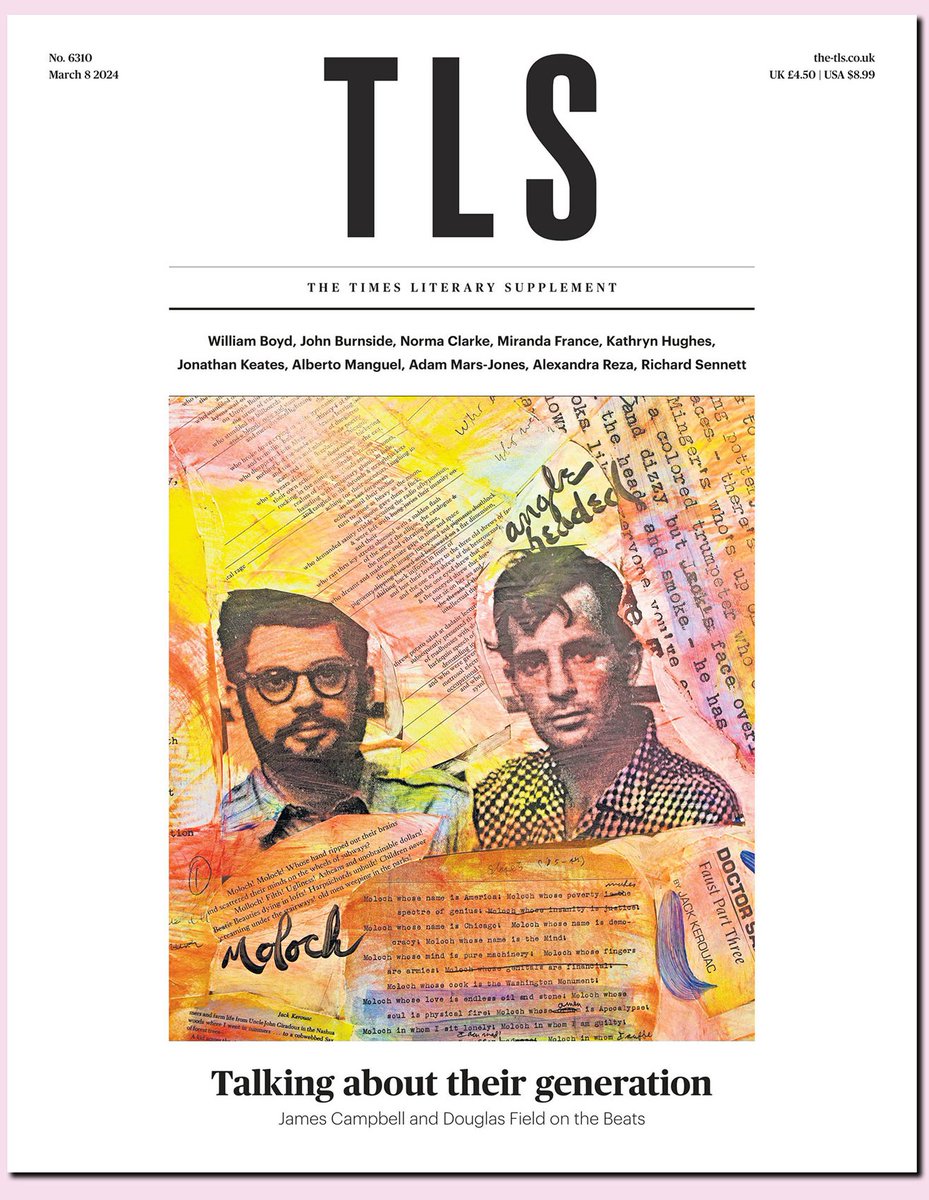
Times Literary Supplement (March 6, 2024): The latest issue features ‘Talking about their generation’ – James Campbell and Douglas Field on the Beats including Jack Kerouac and Allen Ginsberg; Alexandra Reza on Frantz Fanon; Miranda France on Montserrat Roig….
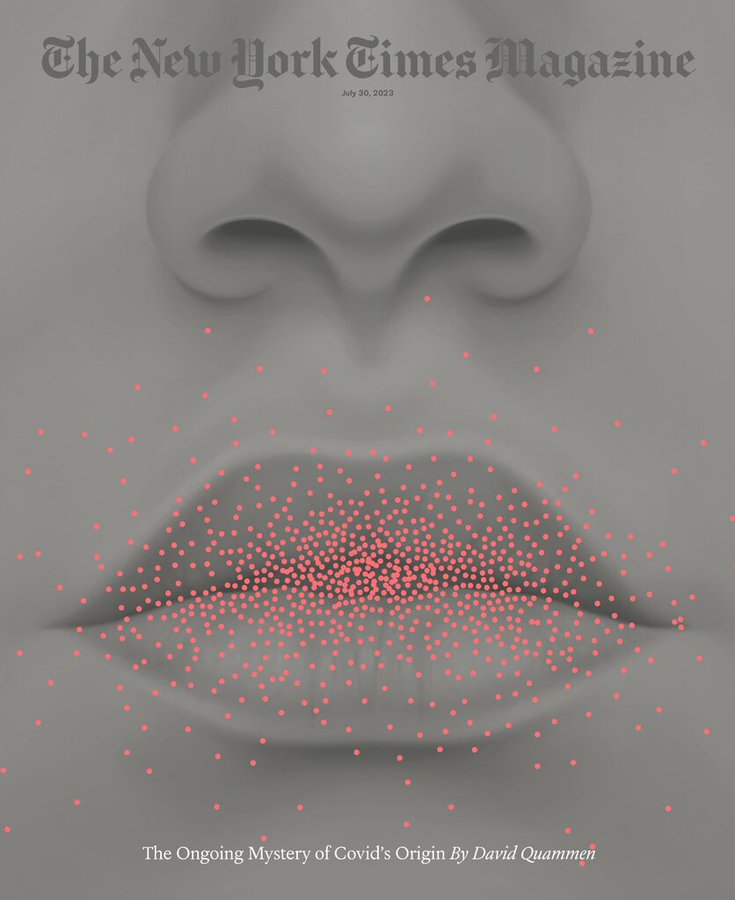

THE NEW YORK TIMES MAGAZINE (July 30, 2023) – In this week’s cover story, David Quammen reports on the ongoing mystery of Covid’s origin, what we do know — and why it matters. Plus, a profile of a poet who was kidnapped from his Black father by his white grandparents and a look at a group of English activists’ fight for the right to access public lands.

We still don’t know how the pandemic started. Here’s what we do know — and why it matters.
By David Quammen
Where did it come from? More than three years into the pandemic and untold millions of people dead, that question about the Covid-19 coronavirus remains controversial and fraught, with facts sparkling amid a tangle of analyses and hypotheticals like Christmas lights strung on a dark, thorny tree. One school of thought holds that the virus, known to science as SARS-CoV-2, spilled into humans from a nonhuman animal, probably in the Huanan Seafood Wholesale Market, a messy emporium in Wuhan, China, brimming with fish, meats and wildlife on sale as food. Another school argues that the virus was laboratory-engineered to infect humans and cause them harm — a bioweapon — and was possibly devised in a “shadow project” sponsored by the People’s Liberation Army of China.

A group of English activists want to legally enshrine the “right to roam” — and spread the idea that nature is a common good.
By Brooke Jarvis
The signs on the gate at the entrance to the path and along the edge of the reservoir were clear. “No swimming,” they warned, white letters on a red background.
On a chill mid-April day in northwest England, with low, gray clouds and rain in the forecast, the signs hardly seemed necessary. But then people began arriving, by the dozens and then the hundreds. Some walked only from nearby Hayfield, while others came by train or bus or foot from many hours away. In a long, trailing line, they tramped up the hill beside the dam and around the shore of the reservoir, slipping in mud and jumping over puddles. Above them rose a long, curving hill of open moorland, its heather still winter brown. When they came to a gap between a stone wall and a metal fence, they squeezed through it, one by one, slipping under strings of barbed wire toward the water below.

In a wide-ranging conversation that headlines World Literature Today’s November issue, we celebrate Ada Limón being named the 24th Poet Laureate Consultant in Poetry to the Library of Congress.
by Chard deNiord
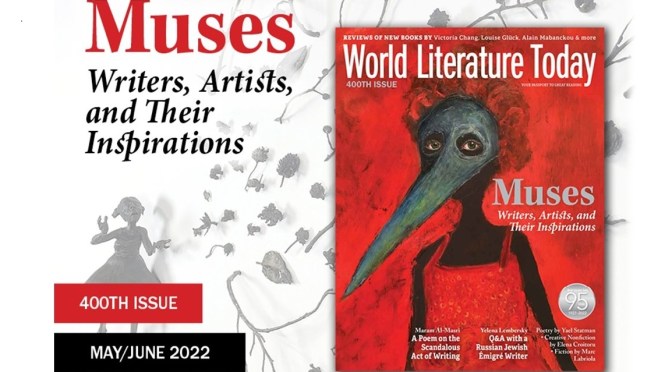
With your latest passport to great reading, the editors are also excited to launch an ambitious new editorial initiative to offer a greater number of shorter pieces to help further diversify the magazine’s coverage and facilitate reader engagement from a wider variety of cultural angles. Through literature, music, film, food, and art, WLT is finding more ways than ever to connect you to the global cultural landscape of the 21st century.
After nearly 60 years as a hotel, this former home of the poet Alfred, Lord Tennyson has been triumphantly restored as a house museum. John Goodall reports; photography by Paul Highnam.
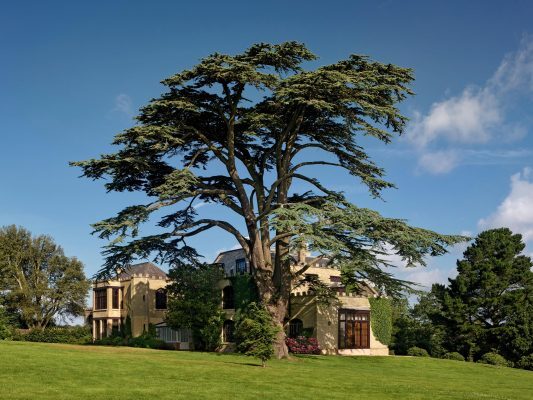
On January 21, 1884, the poet laureate Alfred Tennyson was elevated to the peerage as Baron of Aldworth, Surrey, and of Freshwater on the Isle of Wight. As the editor of The Complete Peerage (1896) primly commented when recording this exceptional accolade, ‘the assumption of two places in different counties (more especially when the estate possessed is inconsiderable), cannot be commended’. Tennyson, however, would not have cared. Indeed, he had refused the offer of baronetcy four times and was only finally persuaded to accept it by his friend, the then Prime Minister, William Gladstone.
Tennyson chose this unusual title because — unconventionally for the period — he had houses in both places that he considered to be homes. Aldworth, which he generally occupied in the summer months, was a retreat from his house at Freshwater. This latter building, known as Farringford, was sold by the family in the 1940s and thereafter became a hotel. Returned back into private ownership in 2007, it has now undergone a renaissance at the hands of a Tennyson scholar, who has turned it into both a home and a house museum to the poet.

Fig 1: The library, which was added to the house in 1871 and has been fully restored. Farringford, Isle of Wight. ©Paul Highnam for Country Life
In the years immediately following his marriage in 1850, Tennyson and his wife, Emily, actively searched for a place to live. They heard from friends about a family house at Freshwater, on the north-western extreme of the Isle of Wight. Following a slightly depressing first viewing by Tennyson — then aged 44 — the couple came back together. An account of their visit in November 1853 is given in Emily’s journal. Travelling by train to Brockenhurst — where the railway line then ended — they caught an omnibus to Lymington and crossed on a still evening from the mainland in a rowing boat.
Emily was delighted by the house, which enjoyed an expansive prospect along almost the whole Hampshire coastline, and ‘looking from the drawing-room window, thought “I must have that view”, and so I said to him when alone. So accordingly we agreed… to take the place furnished for a time on trial with the option of purchasing’.

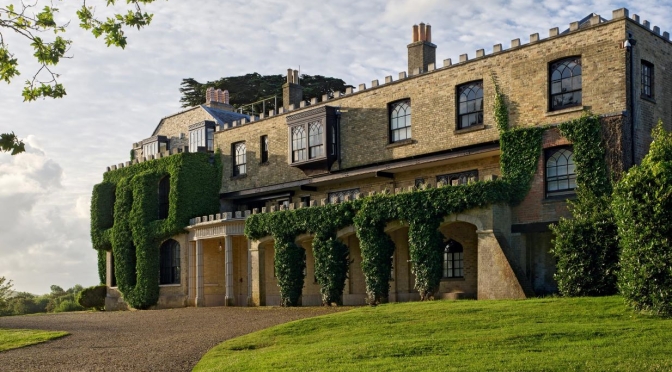
Fig 2: The north front of the house, with its Gothic porch. Farringford, Isle of Wight. ©Paul Highnam for Country Life
Read more at Country Life Magazine: https://ift.tt/l9zibWL

 Boomers Daily