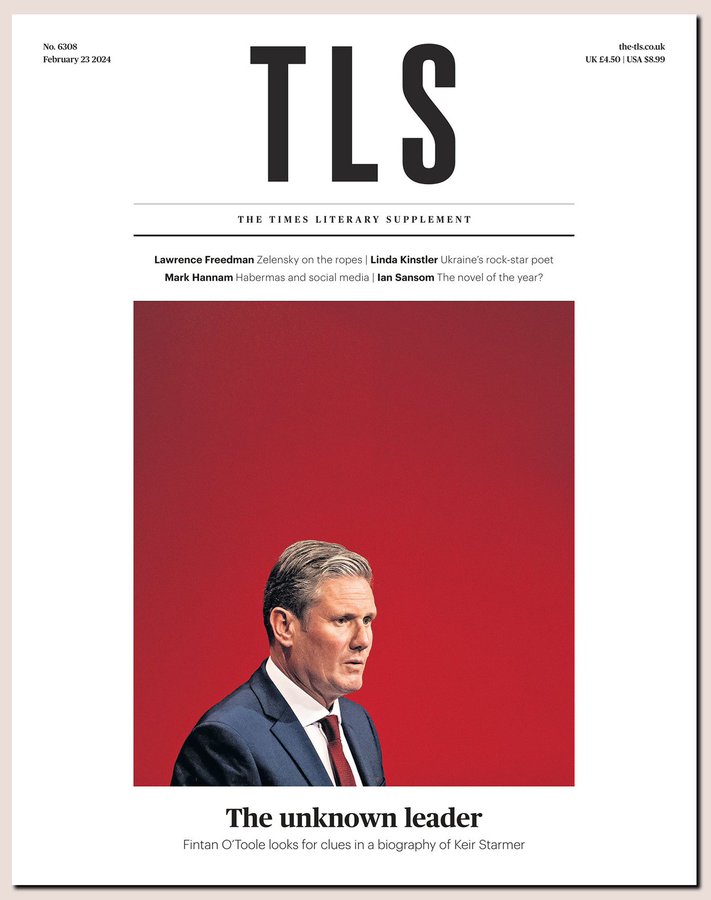
Times Literary Supplement (February 21, 2024): The latest issue features ‘The Unknown Leader’ – Fintan O’Toole looks for clues in a biography of Keir Starmer; Zelensky on the ropes; Ukraine’s rock star poet; Habermas and social media and The novel of the Year?….
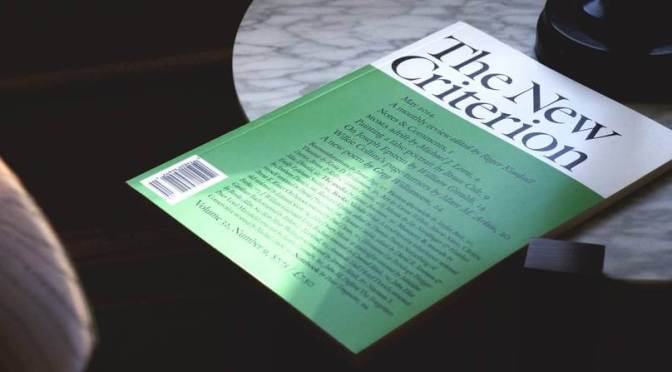
Israel’s eternal dilemma by Victor Davis Hanson Enrique Gómez Carrillo by Anthony Daniels The singularity of speech by Wilfred M. McClay A life in ballet by Peter Martins
New poems by Amit Majmudar, James Matthew Wilson & Michael Casper
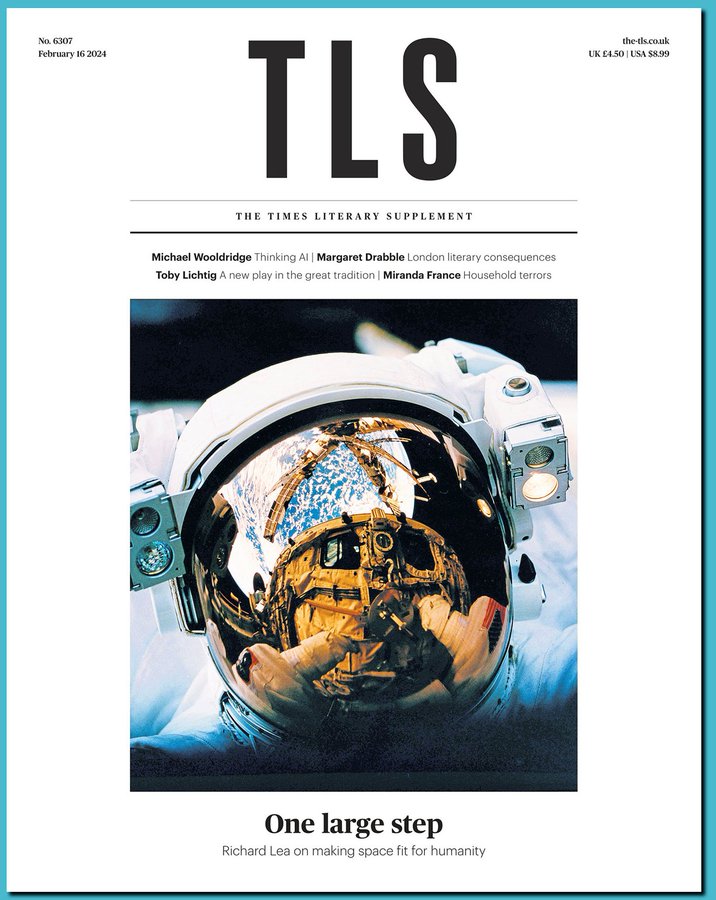
Times Literary Supplement (February 14, 2024): The latest issue features Thinking AI; London literary consequences, A new play in the great tradition, and Household terrors…
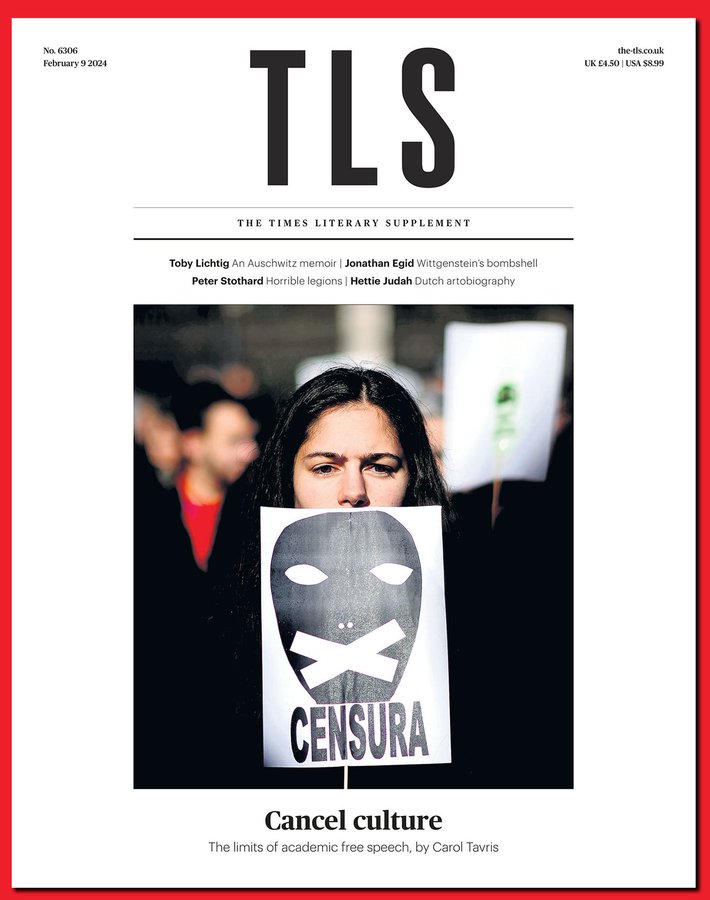
Times Literary Supplement (February 7, 2024): The latest issue features ‘Cancel Culture’ – The limits of academic free speech; An Auschwitz memoir; Wittgenstein’s bombshell; Horrible legions and Dutch artobiography…
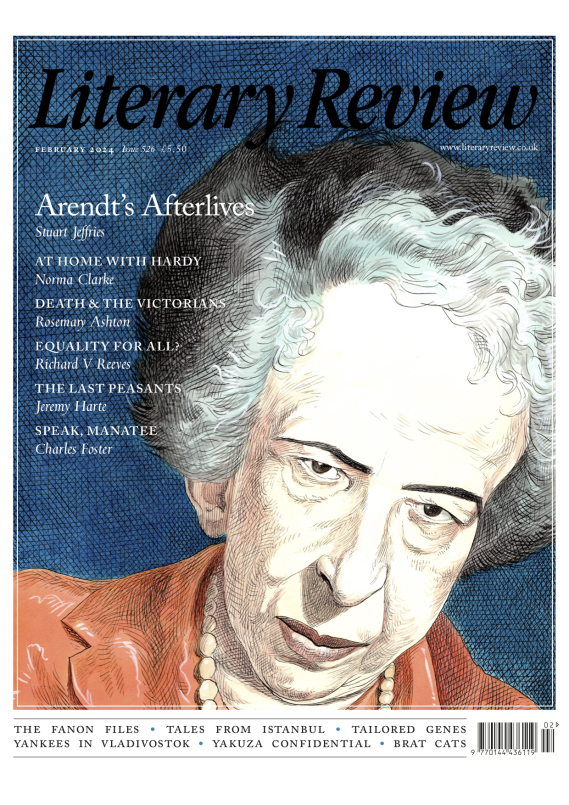
We Are Free to Change the World: Hannah Arendt’s Lessons in Love and Disobedience By Lyndsey Stonebridge
When Hannah Arendt looked at the man wearing an ill-fitting suit in the bulletproof dock inside a Jerusalem courtroom in 1961, she saw something different from everybody else. The prosecution, writes Lyndsey Stonebridge, ‘saw an ancient crime in modern garb, and portrayed Eichmann as the latest monster in the long history of anti-Semitism who had simply used novel methods to take hatred for Jews to a new level’. Arendt thought otherwise.
Hardy Women: Mother, Sisters, Wives, Muses By Paula Byrne
The title of Paula Byrne’s Hardy Women is a pun on Thomas Hardy’s name and a gesture to the enthusiasm that greeted Hardy’s fictional women. Bathsheba Everdene in Far from the Madding Crowd, Tess Durbeyfield in Tess of the d’Urbervilles and Sue Bridehead in Jude the Obscure were new kinds of women, and Hardy’s fame, which was immense and began with the publication of Far from the Madding Crowd, rested to a large extent on the heroines he created. One young reader wrote to him of Tess, ‘I wonder at your complete understanding of a woman’s soul.’ Hardy’s discontented wife Emma wondered at it too. She observed, ‘He understands only the women he invents – the others not at all.’
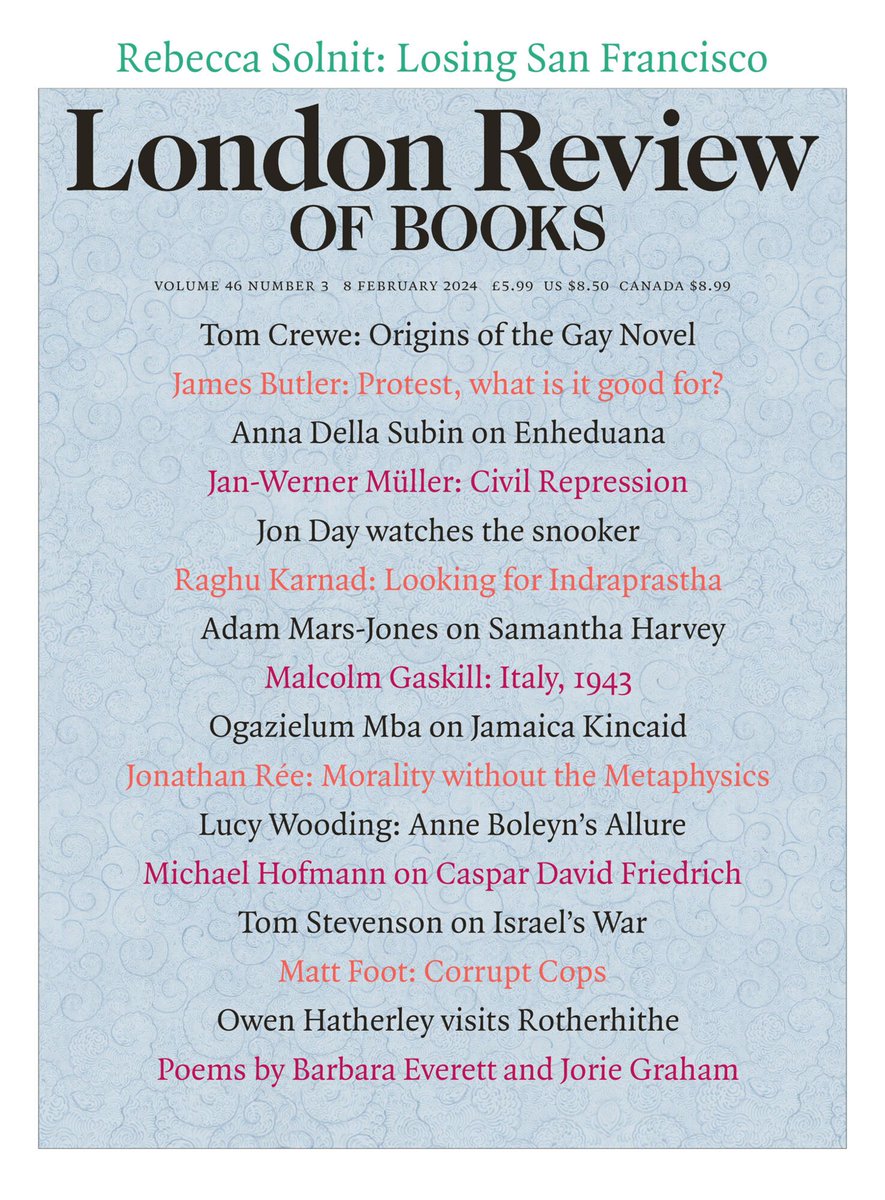
London Review of Books (LRB) – February 1, 2024: The latest issue features Origins of the Gay Novel; Protest, what is it good for?; Poems of Enheduana; Caspar David Friedrich, Israel’s War and more….
Times Literary Supplement (January 31 2024): The latest issue features ‘Back to Nature’ – The counterculture begins with Thoreau; Enlightenment dimmed; The secret state and the IRA; Homosexuality in early modern Europe and A family haunting….
This week’s @TheTLS, featuring Ritchie Robertson on the end of the Enlightenment; Costica Bradatan on Thoreau; Adam Mars-Jones on All of Us Strangers; @tylercowen on the Clinton years; @georgie_cat_ on Werner Herzog; Sarah Foot on Bede – and more pic.twitter.com/bxcIN8OUFu
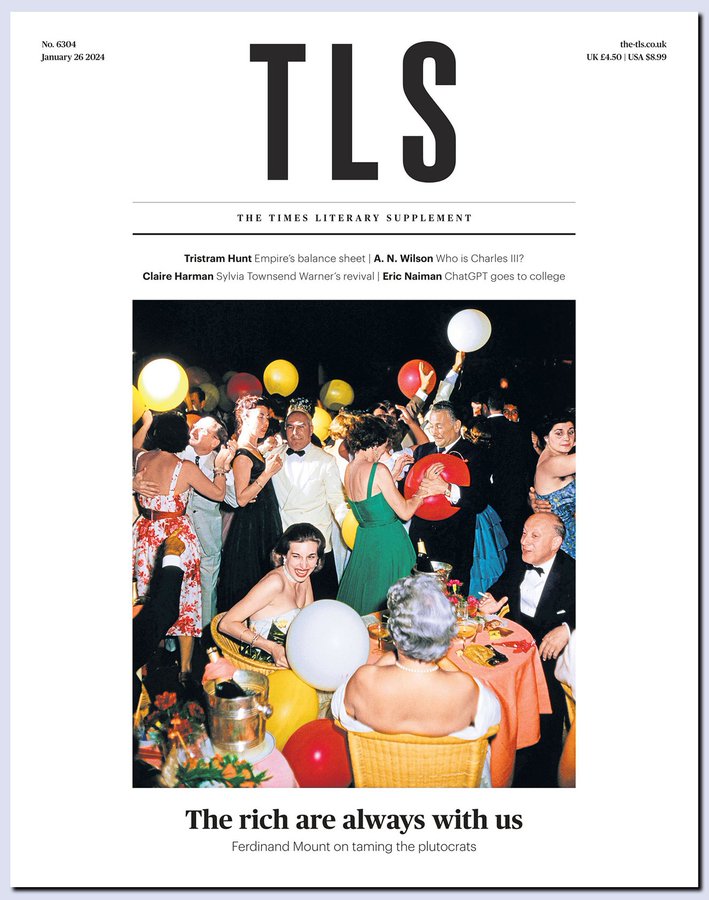
Times Literary Supplement (January 24, 2024): The latest issue features ‘The Rich Are Always With Us’ – Ferdinand Mount on taming the plutocrats; Empire’s balance sheet; Who is Charles III?; Silvia Townsend Warner’s revival and ChatGPT goes to college…
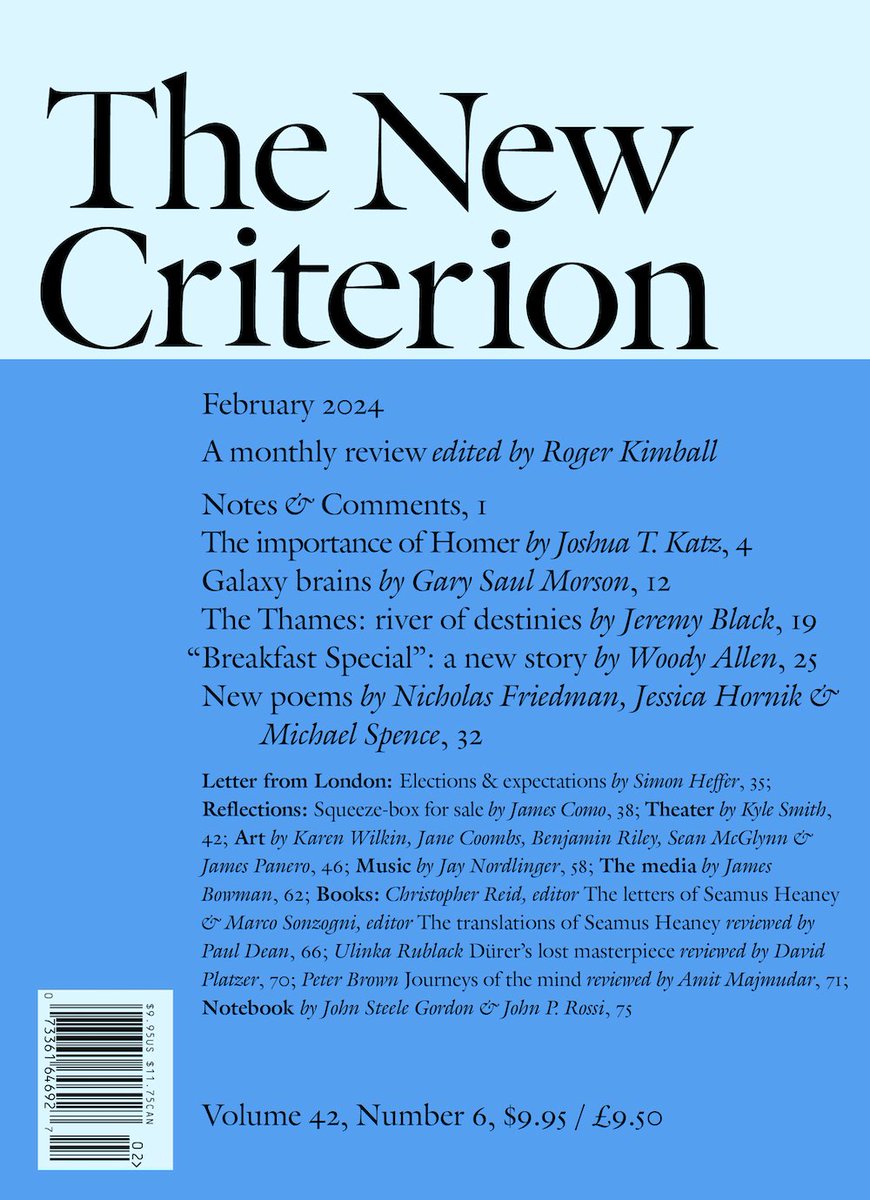
The importance of Homer by Joshua T. Katz Galaxy brains by Gary Saul Morson The Thames: river of destinies by Jeremy Black “Breakfast Special”: a new story by Woody Allen
New poems by Nicholas Friedman, Jessica Hornik & Michael Spence
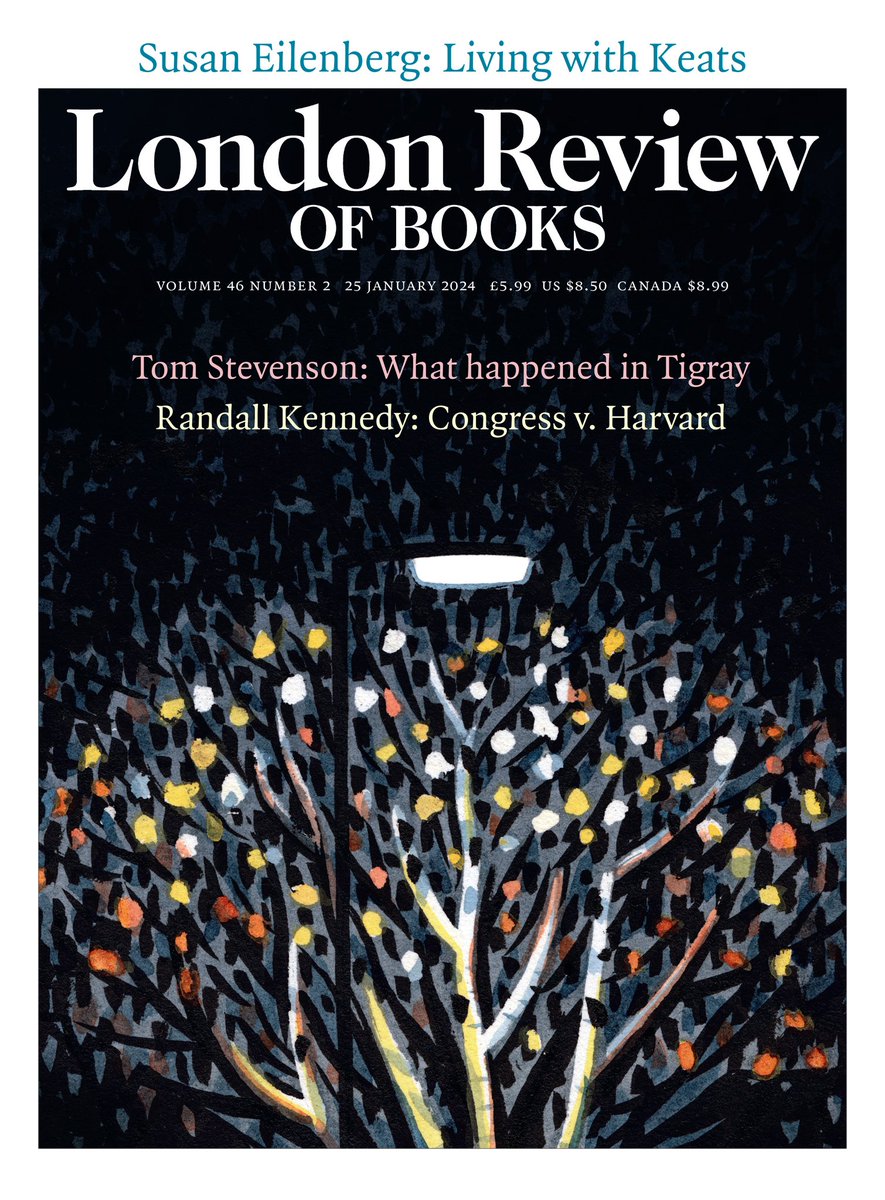
London Review of Books (LRB) – January 17, 2024: The latest issue features ‘Living With Keats’ – A Brief Life in Nine Poems and One Epitaph; Congress vs Harvard; The West’s Fight to Reverse the Russian Revolution, and more…
Looking back to September 1820, when things had gone badly wrong but not yet so grotesquely as to be visibly beyond repair, we can see how few and how poor Keats’s options were. Surely it was better that (in the absence of other volunteers) the young artist Joseph Severn agreed to travel with the dying poet to Rome that autumn than that he had refused.








 Boomers Daily