

DW News 24/7 reports: Michael Cohen releases book on President Trump, Joe Biden gives speech on military, stabbings in Britain and Tunisia, and other top news.

DW News 24/7 reports: Michael Cohen releases book on President Trump, Joe Biden gives speech on military, stabbings in Britain and Tunisia, and other top news.

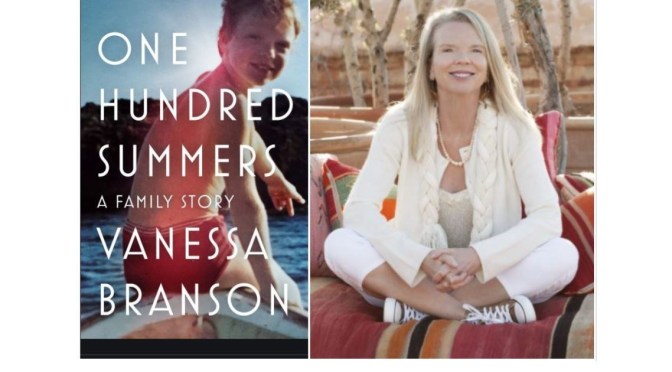
Vanessa Branson is a champion of numerous cultural and ecological initiatives. A trustee for the charitable Virgin Unite organisation that was started by her brother Richard, she has now written a frank and highly entertaining memoir about her family, called ‘One Hundred Summers’.

NPR News Now: Portland shooting, New York protests, Bangladesh explosion and more top news.
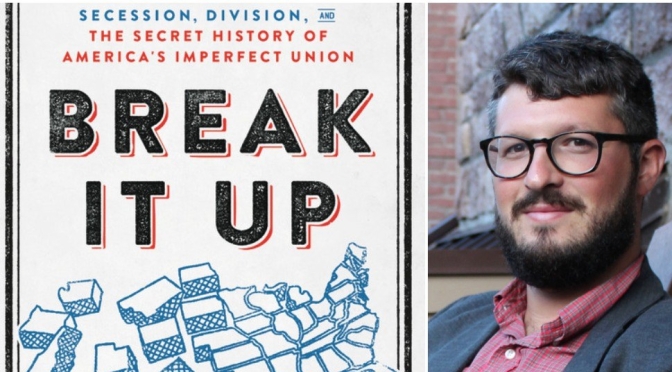
“Disunion—the possibility that it all might go to pieces—is a hidden thread through our entire history,” the journalist and historian Richard Kreitner writes in Break It Up: Secession, Division, and the Secret History of America’s Imperfect Union.
“Our refusal to recognize this, like patients who insist, against all evidence, that they are not ill, has been a major cause of our political dysfunction and social strife. Secession is the only kind of revolution we Americans have ever known and the only kind we’re ever likely to see.” On this episode of The World in Time, Lewis H. Lapham and Kreitner start at the beginning of the United States of America and trace this history of disunion up to the present. Lewis H. Lapham speaks with Richard Kreitner, author of “Break It Up: Secession, Division, and the Secret History of America’s Imperfect Union.”

This Morning With Gordon Deal: Suspect in Portland shooting killed by law enforcement, Joe Biden visits Kenosha, and New Hampshire 16-year-old swims across English Channel.

Joe Biden is visiting Kenosha, Wisconsin today, the city where Jacob Blake was shot by police last week. And where two people died after the black lives matter protests turned violent. His visit comes a few days after Trump’s own visit on Monday.
Axios talked to 10 swing voters in Wisconsin about their feelings on the protests in their state and the upcoming election.
Guests: Axios’ Alexi McCammond, Sam Baker, and Miriam Kramer.

Nature reviews: Engineering yeast to produce medicines, immunity to Covid-19, and the mechanism of anaesthetic action.
In this episode:
00:44 Making medicine with yeast
The tropane alkaloids are an important class of medicine, but they are produced agriculturally leaving them vulnerable to extreme weather and world events. Now, researchers have engineered yeast to produce these important molecules. Research Article: Srinivasan and Smolke
06:36 Coronapod
We discuss the complex story of immunity to COVID-19, and how this may affect vaccine development. News Feature: What the immune response to the coronavirus says about the prospects for a vaccine
16:33 Research Highlights
The neurological reason for overindulgence, and the bacteria that harness copper electrodes. Research Highlight: The brain circuit that encourages eating for pleasure; Research Highlight: Microbes with mettle build their own electrical ‘wires’
19:07 The molecular mechanisms of general anaesthetics
Despite over a century of use, there’s a lot we don’t know about how anaesthetics function. This week, researchers have identified how some of them they bind to a specific neuronal receptor. Research Article: Kim et al.
26:34 Briefing Chat
Whilst the Nature Briefing is on its summer holidays, we take a look at some other science from around the web. This time we discuss Elon Musk’s latest showcase of a brain-chip, and the physics behind how boats can float upside down on levitating liquid. New Scientist: Elon Musk demonstrated a Neuralink brain implant in a live pig; Business Insider: Elon Musk’s AI brain chip company Neuralink is doing its first live tech demo on Friday. Here’s what we know so far about the wild science behind it.; Research Article: Apffel et al.; Video: The weird physics of upside down buoyancy

In the year 79 CE, Pliny the Elder set out to investigate a large cloud of ash rising in the sky above the Bay of Naples. It was the eruption of Vesuvius, and Pliny did not survive.
“I think we can all empathize with someone who’s like a son, or in this case, an adopted son, trying to kind of make his own mark and escape the shadow of his father, and leave something on the world of his own.”
A trailblazing naturalist, he is best remembered today for his multivolume encyclopedia of Natural History,and we are able to retrace his final hours thanks to a vivid account by his nephew, Pliny the Younger. Inspired by his beloved uncle, the young Pliny became a lawyer, senator, poet, and representative of the emperor. His published letters are fascinating reflections on life and politics in the Roman Empire.
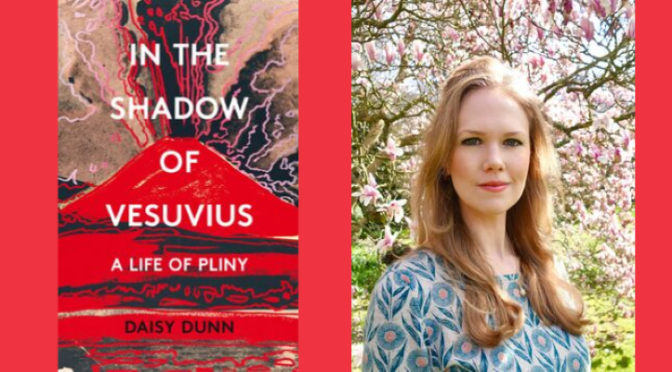
In this episode, Daisy Dunn, classicist and author of The Shadow of Vesuvius: A Life of Pliny,and Kenneth Lapatin, curator of antiquities at the Getty Museum, discuss the two Plinys and their profound impact on our understanding of ancient Rome.
NPR News Now reports: Facebook removing accounts associated with Russian efforts to influence 2020 election, CDC halts evictions until December and other top news.

NPR Up First reports: President Trump travels to Kenosha, Wisconsin to meet with law enforcement as protesters continue to call for police reform. Also, New York City schools were set to open next week, but one of the largest teachers unions in the country is considering a strike. And, India is pushing forward with reopening it’s economy despite record-breaking cases, quickly becoming the global epicenter of the pandemic.

 Boomers Daily