Tag Archives: Paul Signac

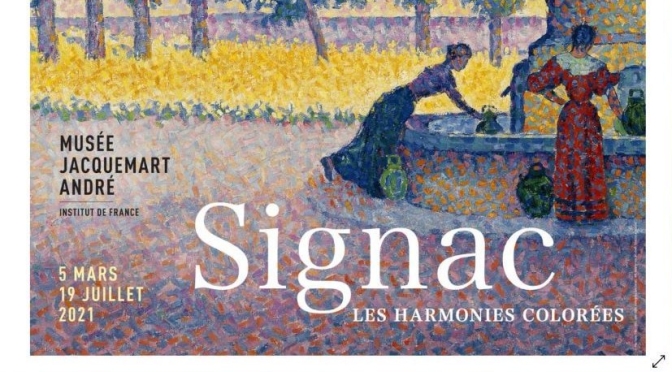
Paris Exhibitions: ‘Signac – The Colored Harmonies’ Musée Jacquemart-André

Signac, Colored Harmonies – From March 26 to July 19, 2021

In 2021, discover the work of Paul Signac (1863 – 1935), master of landscape and main theorist of neo-impressionism, through nearly 70 works from the finest collection of neo-impressionist works in private hands. Alongside 25 of his paintings such as Avant du Tub (1888), Saint-Briac. Les Balises (1890), Saint-Tropez. After the storm (1895), Avignon. Matin (1909) or Juan-les-Pins, Soir (1914) and around twenty watercolors, the exhibition will present more than twenty works by Georges Seurat, Camille Pissarro, Maximilen Luce, Théo Van Rysselberghe, Henri-Edmond Cross , Louis Hayet, Achille Laugé, Georges Lacombe and Georges Lemmen.

The entire exhibition will follow a chronological route, from the first impressionist paintings painted by Signac under the influence of Claude Monet to the brightly colored works produced by the artist in the 20th century, including his meeting with Georges Seurat in 1884. The exhibition, which will retrace the life of Signac and his work to liberate color, will also evoke the history of neo-impressionism.
Website

Art History: “Félix Fénéon: The Anarchist And The Avant-Garde” (MoMA)

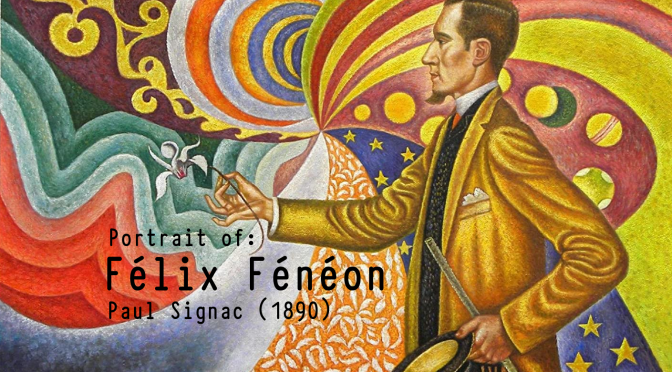
“It would not be a commonplace portrait at all, but a carefully composed picture, with very carefully arranged colors and lines. A rhythmic and angular pose. A decorative Félix, entering with his hat or a flower in his hand.”

With these words, in 1890, Paul Signac described to Félix Fénéon the extraordinary portrait he was dedicating to him. In it, Signac paid homage to Fénéon’s distinctive appearance, his generous but enigmatic personality, and his innovative approach to modernism.

This painting, a masterpiece in the Museum’s collection, will be the centerpiece of Félix Fénéon, the first exhibition dedicated to Fénéon (1861–1944). An art critic, editor, publisher, dealer, collector, and anarchist, Fénéon had a wide-ranging influence on the development of modernism in the late 19th and early 20th centuries.

In the late 1880s, he played a key role in defining the new movement known as Neo-Impressionism, a term he coined himself, whose artists, including Signac, used tiny dabs of color that would mix in the eye of the viewer. Over the next five decades, he championed the careers of artists from Georges-Pierre Seurat and Signac to Pierre Bonnard, Henri Matisse, and Amedeo Modigliani.

He amassed a renowned collection of paintings by these artists and many others, and he was also a pioneering collector of art from Africa and Oceania. The exhibition will feature some 130 objects, including major works that Fénéon admired, championed, and collected, as well as contemporary photographs, letters, and publications that trace key chapters in his biography. Together these works reveal the profound and lasting legacy of Fénéon’s keen eye and bold, forward-looking vision.

Art: “The Rediscovery Of Gaston Lévy’s Collection” Of Paul Signac & Camille Pissarro (Sotheby’s Video)

Known best as the author of Paul Signac’s first catalog raisonné, Gaston Lévy was perhaps the most remarkable art collector in pre-war Paris. After the Nazi regime seized his properties and dispersed his paintings, masterpieces were thought to have been lost to the Lévy family forever.

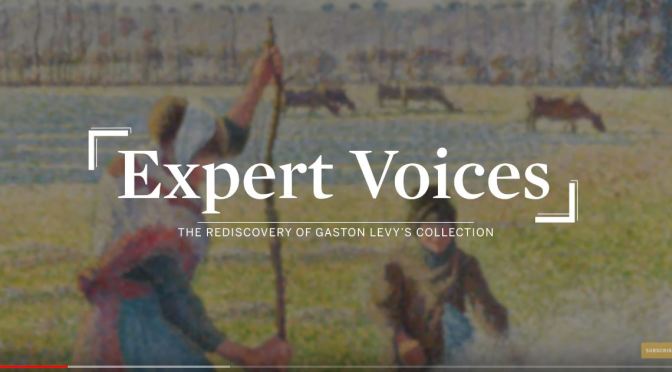
Camille Pissarro Gelée blanche Jeune Paysanne Faisant Du Feu 1888

However, This February Sotheby’s is proud to offer three recently restituted masterworks from the Lévy collection in our Impressionist & Modern Art Evening Sale. In this episode of Expert Voices, Sotheby’s Head of Restitution Lucian Simmons chronicles the story of Gaston Lévy’s collection and explores the extraordinary talent of Paul Signac and Camille Pissarro through their works Gelee Blache, Quai de Clichy and La Corne D’or.

Paul Signac Quai De Clichy Temps Gris 1887

(4 February | London)