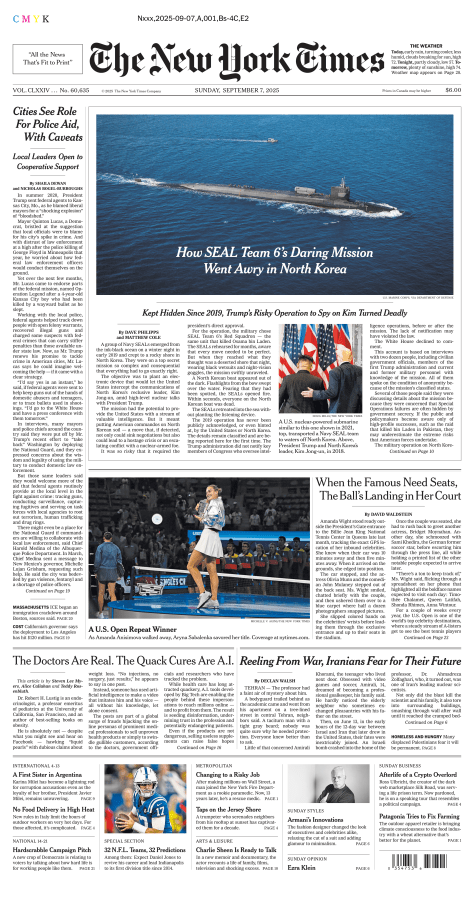
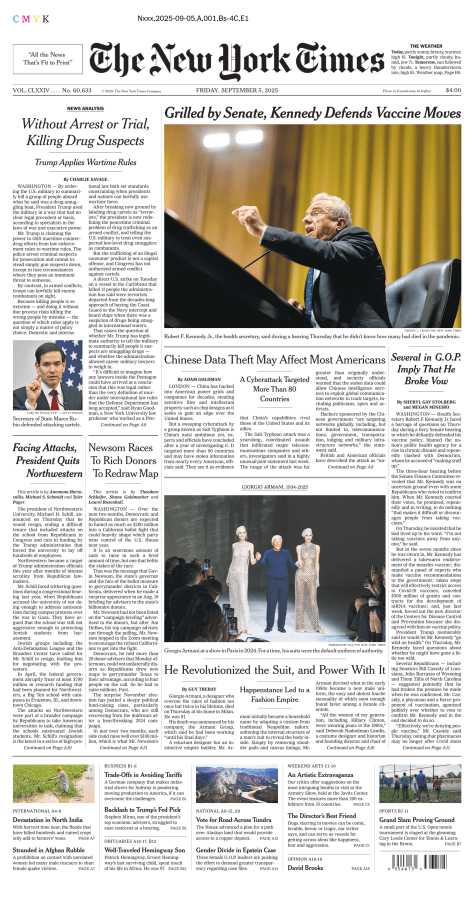
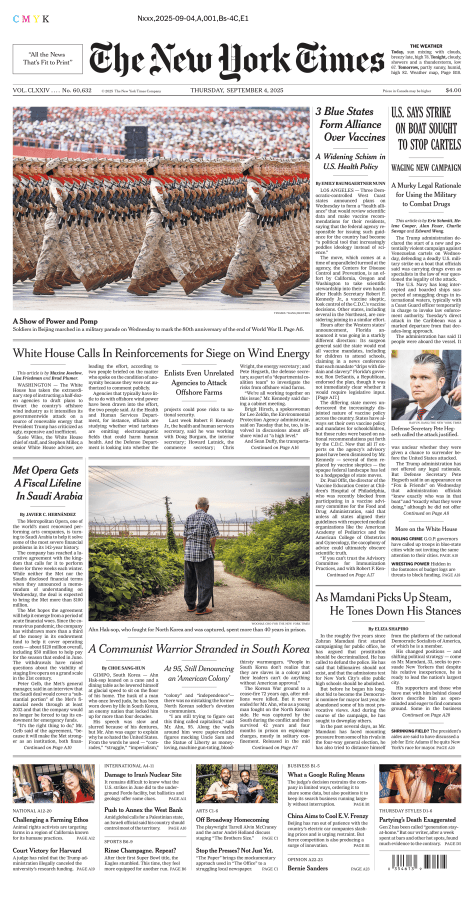
Republicans overcame conservative holdouts to bring President Trump’s domestic policy bill to the House floor. A final vote is still needed to approve the legislation.
In defusing much of the case, the music mogul’s lawyers did not dispute that he did bad things. They disputed that they matched the crimes he was charged with.
Once viewed as a safeguard against global injustice, international law has become increasingly politicised and dysfunctional in recent years. As Linda Kinstler writes in a fascinating essay for the cover story of this week’s Guardian Weekly magazine, the norms, institutions and good faith essential to the system functioning effectively have been badly eroded, and it’s hard to see how the problems can be reversed.
Institutions like the UN security council and international criminal court (ICC) are now often simply ignored or manipulated by powerful member states. The ICC in particular has struggled with legitimacy and enforcement, delivering only a few convictions, amid resistance from big powers such as the US and Russia. The unilateralism of Trump has further undermined the system, while China’s growing influence is shifting the international focus away from human rights.
Spotlight | How the rise of Zohran Mamdani is dividing Democrats Many believe the New York mayoral hopeful signals time for the national party to evolve but others say his brand of politics will not appeal in key battlegrounds. Lauren GambinoandAlaina Demopoulos report
Environment | Tipping points, doomerism and catastrophic risks Climate expert Genevieve Guenther talks to Jonathan Watts on the importance of correcting the false narrative that climate threat is under control – and why it is appropriate to be scared
Feature | The politics of breasts Breasts have always been political – and now they’re front and centre again. Is it yet another way in which Trump’s worldview is reshaping the culture? By Jess Cartner-Morley
Opinion | The global order is being dismantled by an ageing generation Just when the world desperately needs wise elders, its fate is in the hands of old and ruthless patriarchs, argues David Van Reybrouck
Culture | The Herds: The animal marathon stampeding to the Arctic Why is a huge pack of puppet animals, from tiny monkeys to towering elephants, making a 20,000km cross-planet odyssey? Kate Wyver spent a week as an antelope to find out
TIMES LITERARY SUPPLEMENT: The latest issue features ‘The writer as thinker’ – On the novel of ideas; The age of misgovernment; Keeping up with the Camerons; Chaucer’s ambitions for English and Samuel Beckett and me…
Contrary to President Trump’s assertions, records filed in a fraud case against him suggest that his riches are not the product of a steady and strong empire.
If President Trump gets his domestic policy bill over the finish line, it will be a vivid demonstration of his continuing hold over the Republican Party.
Vice President JD Vance arrived at the Capitol prepared to cast a tiebreaking vote on the bill, but it was not clear when Republicans would call a final vote.
How we got to a situation where a President can reasonably claim that it is lawful, without congressional approval, to bomb a country that has not attacked the U.S. By Jeannie Suk Gersen
Anne Enright’s Literary Journeys to Australia and New Zealand
The Booker Prize-winning author recommends three works by writers who, thanks to geography, may have never received their due.
What Happens After A.I. Destroys College Writing?
The demise of the English paper will end a long intellectual tradition, but it’s also an opportunity to reëxamine the purpose of higher education. By Hua Hsu
The Senate will vote on a sweeping Republican-drafted economic and domestic policy bill, with President Trump’s legislative agenda hanging in the balance.
THE NEW YORK TIMES MAGAZINE: The 6.29.25 Issue features C.J. Chivers on the hundreds of cheap, long-range drones Russia is launching at Ukranian civilians at night; Nikole Hannah-Jones on the Trump administration’s dismantling of civil rights protections within the federal government; Parul Sehgal on the state of the modern biography; David Marchese interviews Andrew Schulz; and more.