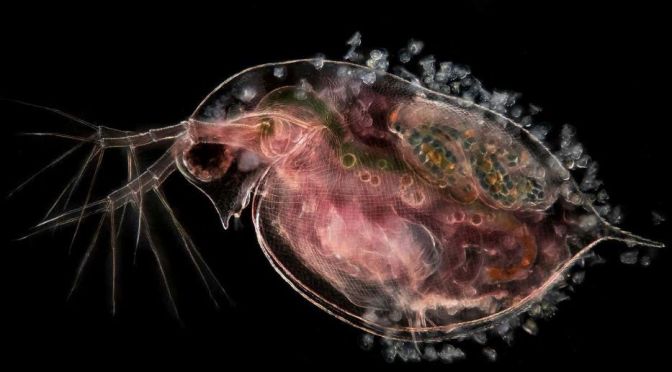
Plankton form the base of marine and freshwater food webs. They consist of phytoplankton (plants) and zooplankton (animals). Their name derives from the Greek word for “drifter”, since they are too tiny to fight tides or currents. Phytoplankton oxygenate the ocean through photosynthesis, enabling marine animals to thrive, and produce about half the world’s oxygen. Yet despite their abundance and fundamental role for life on Earth, their microscopic nature makes them easy to ignore.
“The most exciting thing of the whole project was the discovery of this parallel, beautiful, strange, complex world, ” says photographer Jan van IJken, “there’s so much beauty around the corner that you’re not aware of”. Inspired by the microscopic beauty of plankton – and their predators, van IJken embarked on a photo and film project called Planktonium. Over a year, he collected a diverse array of species from various Dutch waters, including puddles, lakes and seas, “Every time it was [a] new discovery”, he says. “There’s such a diversity, it makes you humble”.
Back in his studio, Van IJken used various microscope and photography techniques, including dark field microscopy and timelapse photography to capture the “beauty, fine detail and incredible shapes” of his subjects. To add impact to the film, he commissioned Norweigan musician, Jana Winderen to create a soundscape, made using aquatic audio recordings including of fish, icebergs, small crustaceans which made a crackling sound and even the sounds of “fish howling to the moon”.
In this week’s issue, a new theory on how Homo sapiens conquered the planet. Plus: black lava from a bizarre volcano could reveal Earth’s deep secrets.
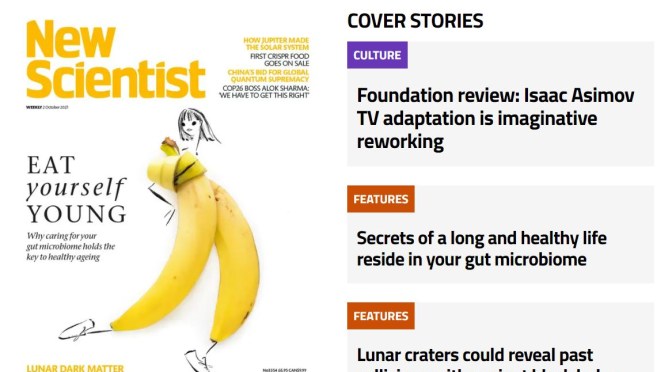
The long-term impact of the pandemic will be felt most by those growing up in its grasp, but how will it shape the future of our society? Find out in this week's New Scientist, available now in shops and in digital and audio formats via our app. pic.twitter.com/18DepWVG6I
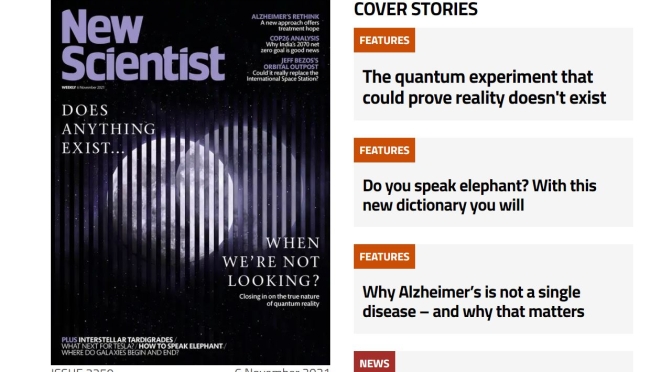
In this week's special issue, we explore some of the biggest outstanding quantum mysteries, focusing on the new insights and experiments that are both deepening and challenging our understanding.
Grab a copy on newsstands now, or download digital and audio editions in our app. pic.twitter.com/s0IGs4UhwQ





 Boomers Daily