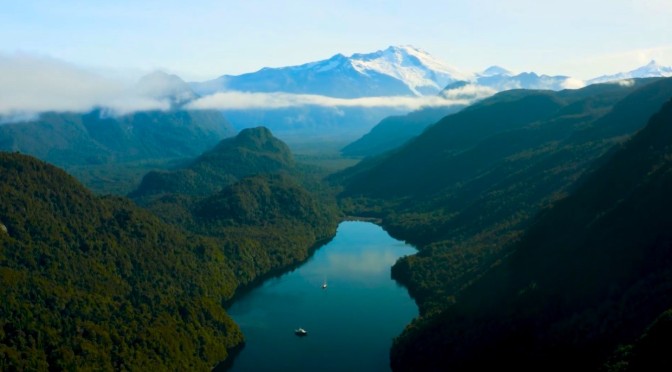
SeaLegacy Films (October 16, 2023) – At the foot of the iconic mountain peaks of Chilean Patagonia, just below the blue surface of the sea, lies a biodiverse and pristine kelp forest. In this episode of “Sea of Hope,” Mission Blue ocean policy expert Max Bello and Chilean Environment Minister Maisa Rojas join the SeaLegacy team to explore how wonderful and spectacular this unique ecosystem is. in the world.
Abundant and diverse life forms find their home in the world’s longest continuous kelp forest, just off the coast, in a region home to hundreds of fjords and more than 40,000 islands and islets. Join our co-founder Andy Mann as he embarks with the exploration team on an adventure to discover the treasures of Chilean Patagonia and evaluate the health of this productive and wild ecosystem. Discover the natural neon colors, the huge stems of kelp, some of the marine characters that inhabit the area, and the impressive carbon capture abilities of the underwater forests!
The Belize Barrier Reef System features three of four coral atolls in the Atlantic, lush mangrove forests, numerous offshore islands, and one of the most extensive seagrass areas in the Caribbean. It hosts 77 species listed as threatened by the IUCN, including a sizeable population of West Indian Manatees.
Now, Belize has reaffirmed its environmental leadership by becoming the first country in the Americas to finalize a debt conversion for ocean conservation—and one that represents an impact investment for marine protection that’s unprecedented in scale. This commitment will enable Belize to restructure approximately US$550 million of external commercial debt—an amount that represents 30 percent of the country’s GDP—and reduce the national debt by 12 percent.
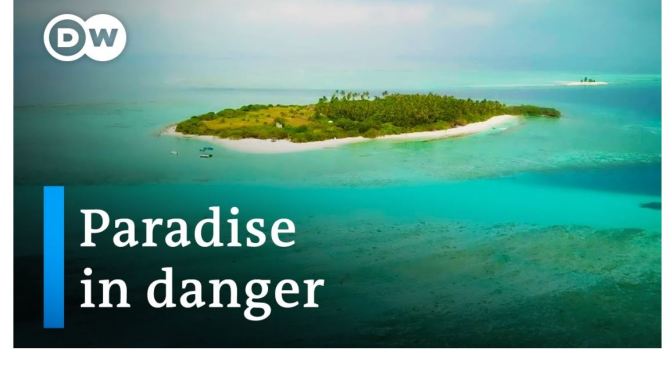
Thilafushi, an island of floating rubbish island in the Maldives, grows by a square meter a day. But diving instructor Shaahina Ali is trying to slow that growth by recycling and using floating barriers to hold back the rising seas.
For decades, the Maldives simply dumped the trash the tourists and the island country’s 400 thousand residents generated. Yet Shaahina Ali says that has to stop. Almost every day, the diving instructor and her allies go from island to island in the Indian Ocean. Working with an environmental organization, they have obtained trash compactors that make plastic waste transportable, allowing it to be shipped abroad for recycling. Ali also advocates avoiding disposable plastic. She gives lectures, advises hotel managers and even bends the ear of the Maldives’ president himself.
When she has time, Shaahina Ali goes scuba diving. Beneath the waves she sees environmental degradation – dying corals and fish caught up in plastic waste. She says, “We can’t afford to address just one problem. We’ve got to take care of everything at once because everything is connected to the sea.” But the island paradise is not only threatened by rubbish. Climate change is also causing the sea levels to rise, and the Maldives are at risk of sinking beneath the water.
That’s why conservationists are using floating barriers made of recycled plastic to help prevent flooding. In addition to the environmental group “Parley for the Oceans,” Ali has also won politicians to her cause. Last year saw a democratic change of government in the Maldives. “The new government no longer views environmentalists as annoying troublemakers. They see us as partners instead,” Ali says. But those trying to save the island are in a race against time. “If we don’t succeed,” says Shaahina Ali, “far more than a vacation paradise will be lost. We will lose our homeland.”
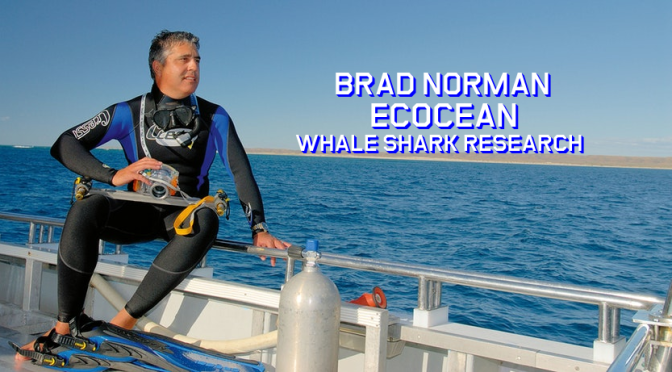
The whale shark is the largest fish in the world, recognisable by its celestial markings. Australian scientist Brad Norman has been tracking this elusive and endangered creature by using technology designed to study stars, as well as images collected through ecotourism.
ECOCEAN (Australia) is a globally recognised, non-government, not-for-profit organization based in Western Australia working towards scientific research, education and conservation of the marine environment. It’s flagship species, the whale shark, is an iconic animal for marine conservation being the world’s largest fish.
ECOCEAN (Australia) was founded in 1995 by marine conservation biologist Brad Norman and was incorporated in 2006. Brad also helped in the establishment of the partner organisation WildMe (USA) who manage the global whale shark photo-identification library – Wildbook.







 Boomers Daily