Even with Kristi Noem gone, the Administration’s immigration agenda shows no signs of flagging—in fact, it is leading toward a new humanitarian and legal crisis. By Jonathan Blitzer
What’s Behind Trump’s New World Disorder?
A foreign policy freed of liberal pretenses and imperial ambitions could lead to restraint—or, as the Iran attack shows, simply license hit-and-run belligerence. By Daniel Immerwahr
Who Bankrolled the American Revolution?
Our history too often sidesteps the question of finances. But sonorous ideals don’t keep an army supplied with uniforms, guns, and grub. By Adam Gopnik
Sarah Schulman on the Art of Nonfiction: “I like to have my say, obviously. And if people would have just let me talk, some of these books wouldn’t have had to be written.”
Darryl Pinckney on the Art of Nonfiction: “There are moments when you run up against a white wall—there’s a white man, white man, white man, white man—and the story somehow has to be uncovered.”
Prose by Ingeborg Bachmann, Dan Bevacqua, Patrick Cottrell, Zans Brady Krohn, Tao Lin, David Szalay, and Yu Hua.
Poetry by Inger Christensen, Rachel Lapides, Enrique Lihn, Joyelle McSweeney, Nakahara Chuya, and Asiya Wadud.
Art by Cecily Brown, Tom Fairs, and Cauleen Smith; cover by Cecily Brown.
The attack launched on Iran by the US and Israel on 28 February was a textbook case of international aggression, justified in only the most cursory fashion by fictional Iranian threats and undertaken with no clear aims and no clear demands or terms. In announcing the war Donald Trump described it as a wholesale attack on both government and state. The US and Israel would ‘raze their missile industry to the ground’ and ‘annihilate their navy’. Benjamin Netanyahu called on Iranians to ‘come out to the streets and finish the job’. By Tom Stevenson
The late queen can be held responsible for much, but nobody could accuse her of seeming to enjoy her role. For the Yorks, however, enjoyment was everything, and the notion of royal sacrifice, arguably a red herring in the House of Saxe-Coburg and Gotha, was finally obliterated by their actions. By Andrew O’Hagan
As Stephen Greenblatt’s Dark Renaissance shows despite itself, it is not Marlowe’s life story that we still need, but his plays and poems: we might well want to avert our eyes from the bathetically dismal life of the man who wrote them. By Michael Dobson
Entitled: The Rise and Fall of the House of York by Andrew Lownie
Nobody’s Girl: A Memoir of Surviving Abuse and Fighting for Justice by Virginia Roberts Giuffre
President Trump has both called for Iranians to rise up and oust the ruthless theocracy and then said that he’s fully prepared to deal with a new religious leader. By Robin Wright
The Zombie Regulator
As the cost of living continues to spiral upward, the Trump Administration is gutting the government agency built to protect Americans from financial ruin. By E. Tammy Kim
The Unmaking of the American University
For decades, research universities have relied on federal funding, with no guarantee that it will last. Now their survival may depend on compliance with the government. By Nicholas Lemann
THE NEW YORK REVIEW OF BOOKS: The latest issue features Anne Enright on a day in Jeffrey Epstein’s life, Jacob Weisberg on the Great Crash, Ingrid D. Rowland on Giorgia Meloni alla fresco, Robert G. Kaiser on Citizen Bezos, Marilynne Robinson on two-party tyranny, Catherine Nicholson on the first diarist, Nathan Thrall on a lost Hebrew classic about the Nakba, David Cole on the fate of affirmative action, Aaron Matz on satire, Orville Schell on Chiang Kai-shek, Mark Lilla on a nineteenth-century protofascist, a poem by Patricia Lockwood, and much more.
When Jeff Bezos bought The Washington Post in 2013 and promised to find inventive ways to make journalism profitable in the digital age, he seemed like a godsend. He wasn’t.
The Leiden Collection—one of the largest private collections of Dutch art in the world—was conceived as a “lending library for Old Masters,” animated by the humanist spirit found in Rembrandt’s paintings.
Art and Life in Rembrandt’s Time: Masterpieces from the Leiden Collection – an exhibition at the H’ART Museum, Amsterdam, April 9–August 24, 2025, and the Norton Museum of Art, West Palm Beach, Florida, October 25, 2025—March 29, 2026
The Leiden Collection Online Catalogue, Fourth Edition edited by Arthur K. Wheelock Jr. and Elizabeth Nogrady
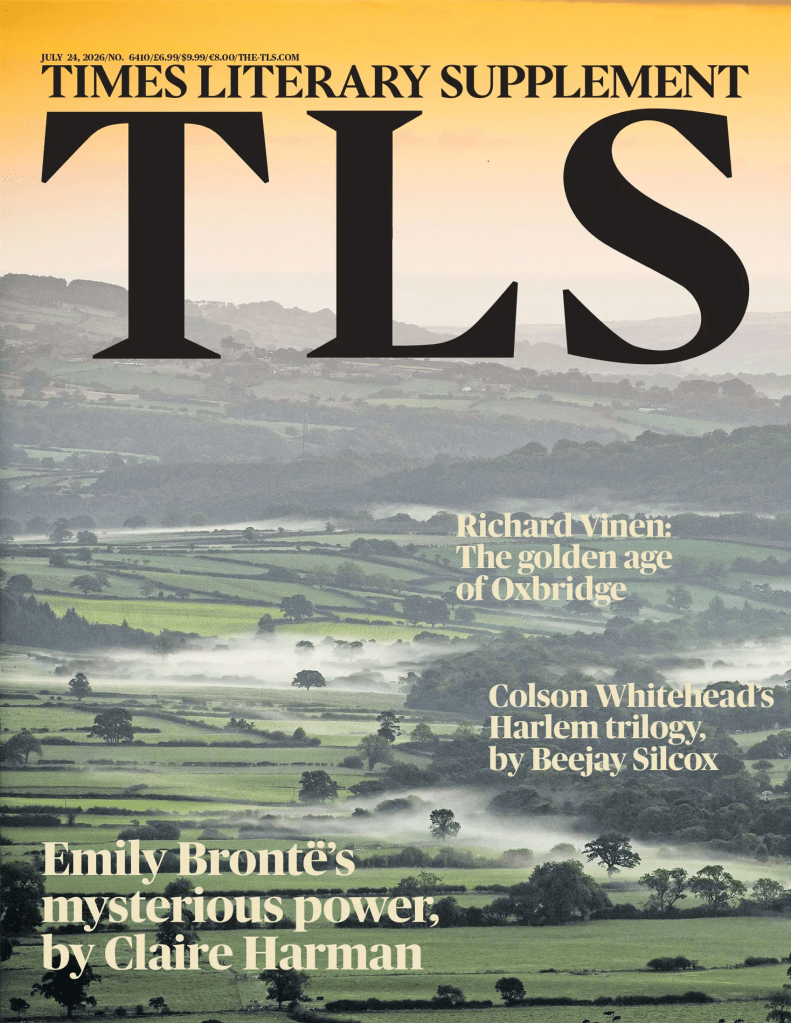
The historian A J P Taylor was at Oxford during the general strike of 1926. After it, he later recalled, relations between the minority of undergraduates, such as himself, who had gone to help the strikers and those who had signed on as special constables or volunteer strike-breakers were cordial. Only those sensible men who had stuck to their books and essays were disdained. The whole episode seemed funny in a stereotypically English way – like a Punch cartoon brought to life.
The fight over the 2028 primary calendar is one of several proxies for a broader battle about the future of the Party—and the search for the best nominee. By Amy Davidson Sorkin
Scandal, Protest, Goofiness, and Grandeur at the U.S. Bicentennial
This year marks the two-hundred-and-fiftieth anniversary of the nation’s founding. The two hundredth wasn’t exactly smooth sailing. By Jill Lepore
The Tree House and the Oil Pipeline
In the fight against climate change, sometimes you have to go out on a limb. By Robert Moor
Ian McKellen Swings from Shakespeare to Gandalf to Virtual Reality
On a visit to New York, the actor reflected on mortality and coming out, and unleashed an Elizabethan anti-ICE monologue on “Colbert” that went viral. By Henry Alford
James Talarico Puts His Faith in Texas Voters
The Senate candidate believes that Democrats can win by appealing to higher values. Can he succeed in the age of Trump? By Tad Friend
Why the World Cup Can Feel Like War
Soccer stadiums can be dominated by violence, tribalism, chauvinism, and near-religious fervor‚ animated by the memory of old hostilities and the power of ritual. By Ian Buruma
The Trial of Gisèle Pelicot’s Rapists United France and Fractured Her Family
After fifty-one men were convicted, Pelicot became a feminist hero. But additional accusations left her children struggling to accept her new role. By Rachel Aviv
In A House for Miss Pauline, the Jamaican novelist Diana McCaulay examines her family’s shadowy history by telling the story of a woman who builds her house with the remains of the manor of a former slave plantation.
Four years after their full-scale invasion, the Russians are trying to freeze Ukraine into submission by relentlessly attacking the country’s energy grid.
What Bernie Sanders brought to the job of mayor of Burlington and what he did with it help explain what matters to him and how he fits into American political argument.
Bernie for Burlington: The Rise of the People’s Politician and the Transformation of One American Place by Dan Chiasson
News, Views and Reviews For The Intellectually Curious