

From a National Institute On Aging release:

Fragmented physical activity, but not total daily activity, was significantly associated with death, the researchers found. For each 10% higher degree of activity fragmentation, mortality risk was 49% greater. The duration of physical activity also mattered: Participants who frequently engaged in short bouts of activity of less than five minutes were more likely to die than those whose activity bouts lasted five minutes or longer. These associations held after adjusting for age, sex, body mass index and other factors.
Daily physical activity, which benefits health and quality of life, typically decreases in older adults. A new study shows that higher fragmentation of that activity — more transitions from activity to sedentariness — may be a better indicator of risk of death than a person’s overall level of physical activity.
Researchers from the Johns Hopkins Bloomberg School of Public Health, Baltimore, analyzed data from the NIA-supported Baltimore Longitudinal Study of Aging (BLSA), looking at a week’s worth of minute-by-minute physical activity for 548 healthy participants age 65 and older (average age, 76).
To read more: https://www.nia.nih.gov/news/fragmented-physical-activity-linked-higher-risk-death-older-adults

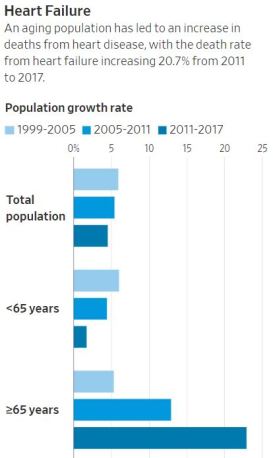 The findings help explain why a decadeslong decline in the death rate from cardiovascular disease has slowed substantially since 2011 and started rising in middle-aged people, helping
 For the study, nearly 8,300 people at risk for heart disease had fasting and nonfasting lipid profile tests done at least four weeks apart. (Fasting means they had nothing to eat or drink except water for at least eight hours before the test.) The differences in their total, LDL, and HDL cholesterol values were negligible. Triglyceride levels were modestly higher in the nonfasting samples.
 Boomers Daily