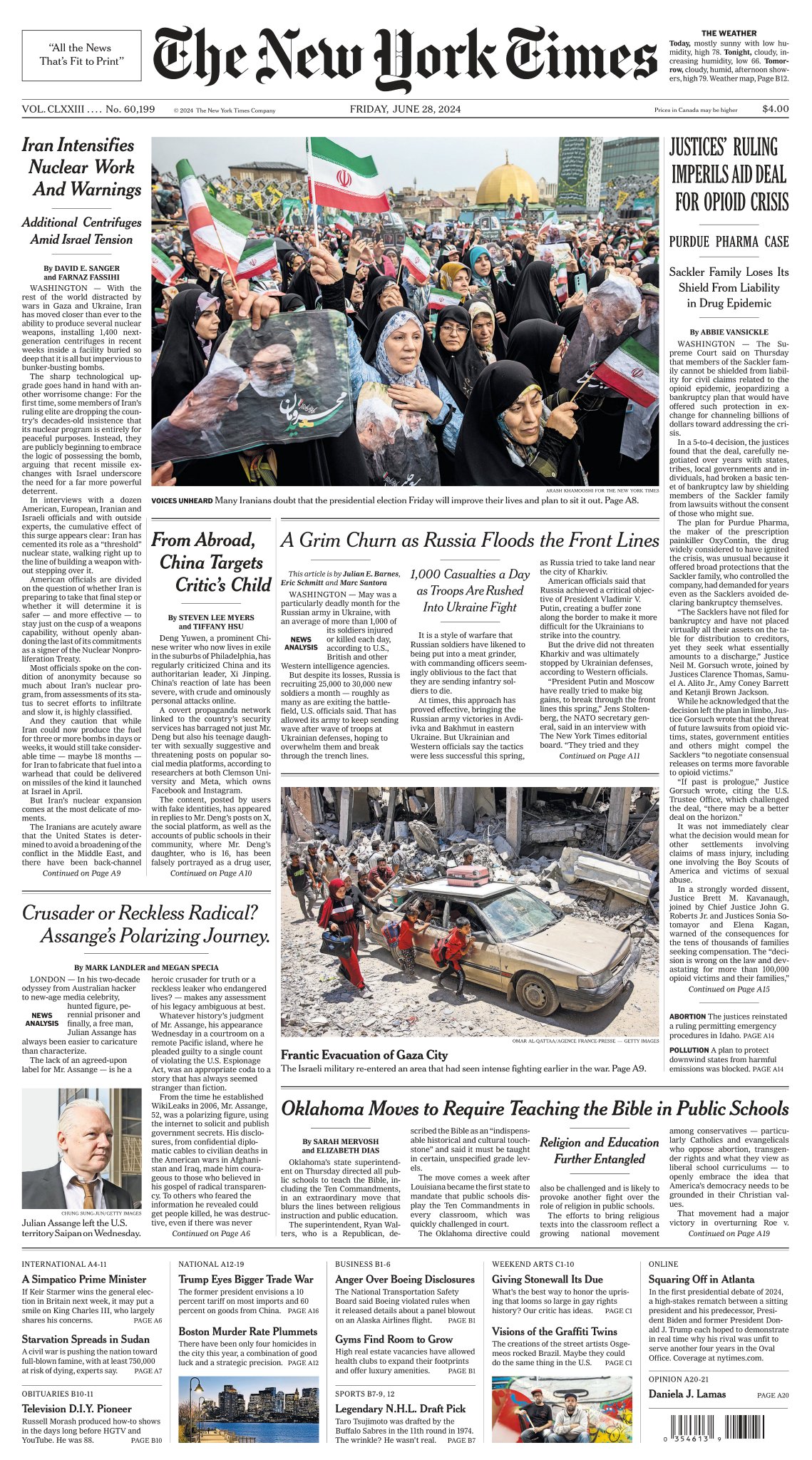
The justices rejected a bankruptcy settlement maneuver that would have protected members of the Sackler family from civil claims related to the opioid epidemic.
Iran has expanded its most sensitive nuclear production site in recent weeks. And for the first time, some leaders are dropping their insistence that the nuclear program is for peaceful purposes.
More than 1,000 Russian soldiers in Ukraine were killed or wounded on average each day in May, according to NATO and Western military officials.
New Tactic in China’s Information War: Harassing a Critic’s Child in the U.S.
A covert campaign to target a writer critical of the country’s Communist Party has extended to sexually suggestive threats against his 16-year-old daughter.
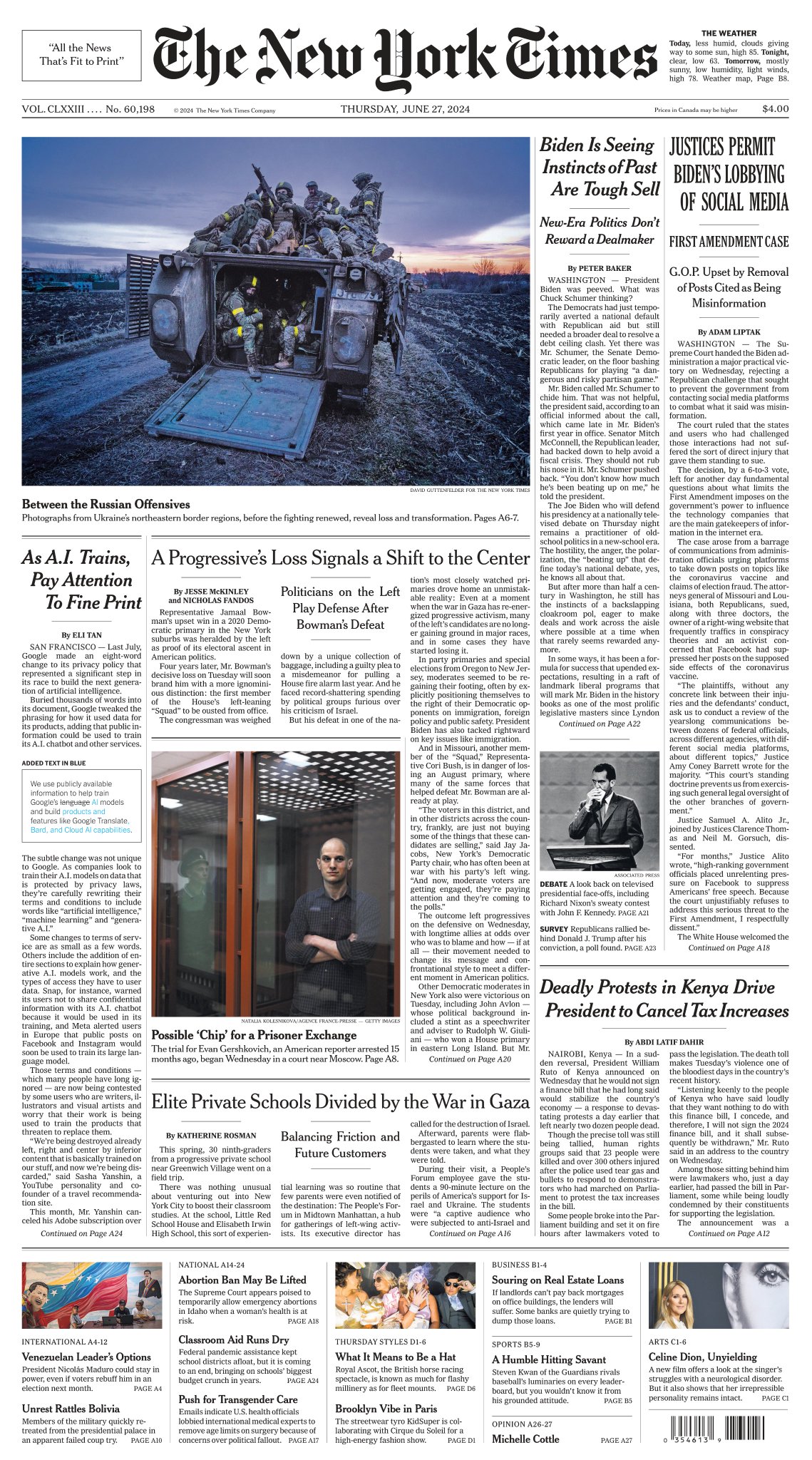
The case, one of several this term on how the First Amendment applies to technology platforms, was dismissed on the ground that the plaintiffs lacked standing to sue.
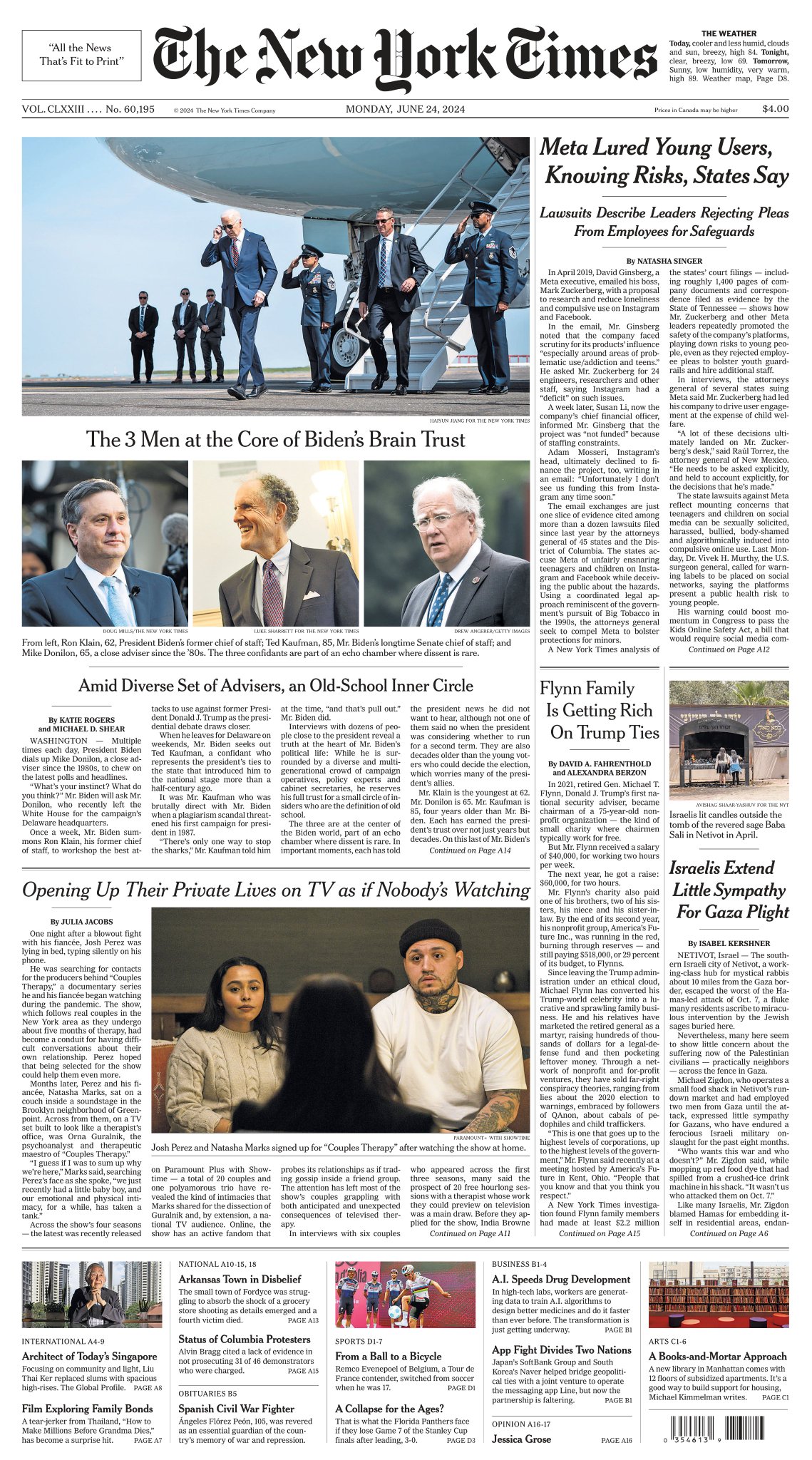
After more than half a century in Washington, President Biden has learned to make deals and work across the aisle. But that instinct is rarely rewarded in today’s political climate.
Tech companies have been making subtle and not-so-subtle changes to their rules for better access to data for building A.I. We took a look at some of them.
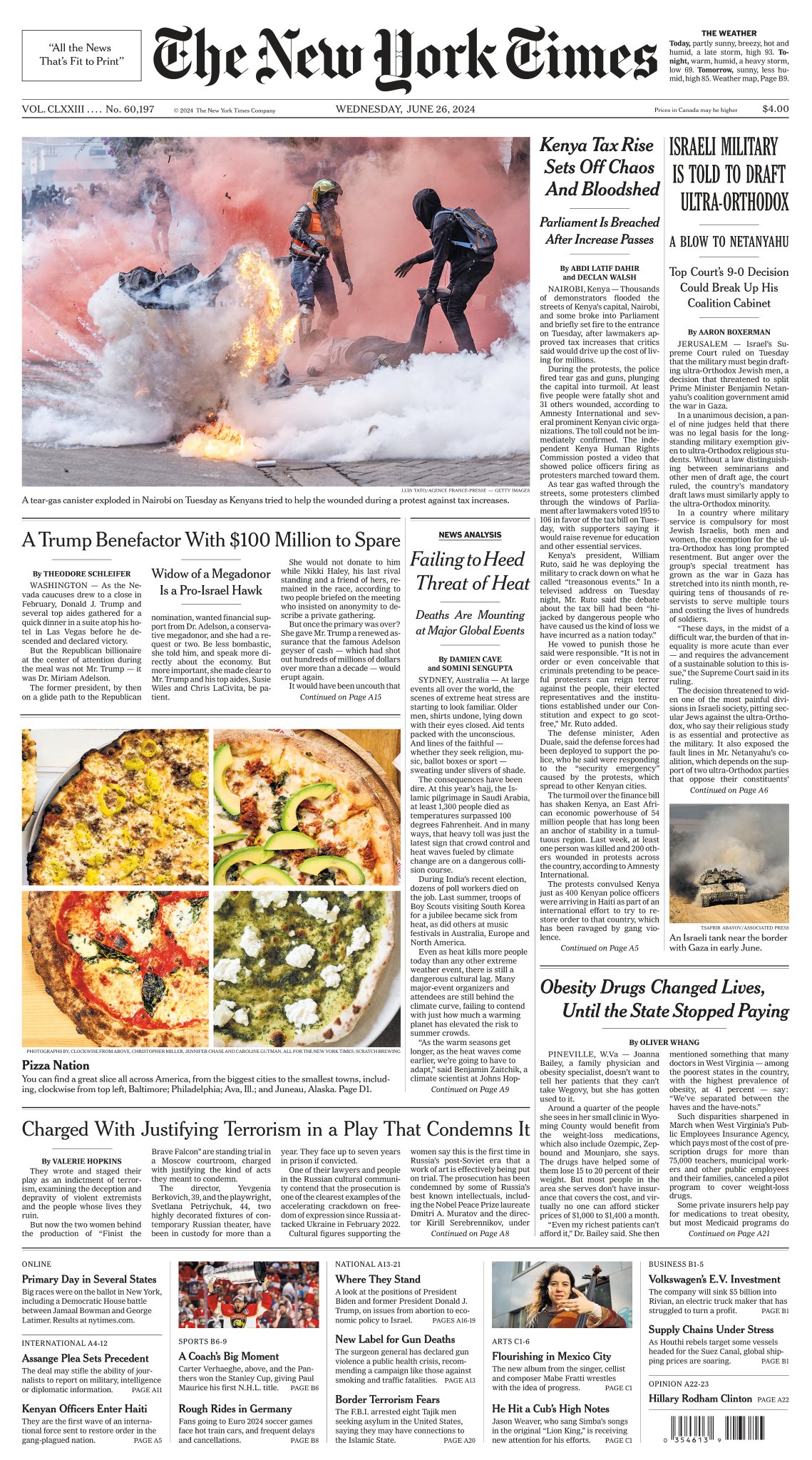
The court ruled there was no legal justification for the ultra-Orthodox exemption from service, a decision that threatened to split Prime Minister Benjamin Netanyahu’s wartime government.
At least five people were killed in clashes with the police that erupted after lawmakers approved tax increases that critics said would drive up the cost of living for millions.
Miriam Adelson long operated in the shadow of her powerful husband, Sheldon Adelson. Now, after his death, she is playing in politics as a solo practitioner for the first time.
Heat Is Killing Thousands, and Big Events Have Not Adjusted
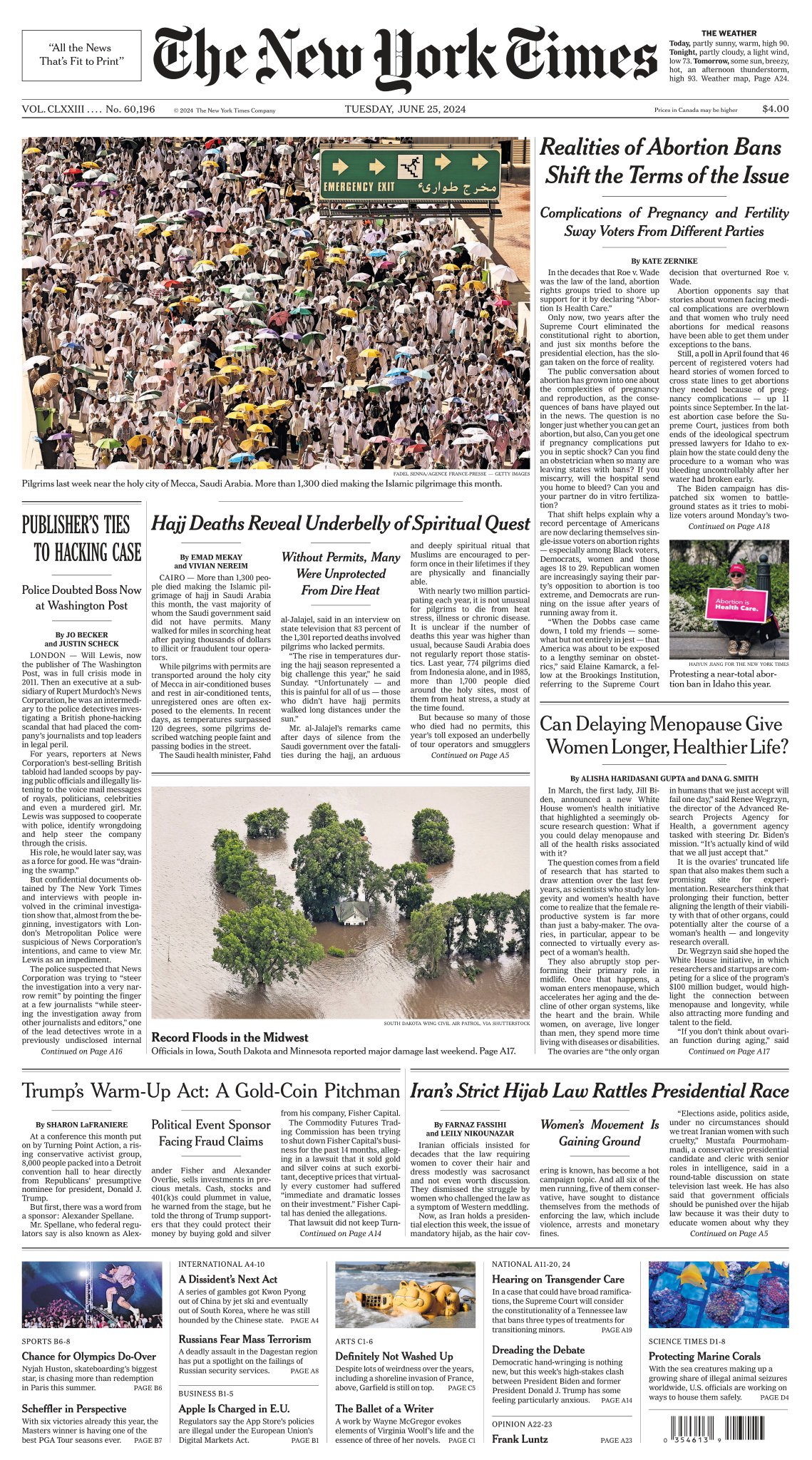
The deaths of at least 1,300 pilgrims during the hajj point to the growing threat that climate change poses to beloved gatherings.
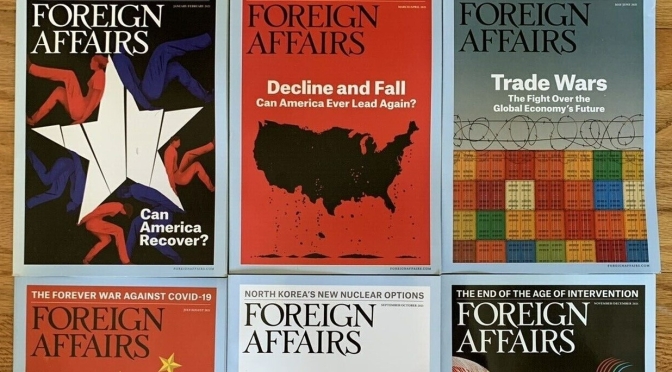
“America is back.” In the early days of his presidency, Joe Biden repeated those words as a starting point for his foreign policy. The phrase offered a bumper-sticker slogan to pivot away from Donald Trump’s chaotic leadership. It also suggested that the United States could reclaim its self-conception as a virtuous hegemon, that it could make the rules-based international order great again. Yet even though a return to competent normalcy was in order, the Biden administration’s mindset of restoration has occasionally struggled against the currents of our disordered times. An updated conception of U.S. leadership—one tailored
The Return of Peace Through Strength
Making the Case for Trump’s Foreign Policy
Si vis pacem, para bellum is a Latin phrase that emerged in the fourth century that means “If you want peace, prepare for war.” The concept’s origin dates back even further, to the second-century Roman emperor Hadrian, to whom is attributed the axiom, “Peace through strength—or, failing that, peace through threat.”
More than 1,300 people died, and a Saudi official said most of them were not registered for the pilgrimage. That left them with little protection from the heat.
Monocle on Saturday (June 22, 2024): Monocle brings Switzerland to Midori House. Alex Herrmann, UK & Ireland Director of Switzerland Tourism, joins Georgina Godwin to tell us all about the different regions and Swiss delicacies at Monocle’s Swiss Summer Market.
Plus: Georgina and political journalist Terry Stiastny flick through the global papers and Monocle’s Helsinki correspondent, Petri Burtsoff, explains how the wider Nordic region is celebrating midsummer this weekend.
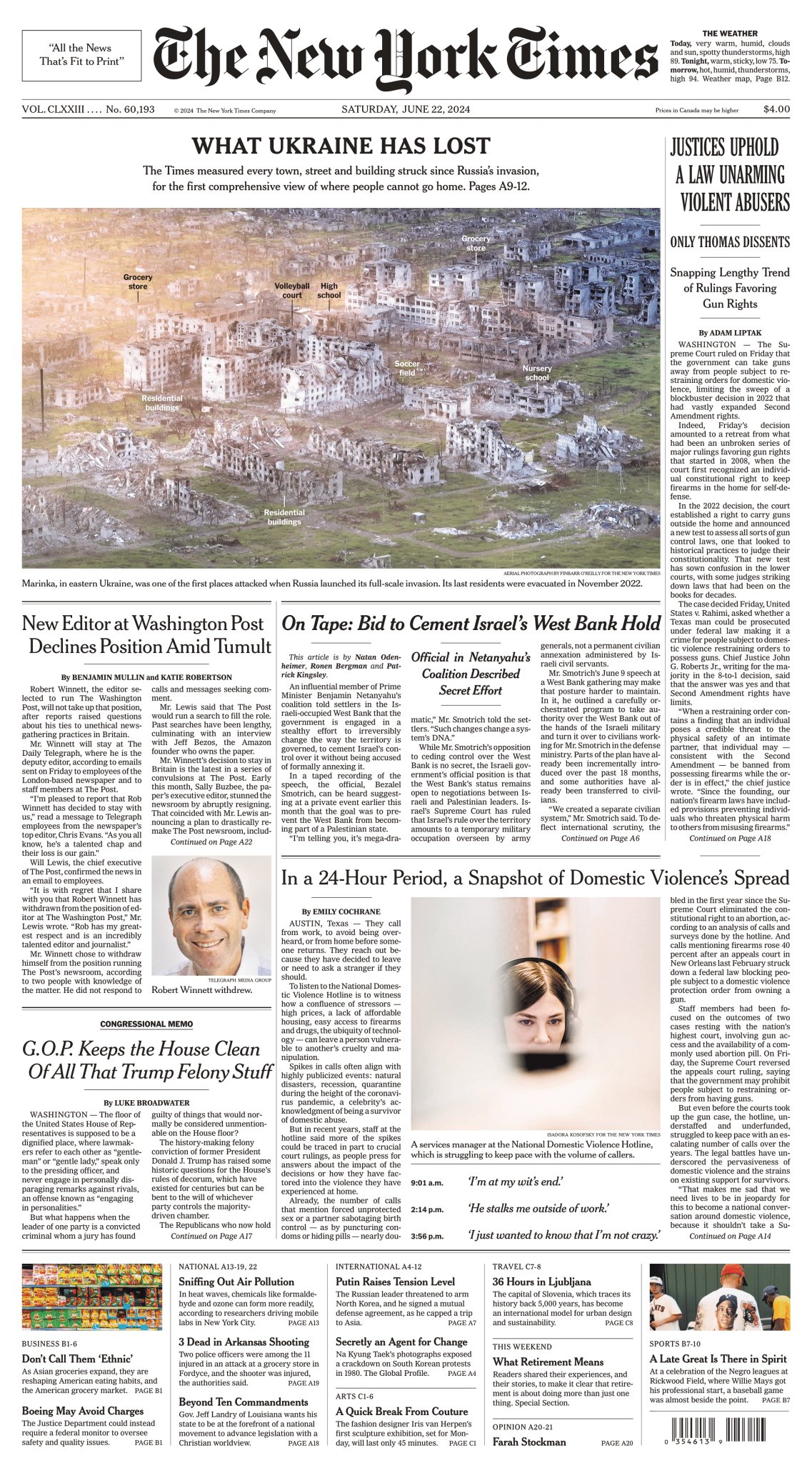
Israeli judges have long ruled that Israel’s control of the territory is a temporary military occupation and complies with international law. A powerful minister’s recent speech, caught on tape, suggested the government is trying to change that.
Editor Tapped to Lead Washington Post Won’t Take the Job
Robert Winnett will stay at The Daily Telegraph, after reports raised questions about his ties to unethical news gathering practices.
Their tensions, which have grown quietly for months, reached a new peak this week when the military’s chief spokesman, Rear Adm. Daniel Hagari, made unusually blunt comments.
Judge in Trump Documents Case Rejected Suggestions to Step Aside
Two federal judges in South Florida privately urged Aileen M. Cannon to decline the case when it was assigned to her last year, according to two people briefed on the matter. She chose to keep it.
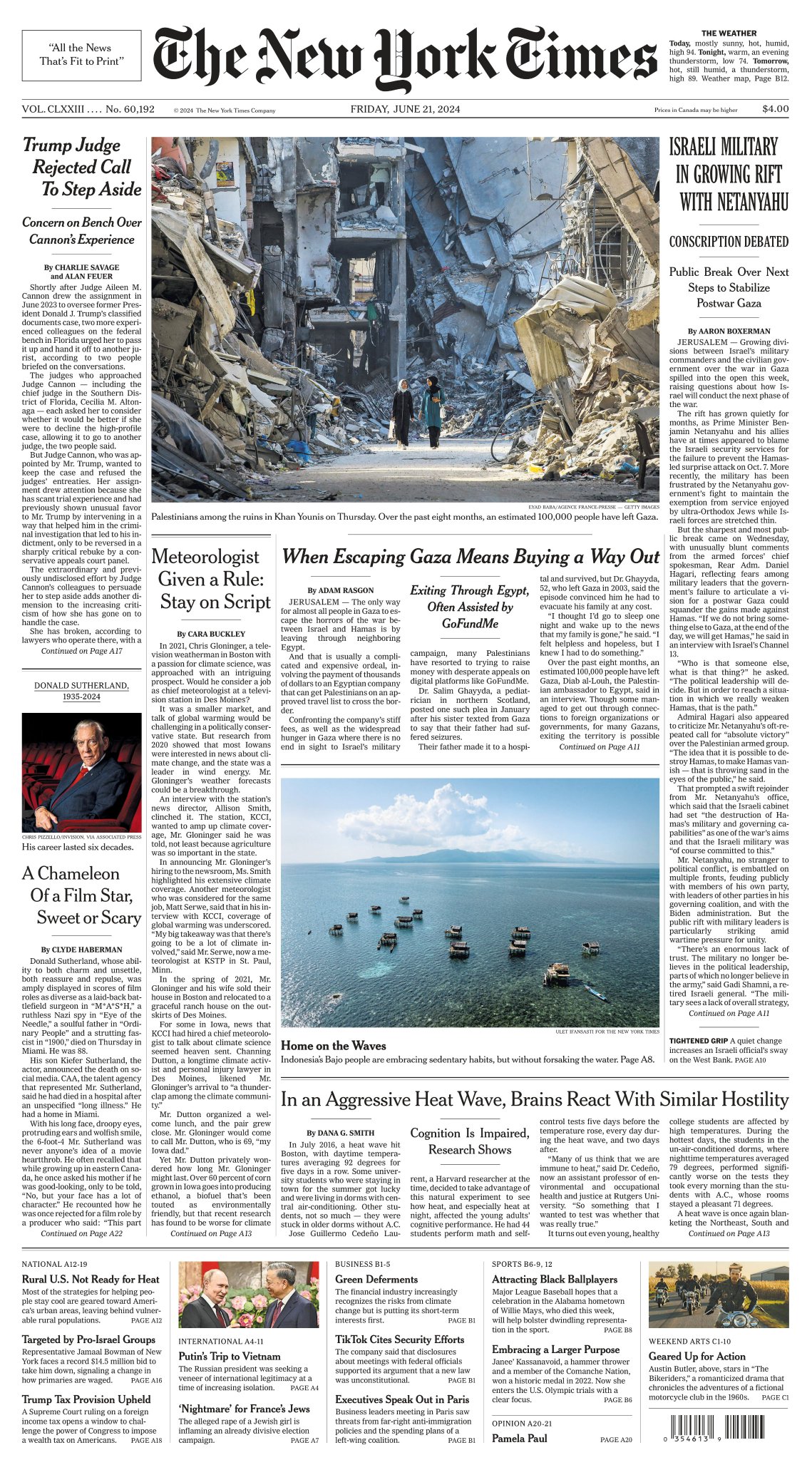
For many Palestinians, securing approval to exit the territory is possible only after raising thousands of dollars to pay middlemen or an Egyptian company.
News, Views and Reviews For The Intellectually Curious








 Boomers Daily