
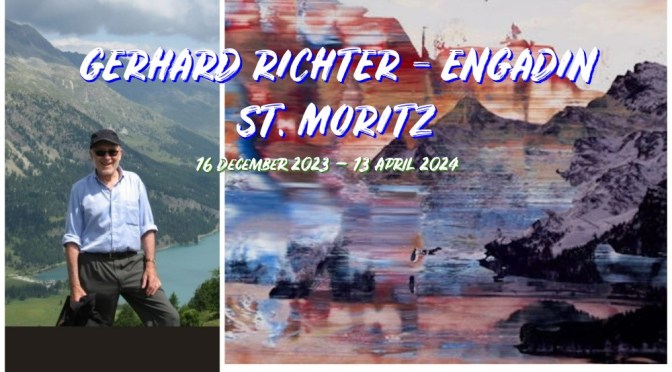


GERHARD RICHTER
ENGADIN
St. Moritz
16 December 2023 – 13 April 2024

Curated by Dieter Schwarz and presented across three venues in the Upper Engadin—Nietzsche-Haus, the Segantini Museum and Hauser & Wirth St. Moritz—this momentous exhibition is the first to explore Gerhard Richter’s deep connection with the Engadin’s alpine landscape. More than seventy works from museums and private collections—including paintings, overpainted photographs, drawings and objects—are testament to the artist’s fascination with the Upper Engadin. Opening 16 December 2023, ‘Engadin’ will be on view through 13 April 2024.
The work connecting the three exhibition venues is a steel sphere that Richter had produced as an edition, on view at each site. He first presented it at Nietzsche-Haus in 1992, in an exhibition curated by Hans Ulrich Obrist. Each unique sphere bears the name of a mountain in the Upper Engadin. The matte, subtly reflective, almost surreal sphere delicately reflects all that surrounds it. It symbolizes the sublime yet inhospitable manifestations of nature, which are especially conspicuous in the mountains.

St. Moritz – Gerhard Richter – 1992
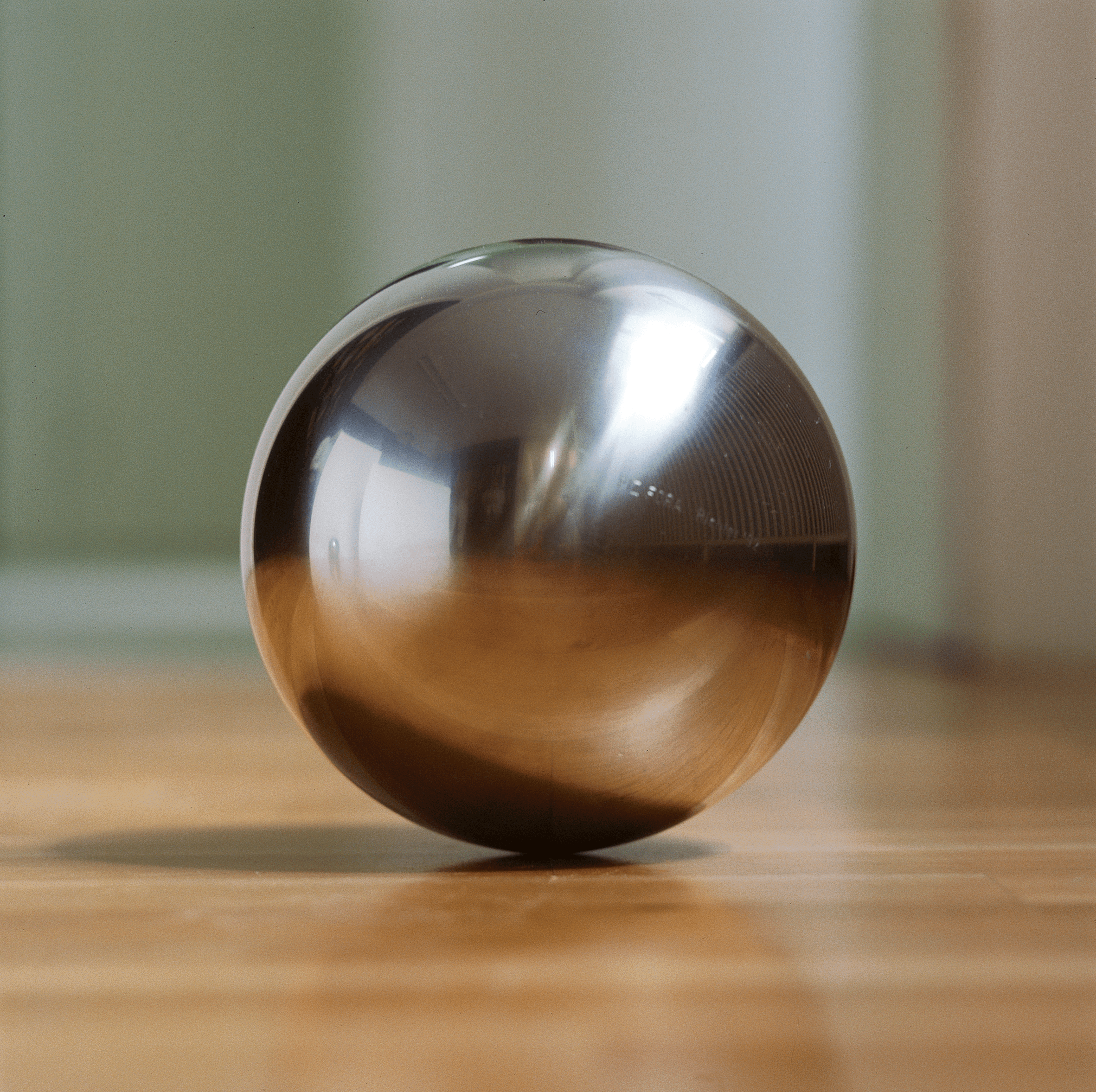
Kugel III (Piz Fora) [Sphere III (Piz Fora)] – Gerhard Richter – 1992
On view at the Segantini Museum and Hauser & Wirth are paintings that Richter created from photographs taken during his hikes in the Upper Engadin. These works mark a new chapter in his landscape painting—a genre that had always appealed to him for its supposed untimeliness. Richter’s Engadin landscapes are exemplary of the ambiguity in his painting, oscillating between a seductive transfiguration of nature and a reflection of its alienness. Particularly noteworthy is the painting ‘Wasserfall (Waterfall)’ (1997) from Kunst Museum Winterthur, a work that clearly traces Richter’s engagement with 19th-century painting, from romanticism to realism. The artist later overpainted some of the Engadin motifs, including depictions of Piz Materdell and Lake Sils, transforming them into abstract paintings with a melancholic atmosphere that responds to impressions of the landscape.
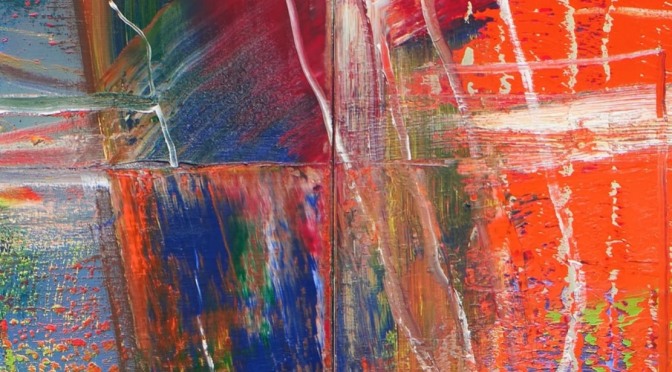

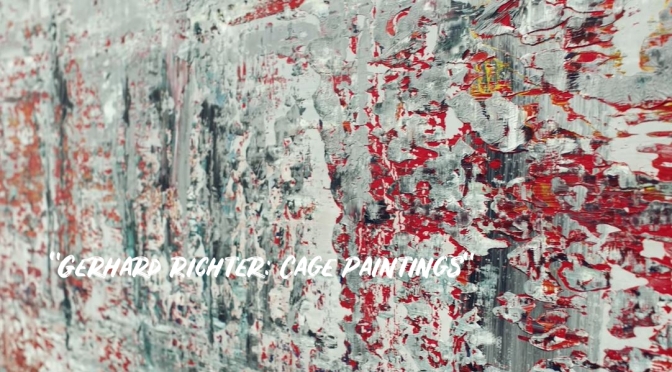
 Over the course of his acclaimed 60-year career, Gerhard Richter (b. 1932) has employed both representation and abstraction as a means of reckoning with the legacy, collective memory, and national sensibility of post–Second World War Germany, in both broad and very personal terms.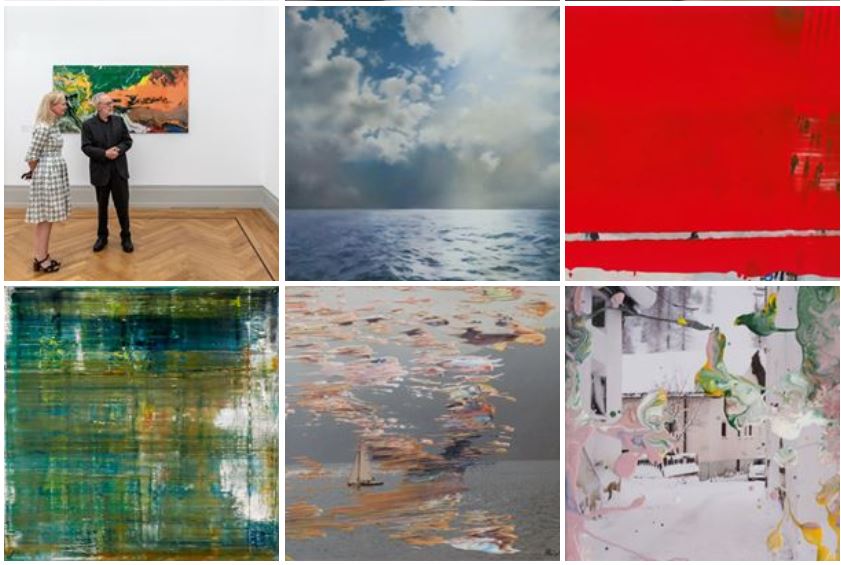
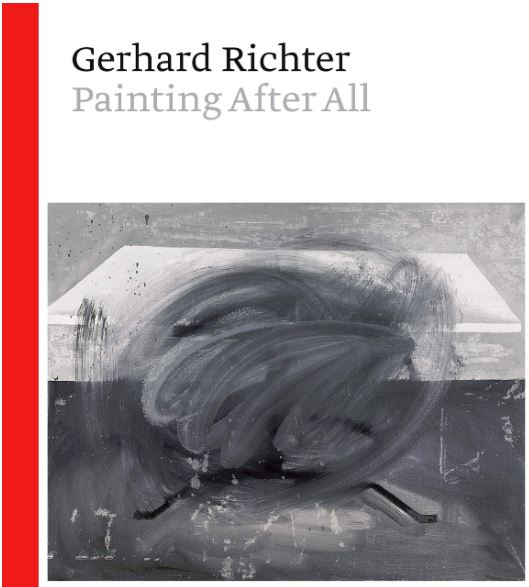
 New essays by eminent scholars address a variety of themes: Sheena Wagstaff evaluates the conceptual import of the artist’s technique; Benjamin H. D. Buchloh discusses the poignant Birkenau paintings (2014); Peter Geimer explores the artist’s enduring interest in photographic imagery; Briony Fer looks at Richter’s family pictures against traditional painting genres and conventions; Brinda Kumar investigates the artist’s engagement with landscape as a site of memory; André Rottmann considers the impact of randomization and chance on Richter’s abstract works; and Hal Foster examines the glass and mirror works. As this book demonstrates, Richter’s rich and varied oeuvre is a testament to the continued relevance of painting in contemporary art.
 Boomers Daily