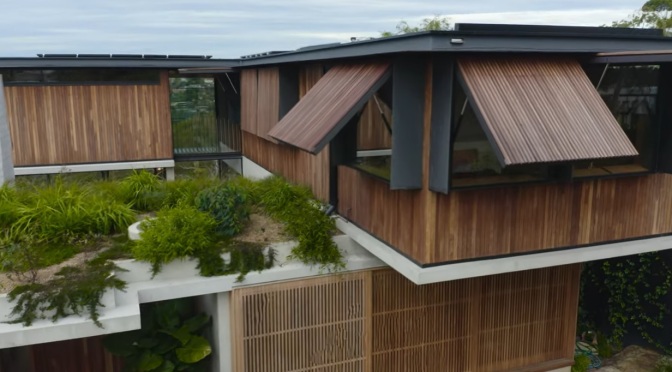
The Local Project (October 10, 2023) – Inspired by the nearby waterways and bushland, Downie North creates a garden home that not only exists in conversation with the surrounding landscape but also provides a sense of retreat.
Video timeline:00:00 – Introduction to the Garden Home 01:15 – The Layout and Walkthrough of the Home 03:02 – Landscaping Features 03:28 – Utilising Concrete Throughout 03:54 – Raw and Primal Materials 04:56 – Control of The Light 05:24 – Rewarding Aspects of the Design
Defined by a gradual reveal of interior spaces, Castlecrag Courtyard eloquently encapsulates slow living. Located on the ridge of Castlecrag, a harbourside suburb just north of Sydney’s CBD, Castlecrag Courtyard features a northerly aspect and a sloping site to the south. As such, the challenge of this project was about maximising sunlight and privacy whilst opening up to the 180-degree city and harbour views.
The garden home features a north-facing courtyard, which allows natural light to enter the interior living spaces whilst creating private external areas. The house tour reveals an architectural layout that encourages circular movement, meaning one is always met with changing views. The home is made up of three levels, and, upon arrival, one is met with a bush path before entering the ground floor, which contains the main living and kitchen areas.
The Local Project (September 1, 2023) – Removed from the busyness of Fitzroy, an inner-urban suburb of Melbourne where the home resides, stepping into Sunday makes one feel as though they are entering a hidden garden house. Architecture partners with Brickworks to create a sanctuary that offers a range of intimate, social and comforting spaces under the one roof.
Video timeline:00:00 – Intro to the Hidden Garden House 00:57 – The Inner-Melbourne Location 01:18 – A Specific and Well Written Brief 01:45 – A Walkthrough of the Home 02:32 – Integrating A Colour Pop 03:10 – An Indoor Jungle 03:39 – Utilising A Robust Material Palette 04:22 – The Brickworks Collaboration 05:40 – An Exciting Future
The client put forth interesting architectural reference points for the renovation. An extension creates the main communal, outdoor and private realms, and two east-west bands further divide each of these realms into two zones. The kitchen and dining are the heart of the home, with a sunken lounge that comes off the kitchen space. Expressed beams, clerestory glazing and concrete pavers connect the communal outdoor areas, which also sees the courtyard act as its own room.
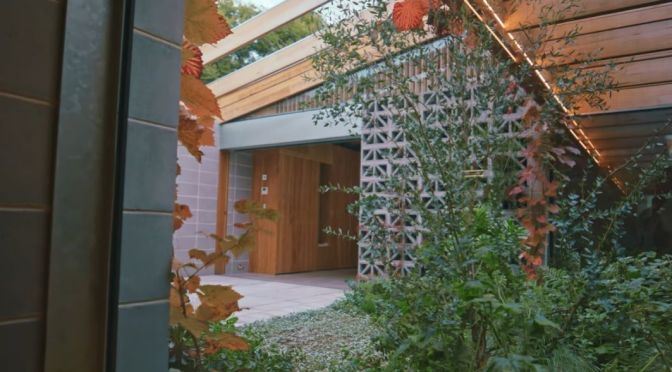
Perhaps the most powerful design concept of the renovation is this assimilation of the courtyard, which further elevates the home as a hidden garden house. Designing a central courtyard not only offers a great sense of connectedness to the landscape but also maximises ventilation and natural light in the living and bedroom areas. As a way of navigating the small size of the site, key themes the architect leverages are that of separation and connection to ensure there are comfortable places to gather and retreat.
Breeze-block walls establish the various zones of the house and allow for an abundance of light, air and outward views. Similarly, accessing the bedroom requires walking across the open-air courtyard – a deliberate retreat from the house. The interior design of Sunday is defined by a robust materiality, muted palettes, clear geometries and spaces sculpted by light. Natural textures dominate, with minimal surface treatments allowing the house to develop its own patina with time that continues throughout internal and external areas of the home. Bold yellow also features throughout the hidden garden house, which is inspired by the client’s love of Luis Barragán’s colours.
The Local Project (July 25, 2023) – From the moment the gates opened, client and interior designer Gillian Wynn knew Palms Residence was the secret garden house she had been looking for. After enlisting the help of Olson Kundig for the architecture and design of her home, Gillian delivered a brief that asked for something that was unlike the past work of the studio.
Video timeline:00:00 – Introduction From The Homeowner 00:57 – Collaborating With The Architect 01:28 – Intertwining The Indoors And Outdoors 02:43 – Venice’s Natural Light 03:14 – The Unique Kinetic Sculpture 04:09 – A Modest Palette 04:56 – Disappearing Into The Garden 05:27 – The Deconstructed Geometry Of The House
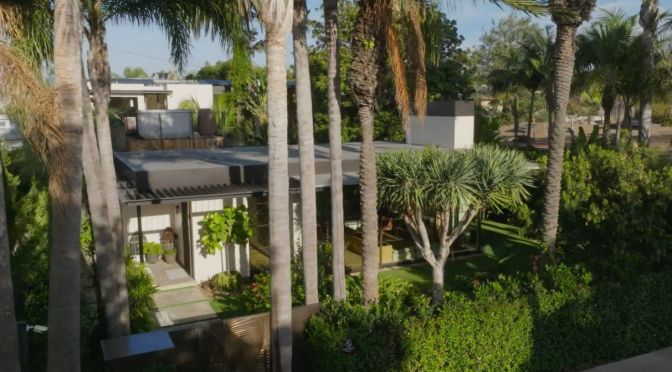
As the agenda of the residence was mostly focused on emphasising the garden, both Tom Kundig, Principal and Founder at Olson Kundig, and Gillian knew that in order to make her vision come to life, the home needed to be manipulated around nature. Seen throughout the house tour is a yoga studio, living and dining areas and a couple of bedrooms, each space blurring the lines between indoor and outdoor living and taking advantage of the paradise-like climate of Venice. Employing a number of design techniques,
Olson Kundig treats architecture like “layers of clothing,” in that there are multiple ways to open and close the home and manipulate how one can enter and exit. Yet it is how the garden is shaped around the home to encourage light to trickle through the trees and inside to complement the interior design that turns Palms Residence into a secret garden house. With the focal point of indoor and outdoor living, the home is complemented with wide glass doors and a glass-walled stairwell that invites the light in and creates a warming character.
Moreover, due to the home’s location, there is a magical quality of natural light that emphasises the architecture and interior design from the moment the sun rises and until it sets. Additionally, the home’s private yoga studio features a Gamelatron installation, a kinetic sculpture designed by the owner’s close friend Aaron Taylor Kuffner. Composed on site, the sculpture emits a sound bath via Indonesian gongs, which sets the tone of meditation and flow for the rest of the secret garden house.
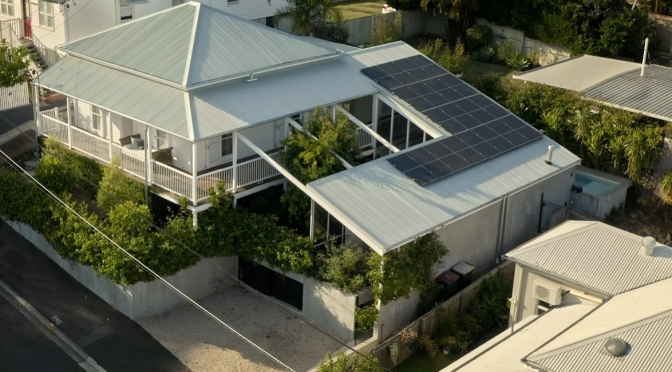
The Local Project (December 20, 2022) – By creating a sub-tropical modern architecture garden home, Justin Humphrey Architects employs concrete, timber, dark tones and green life to respond to the client’s brief.
Video timeline: 00:00 – Introduction to the Extraordinary Garden Home 00:11 – The Architect’s Favourite Aspects 00:40 – A Queensland Location 01:08 – The Well-Travelled Clients and their Desire for Sub-Tropical Modern Architecture 01:26 – A Strong Form and Sense of Materiality 01:48 – A Walkthrough of the Home and its Materials 02:29 – The Spine of the Home 03:00 – The Owners 03:20 – A Response to Natural Light 03:39 – Accommodating for Entertaining 03:56 – Implementing Passive Design Principles 04:50 – Seeing the Clients Grow into the Home
Desiring a family home that was equal parts building and garden, the clients needed a home that could provide privacy and areas for entertaining. Handling the combination of public and private spaces with ease, the architect has also challenged the traditional entrance sequence of the home. From its exterior, Cove House strikes a formidable presence, yet with its singular floating plane roof and plant life,
Cove House establishes itself as a modern architecture garden home. To create a modern architecture garden home, the architect has offset the concrete and dark tones of the exterior with warm timber battens to soften the entrance. Starting the house tour, the green landscape spine runs down the centre of the home, separating the public entry and the private living spaces. Additionally, the green spine guides guests towards the rear of the home, where the living and entertainment spaces are situated.
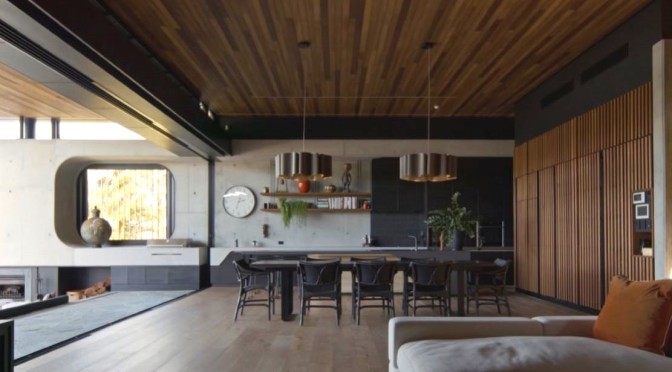
Contributing to the interior design of the Cove House, concrete and timber are combined to establish a flowing effect from outside in, honouring the client’s appreciation of climate-responsive materials and architecture. Answering the client’s love of boating and water, Cove House embraces open plan living and joins with the natural reserve, Coomera Island, which sits opposite the home. By opening the rear glass doors, the owners can increase the entertaining size onto the back deck and the passion pit – a curved lounging area that embraces outside living.
Providing the clients with a space to grow into, the modern architecture garden home also offers privacy from its neighbours on either side. Following critical passive design principles for the modern architecture garden home, the large roof-span provides wide-set eaves that protect from rain, provide deep shade during summer and curate cool breezes through the home. Additionally, the natural stone floor and concrete were employed as a thermal mass element to help regulate the home’s temperature all year round. As the house ages, Justin Humphrey Architects has specifically chosen the material palette to influence an alternative approach to address the natural climate setting.
The Local Project (December 13, 2022) – Designed to feel like one is living in a garden, Cascade House by John Ellway seamlessly blends outdoor and indoor living. Located in Queensland, the family home of interior designer, stylist and client Jacqueline Kaytar is a traditional cottage home that was in dire need of repair.
Video timeline: 00:00 – Introduction to the Garden Home 00:26 – The Inner-City Location 01:14 – An Overview of the Home 01:49 – A Walkthrough of the Home 02:28 – The Key Brief of Garden Connection 02:50 – Original Timber Cottages 03:18 – Separation of Old and New 03:53 – The Kitchen 04:11 – A Seamless Integration of Fisher & Paykel 04:44 – The Fisher & Paykel Fit 05:16 – Key Materials 05:59 – A Connection of Texture and Detail 06:22 – The Connection Between Owner and Architect 06:59 – Proud Moments
Working closely with Jacqueline, the architect avoided building underneath the home to keep the streetscape intact. Instead, John Ellway used the vacant land to the side of the original cottage to provide a much-needed extension that leans into the cascading landscape of the site. Found by the client, the cottage home was in a dilapidated state, though internally and structurally the house was in good condition with a much-needed update to accommodate the contemporary needs of the family.
After bringing John Ellway on board, Jacqueline expressed an aspiration to instil a feeling like that of living in a garden. Beginning the house tour from the parking area, the entry to the home opens to the kitchen, dining and living spaces. Immediately connecting to the gardens through large glass doors and windows, the house opens up onto a grass patch for the family to enjoy. Providing the space to embrace living in a garden, the grass patch also offers a private outdoor reprieve. Connecting the new extensions with the older parts of the cottage, a breezeway also adds another layer of connection to the garden.
The private rooms sit in the old section of the cottage, with the entertainment spaces confined to the new extensions. The home’s extended veranda instils the experience of living in a garden as occupants step into the new volume. Incorporating seamless connections throughout the architecture, John Ellway has made additional interior design choices in the kitchen, adding nooks and crannies to conceal appliances and ensuring the interior architecture is kept sleek and simple.
In the kitchen, Fisher & Paykel’s integrated appliances seamlessly blend into the joinery, providing a cohesive effect. Aside from aligning with budget and aesthetic desires, John Ellway used Fisher & Paykel to coincide with the broader context of the kitchen. Focused on using key materials to further assist with the idea of living in a garden, the client and architect chose plywood, brass countertops and polished concrete to foster a warm and natural connection. Together, John Ellway and Jacqueline work to combine finishes and textures to create an uplifted and refreshing home.
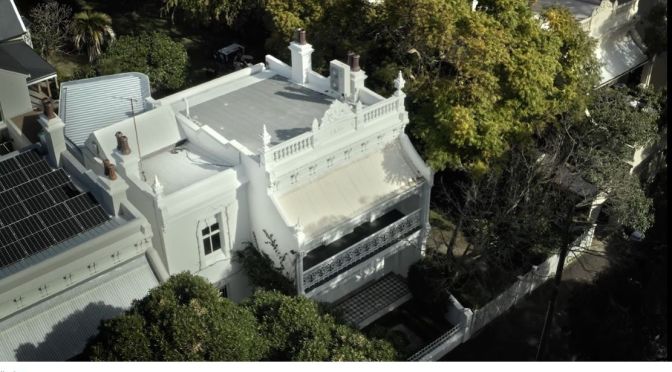
The Local Project = Located in Sydney’s east, Grove House is a garden home that possesses a sense of community through its connection to the shared grove between the surrounding heritage houses. Supplying architecture and interior design, Clayton Orszaczky delivers a family home that wraps around its occupants like a cocoon.
Video timeline:00:00 – Introduction to the Inner-City Garden Home 00:27 – The Architects 00:47 – Preservation of the Heritage Aspects of the Home 01:02 – A Walkthrough of Grove House 01:44 – The Clients 02:09 – Connecting to the Garden 02:27 – The Grove, A Community Garden 02:54 – The Landscape Designers 03:06 – A Contrast Between Old and New 03:34 – The Use of Concrete 04:06 – The Key Relationship Between Form and Lighting 04:30 – The Architects Favourite Moments
As the house tour begins, the desire to keep the original fabric of the house – while sensitively connecting to the new additions – can be seen through each design choice of the garden home. Inside, a careful consideration of materials and space has been infused from the original formal rooms to the dining and family living room and into the extensions.
However, it is the original timber staircase greeting guests from the entrance that establishes a graceful connection between the original home and new additions. Directly responding to the clients’ desire to connect to the gardens and grove beyond, Clayton Orszaczky encourages the new additions of the garden home to directly respond with the original fabric. A core aspect of the home, the kitchen and dining space connects to the gardens through large glass doors and windows which directly draw in both northern and eastern light.
A further dialogue between the existing home and the new was addressed by specifically choosing to emphasise the contrast of eras through the use of off-form concrete, steel windows, timber veneer, black porcelain and modern furniture. Collaborating with Tanya Wood Landscape Architect on the ground level and roof garden design, Grove House establishes a renewed connection between home and garden. Looking at the garden home from the grove, it can be seen that the soft form of the exterior contributes to the grove and the shared community space.
Continuing the house tour from the back fence to the shared grove, an immediate connection with the landscape, surrounding greenery and neighbours can be experienced. Throughout the house tour, the transition between the existing and new areas of the garden home are seen through the proportional ratios. Specifically choosing to speak to this dialogue between old and new additions, Clayton Orszaczky has used concrete for mass – similarly to how masonry was used in the original home.
Additionally, continued references to the terrace house form is seen within the new additions and the renewed relationship between light and form further contributes to the connection within the home and to the garden and grove.
News, Views and Reviews For The Intellectually Curious





 Boomers Daily