Monocle Radio Podcast (October 25, 2024): Georgia goes to the polls tomorrow in the first parliamentary elections since the country obtained EU-candidate status in December 2023, it is also the first since Russia’s full-scale invasion of Ukraine.
Joshua Kucera joins Georgina Godwin to discuss this decisive moment for the country’s future and whether it is shifting towards Russia or the West. Plus: What will chancellor Scholz hope to secure for Germany’s economic future from his visit to India? Then: Dutch navy unveils the world’s first unmanned warships.
Monocle Radio Podcast (October 24, 2024): We get the latest following the deadly attack on a major defence and aerospace company in the Turkish capital.
Plus: North Korea’s deployment of troops to Russia, why Tokyo Metro’s market debut is on the right track and a look ahead to our new programme, ‘Monocle on Fashion’.
Monocle Radio Podcast (October 23, 2024): Antony Blinken is back in the Middle East – but prospects for a ceasefire appear slim. We also get the latest on the UN Biodiversity Conference in Colombia, find out why a former Peruvian president has been jailed for 20 years and learn how Egypt has managed to eradicate malaria.
Monocle Radio Podcast (October 22, 2024): Vladimir Putin brings Brics leaders to Kazan, our US politics correspondent brings us the latest two weeks before the presidential election and we discuss King Charles’s testy visit to Australia. Plus: a check-in from San Francisco’s Urban Transformation Summit.
This week, we’re putting the focus on Nobel Prize-winning French author Albert Camus. As 2020 saw France mark 60 years since his death in a car crash, Camus’s seminal work “The Plague” was unexpectedly thrust back into the spotlight by the Covid-19 pandemic.
From the UK to Japan, the 1947 novel established itself as a global sensation, topping sales charts and pushing publishers into a rushed reprint. But Camus’s prolific and multi-faceted career extends far beyond this viral hit. We tell you more about the author’s life, starting with his humble beginnings in French-ruled Algeria.
With a lack of restrictions on water use, owners of some large-scale farms in the United States are drying up underground water tables. All they have to do is buy the land to have access to as much free water as they want. In Arizona, farm owners and ranchers are digging ever deeper to irrigate their land, leaving other residents with low water reserves. Meanwhile, parts of the land have caved in, collapsing as the water is pumped up from beneath. Our France 2 colleagues report, with FRANCE 24’s James Vasina.
From the foothills of the Vosges mountains, to a medieval town in the south, to a village on the Spanish border, France has many beautiful streets full of history. We take you to discover three of them.
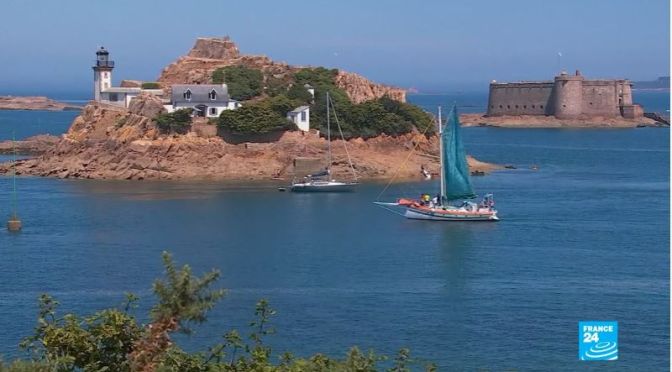
We take you to discover the coastline of the French region of Brittany and its gems of natural beauty. With its 70-metre-high cliffs, the Cap Fréhel has some of the most dramatic scenery in the region. Further west, there are spectacular views over the Morlaix Bay, home to more than 60,000 seabirds. Out in the Atlantic, Ouessant is the last island before America. We end our journey at sunset at the Raz peninsula, looking out onto the Atlantic, at the tip of Europe.
Impressive and colourful landscapes, the scent of the moorlands, crashing waves and the call of seabirds: open your eyes, nostrils and ears! Looming above an emerald sea, the pink sandstone cliffs of the Cap d’Erquy headland are crowned by wild moorlands where the colours are ever-changing. The dazzling yellow of gorse flowers in spring is followed by violet heathers in summer. This nature reserve is home to a variety of plant species and is a haven for seabirds. Erquy is also a fishing-port, known for its scallops. Not far away, the majestic cliffs of Cap Fréhel provide one of the best views in Brittany. On a clear day, you can enjoy a panoramic view that stretches from the Cotentin Peninsula and Jersey all the way to Paimpol: it’s mind-blowing!
Bordeaux is best known as France’s wine HQ. But over the past decade, this wonderful old metropolis ten times smaller than Paris has been enjoying a new lease of life thanks to huge investment in culture and transport – that includes a whopping great wine museum. Eve Jackson travels to this UNESCO-listed city to discover its buzzing arts scene with a visit to the Cité du Vin and a tour of the regenerated banks of the Garonne river.
News, Views and Reviews For The Intellectually Curious








 Boomers Daily