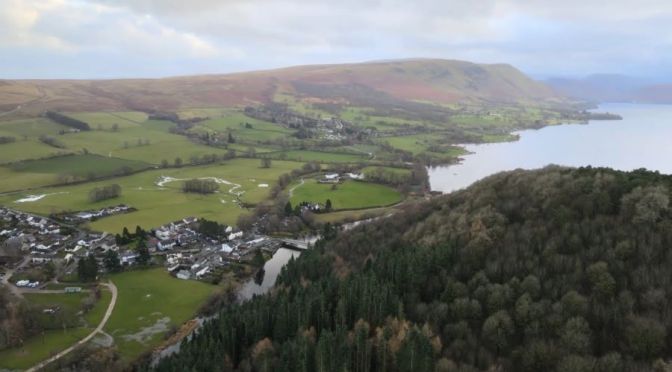
Snake Pass slithers across the Pennines between the market town of Glossop and Ladybower Reservoir’s Y-shaped valley. This route, one of Britain’s most scenic drives, opened by George VI in 1945.

Snake Pass slithers across the Pennines between the market town of Glossop and Ladybower Reservoir’s Y-shaped valley. This route, one of Britain’s most scenic drives, opened by George VI in 1945.

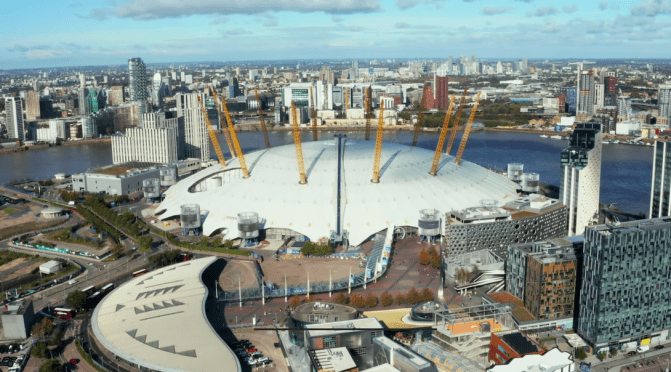
Salford Quays is an area of Salford, Greater Manchester, England, near the end of the Manchester Ship Canal. Previously the site of Manchester Docks, it became one of the first and largest urban regeneration projects in the United Kingdom following the closure of the dockyards in 1982.
At the beginning of the Industrial Revolution Quarry Bank Mill became one of the most important Cotton Mills in England. Samual Greg embraced the Industrial Revolution to create a powerhouse of the Cotton Milling industry.
180 years after the end of the Industrial Revolution this Cotton Mill is still intact and in full working order. Maintained by the National Trust you can take a day tour of this fascinating Cotton Mill and find out about the Greg family, his workers, including children as young as 8 and the community he created in the village of Styal. You can see the machinery in operation and learn how the fluffy cotton plant is turned into a workable yarn as the volunteers run the machines and show you.
Greg built his family home on the grounds of Quarry Bank Mill, you can view the property or visit the darker side with the apprentice house, home to up to 90 children, working in the mill in return for food and board.
Timeline: 0:00 Intro 1:08 What to see at Quarry Bank 2:01 Cotton Industrial Revolution 2:25 Samual Greg builds Quarry Bank 3:32 The Great Wheel 4:09 Process to make cotton yarn 7:31 Quarry Bank House 10:26 Styal Village 11:53 Apprentice House (Child Labour) 16:44 Steam Power comes to Quarry Bank 19:02 The Gardens
Liverpool is a maritime city in northwest England, where the River Mersey meets the Irish Sea. A key trade and migration port from the 18th to the early 20th centuries, it’s also, famously, the hometown of The Beatles. Ferries cruise the waterfront, where the iconic mercantile buildings known as the “Three Graces” – Royal Liver Building, Cunard Building and Port of Liverpool Building – stand on the Pier Head.
Timeline: 00:00 Albert Dock 08:08 Salthouse Dock 09:35 The Dock Traffic Office and Pump House 11:14 Salthouse Quay 13:00 The Liverpool Waterfront UK and Strand street 19:24 River Mersey Embankment and Canada Boulevard 20:47 The Beatles Pier Head 23:38 Ice Rink and Christmas Market 26:22 Liverpool Canal Link 27:37 Water street 32:30 Liverpool Town Hall 33:20 Castle street 35:00 Brunswick street 37:25 The Strand 41:20 Albert Dock 44:28 Liverpool One Water Fountain on Thomas Steers Way 46:20 Liverpool ONE 48:41 Christmas Tree on Paradise street 49:25 Paradise street 57:36 Church street 58:51 Church Alley 01:03:09 Bold street 01:08:00 Church street 01:09:22 Basnett street 01:10:34 Williamson Square and Christmas Tree 01:12:25 Liverpool Playhouse Theatre and Radio City Tower 01:14:26 Houghton street 01:17:13 Liverpool Register Office 01:18:23 St John’s Gardens and William Brown street 01:19:10 Liverpool Christmas Market 01:23:43 Wellington Column and Walker Art Gallery 01:27:00 Liverpool Cenotaph and Wheel Of Liverpool
There’s a rainforest in Europe? Apparently, yes – and it’s called the Eden Project! It houses the world’s largest covered rainforest, beneath a giant dome.
But it’s not an amusement park, but rather an educational centre and environmental organisation. The concept: Only those who experience and engage with the beauty of nature can also protect it. That’s why 100,000 plants from all over the world have been brought here, where they cover an area of some 50 hectares.
Not only the sheer number of plants is impressive, the building itself is, too: Two geodesic domes span the site as greenhouses – like massive soap bubbles sticking together. Our Euromaxx reporter Hendrik Welling visits the record-breaking Eden Project and to explore its biotopes and rainforest.
Manchester is a major city in the northwest of England with a rich industrial heritage. The Castlefield conservation area’s 18th-century canal system recalls the city’s days as a textile powerhouse, and visitors can trace this history at the interactive Museum of Science & Industry. The revitalised Salford Quays dockyards now house the Daniel Libeskind-designed Imperial War Museum North and the Lowry cultural centre.

Michael Portillo resumes his tour of the Home Counties in the picturesque and historic county town of Guildford. His 1936 Bradshaw’s guide commends its ‘fine old castle keep’ and guildhall but makes no mention of its hilltop cathedral.
Michael meets head guide Janet Matthews to discover the origins of the first Anglican cathedral to be built on a new site in the south of England since the Reformation – begun in 1936. He finds splendid architecture and modern materials have combined to produce a gloriously open building full of space and light. Michael climbs its 160 foot tower for a panoramic view of Surrey.
Michael’s next stop is Chilworth, from which he follows his guide to Newlands Corner on the slopes of the North Downs. At this popular beauty spot, the famous crime writer Agatha Christie disappeared, sparking a massive search and a tabloid frenzy. A Christie biographer pieces the puzzle together for Michael.
Heading west across the county, Michael reaches the Georgian market town of Farnham with its 12th-century castle, once home to the bishops of Winchester. Intrigued by his Bradshaw’s reference to a famous Farnham painter, WH Allen, Michael joins the artist’s great-great-niece in the castle’s splendid gardens to learn more about him. A kind Farnham artist encourages Michael to commit the castle to canvas in his own way. After a luxurious night at the castle, Michael crosses into Hampshire to reach Aldershot. At the home of the British Army, he hears how in the years leading up to the World War II, the town began to receive conscripts for military training.
As the official sponsor of the London to Brighton Veteran Car Run we thought it was only fitting to send two of our Car Specialists out to experience the 54 mile (87km) journey in a 1904 Cadillac Model F Four-Passenger Tourer. As hundreds of cars set out to celebrate the 125th year of the longest-running motoring event in history, Nick Wiles and Felix Archer take you on an intimate and definitive experience along the way.