
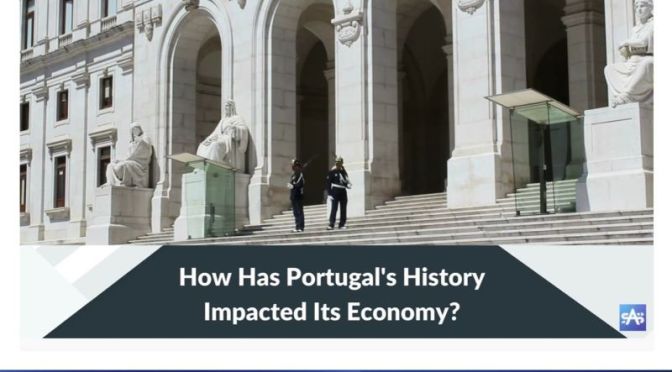
In the lead up to the Eurozone Crisis, Portugal’s Economy was an outlier. Whilst many economies went on an incredible run, the Portuguese Economy did not have such a good time. Not only underperforming the average eurozone growth rate, but unemployment actually rose from 3.8% to 7.5% between the millennium and 2008. Compare this against the likes of Greece, Spain and Italy, all of which had seen significant declines in unemployment. Raising the question of why? Why had Portugal’s Economy stagnated in what were supposed to be the good times? What was the impact of its long history as a colonial power? And to what extent did a 19th Century letter from Pope Leo the 13th influence its wider economic approach?
Tag Archives: Economic History
Africa: ‘An Economic History Of Egypt’ (Video)
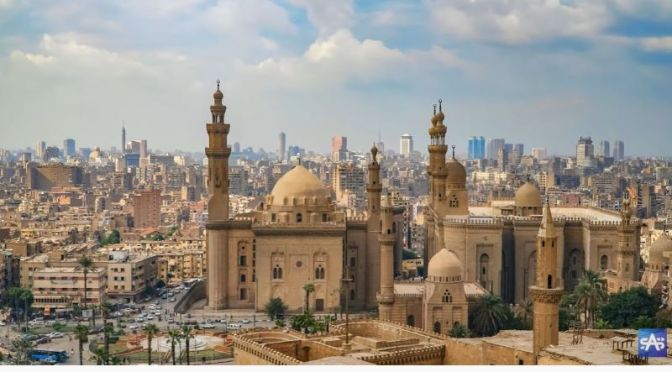
The Egyptian Economy was the only one in the Middle East North Africa region to avoid a recession in 2020. Being a good reflection of the economic rollercoaster Egypt routinely finds itself on. One driven by inflation rates of up to 30% a year, a halving of its currency and a painful IMF bailout in 2016. But how did Egypt’s Economy find itself in this situation? What impacts did Five Year Plans, spending nearly 20% of GDP on the military and widespread nationalisation have on its economy? Why is Egypt the world’s largest importer of wheat? And perhaps most importantly, what has its post 2011 revolution delivered?
Egypt, a country linking northeast Africa with the Middle East, dates to the time of the pharaohs. Millennia-old monuments sit along the fertile Nile River Valley, including Giza’s colossal Pyramids and Great Sphinx as well as Luxor’s hieroglyph-lined Karnak Temple and Valley of the Kings tombs. The capital, Cairo, is home to Ottoman landmarks like Muhammad Ali Mosque and the Egyptian Museum, a trove of antiquities.
Europe: An Economic History Of Iceland (Video)
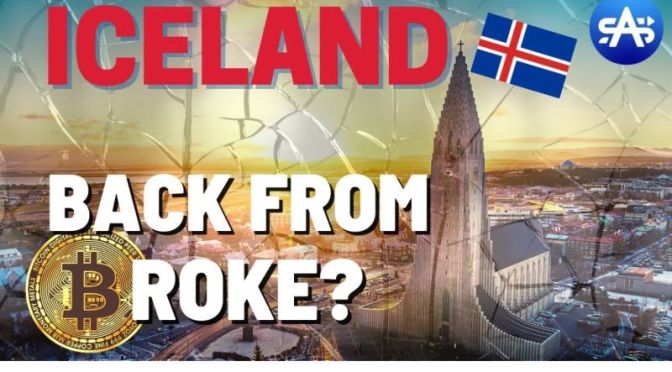
Iceland’s Economy had a banking debt ten times larger than its GDP. Iceland was that one Economy which went left when everybody else went right. Whilst most thought the banks were too big to fail, Iceland thought they were too big to save. It let its largest banks go bankrupt and threw dozens of bankers in jail. And yet despite its unusual approach, its Economy recovered. Going on to enjoy a decade of unbroken economic growth and high standard of living. But why did an island just outside the arctic circle have a financial crisis? What strategies did it deploy to rack up such monumental debts? How did it recover? And does its future rely on impressive tourist growth and crypto currencies?

Europe: ‘An Economic History Of Spain’ (Video)
The Spanish economy is one of extremes. At one point a focus of the eurozone crisis, at another the largest contributor of growth, and more recently, suffering the greatest economic hit of any Advanced Economy in 2020. Spain’s economic problems are often confused. In the years leading up to the Great Recession it posted consistent budget surpluses. However, a huge real estate bubble was lying in wait. The question… is why? Why did Spain go from a seemingly safe level of debt to one larger than it’s economy? How was the housing bubble encouraged? And since then, has Spain’s economy ever truly recovered? Or in what ways?

Asia: An Economic History Of Thailand (Video)
The Thai economy is the second largest in southeast asia. Being right in the centre of one of the most vibrant economic clusters on the planet. Famous for its sun, sea and sand, Thailand is so much than just a tourist hot spot. Thailand’s Economy went on an incredible growth run during the second half of the 20th century. However, economic growth has slowed since the 2000’s, leading some to suggest Thailand’s economy is stuck in a middle income trap. What are the factors behind this in Thailand’s case? How did rice pledging impact the economy? And why Thailand pinning its’ economic hopes on the Eastern Economic Corridor?
Europe: ‘An Economic History Of Poland’ (Video)
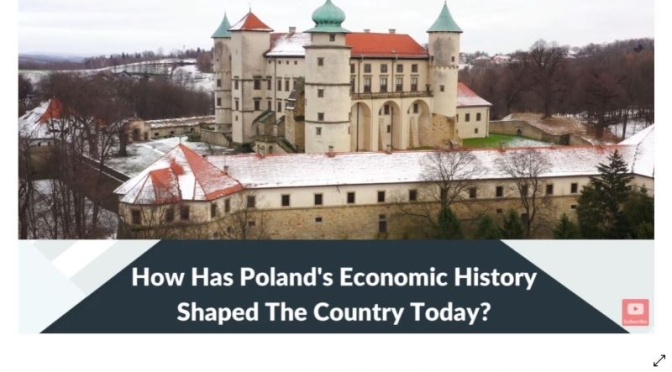
The Polish economy was the fastest growing European economy over the last two decades, being the only one to avoid a recession following 2008. Outperforming other post communist nations, to become the first to reach developed status. However it’s fair to say that Poland often receives less attention than it deserves. Despite regularly being touted as Europe’s growth engine. This raises all sorts of questions, like how has Poland’s Economy done so well? Why do under 26 year olds pay less income tax and whether, as some have suggested, it can catch up with Germany’s average income by 2040. Is Poland a Tiger Economy?
Poland, officially the Republic of Poland, is a country located in Central Europe. It is divided into 16 administrative provinces, covering an area of 312,696 square kilometres, and has a largely temperate seasonal climate.
 Boomers Daily