
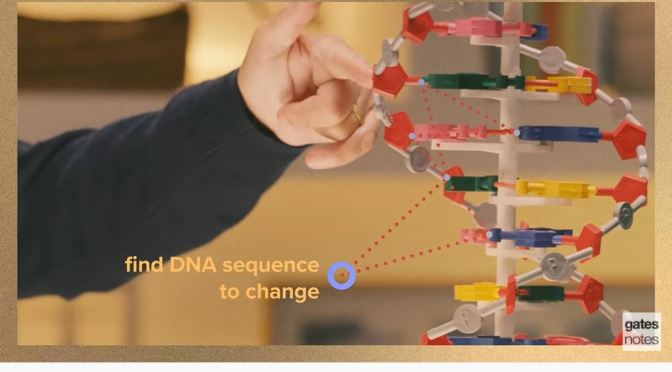
CRISPR is a technology that can be used to edit genes and, as such, will likely change the world. The essence of CRISPR is simple: it’s a way of finding a specific bit of DNA inside a cell. After that, the next step in CRISPR gene editing is usually to alter that piece of DNA.
Tag Archives: DNA
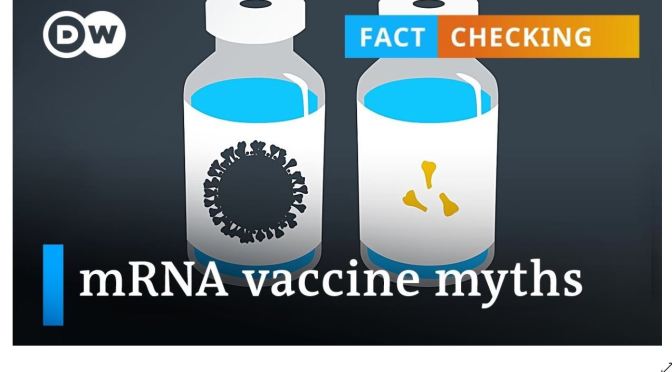
Covid-19: mRNA Vaccines Do Not Change Your DNA
With so many myths about COVID-19 vaccines regarding their impact on our health, many people don’t know what to believe. In our fact check, find out what you need to know about the mRNA vaccines — as we expose the myths and reveal the facts.

Science: What Is CRISPR And How Does It Work?
This revolutionary gene-editing system has taken science by storm. CRISPR is the basis of a revolutionary gene editing system. One day, it could make it possible to do everything from resurrect extinct species to develop cures for chronic disease.
CRISPR is a family of DNA sequences found in the genomes of prokaryotic organisms such as bacteria and archaea. These sequences are derived from DNA fragments of bacteriophages that had previously infected the prokaryote. They are used to detect and destroy DNA from similar bacteriophages during subsequent infections.
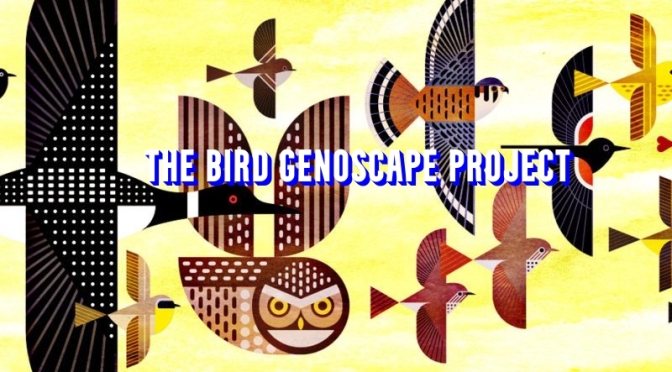
Science & Wildlife: ‘The Bird Genoscape Project’
Billions of birds migrate annually across the Western Hemisphere… but if we don’t know where they go when they leave their breeding grounds, how can we protect them? By extracting DNA from individual feathers (and borrowing cutting-edge technology from the Human Genome Project) scientists can map bird migration with greater precision than ever before. The result is the Bird Genoscape Project, and it’s revolutionizing bird conservation by connecting migratory birds – and the people who care about them – across the Americas. This work was funded by the National Geographic Society. Learn more at http://www.natgeo.org.

Top New Science Podcasts: New Skin That Grows Hair, Spontaneous RNA (Nature)
 This week, Nature looks at a new method to grow hairy skin in a dish, and new research takes aim at the RNA world hypothesis.
In this episode:
00:45 Hairy Skin
Researchers may have developed a way to make skin that can grow hair in the lab, paving the way for treatment of a variety of skin disorders, and perhaps even baldness. Research Article: Lee et al.; News and Views: Regenerative medicine could pave the way to treating baldness
08:56 Research Highlights
How mercury moved during the ‘Great Dying’, and the link between mobile phones and gender equality. Research Highlight: Giant eruptions belched toxic metal during the ‘Great Dying’; Research Article: Rotondi et al.
11:21 Does DNA predate life?
The RNA world hypothesis posits that RNA formed spontaneously leading eventually to life. Now new research suggests that RNA and DNA formed together, before life. Research Article: Xu et al.; News and Views: How DNA and RNA subunits might have formed to make the first genetic alphabet
19:25 Pick of the Briefing
We pick our highlights from the Nature Briefing, including the recent SpaceX launch, and the earliest fossil of a land animal. CBC: Scientists find oldest fossil of a land animal; Nature News: SpaceX to launch astronauts — and a new era of private human spaceflight
Other links
Video: We test a home antibody kit for tracking Covid-19 transmission
Top Science Podcasts: Our Ancient Hominin Species DNA, Vikings, Lemur Love & “Gargantuan” Hail Stones
 23 April 2020: Denisovan DNA in modern Europeans, and the birth of an unusual celestial object. This week, evidence of ancient hominin DNA in modern human genomes, and the origin of a snowman-shaped object at the edge of the solar system.
In this episode:
00:45 Intermixing of ancient hominins
By combing through the DNA of over 27,000 modern day Icelanders, researchers have uncovered new insights about the ancient hominin species who interbred with Homo sapiens. Research Article: Skov et al.
08:05 Research Highlights
The scent of lemur love, a hidden Viking trade route, and ‘gargantuan’ hail. Research Highlight: Lemurs’ love language is fragrance; Research Highlight: Vikings’ lost possessions mark a long-hidden early trade route; Research Highlight: Enormous hailstones inspire a new scientific size category: ‘gargantuan’
11:44 The origin of Arrokoth
In 2019, the New Horizon Spacecraft took images of Arrokoth – an unusual, bi-lobal object found in the Kuiper belt. Now, researchers believe they’ve figured out how it formed. Research Article: Grishin et al.
17:29 Pick of the Briefing
We pick some highlights from the Nature Briefing. This week we discuss why the Universe may be lopsided, and why water could actually be two different liquid states. Scientific American: Do We Live in a Lopsided Universe?; Chemistry World: The weirdness of water

Fasting Activates Sirtuin Signaling Proteins (SIRT1), Accelerating Cell Repair
-
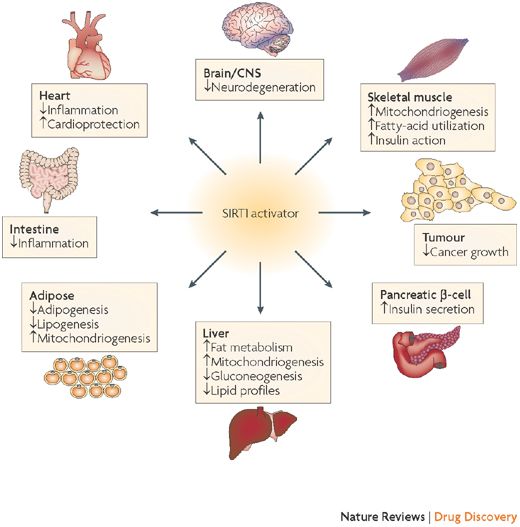
Sirtuins are a family of signaling proteins involved in metabolic regulation. SIRT1 (along with SIRT6 and SIRT7) are proteins are employed in DNA repair.
From Wikipedia:
Sirtuins are a class of proteins that possess either mono-ADP-ribosyltransferase, or deacylase activity, including deacetylase, desuccinylase, demalonylase, demyristoylase and depalmitoylase activity. The name Sir2 comes from the yeast gene ‘silent mating-type information regulation 2‘, the gene responsible for cellular regulation in yeast.
From in vitro studies, sirtuins are implicated in influencing cellular processes like aging, transcription, apoptosis, inflammation and stress resistance, as well as energy efficiency and alertness during low-calorie situations. As of 2018, there was no clinical evidence that sirtuins affect human aging.
Aging
Although preliminary studies with resveratrol, an activator of deacetylases such as SIRT1, led some scientists to speculate that resveratrol may extend lifespan, there was no clinical evidence for such an effect, as of 2018.
In vitro studies shown that calorie restriction regulates the plasma membrane redox system, involved in mitochondrial homeostasis, and the reduction of inflammation through cross-talks between SIRT1 and AMP-activated protein kinase (AMPK), but the role of sirtuins in longevity is still unclear, as calorie restriction in yeast could extend lifespan in the absence of Sir2 or other sirtuins, while the in vivo activation of Sir2 by calorie restriction or resveratrol to extend lifespan has been challenged in multiple organisms.

Top Science Podcasts: A New Antibiotic From Nematodes, “Grants” Thru Lotteries (Nature)
 Benjamin Thompson brings you the latest science news. This week, an antibiotic that targets difficult to treat bacteria, and a roundup of the latest science news.
In this episode:
00:49 Discovering darobactin
Researchers looked inside nematode guts and have identified a new antibiotic with some useful properties. Research Article: Imai et al.
05:45 Research Highlights
Using urine as a health metric, and sniffing out book decay with an electronic nose. Research Article: Miller et al.; Research Article: Veríssimo et al.
07:54 News Chat
Adding an element of chance to grant funding, a continental butterfly-sequencing project, and tracking endangered animals via traces of their DNA. News: Science funders gamble on grant lotteries; News: Every butterfly in the United States and Canada now has a genome sequence; News: Rare bird’s detection highlights promise of ‘environmental DNA’
To read more: https://www.nature.com/articles/d41586-019-03588-z

Technology Podcasts: What To Consider With DNA Testing (Kiplinger)
 Kiplinger’s vice president of content Sarah Stevens joins our podcast hosts Sandy Block and Ryan Ermey to talk about the advantages, risks, obstacles and other things to consider when having your DNA tested.
 Boomers Daily