
Tag Archives: Covid-19

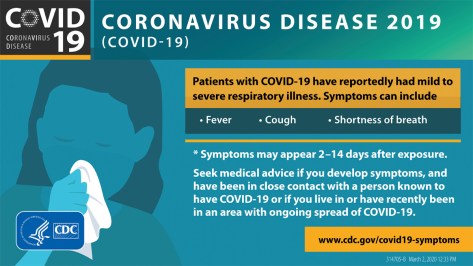
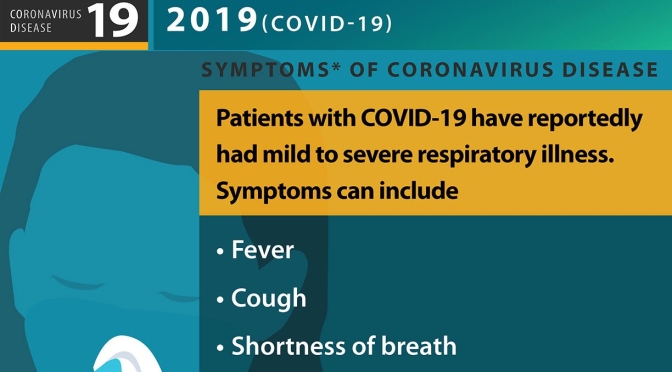
Health Infographics: “Coronavirus / Covid-19” – Symptoms And Exposure Period (CDC Update)
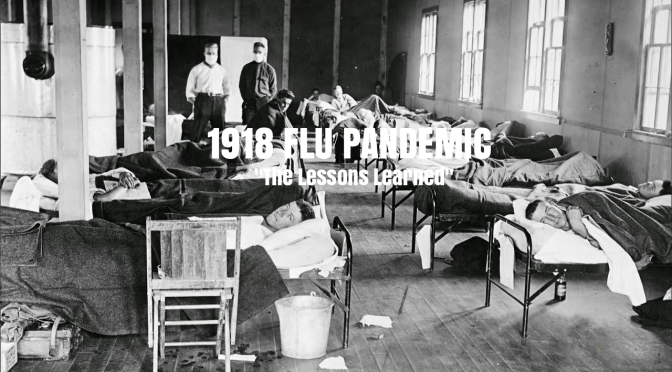
History Videos: “1918 Flu Pandemic” – The Story And Lessons Learned (CBS)
The pandemic of H1N1 virus in 1918 infected about one-third of the world’s population, causing at least 50 million deaths, including more than a half-million in the United States. Martha Teichner reports.
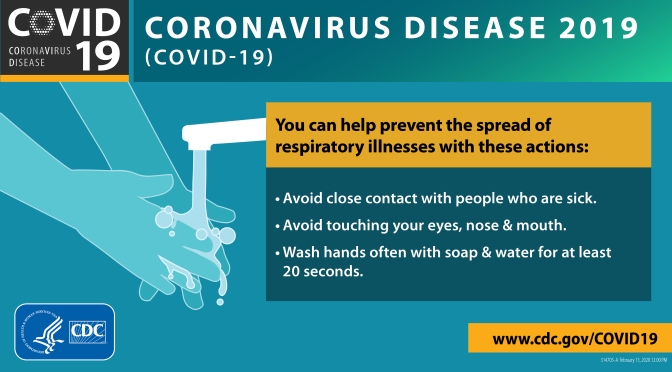
CDC Health Infographic: Preventing The Spread Of “Coronavirus / Covid-19”

New Science Podcasts: Dogs’ Cold Noses Sense Heat, Coronavirus And The Search For Alien Life
 On this week’s show, Online News Editor David Grimm joins host Sarah Crespi to discuss how dogs’ cold noses may be able to sense warm bodies. Read the research. International News Editor Martin Enserink shares the latest from our reporters covering coronavirus.
And finally, from a recording made at this year’s AAAS annual meeting, host Meagan Cantwell talks with Jill Tarter, chair emeritus at the SETI Institute, about the newest technologies being used to search for alien life, what a positive signal would look like, and how to inform the public if extraterrestrial life ever were detected.

Coronavirus / Covid -19: “What Happens When It Enters Your Body” (Video)
 What happens when you catch coronavirus? The Telegraph’s Global Health Security Editor Paul Nuki explains all the ways in which you could become infected with COVID-19 and how your body reacts to this virus.
What happens when the virus enters the body?
When the virus enters your body it binds to two cells in the lungs – goblet cells that produce mucus and cilia cells which have hairs on them and normally prevent your lungs filling up with debris and fluid such as virus and bacteria and particles of dust and pollen.
The virus attacks these cells and starts to kill them – so your lungs begin to fill with fluid making it hard for you to breathe. This phase of the disease is thought to last about a week.
At this point your immune system will start to kick in and fight off the invaders. You will develop a fever and your high body temperature will create a hostile environment for the virus. You will start to get rid of the mucus in the form of coughing and a runny nose.
But in some people – particularly the elderly and those with other health conditions – the immune system can go into overdrive. As well as killing the virus it also starts to kill healthy cells.
This heightened immune response can trigger a “cytokine storm” – white blood cells activate a variety of chemicals that can leak into the lungs, which along with the attack on the cells damages them even further. Scans of the lungs show “ground-glass” opacity and then “crazy paving” patterns, as they fill with mucus making it harder and harder to breathe.

New Science Podcasts: Faster Image ID, Crafting Crystals And Coronavirus / Covid-19 Update (Nature)
 Listen to the latest from the world of science, with Benjamin Thompson and Nick Howe. This week, improving computers’ image identification, and a new method for growing crystals.
In this episode:
00:44 Upgrading computer sight
Researchers have designed a sensor that allows machines to assess images in nanoseconds. Research Article: Mennel et al.; News and Views: In-sensor computing for machine vision
06:51 Research Highlights
Calorie restriction’s effects on rat cells, and the dwindling of sandy seashores. Research Highlight: Old age’s hallmarks are delayed in dieting rats; Research Highlight: Sandy beaches are endangered worldwide as the climate changes
08:53 Crafting crystals
To understand the structure of materials, researchers often have to grow them in crystal form. A new method aims to speed up this process. Research article: Sun et al.
14:48 News Chat
Coronavirus outbreak updates, and climate change’s role in the Australian bush fires. News: Coronavirus: latest news on spreading infection; News: Climate change made Australia’s ‘unprecedented’ bushfires 30% more likely
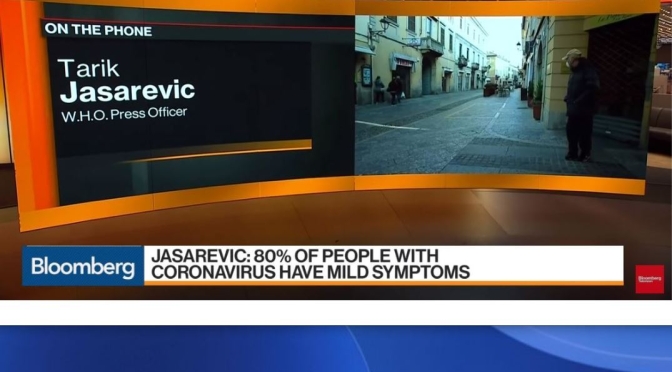
W.H.O. Update: 80% Of “Coronavirus/Covid-19” Patients – “Mild Symptoms”
Mar.03 — World Health Organization spokesman Tarik Jasarevic speaks from Geneva about the latest advice for avoiding the coronavirus. He also comments on efforts to develop a vaccine and advice for public health workers. He speaks on “Bloomberg Markets: European Open.”
Coronavirus: Lack Of “Adequate Knowledge” Driving Public Panic (BMJ)
From a BMJ Opinion article (Feb 28, 2020):
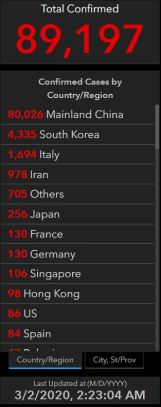 A lack of adequate knowledge is probably the driving force for the public panic, particularly at the early stages of an outbreak—highlighting the fact that information is crucial. Misunderstandings about the information that is available, even worse exaggerating such information, may further aggravate the panic. Unfortunately, these phenomena are not uncommon. To relieve the public panic, an effective approach would be timely publication of trustworthy research evidence in a manner appropriate for the public.
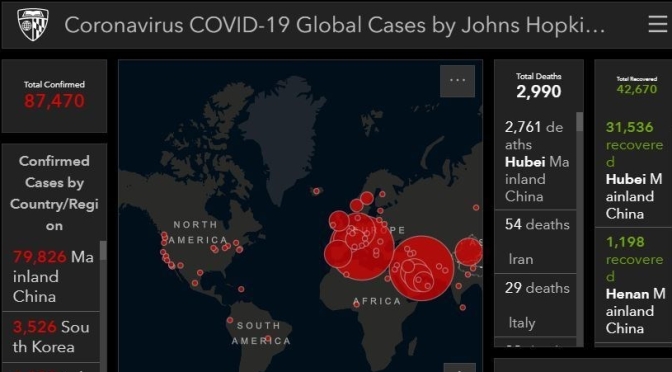
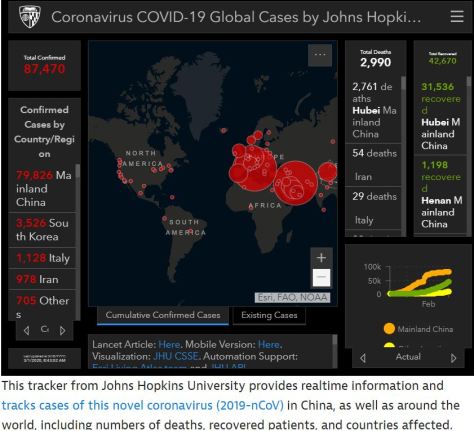
Click here for real-time update
To date, there have been a number of reports and research papers published in peer reviewed journals. However, this information is largely aimed at researchers and healthcare professionals. The study findings are often obscure for the general public. Some of the published evidence is reporting on early findings and there are some methodological limitations. If inappropriately interpreted, they could misinform the public and could potentially cause further panic or psychological stress. We believe that providing the public with timely and credible evidence and appropriate interpretation is very important. Disseminating the evidence effectively is critical to improving the public’s understanding of the outbreak.
 Boomers Daily