Tag Archives: Climate

Climate Research: The ‘Ice Fields’ Of Patagonia, Chile

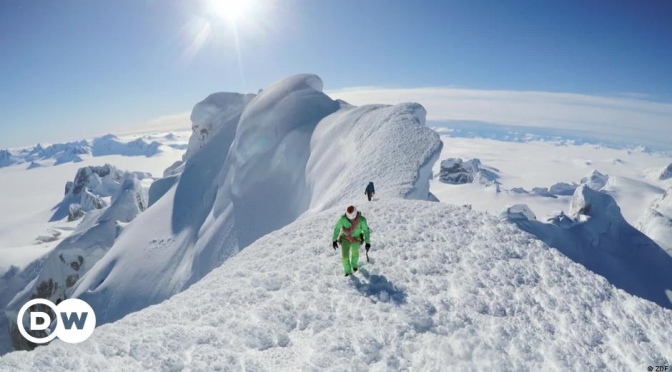
DW Documentary (March 4, 2024): Patagonia’s icefields are very difficult to access. As a result, they remain largely unexplored by climate researchers. Now, a scientist and two extreme mountaineers are venturing into this hard-to-reach area, in search of new data for climate research.

Even after 15 years of research in Chile, scientist Tobias Sauter says that for him, many questions remain unanswered. To clarify them, he decides to venture into areas that are difficult to access. The mountaineers Robert Jasper and Jörn Heller agree to help – and put themselves in great danger in the process. The two icefields in the Patagonian Andes, which stretch across the borders of Chile and Argentina, represent the largest ice mass outside the polar ice caps.

However, as a result of climate change, the ice here is losing mass. In some areas, the icefields are losing up to 20 meters in height per year. Little is known about these dramatic developments and their specific causes. The ice field to the north in particular has so far mainly been studied using satellite-based data. The area’s extreme weather conditions and great remoteness make field research on site a challenge. Tobias Sauter from Humboldt University in Berlin is one of the few researchers to take on this challenge.
#documentary #dwdocumentary

Climate Documentary: ‘Colorado River In Crisis’

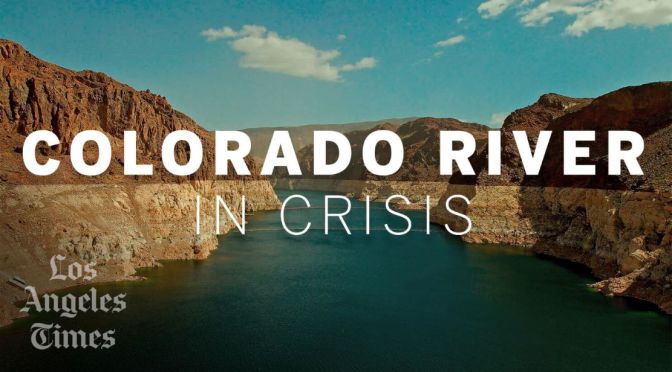
Los Angeles Times (November 15, 2023) – A team of Los Angeles Times journalists travels along the Colorado River to examine how the Southwest is grappling with the water crisis. The Colorado River can no longer withstand the thirst of the arid West.

Water drawn from the river flows to millions of people in cities from Denver to Los Angeles and irrigates vast farmlands. For decades, sections of the river have been entirely used up, leaving dusty expanses of desert where water once flowed to the sea in Mexico. Now, chronic overuse and the effects of climate change are pushing the river system toward potential collapse, with depleted reservoirs near the lowest levels since they were filled.

A water reckoning is about to transform the landscape of the Southwest. Colorado River in Crisis follows Los Angeles Times journalists traveling throughout the river’s watershed, from the headwaters in the Rocky Mountains to the river’s dry delta. These stories reveal the stark toll of the river’s decline, responses that have yet to match the scale of the crisis, and voices that are urging a fundamental rethinking of how water is managed and used to adapt to the reality of an overtapped and dwindling river.

This documentary was filmed and produced by Albert Brave Tiger Lee, with reporting by Ian James and other L.A. Times journalists. Consulting producers included Maggie Beidelman, Robert Meeks and Erik Himmelsbach-Weinstein. (46 minutes)

Read the L.A. Times series Colorado River in Crisis: https://www.latimes.com/environment/s…

Research Preview: Science Magazine – August 4, 2023

Image

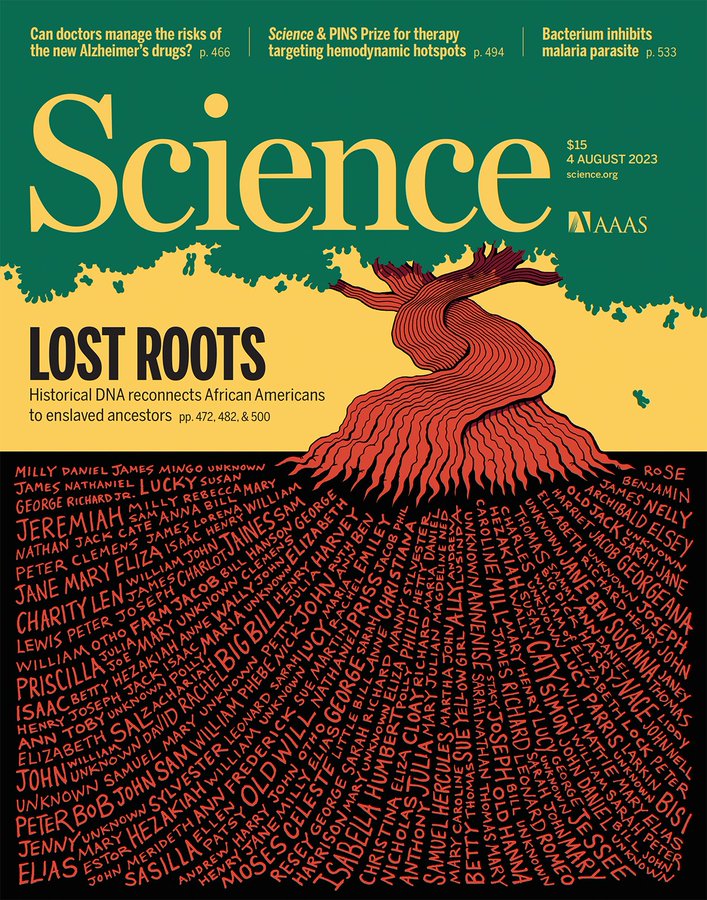
Science Magazine – August 4, 2023 issue: DNA was sequenced from 27 African Americans buried at Catoctin Furnace, Maryland, where enslaved people labored between 1774 and 1850. The tree trunk forms a double helix comprising 27 segments representing each sequenced individual.

‘We’re changing the clouds.’ An unforeseen test of geoengineering is fueling record ocean warmth

Pollution cuts have diminished “ship track” clouds, adding to global warming

Tropical trees deter similar neighbors

Tropical forests host an unusually high diversity of tree species. Strong interactions between individuals are hypothesized to create these patterns. A tree is more likely to survive when surrounded by different tree species with different resource needs, diseases, and herbivores. Kalyuzhny et al. found patterns consistent with this mechanism in a long-term forest plot in Panama. Adult trees in this site are more distant from members of their own species than from other species and more distant than would be expected by chance or by the limits of seed dispersal. This study shows that distances between conspecifics are maintained in adult trees, helping to explain the high diversity of tropical forests.

Research Preview: Science Magazine – July 28, 2023

Image

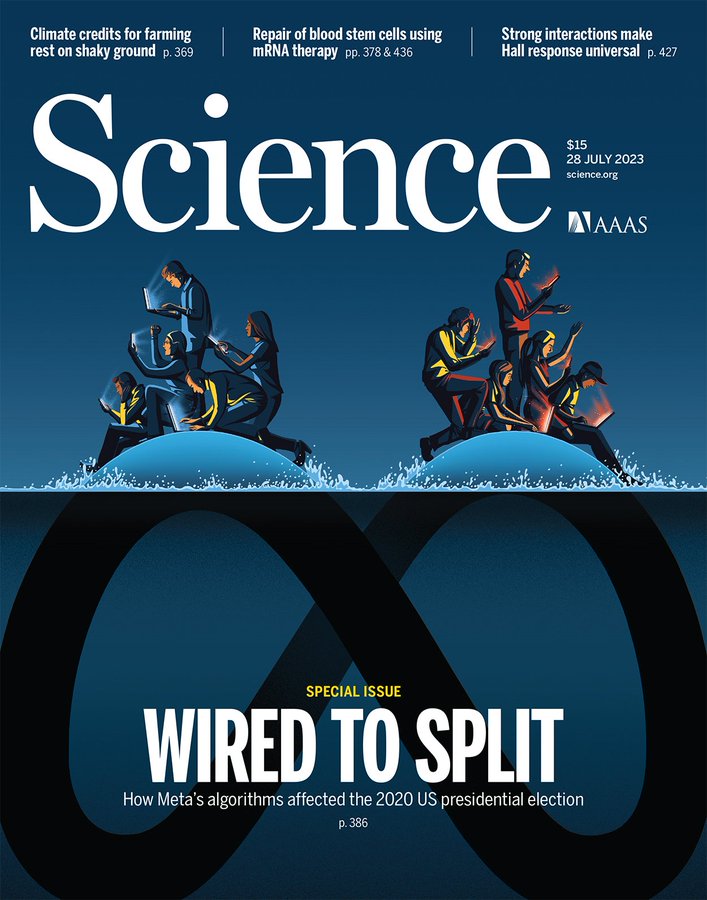
Science Magazine – July 28, 2023 issue: This artwork depicts social media users that are engaged (and often enraged) from the “left” (liberals, blue) and the “right” (conservatives, red) perched on Meta’s logo. Social media algorithms personalize users’ online experiences, recommending engaging content that will interest them and possibly spark outrage.

Social media and elections

The advent of social media forever changed how we consume news. At least half of Americans rely on it for news, and Facebook (owned by parent company Meta) is the most popular. Meta’s Facebook and Instagram platforms are funded through advertisements and generate more revenue when users spend more time on their platforms. To make platforms alluring and increase screen time, tech companies operate on business models that incentivize algorithms that are designed to elevate eye-catching content to the top of users’ feeds—content that captures attention and may go “viral” by stimulating “engagement” through comments, likes, and resharing.

Origin of diamond-bearing eruptions revealed

Deep mantle waves from continental rifting trigger mysterious kimberlite volcanoes

‘I should have done better.’ Stanford head steps down

Probe clears Marc Tessier-Lavigne of misconduct but criticizes lab culture and lack of “appetite” for corrections

Climate Change: A Review Of High-Tech Solutions

DW Documentary (June 13, 2023) – Can high-tech solutions help protect the climate? What would be the side effects of further human intervention in nature?

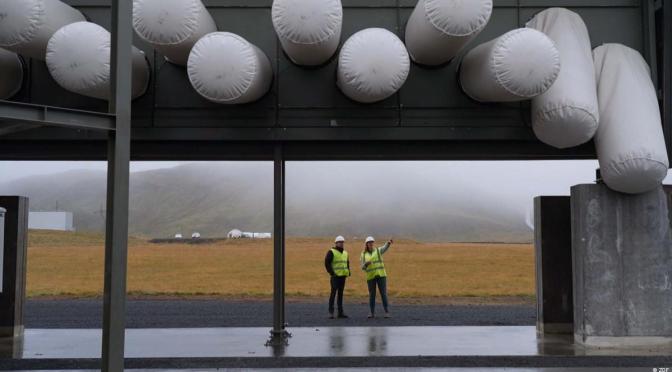
Attempts are being made to reduce the CO2 in the atmosphere with technical solutions. For example, new carbon capture technology that can extract CO2 from air and water, even if the amount currently captured is minimal and not enough to prevent the climate crisis and its consequences. Still, there is no shortage of ideas. Adding basalt rock dust to agricultural fields not only binds carbon dioxide but keeps the soil fertile.

Biochar, made from organic waste, has a similar effect. Some ideas are bolder: A protective screen of particles in the upper layers of the atmosphere could filter sunlight, as seen with the eruption of the Pinatubo volcano in the Philippines in 1991. The millions of tons of sulfur dioxide spewed into the stratosphere cooled the earth significantly.

Theoretically, aircraft could be used to deliver the particles. But experts warn that the consequences for humans and the weather would be felt worldwide and could never be fully controlled.

#documentary #dwdocumentary #climatechange

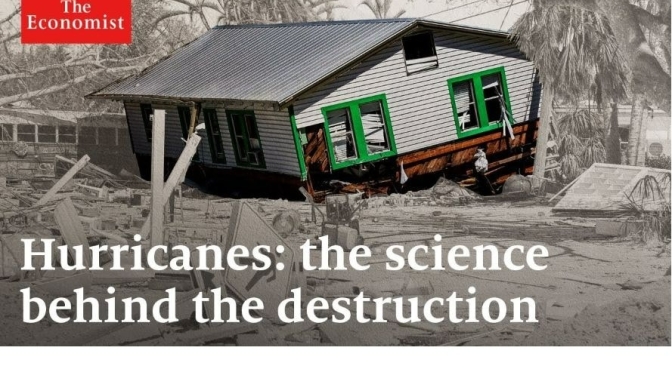
Hurricanes: The Science Behind Their Destruction

The Economist (May 5, 2023) – Hurricanes are among the most dangerous natural phenomena on earth, causing billions of dollars of damage and destroying lives every year. But what turns a peaceful patch of ocean into the planet’s most destructive force, and how is this process being affected by climate change?

Video timeline: 00:00 – What are tropical cyclones? 00:46 – The history of tropical cyclones 02:06 – How do they form? 04:33 – What happens when they reach land? 07:13 – What is the impact of climate change?

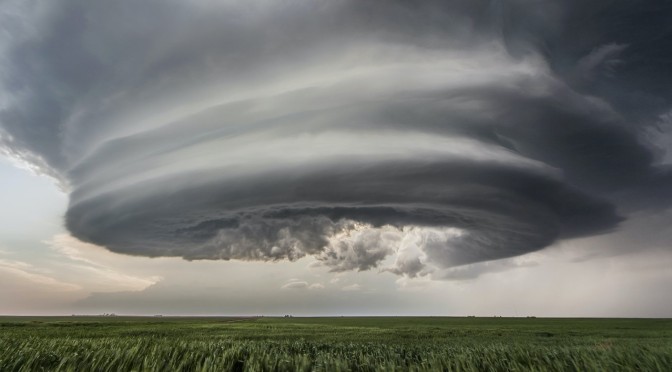
Weather: Why Tornadoes Hit U.S. Midwest & South

DW News (April 2, 2023) – At least 21 people have been killed and many more injured as storms batter the South and Midwest. Authorities in Arkansas have declared an emergency after multiple tornadoes tore through the state.

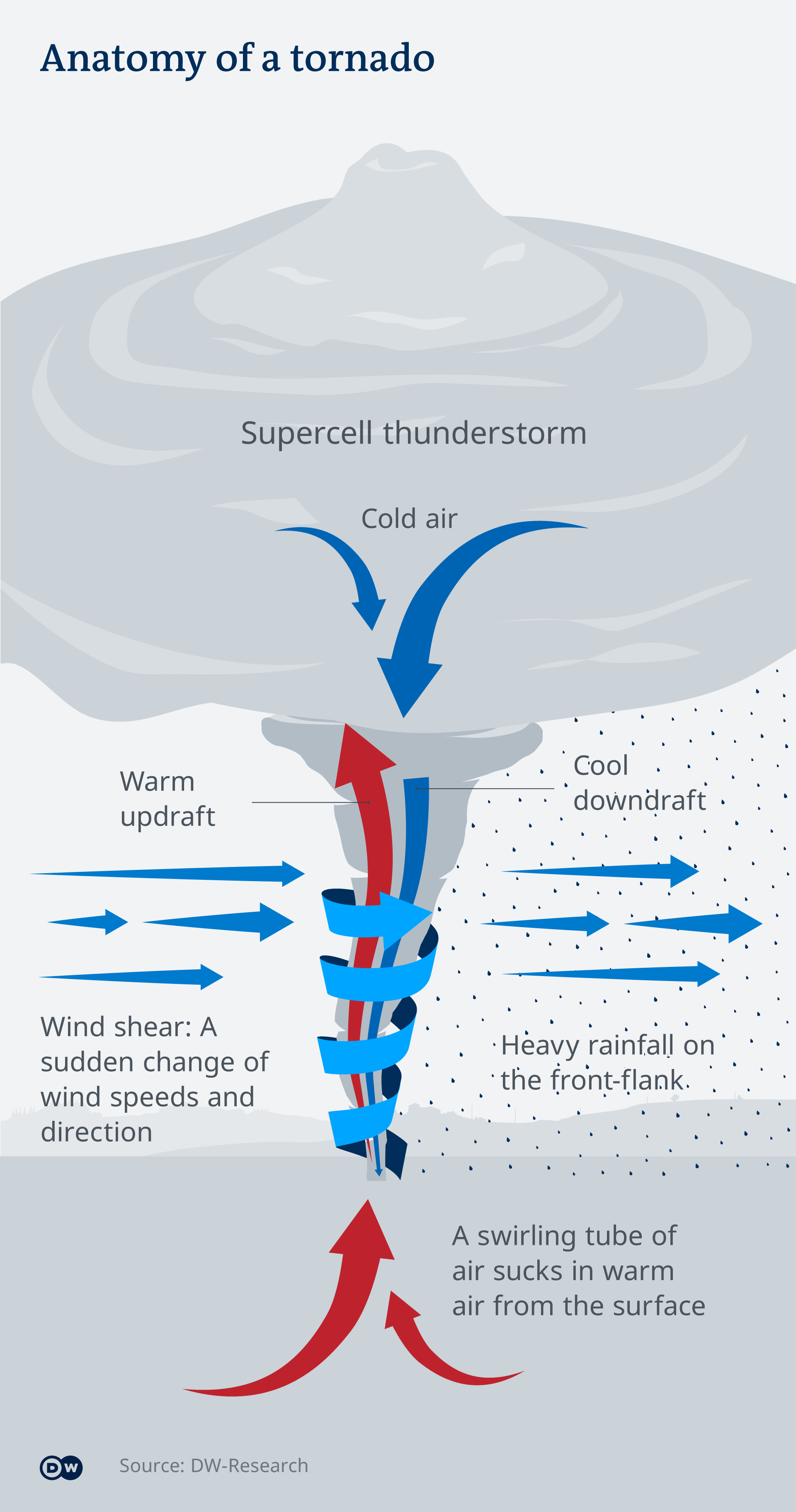
Infografik - Anatomy of a tornado

Tornadoes develop from severe thunderstorms in warm, moist, unstable air along and ahead of cold fronts. Such thunderstorms also may generate large hail and damaging winds. When intense springtime storm systems produce large, persistent areas that support tornado development, major outbreaks can occur.

Disasters: Earthquakes & Cyclones Ravage Vanuatu

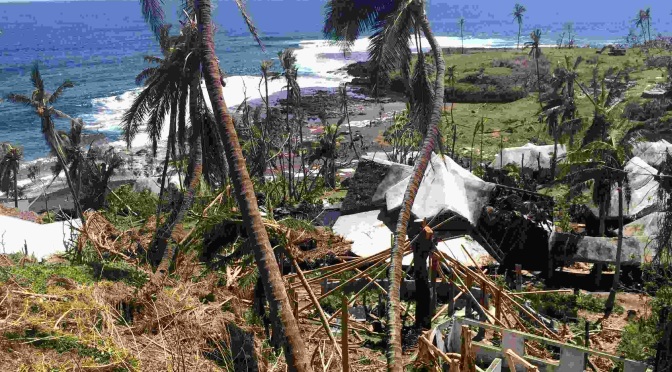
The Independent (March 28, 2023) – The tiny Pacific island state of Vanuatu was hit by two category-four cyclones and two earthquakes over three days this month, in a devastating onslaught that destroyed homes, cut power, and impacted 80 per cent of the population.

Scientists say global heating is already making major tropical cyclones like those that hit Vanuatu more frequent. Under moderate and worst-case climate scenarios, the country is expected to lose around 20-25 per cent of its GDP from natural disasters each year, according to a recent UN report. Later this month Vanuatu’s proposal for a top international court to clarify the obligations of states to tackle climate change and the consequences of not doing so under international law will be put to a vote at the United Nations.

Vanuatu is a South Pacific Ocean nation made up of roughly 80 islands that stretch 1,300 kilometers. The islands offer scuba diving at coral reefs, underwater caverns and wrecks such as the WWII-era troopship SS President Coolidge. Harborside Port Vila, the nation’s capital and economic center, is on the island of Efate. The city is home to the Vanuatu National Museum, which explores the nation’s Melanesian culture.

Africa: Somalia Is Facing Its Worst Drought Ever

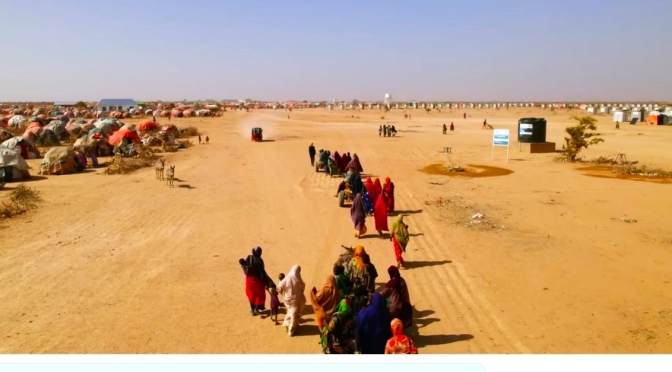
ABC News In-depth (March 23, 2023) – Somalia is one of the most dangerous places on earth. Almost two decades of conflict with the al-Qaeda backed terrorist group al-Shabaab has taken a huge toll on the country. Now Somalia is experiencing its worst drought in 40 years.

“People say that this is the worst drought in 40 years, but that’s wrong,” says Adam Abdelmoula, the UN humanitarian coordinator for Somalia. “This is the worst drought in Somalia’s history, period.”

A map of Somalia.

With the world distracted by the war in Ukraine, the crisis is escalating away from the public gaze. This week on Foreign Correspondent reporter Stephanie March and producer/cinematographer Matt Davis travel to Somalia where makeshift camps have become home to more than a million hungry children and their families.

There, they meet mothers with babies who have walked for days without food and very little water. They hear incredible stories of courage and survival in a landscape that is unforgiving and unsafe. And they also face their own safety problems when their security team worries al-Shabaab has been told of their whereabouts.

As the Somali government fights back against al-Shabaab, another threat, which they have no control over, is driving the extreme weather: climate change. In the midst of this turmoil, the Foreign Correspondent team meets extraordinary people who are determined to make their story one of survival.

READ MORE

Climate Change: Threats Of Ocean Acidification

The Economist (February 2, 2023) – As carbon emissions change the chemistry of the seas, ocean acidification threatens marine life and human livelihoods. How worried should you be about climate change’s so-called “evil twin”?

Video timeline: 00:00 The other carbon problem 00:50 How does the ocean’s deepest point reveal its past? 02:55 Why are baby oysters dying? 04:08 Is the ocean acidic? 05:21 What is causing ocean acidification? 06:01 Why are corals dissolving? / Will deep sea ecosystems survive? 08:35 A threat to human livelihoods 10:42 What are the ‘potato chips of the sea’? 12:04 What is the solution?