Financial Times (November 19, 2023) – Lithium is the ‘new oil’ of the clean energy era, crucial to the production of batteries for electric vehicles. The FT investigates this booming industry – and the controversies surrounding it – on a journey from Chile to Norway and the UK.
Video timeline: 00:00 Lithium and the energy transition 01:13 Global lithium reserves 01:33 The process 03:03 The communities 04:05 Water reserves 05:29 The investors 07:40 Lithium supply and China 08:41 The policymakers 09:35 Cornish mining revival 12:16 The markets 15:28 Chile’s lithium policy 18:02 Direct lithium extraction 19:54 The indigenous perspective 22:58 Recycling batteries 25:30 The future
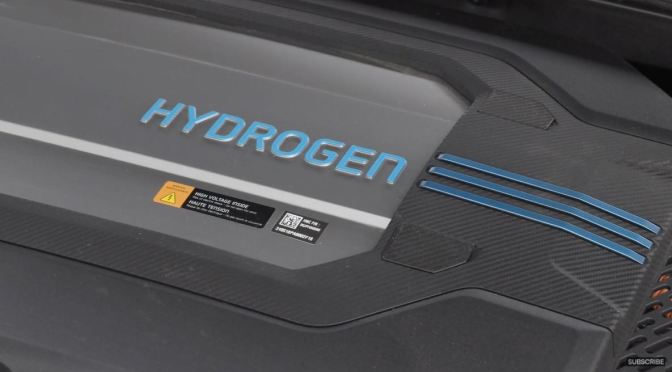
There’s a lot of interest in the hydrogen fuel economy. Here’s what you need to know about how it works and the hurdles it faces.
Hydrogen is a clean fuel that, when consumed in a fuel cell, produces only water. Hydrogen can be produced from a variety of domestic resources, such as natural gas, nuclear power, biomass, and renewable power like solar and wind. These qualities make it an attractive fuel option for transportation and electricity generation applications. It can be used in cars, in houses, for portable power, and in many more applications.
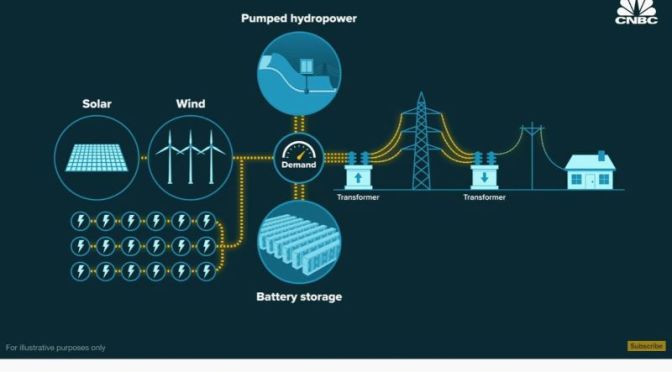
The U.S. electric grid is outdated. Designed for a world that runs on fossil fuels, our grid needs some major tech upgrades in order to transition to a more distributed, all-renewable system. That means smart, internet connected hardware working in tandem with advanced data analytics software to ensure that supply and demand are balanced, even when the sun isn’t shining or the wind isn’t blowing.
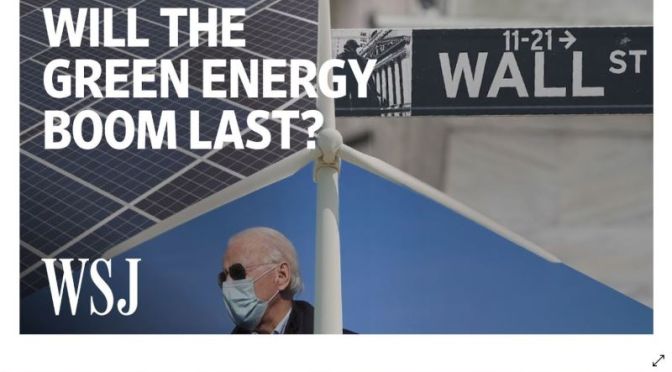
Investors have been pouring more money than ever into renewable energies such as solar and wind. WSJ looks at how the pandemic, lower energy costs and global politics have driven the rally–and whether it can last.
The 2021 Toyota Mirai is the second generation of zero emission hydrogen fuel cell electric sedan.
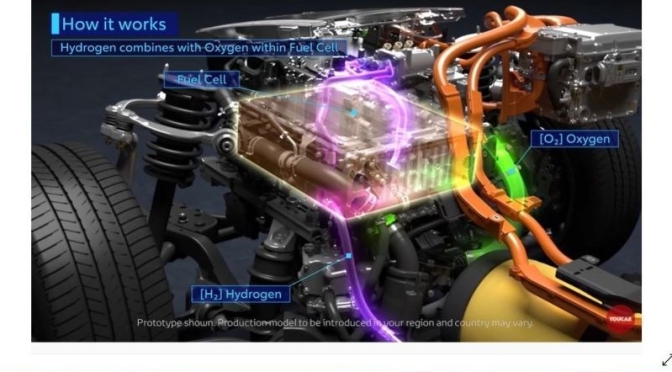
One of the principal aims for the new 2021 Mirai has been to give the car a stronger emotional appeal, making it a car that people will be attracted to by its looks and the way it drives, as well its eco-performance. The new GA-L platform and Toyota’s advances in FCEV technologies have made this possible. Toyota’s new fuel cell stack and fuel cell power converter (FCPC) have been developed specifically for use with the GA-L platform.
The designers have been able to bring all the elements together in the stack frame (including the water pumps, intercooler, air conditioning and air compressors and the hydrogen recirculation pump) with each part made smaller and lighter, while at the same time improving performance. The stack case itself has been made smaller by using Friction Stir Welding, reducing the gap between the fuel cell and casing.
The new Mirai is equipped with lithium-ion high-voltage battery in place of the current model’s nickel-metal hydride unit. Although smaller in size, it is more energy-dense, giving higher output and superior environmental performance. Containing 84 cells, it has a 310.8 rated voltage compared to 244.8, and a 4.0 Ah capacity, versus 6.5 Ah. Overall weight has been reduced from 46.9 to 44.6 kg. The output has improved from 25.5 kW x 10 seconds to 31.5 kW x 10 seconds.
The battery’s smaller dimensions have allowed it to be positioned behind the rear seats, avoiding intrusion in the load compartment. An optimised air-cooling path has been designed, with discreet inlets either side of the rear seats. The environmental benefit of driving the Toyota Mirai go beyond zero emissions to “negative emissions” – the car effectively cleans the air as it moves. A Toyota innovation, a catalyst-type filter is incorporated in the air intake.
As air is drawn into the vehicle to supply the fuel cell, an electric charge on the non-woven fabric filter element captures microscopic particles of pollutants, including sulphur dioxide (SO2), nitrous oxides (NOx) and PM 2.5 particulates. The system is effective in removing 90 to 100% of particles between 0 and 2.5 microns in diameter from the air as it passes into the fuel cell system.
News, Views and Reviews For The Intellectually Curious



 Boomers Daily