Tag Archives: Biology

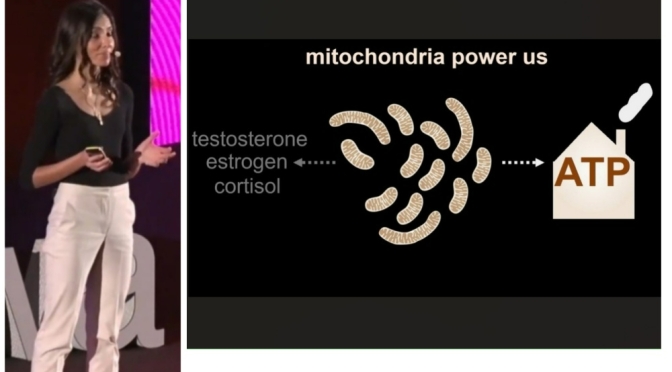
Research: Lena Pernas PhD On ‘How Mitochondria Protects Us From Disease’

TEDx Talks (November 4, 2023) – Approximately 1.5 billion years ago, a lone bacterium found its way into a larger cell. The exchanges that transpired between the two are considered to have driven the evolution of this bacterium into the organelle we now call the mitochondrion.

Emerging research suggests that mitochondria are not simply the ‘powerhouses’ of the cell, but also function as cellular guardians against microbial intruders. Consequently, maintaining mitochondrial health is not only vital for our well-being, but may serve to protect us against infectious disease.

Dr. Lena Pernas started as a Max Planck Research Group Leader at the MPI Biology for Ageing (Cologne, Germany) in late 2018, where her lab investigates the organelle and metabolic dynamics of the host-pathogen interaction. Her lab will open its doors at UCLA in the Metabolism Research Theme in 2023.

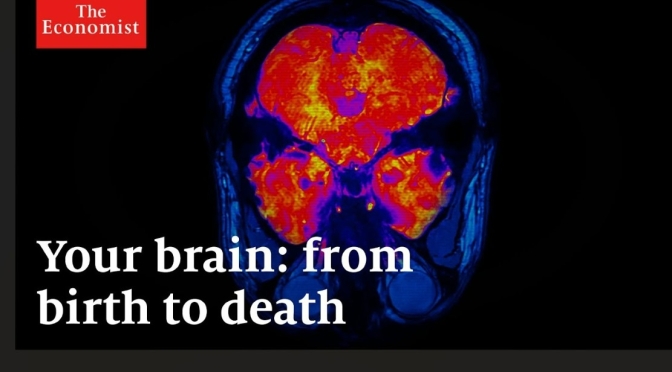
Research: What Happens To Your Brain As You Age

The Economist (November 2, 2023) – As the most complex organ in your body, your brain changes radically throughout your life. Starting from before birth and continuing even after you’ve died. This is what happens to your brain as you age.

Video timeline: 00:00 – What happens to your brain when you age? 00:32 – In the womb 01:03 – Childhood 03:19 – Teenage years 04:48 – Early adulthood 05:27 – Middle age 07:04 – Later life 07:36 – Death

Science: Fiber Optic Cables Detecting Seismic Activity, The Oil & Water Interface

Geoscientists are turning to fiber optic cables as a means of measuring seismic activity. But rather than connecting them to instruments, the cables are the instruments. Joel Goldberg talks with Staff Writer Paul Voosen about tapping fiber optic cables for science.

Also this week, host Sarah Crespi talks with Sylvie Roke, a physicist and chemist at the Swiss Federal Institute of Technology, Lausanne, and director of its Laboratory for fundamental BioPhotonics, about the place where oil meets water. Despite the importance of the interaction between the hydrophobic and the hydrophilic to biology, and to life, we don’t know much about what happens at the interface of these substances.

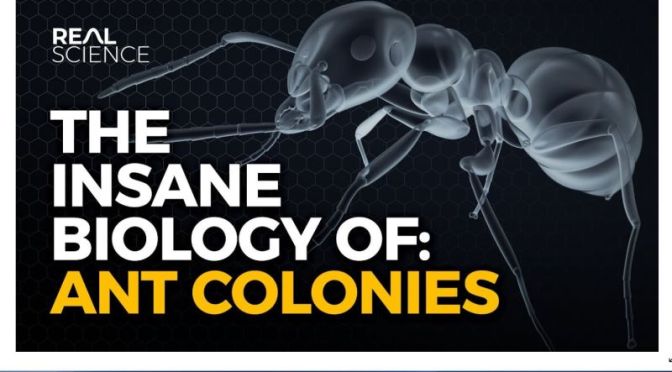
Science: ‘Insane Biology Of Ant Colonies’ (4K Video)

Ants are social insects which form small to large colonies. A typical colony contains an egg-laying queen and many adult workers together with their brood (eggs, larvae and pupae). Workers are by far the most numerous individuals in the nest. They are responsible for nest construction and maintenance, foraging, tending the brood and queen, and nest defence.

While all workers are female, they are sterile and do not lay eggs. Winged queens and males are present in the nest for only a short period. Soon after emerging they leave the nest to mate and establish new nests. Queens are generally similar to the workers, differing primarily in having larger bodies. In some species, fully winged queens are lacking and egg-laying is undertaken either by typical workers or by individuals which are morphologically intermediate between typical queens and workers (these are called ergatoid queens). Males are generally about the same size as the workers or smaller, and have smaller heads with large ocelli, very short scapes and small mandibles. In many cases males look more like wasps than ants.

Science: ‘The Biggest Breakthroughs In Biology In 2020’ (Video)

In 2020, the study of the SARS-CoV-2 virus was undoubtedly the most urgent priority. But there were also some major breakthroughs in other areas. We’d like to take a moment to recognize them.

  • 1. This year, we learned that we had severely underestimated the human brain’s computing power. Researchers are coming to understand that even the dendritic arms of neurons seem capable of processing information, which means that every neuron might be more like a small computer by itself.
  • 2. The new Information Theory of Individuality completely reimagines the way biologists have traditionally thought about individuality. Armed with information theory, the researchers found objective criteria for defining degrees of individuality in organisms.
  • 3. Deprived of sleep, we and other animals die within weeks. More than a century of scrutiny failed to explain why lack of sleep is so deadly. This year, an answer was finally found — not inside the brain, as expected, but inside the gut.

Top Lectures: ‘A Series Of Fortunate Events’ By Biologist Sean B. Carroll

Is simple chance the source of all the beauty and diversity we see in the world? Sean B. Carroll tells the story of the awesome power of chance. Sean’s book “A Series of Fortunate Events” is available now: https://geni.us/mPPrdQH

Watch the Q&A: https://youtu.be/adrqThhSgYg

Why is the world the way it is? How did we get here? Does everything happen for a reason or are some things left to chance? Philosophers and theologians have pondered these questions for millennia, but startling scientific discoveries over the past half century are revealing that we live in a world driven by chance.

Sean B. Carroll is an award-winning scientist, writer, educator, and film producer. He is Vice President for Science Education at the Howard Hughes Medical Institute and the Balo-Simon Chair of Biology at the University of Maryland. His books include The Serengeti Rules (Princeton), Brave Genius, and Remarkable Creatures, which was a finalist for the National Book Award. He lives in Chevy Chase, Maryland. This talk and Q&A was recorded by the Royal Institution on 6 October 2020.