

January 11, 2023: Tensions mount in Iran over imminent executions. Plus: Calls grow in Peru for President Boluarte to resign; Australia’s outback is hit by “a one-in-100-year flood”; political momentum grows towards reaching agreement on Northern Ireland protocol talks; a run through the day’s papers; and the latest business news.
Tag Archives: Australia
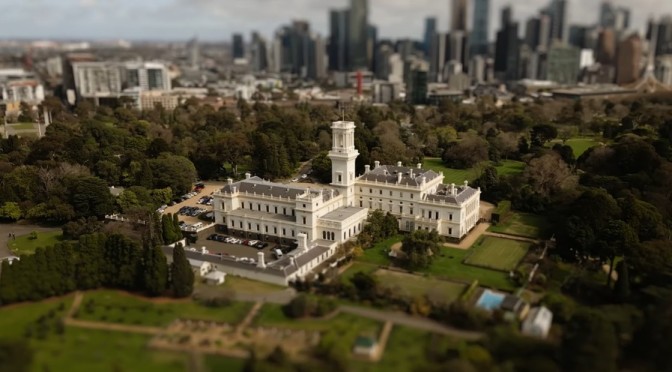
Tilt-Shift Travel: A Look At ‘Melbourne In Miniature’

I was in Australia to shoot an ARTE documentary in the Outback and decided to stay one week longer and team up with Visit Victoria to shoot my first Little Big World episode in Australia. Melbourne consistently ranked as the world’s most liveable city for much of the 2010s and I can toally see why! It’s a big vibrant city with impressive architecture, amazing cultural offers, from museums to street art, live music and theatre.
Also there are some pretty great food places in the city. Many beautiful parks in the area invote to relax and the the Yarra River for water activitie. Oh, and the Ocean is just a quick tram ride away.
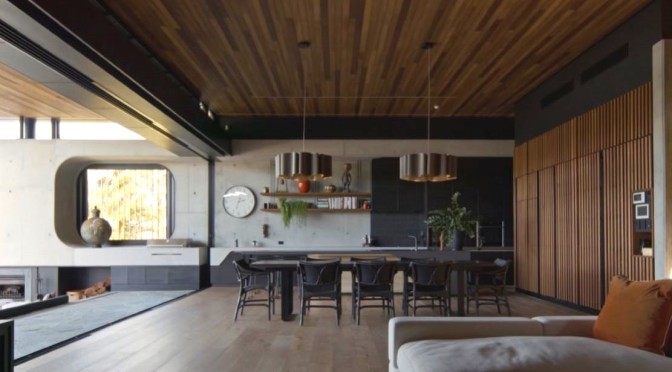
Design Tour: Cove House – Coomera Island, Australia

Video timeline: 00:00 – Introduction to the Extraordinary Garden Home 00:11 – The Architect’s Favourite Aspects 00:40 – A Queensland Location 01:08 – The Well-Travelled Clients and their Desire for Sub-Tropical Modern Architecture 01:26 – A Strong Form and Sense of Materiality 01:48 – A Walkthrough of the Home and its Materials 02:29 – The Spine of the Home 03:00 – The Owners 03:20 – A Response to Natural Light 03:39 – Accommodating for Entertaining 03:56 – Implementing Passive Design Principles 04:50 – Seeing the Clients Grow into the Home
Desiring a family home that was equal parts building and garden, the clients needed a home that could provide privacy and areas for entertaining. Handling the combination of public and private spaces with ease, the architect has also challenged the traditional entrance sequence of the home. From its exterior, Cove House strikes a formidable presence, yet with its singular floating plane roof and plant life,
Cove House establishes itself as a modern architecture garden home. To create a modern architecture garden home, the architect has offset the concrete and dark tones of the exterior with warm timber battens to soften the entrance. Starting the house tour, the green landscape spine runs down the centre of the home, separating the public entry and the private living spaces. Additionally, the green spine guides guests towards the rear of the home, where the living and entertainment spaces are situated.
Contributing to the interior design of the Cove House, concrete and timber are combined to establish a flowing effect from outside in, honouring the client’s appreciation of climate-responsive materials and architecture. Answering the client’s love of boating and water, Cove House embraces open plan living and joins with the natural reserve, Coomera Island, which sits opposite the home. By opening the rear glass doors, the owners can increase the entertaining size onto the back deck and the passion pit – a curved lounging area that embraces outside living.
Providing the clients with a space to grow into, the modern architecture garden home also offers privacy from its neighbours on either side. Following critical passive design principles for the modern architecture garden home, the large roof-span provides wide-set eaves that protect from rain, provide deep shade during summer and curate cool breezes through the home. Additionally, the natural stone floor and concrete were employed as a thermal mass element to help regulate the home’s temperature all year round. As the house ages, Justin Humphrey Architects has specifically chosen the material palette to influence an alternative approach to address the natural climate setting.
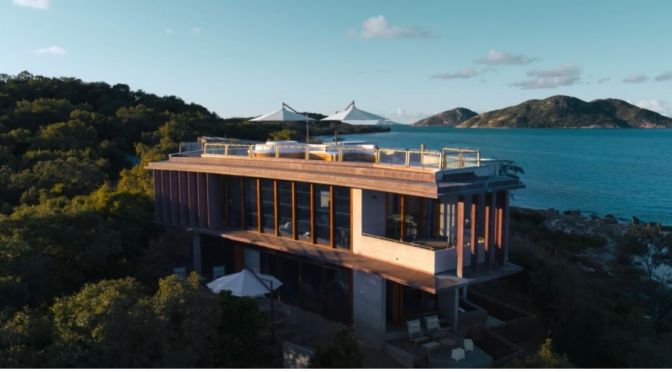
Architecture: The House At Lizard Island, The Great Barrier Reef In Australia

Lizard Island is an island on the Great Barrier Reef in Queensland, 1,624-kilometre northwest of Brisbane and part of the Lizard Island Group that also includes Palfrey Island. It is part of the Lizard Island National Park. Lizard Island is within the locality of Lizard in the Cook Shire.
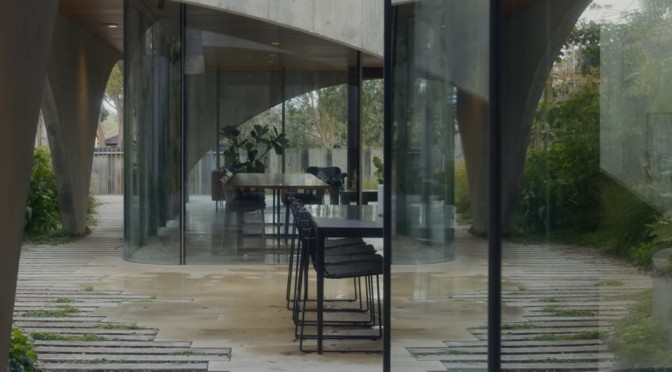
Melbourne Architecture: Tour of Hawthorn House
Video timeline: 00:00 – Introduction to the Most Brilliant Architectural Home 00:26 – Playing with Light and Shadow 00:44 – Creating a Family Home 01:47 – Filtering Through the Concrete Shroud 02:00 – Views From Each Living Space 02:24 – The Original Brief 02:59 – A Quick but Complex Build 04:14 – Emulating A Sanctuary with Other Worldly Vibes 04:30 – The Skin of the Building 04:46 – A Balancing Act with The Materials 05:05 – Returning to the Project 05:26 – Proud Moments
Over an 18-month building process, Flux Construction and Edition Office have created a house unlike other modern architectural homes. First seen from the outside, Hawthorn House appears as a monolithic structure yet, on the inside, the family home becomes a private sanctuary for its owners. Similar to other modern architectural homes, Hawthorn House suffered from lack of privacy in its suburban location.
To respond to this need, Edition Office has pushed the skin of the building out from the glass line, which allows for both privacy and the softening of light. Upstairs has been provided more privacy through light volumes, a structural choice between the buildings form and glass line that open up to the sky. Furthermore, the light volumes also provide advantageous views and the experience of seeing the seasons as they change.
Employing unique interior design choices that allow for ease of living, the architect and interior designer have configured downstairs as one singular platform. Offering different experiences, each living area has a differing focus. From the front pavilion, the homing in on the northern light and established lemon gum tree offers the owners a space to connect with their surrounds. Experienced in the more intimate rear pavilion, an inward focus of the home brings a soft and warming essence to the interior. Celebrating the structural form of modern architectural homes, Edition Office and Flux Construction operated with a concise approach when completing the house.
Through the connection of materials, the home is a celebration of concrete, timber and glass, which is observed immediately from the exterior shell. Equally as important as the home, the evolving landscape offers a place of cognitive restoration. With a mixed use of exotic species and natives, the green life helps to provide a comforting space that will continue to grow in place. Over the modern architectural home’s form, Edition Office has provided its clients with complete privacy through a humble material palette and lush landscaping.
Tours: Cascade House In Queensland, Australia
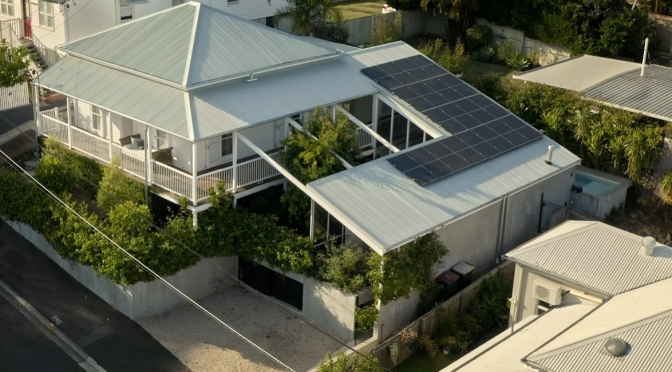
Video timeline: 00:00 – Introduction to the Garden Home 00:26 – The Inner-City Location 01:14 – An Overview of the Home 01:49 – A Walkthrough of the Home 02:28 – The Key Brief of Garden Connection 02:50 – Original Timber Cottages 03:18 – Separation of Old and New 03:53 – The Kitchen 04:11 – A Seamless Integration of Fisher & Paykel 04:44 – The Fisher & Paykel Fit 05:16 – Key Materials 05:59 – A Connection of Texture and Detail 06:22 – The Connection Between Owner and Architect 06:59 – Proud Moments
Working closely with Jacqueline, the architect avoided building underneath the home to keep the streetscape intact. Instead, John Ellway used the vacant land to the side of the original cottage to provide a much-needed extension that leans into the cascading landscape of the site. Found by the client, the cottage home was in a dilapidated state, though internally and structurally the house was in good condition with a much-needed update to accommodate the contemporary needs of the family.
After bringing John Ellway on board, Jacqueline expressed an aspiration to instil a feeling like that of living in a garden. Beginning the house tour from the parking area, the entry to the home opens to the kitchen, dining and living spaces. Immediately connecting to the gardens through large glass doors and windows, the house opens up onto a grass patch for the family to enjoy. Providing the space to embrace living in a garden, the grass patch also offers a private outdoor reprieve. Connecting the new extensions with the older parts of the cottage, a breezeway also adds another layer of connection to the garden.
The private rooms sit in the old section of the cottage, with the entertainment spaces confined to the new extensions. The home’s extended veranda instils the experience of living in a garden as occupants step into the new volume. Incorporating seamless connections throughout the architecture, John Ellway has made additional interior design choices in the kitchen, adding nooks and crannies to conceal appliances and ensuring the interior architecture is kept sleek and simple.
In the kitchen, Fisher & Paykel’s integrated appliances seamlessly blend into the joinery, providing a cohesive effect. Aside from aligning with budget and aesthetic desires, John Ellway used Fisher & Paykel to coincide with the broader context of the kitchen. Focused on using key materials to further assist with the idea of living in a garden, the client and architect chose plywood, brass countertops and polished concrete to foster a warm and natural connection. Together, John Ellway and Jacqueline work to combine finishes and textures to create an uplifted and refreshing home.
Pre-Fab Tiny Home Tours: ‘The Cutting’ In Australia
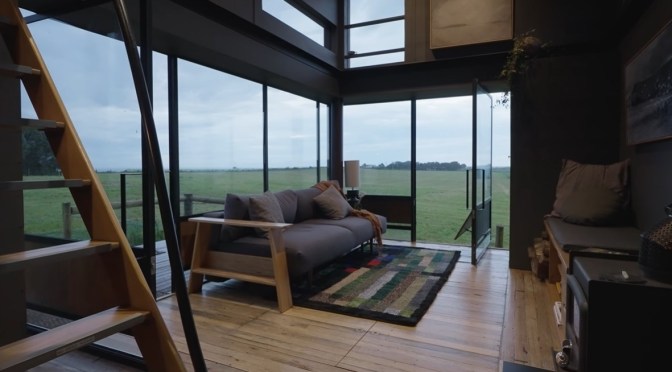
Video timeline: 00:00 – Introduction to the DIY Tiny Home 00:36 – The Brief – Small but Generous 00:54 – Situated on a Patch of Farmland with Views of The Cutting 01:11 – A Tour of the Tiny Home 02:30 – The Challenges in Designing a Small and Transportable Home 03:14 – A Reclaimed and Recycled Material Palette 03:35 – Textural Materiality 03:52 – The Aussie Shed
Promoting a better future with the idea that less is more, the designers have provoked others to think outside the box when crafting residential projects. Looking over The Cutting, an area where the sea cuts into the sand dunes, the home provides plentiful living within its 30 square meters. The house tour of the small home begins at arrival, with basalt pavers that lead up towards the DIY pre-fab tiny home. A set of steps – made from cow trough supports, reclaimed hardwood and perforated mesh salvaged from an old farm shed on the property – brings the occupants to the front door that pivots into the passive house.
Once inside, the kitchen, dining and living spaces are infused with warm timbers and bamstone cobbles, which together pare back the interior and tie the cabin into the surrounding landscape. At the south-western end of the DIY pre-fab tiny home, a double-glazed and steel window section with operable awnings allows for cross flow ventilation throughout the small home. Up on the mezzanine level, a study nook has been inserted into the floor and blurs the connection between upstairs and downstairs.
To cooperate with Victorian road rules, Aaron and Nick needed to design to specific dimensions in order to make the DIY pre-fab tiny home transportable. After collapsing the roof by 1500 millimetres, the small home can then be moved to its new location and settled on the land. With a hope to change the perception surrounding how homes can contribute to sustainability agendas, the designers use reclaimed materials. By doing so, every piece of furniture within the DIY pre-fab tiny home is built from reclaimed wood.
The floor is recycled iron bark, while many of the other timber elements have been sourced from other structures. Futhermore, the designers have championed the idea of the Australian shed with the use of timber and metal on the exterior, reflecting the history of the landscape. Overall, Aaron and Nick have created a modest home with an unexpected perceived spatial generosity that celebrates the value of materials.

Minimalist Design: ‘House K’ In Fairfield, Australia

Video timeline: 00:00 – Introduction to the Minimalist Home 00:30 – The Brief 01:05 – Minimising the Impact on the Garden 01:29 – The Original House 01:45 – A Reference to the Extension 02:04 – A Walkthrough of the Home 02:58 – The Ceiling Registered Floorplan 03:32 – Extending the Spatial Strategies to the Garden 03:59 – The Extension 04:16 – The Material Palette 05:26 – The Perks of Designing Every Aspect
Located in the Melbourne suburb of Fairfield, House K possesses a similar architectural history to the neighbouring builds. A weatherboard residence, the existing home was slightly worn and featured a small extension that was almost unusable. The original brief requested the existing house be reinterpreted as a minimalist home with a new extension added to allow for an altered internal layout. However, the condition of the essential architecture of the house meant that a more substantial renovation was required.
The resulting minimalist home retains much of the original garden space and effortlessly connects the landscape to the interior. Though repainted, the minimalist home retains its original weatherboard façade. Only the addition of a red fence outside the building offers a clue to the renovation work that lies beyond. A house tour of the home begins with a corridor intentionally kept dark in order to showcase the artwork purchased by the client. Compressing down into a steel transition space, the corridor leads to a large pivot door.
A nearby study and library space represents the last portion of the original house. The extension space is defined by a large storage volume and day bed, which together establish different zones, including the living room and dining area. Reinforcing the spatial plan, a coffered ceiling gently delineates the areas below. Extending the spatial strategies of the interior into the garden, Kart Projects creates a series of social amenities. The pool sits elevated on one side – in proximity to an outdoor dining area – whilst the space behind is detailed by a small deck and lawn which maximise the functionality of the landscape. Turning to face the exterior of the minimalist home, occupants will see a red-painted façade exclusive to the rear of the building. In materiality, House K reflects a taste for minimalism.
The material palette is stripped back, consisting primarily of timber-lined features sitting below the coffered ceiling. In the kitchen, the visual impact of a black kitchen island and bench is contained by means of elevation, so that the amenities appear to float in place. In addition, the interior design of the home is uplifted by the inclusion of multiple skylights. Exerting influence over all aspects of the project – including the architecture, interior design and garden landscaping – Kart Projects establishes a cohesive and contemporary home. House K embodies the thorough execution of a singular design concept, expressing the importance of effective spatial planning during renovation projects.
Sustainable Architecture: TMRW Home In Melbourne
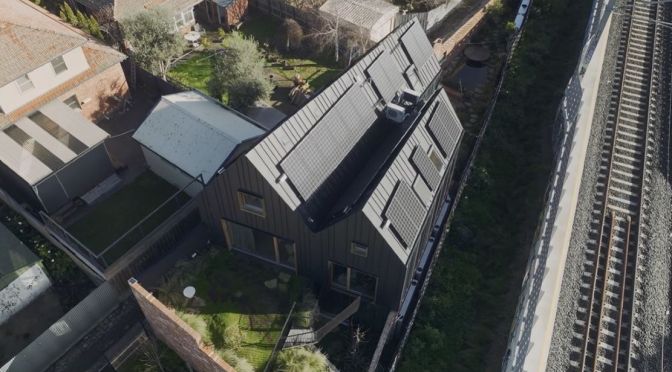
Video timeline: 00:00 – Introduction to the Small, Sustainable and Timeless Home 00:48 – The Shape of the Land 01:12 – A Walkthrough the Home 01:41 – Making the Most of the Small Space 02:00 – Blum Addicts 02:14 – Blum’s Input 02:45 – Blum Storage Options 03:10 – The First Floor 03:38 – The Top Floor 03:54 – 5 Principles of a Passive House 04:44 – Creating a Carbon-Neutral Home 05:13 – A Home That Ticks Every Box
From the exterior of the small home, the architecture considers brick and concrete as main elements of the design, while the interior uses timber as a key material to minimise the home’s carbon footprint. Utilising an open plan approach in the small home allows for a connection to the rear and first-floor gardens. Throughout the residence, a sense of communal living has been infused alongside sustainable elements.
In the sunken living room – where the sense of the communal spirit of the small home is evoked – the surrounding timber edges allow for extra seating for larger gatherings. At the other end of the house, the kitchen and dining room showcase the collaboration with Blum through storage units and cupboards. Helping to provide functionality, organisation and ergonomics while increasing the home’s passive living, Blum specified products such as the LEGRABOX in the kitchen and first-floor bedrooms to enhance storage and aesthetic function.
Moving upstairs to the private spaces, Blum has assisted with the home’s organisation and ergonomics with floor-to-ceiling cupboards in the master to staircase storage systems in the children’s rooms. Additionally, a net has been installed in the children’s rooms, hanging over the ground level and allowing for extra play space without taking away from liveable areas. Further assisting with the passive living of the home, a garden has been installed on the first level and a living green wall in the bathroom adds a natural flow of oxygen. Continuing the importance of indoor air quality, a mechanical heat recovery system has been installed to capture fresh air and remove any stale air.
Furthermore, a heat exchanger allows for temperature stability all year while maintaining energy efficiency. Throughout the small home, an emphasis on creating a carbon neutral project is referenced in the architecture and interior design choices. From the use of timber to the living green wall and connections to the gardens, sustainability is the key focus of Blum and Hütt Homes’ collaboration. An inspiration for upcoming architects and designers to think and design responsibly, TMRW Home is a responsible family residence that considers the present and the future.
Architectural Tours: Off-Grid ‘Limestone House’ In Melbourne, Australia
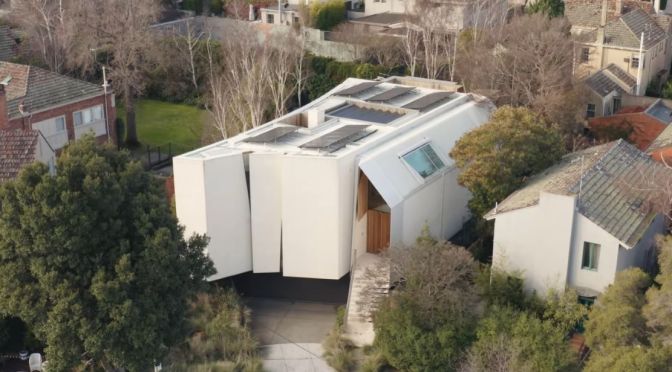
Video timeline: 00:00 – Introduction to the Sustainable Off-Grid House 00:41 – The Location and The Vacant Lot 01:22 – Architects Declare 01:39 – The Living Building Challenge 02:06 – Passive House Standards 02:40 – The Shading Systems 03:04 – What’s Behind the Walls 03:19 – The Energy Supply 03:35 – Requirements of the Living Building Challenge 03:50 – The Two Main Materials Used 04:12 – An Interesting History Behind the Timber 04:42 – The Handmade Aspects 05:01 – Floating on a Sea of Native Grasses
Located in the Melbourne suburb of Toorak, Limestone House rests on the Wurundjeri Land of the Kulin Nation. Initially vacant, the project site excited the clients with the possibility of building a sustainable off-grid house. Paying homage to the environmental agenda, the landscape design of Limestone House sees the building float above a sea of native grass. Guiding the design of Limestone House is the Living Building Challenge and Passivehaus, two rigorous standards of sustainability.
In order to satisfy the standards, John Wardle Architects ensures that the home operates as a sustainable off-grid house, harvesting its own water and disposing of all of its waste water. Externally, a set of edible plantings on the terrace meets the requirement for food production on site. The Passivehaus standard sees a tightly-sealed, sustainable off-grid house emerge. While a passive ventilation system consistently delivers fresh air into the home at a slow speed, an airtight barrier seals heat into the dwelling, maximising energy efficiency.
Similarly, high-performance insulation is applied to the walls, roof and floor and the home features triple-glazed windows. Shading systems take the form of motorised venetian blinds to the northeast and west, as well as operable timber louvres at roof level over the courtyard. Internally, the material palette of Limestone House consists primarily of stone and timber. Concrete benchtops and Queensland siltstone complement the calming tonal character of the scheme alongside hydrowood oak. Many of the trees used for the oak come from a valley that was flooded during a 1940s hydroproject – now the timber comprises a bespoke dining room table.
A sustainable off-grid house, Limestone House produces its own energy and a surplus of five per cent that is exported to the grid. While meeting the design brief, John Wardle Architects ensures that the residence forms a unique embracement of natural serenity, in distinction from other sustainable dwellings of the past.
 Boomers Daily