ZYZZYVA Magazine: The latest issue features…

ZYZZYVA Magazine: The latest issue features…

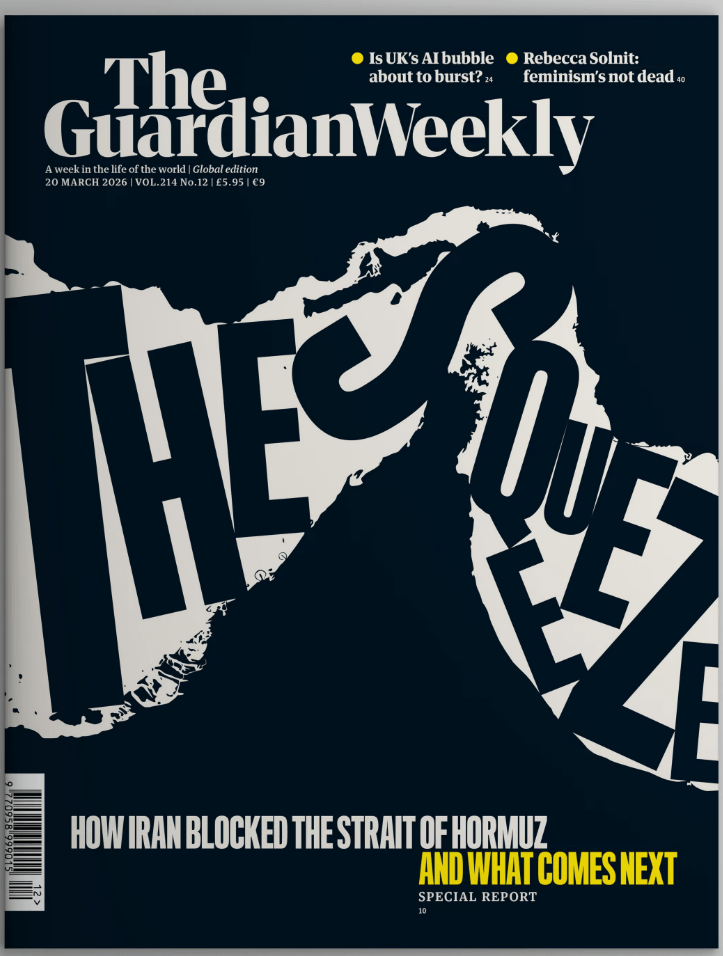
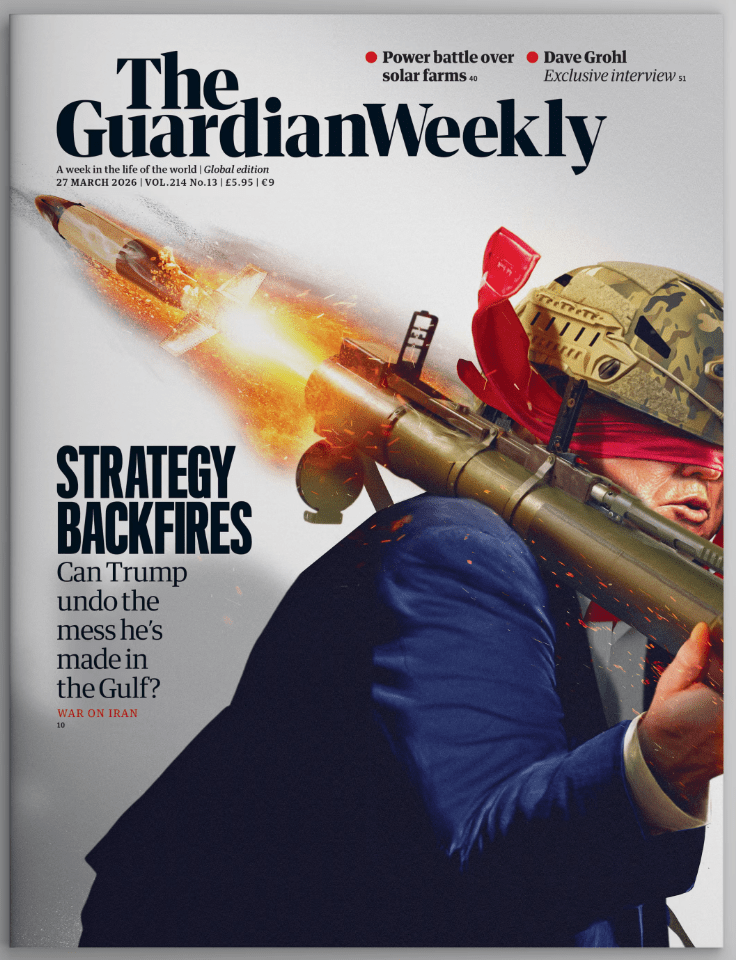
THE GUARDIAN WEEKLY: The latest issue features ‘Blocked!’ – Why Australia banned kids from social media (and what they think of it)
Millions of teenagers in Australia woke up on Wednesday to find themselves locked out of social media accounts after the government introduced a ban for under-16s – the first of its kind – on the platforms.
Far from being a kneejerk response to a moral panic, it’s a move backed up by detailed investigation into the effects of unfettered online access on children – and one that several other countries are poised to follow. Australian eSafety research found seven in 10 children aged 10 to 15 had encountered content associated with harm online. Three-quarters of those had most recently encountered that – including misogyny, violence, disordered eating and suicide – on a social media platform.
“We are seeking to create some friction [in the] system to protect children where previously there has been close to none … We are treating big tech like the extractive industry it has become,” Australia’s eSafety commissioner, Julie Inman Grant, told an audience earlier this year.
Spotlight | Syria, one year after Assad
While country’s return to global stage has filled many Syrians with pride, domestically old grievances threaten efforts to rebuild the state. William Christou reports from Damascus
Feature | The inside story of the race to create the ultimate AI
In Silicon Valley, rival companies are spending trillions of dollars to reach a goal that could change humanity – or potentially destroy it. Robert Booth reports
Feature | On the trail of London’s snail farming don
Terry Ball – renowned shoe salesman, friend to former mafiosi – has vowed to spend his remaining years finding ways to cheat authorities he feels have cheated him. His greatest ruse? A tax-dodging snail empire. Jim Waterson caught up with him
Opinion | What words are left to describe Trump’s global rampage?
Deadly US boat strikes in the Caribbean are the latest example of a president corrupting both the law and morality, argues Jonathan Freedland
Culture | The best books of 2025
From fiction to food, people to poetry, science to sport: Guardian critics round up the year’s essential reads

Watching with horror from London last week as flames ripped through seven adjacent apartment blocks in Hong Kong, it was impossible not to think back to the Grenfell Tower fire of 2017, which exposed major systemic failures around UK social housing and eventually led to law changes around safety and accountability for high-rise buildings.
The comparisons with Hong Kong were not just visually obvious but also because the semi-autonomous city’s worst fire in decades appears to have followed months of complaints from residents about shoddy materials used in building works.
Hong Kong is of course a very different place to London, with politicians facing less public accountability in a political climate that makes it much harder for citizens to express dissent. But, as anger rises, hard questions are nevertheless being asked of authorities amid accusations of negligence and corruption.
The big story | Can Europe unite to tame Russia – without the US?
Washington’s Putin-appeasing plan for peace in Ukraine has failed, but many heard the death knell sound for European reliance on US protection, writes Patrick Wintour
Spotlight | If Rachel Reeves goes, will Keir Starmer fall with her?
British prime ministers rarely sack their chancellors – and when they do it almost inevitably leads to their own downfall. After last week’s budget, Starmer knows the same is true of him and Reeves, says Jessica Elgot
Feature | The dangerous rise of extremist Buddhism
Buddhism is still largely viewed as a peaceful philosophy – but across much of south-east Asia, the religion has been weaponised to serve nationalist goals. Sonia Faleiro investigates
Opinion | From the West Bank to Syria and Lebanon, Israel’s onslaught continues
Broken ceasefires, bombing, ground incursions and mounting deaths: Israeli imperialism is now expanding across the region, says Nesrine Malik
Culture | Ethan Hawke and Richard Linklater: two men on the moon
As their 11th movie together, Blue Moon, is released, the actor and director tell Xan Brooks about musicals, the legacy of Philip Seymour Hoffman and what being bald and short does to your flirting skills

After a gloomy few years, promising auction results and some exciting upcoming sales suggest that the market could be on the road to recovery
A century ago, Alexander Tamanyan devised a startling layout for the city. Despite changes in regime and fashion, his vision has endured
THE WEEK IN ART (October 2, 2025): The latest episode feature a new exhibition at the Fitzwilliam Museum in Cambridge, UK, called Made in Ancient Egypt, reveals untold stories of the people behind a host of remarkable objects, and the technology and techniques they used.
The Art Newspaper’s digital editor, Alexander Morrison visits the museum to take a tour with the curator, Helen Strudwick. One of the great revelations of the past two decades in scholarship about women artists is Michaelina Wautier, the Baroque painter active in what is now Belgium in the middle of the 17th century. The largest ever exhibition of Wautier’s work opened this week at the Kunsthistorisches Museum in Vienna, and travels to the Royal Academy of Arts in London next year.
Ben Luke speaks to the art historian who rediscovered this extraordinary painter, Katlijne Van der Stighelen, who has also co-edited the catalogue of the Vienna show. And this episode’s Work of the Week is Robert Rauschenberg’s Bed (1955), one of the most important works of US art of the post-war period. It features in the exhibition Five Friends: John Cage, Merce Cunningham, Jasper Johns, Robert Rauschenberg, Cy Twombly, which this week arrives at the Museum Ludwig in Cologne.
We speak to Yilmaz Dziewior, the co-curator of the exhibition.
Made in Ancient Egypt, Fitzwilliam Museum, Cambridge, UK, 3 October-2 April 2026
Michaelina Wautier, Painter, Kunsthistorisches Museum, Vienna
30 September-22 February 2026; Royal Academy of Arts, London
27 March – 21 June 2026.
Five Friends: John Cage, Merce Cunningham, Jasper Johns, Robert Rauschenberg, Cy Twombly, Museum Ludwig, Cologne, Germany,
3 October-11 January 2026
How Chicago’s oldest exchange bet on sixty-minute markets, and what it means when certainty itself is priced like a parlay.

Inspired by conversations on Bloomberg’s “Odd Lots” podcast, October 2, 2025, this essay explores the collision of Chicago’s most venerable marketplace with America’s newest gambling instinct.
By Michael Cummins, Editor, October 2, 2025
Chicago declares its weather. The wind comes down LaSalle Street like a verdict, rattling the brass doors of the Chicago Mercantile Exchange (CME), the world’s largest derivatives marketplace, and Terry Duffy keeps telling the same story about the Sears Tower. Once, Sears was so secure it stamped its name onto the tallest building in the country. Then Amazon arrived and the edifice outlived the company. Duffy repeats the story because he knows it could happen to him. He is the custodian of a market built on trust and clearing, and he now presides over a future in which markets themselves have begun to resemble slot machines.
When CME announced this summer that it would partner with FanDuel to launch retail-friendly “event contracts,” the move was described, in the buttoned-down language of FIA MarketVoice, as bringing “Wall Street to Main Street.” But the reality is stranger: the nation’s most venerable exchange has chosen to build a door onto a sports-betting app. The product is stark in its simplicity—fully funded, binary contracts tied to benchmarks like the S&P 500, gold, or the monthly Consumer Price Index (CPI), each available for a dollar, each expiring in sixty minutes. “We want to attract a new generation of retail traders,” CME explained in its release, emphasizing transparency, defined risk, and the symbolic price point that even the most casual bettor can afford.
Duffy knows what it is to sell certainty. He began his career in the pits, where certainty was conjured out of chaos. To enter the pit was to descend into a human engine: men in jackets of vivid color, chalk dust in the air, sweat soaking the collars, voices rising to a roar. Each shout was a legal contract; each hand signal, a coded promise. Palm in meant buy, palm out meant sell. A quick nod sealed the trade. A look in the eye carried as much weight as a notarized document. The pit was a place where trust was physical, embodied, and enforced by reputation.
He still carries it in his cadence. His sentences are short, clipped, emphatic, relics of the pits’ staccato. A “yes” had to carry over the roar, and a “no” had to land like a gavel. He learned that a man’s word was binding; a lie meant exile. To Duffy, the roar was not noise but a symphony of accountability.
Contrast that to the FanDuel app, silent and frictionless. No shouts, no sweat, no eye contact. A bet placed with a swipe, confirmed by a vibration in the pocket. The counterparty is invisible; the clearing is algorithmic. The visceral contract of the pit has become the abstract contract of the phone. For Duffy, the gap is more than technological—it is civilizational.
His survival has always depended on bridging gaps. In 2007, he forced CME and the Chicago Board of Trade (CBOT)—longstanding rivals, territorial and proud—into a merger that saved both from decline. It was, at the time, a brutal clash of cultures. Pit traders who once hurled insults across LaSalle now shared a roof. Duffy’s achievement was to convince them that survival required sacrifice. The precedent matters now: he knows when to abandon tradition in order to preserve the institution. He has led the exchange for over two decades, long enough to embody continuity in a world addicted to rupture.
Which is why he returns, again and again, to the Sears Tower. Sears did not collapse overnight. Its decline was gradual: catalogs left unopened, trust eroded, relevance seeped away. Sears represented predictability—a known price, a tangible good. It was undone by the infinite shelf of Amazon, where everything was available, untethered from a physical catalog. Duffy fears the same for CME: that in the infinite, unregulated shelf of crypto and apps, the certainty of a clearinghouse will be forgotten. He has made himself the defender of that certainty, even as he opens the door to the FanDuel crowd.
Imagine it, then, not in Chicago but in Des Moines: a woman on her lunch break, soup cooling in its paper cup, phone buzzing with the faintly cheerful ping of a FanDuel notification. She scrolls past the Raiders’ line, taps the “markets” tab, and there it is: gold, $1,737. Above or below? Sixty minutes to decide. She glances at the chart, flickering like a slot machine, and stakes a dollar. Her coworker laughs—he’s on crude oil, betting it falls before the hour. It is a small act, private and almost whimsical. But multiply it by millions, and the cathedral of Chicago has rented space to the gamblers.
Amy Howe, FanDuel’s chief executive, prefers another framing. “By working with CME Group, we can give consumers a transparent, fully funded product with clear rules and protections,” she said in August. For her, the lunch-break wager is less a symptom of dopamine culture than an act of empowerment, bounded by disclosure and design. Later, she would describe it as “responsible innovation for a generation that already expects to engage with markets digitally.”
The phone has conditioned us to view every decision as a micro-transaction with binary payoff, a perpetual A/B test of our own lives. Swipe left or right, invest in Tesla or short its sales, like or ignore, vote or abstain. Certainty itself has become a parlay. The event contract is merely the most transparent expression of this new algorithmic certainty.
Duffy knows the critique—that he is blurring investing and gambling, putting the reputation of the world’s most trusted clearinghouse in play. He shrugs off the taxonomy. “Find me an investment without speculation,” he challenges. Speculators create liquidity; investors ride the train. The problem is not the label. The problem is whether the architecture can hold.
Once, hedging was about survival. A farmer locked in the price of corn to guarantee his family’s subsistence through drought. A grain elevator hedged to manage inventory. Futures were the sober instrument of risk management, a tool for keeping bread on tables. The retail contracts on FanDuel are different. They are not designed to secure a season’s yield but to occupy a lunch break. The hedger and the gambler both face uncertainty, but one does so to live through winter, the other to feel a flicker of dopamine.
What happens when a generation learns to price its risks in sixty-minute increments? When patience is dissolved into perpetual refresh, when civic trust is reshaped by the grammar of instant payoff? Perhaps we become more rational, disciplined consumers of risk. More likely, we become addicted to ever-shorter horizons, citizens of a republic of immediacy.
The FanDuel tie-up is not an aberration; it is the logical culmination of a broader gamification. Fitness apps turn calories into wins and losses. Dating apps transform intimacy into binary swipes. Diet apps offer daily streaks, productivity trackers chart each hour, social media doles out likes. The logic is universal: win or lose, in the money or out. Finance is simply the purest distillation of the loop. The hour-long future looks less like a radical departure than the natural endpoint of the dopamine economy.
Duffy insists that the difference lies in the architecture of the market. Here, the clearinghouse still rules. The CME Clearing division guarantees that each contract, no matter how small, will clear. This is the core trust mechanism: novation. The clearinghouse steps in as the buyer to every seller and the seller to every buyer. It guarantees performance even if a party defaults. It is the invisible institution that makes markets work, as essential as plumbing or electricity. Without clearing, a market is just a game of promises. With clearing, promises become enforceable contracts.
This is why Duffy obsesses over jurisdiction. The nickel crisis in London remains his cautionary tale. When the London Metal Exchange (LME) canceled billions in nickel trades in 2022, after a massive short squeeze threatened a major client, it violated the principle that trades, once made, must stand. In Duffy’s view, this was sacrilege. If trades can be retroactively voided, trust collapses. The nickel debacle lingers as a ghost story he tells often: what happens when clearing is not sacred, when the rules bend to expedience?
The tax code, too, becomes part of his defense. Section 1256 of the Internal Revenue Code gives futures a blended 60/40 tax treatment—sixty percent long-term, forty percent short-term—even though they expire quickly. This means that a futures trader, even in hourly event contracts, can claim a rate unavailable to sports bettors. The distinction between “future” and “security” may be arcane, but in the retail economy it could be decisive. Why place a bet on an unregulated platform with higher tax burdens when you could trade an event future inside CME’s fortress? Duffy is building his moat out of law as well as architecture.
Yet even he admits there are red lines. Political prediction markets, for instance. At first glance, they seem like an extension of the model. Why not allow bets on elections, if you can bet on CPI or jobs reports? But Duffy sees danger. Imagine a small-town school bond vote. A motivated actor buys all the “Yes” contracts, pushing the price higher, creating the illusion of inevitability. Undecided voters, reading the “market,” assume the bond will pass and vote accordingly. Speculation becomes self-fulfilling. A democracy of markets quickly becomes a market for democracy.
The Iowa Electronic Markets (IEM) were tolerated because they were small, academic, pedagogical—designed to teach students about probabilities. But scaled onto a national betting app, political contracts would cease to be an experiment and become an accelerant. Duffy resists. “Every political event is not a presidential election,” he warns. Some are small enough to be readily manipulable. And the Commodity Exchange Act is explicit: contracts cannot be.
He also resists the temptation of perpetual futures. Crypto invented them as an answer to expiry, an infinite bet that never resolves. To Duffy, they fail the laugh test. Immortal cattle cannot be delivered. Wheat cannot grow forever. A Treasury future must expire into a bond. A future without resolution is not a hedge but a hallucination.
Still, he is not afraid of arriving late. In 2017, he was mocked for waiting to list Bitcoin futures. When he did, CME became the premier venue for hedging crypto risk. His philosophy is consistent: better to be late with credibility than early with chaos. “Go when the architecture can hold,” he says, and it sounds less like a trading maxim than a worldview.
The contradiction remains: the man who built his authority in the pits, enforcing trust by the pressure of a body, is now enabling the gamification of markets by the tap of a thumb. Is he selling his integrity, or saving the concept of the market by absorbing the dopamine impulse into its ancient structure? Is CME, in joining FanDuel, protecting the house—or merely becoming one more casino in an infinite arcade?
He walks a city that remembers. The Sears Tower still stands, though its name has eroded. The ghost-hum of the pits lingers in his cadence. The wind whips down LaSalle, eternal as ever. The phones in people’s pockets glow across the country, each a miniature trading pit, silent and frictionless. A new market is trying to clear—not just trades, but trust, patience, and perhaps the architecture of democracy itself.
THIS ESSAY WAS WRITTEN AND EDITED UTILIZING AI

APOLLO MAGAZINE: The latest issue features Hew Locke and the Empire’s new clothes | Princeton University Art Museum reopens | William Hogarth’s bedside manner | the many faces of Nigerian modernism
On the eve of a major US survey, the artist talks to Apollo about decorating statues and the ornamental side of the British Empire
By turns picturesque and insalubrious, mews houses have a compellingly chequered past
Eclectic art and innovative curation are helping Art Basel Paris fly the flag for the French art market
Work by late 20th-century and contemporary Chinese artists has been throwing up surprises recently
How microgambling apps turn male solitude into profit.

By Michael Cummins, Editor, September 30, 2025
The slot machine has left the casino. Now, with AI precision, it waits in your pocket—timing its ping to the hour of your despair.
The ghost light of the television washes the room, a half-forgotten Japanese baseball game murmuring from the corner. Alex sits in the dark with his phone held at the angle of prayer, the glass an altar, an oracle, a mirror. A ping sounds, small and precise, like a tuning fork struck in his palm. Next pitch outcome—strikeout or walk? Odds updated live. Numbers flicker like minnows. The bet slip breathes. He leans forward. The silence is not merely the absence of sound, but the pressure of who isn’t there—a vacuum he has carried for years.
The fridge hums behind him, its light flickering like a faulty heartbeat. On the counter, unopened mail piles beside a half-eaten sandwich. His last real conversation was three days ago, a polite nod to the barista who remembered his name. At work, Zoom windows open and close, Slack messages ping and vanish. He is present, but not seen.
He is one of the nearly one in three American men who report regular loneliness. For him, the sportsbook app isn’t entertainment but companionship, the only thing that demands his attention consistently. The ping of the odds is the sound of synthetic connection. Tonight he is wagering on something absurdly small: a late-night table tennis serve in an Eastern European hall he’ll never see. Yet the stakes feel immense. Last year in Oregon, bettors wagered more than $100 million on table tennis alone, according to reporting by The New York Times. This is the new American pastime—no stadium, no friends, just a restless man and a glowing rectangle. The algorithm has found a way to commodify the quiet desperation of a Sunday evening.
This isn’t an evolution in gambling; it’s a fundamental violation of the natural pace of risk. Pregame wagers once demanded patience: a pick, a wait, a final score. Microbetting abolishes the pause. It slices sport into thousands of coin-sized moments and resolves them in seconds. Behavioral scientists call this variable-ratio reinforcement: rewards arriving unpredictably, the most potent engine of compulsion. Slot machines use it. Now sports apps do too. The prefrontal cortex, which might otherwise whisper caution, has no time to speak. Tap. Resolve. Tap again.
The shift is from the calculated risk of an investment to the pure reflex of a hammer hitting a knee. Fifty-two percent of online bettors admit to “chasing a bet”—the desperate reflex to wager more after losing. One in five confess to losing more than they could afford. The harm isn’t accidental; it’s engineered. Rachel Volberg, who has studied problem gambling for four decades, told The New York Times that live betting is “much more akin to a slot machine rather than a lottery ticket.” It bypasses deliberation, keeping the brain trapped in a continuous, chemical loop.
And it isn’t marginal to the industry. Live wagers already account for more than half of all money bet on DraftKings and FanDuel. The slot machine has left the casino. It is now in the pocket, always on, always glowing.
The uncanny efficiency of the app lies not in predicting what Alex will bet, but when he will be weakest. After midnight. After a loss. After a deposit he swore not to make. DraftKings’ $134 million purchase of Simplebet, as reported by The New York Times, wasn’t just a business deal; it was the acquisition of a behavioral engine. These models are trained not only on the game but on the gambler himself—how quickly he scrolls, when he logs on, whether his bets swell after defeat, whether his activity spikes on holidays.
DraftKings has gone further, partnering with Amazon Web Services to refine its predictive architecture. At a recent engineering summit in Sofia, engineers demonstrated how generative AI and AWS tools could enhance the personalization of wagers. The same anticipatory logic that once powered retail nudges—“this user is hovering over a product, send a discount”—is now recalibrated to detect emotional vulnerability. In betting apps, the purchase is a wager, the discount is a boost, and the timing is everything: late at night, after a loss, when silence settles heaviest.
The AI’s profile of Alex is more precise than any friend’s. It has categorized his distress. Recent surveys suggest men in the lowest income brackets report loneliness at twice the rate of wealthier peers—a demographic vulnerability the models can detect and exploit through the timing and size of his wagers. Loneliness among men overall has risen by more than thirty percent in the past decade. An algorithm that watches his patterns doesn’t need to imagine his state of mind. It times it.
The profile is not a dashboard; it’s a lever. It logs his loneliest hours as his most profitable. It recognizes reckless bets after a gut-punch loss and surfaces fast, high-variance markets promising a chemical reset. Then comes the nudge: “Yankees boost—tap now.” “Next serve: Djokovic by ace?” To Alex it feels like telepathy. In truth, the system has mapped and monetized his despair. As one DraftKings data scientist explained at a gambling conference, in remarks quoted by The New York Times: “If we know a user likes to bet Yankees games late, we can send the right notification at the right time.” The right time, of course, is often the loneliest time.
Microbetting doesn’t just gamify sport—it gamifies emotion. The app doesn’t care if Alex is bored, anxious, or heartbroken. It cares only that those states correlate with taps. In this system, volatility is value. The more erratic the mood, the more frequent the bets. In this economy of emotional liquidity, feelings themselves become tradable assets. A moment of heartbreak, a restless midnight, a twinge of boredom—all can be harvested. Dating apps convert longing into swipes. Fitness trackers translate guilt into streaks. Robinhood gamified trading with digital confetti. Sportsbooks are simply the most brazen: they turn solitude into wagers, despair into deposits.
Beneath the betting slips lies a hunger for competence. Only forty-one percent of men say they can confide in someone about personal problems. Men without college degrees report far fewer close friendships. Many describe themselves as not meaningfully part of any group or community. In that vacuum, the interface whispers: You are decisive. You are strategic. You can still win. Microbetting offers a synthetic agency: decisiveness on demand, mastery without witness. For men whose traditional roles—provider, protector, head of household—have been destabilized by economic precarity or cultural drift, the app provides the illusion of restored mastery.
The sheer volume of micro-choices acts as a placebo for real-world complexity. Where a career or relationship requires slow, uncertain effort, the app offers instant scenarios of risk and resolution. The system is perfectly aligned with the defense mechanism of isolation: self-soothing through hyper-focus and instant gratification. The product packages loneliness as raw material.
The genius of the app is its disguise. It feels less like a gambling tool than an unjudging confidant, always awake, always responsive, oddly tender. Welcome back. Boost unlocked. You might like… A digital shadow that knows your rhythms better than any friend.
“The clients I see gamble in the shower,” says counselor Harry Levant. “They gamble in bed in the morning.” The app has colonized spaces once reserved for intimacy or solitude. Men and women report similar levels of loneliness overall, but men are far less likely to seek help. That gap makes them uniquely susceptible to a companion that demands nothing but money.
FanDuel actively recruits engineers with backgrounds in personalization, behavioral analytics, and predictive modeling—the same skills that fine-tuned retail shopping and streaming recommendations. There is no direct pipeline from Amazon’s hover-prediction teams to the sportsbooks, but the resemblance is unmistakable. What began as an effort to predict which blender you might buy has evolved into predicting which late-inning pitch you’ll gamble on when you’re most alone.
Some apps already track how hard you press the screen, how fast you scroll, how long you hesitate before tapping. These aren’t quirks—they’re signals. A slower scroll after midnight? That’s loneliness. A rapid tap after a loss? That’s desperation. The app doesn’t need to ask how you feel. It knows. What looks like care is in fact surveillance masquerading as intimacy.
For Alex, the spiral accelerates. Fifty. Then a hundred. Then two-fifty. No pause, no friction. Deposits smooth through in seconds. His body answers the staccato pace like it’s sprinting—breath shallow, fingers hot. Loss is eclipsed instantly by the next chance to be right. This is not a malfunction. It is maximum efficiency.
In Phoenix, Chaz Donati, a gambler profiled by The New York Times, panicked over a $158,000 bet on his hometown team and tried to counter-bet his way back with another $256,000. Hundreds of thousands vanished in a single night. After online sportsbooks launched, help-seeking searches for gambling addiction surged by sixty percent in some states. The pattern is unmistakable: the faster the bets, the faster the collapse. The app smooths the path, designed to be faster than his conscience.
In Vancouver, Andrew Pace, a professional bettor described by The New York Times, sits before three monitors, scanning Finnish hockey odds with surgical calm. He bets sparingly, surgically, explaining edges to his livestream audience. For him, the app is a tool, not a companion. He treats it as a craft: discipline, spreadsheets, controlled risk. But he is the exception. Most users aren’t chasing edges—they’re chasing feelings. The sportsbook knows the difference, and the business model depends on the latter.
Meanwhile, the sport itself is shifting. Leagues like the NBA and NFL own equity in the data firms—Sportradar, Genius Sports—that provide the feeds fueling microbets. They are not neutral observers; they are partners. The integrity threat is no longer fixing a whole game but corrupting micro-moments. Major League Baseball has already investigated pitchers for suspicious wagers tied to individual pitches. When financial value is assigned to the smallest, most uncertain unit of the game, every human error becomes suspect. The roar of the crowd is drowned out by the private vibration of phones.
Lawmakers have begun to stir. In New Jersey, legislators have proposed banning microbets outright, citing research from Australia showing nearly eighty percent of micro-bettors meet the criteria for problem gambling. Representative Paul Tonko has pushed for national standards: deposit caps, affordability checks, mandatory cool-off periods. “We regulate tobacco and alcohol,” he said. “Why not emotional risk?” Public health advocates echo him, warning of “a silent epidemic of digital compulsion.” The industry resists. Guardrails, they insist, would ruin the experience—which, of course, is the point.
The deeper question is not consumer choice; it is algorithmic ethics. Loneliness is already a recognized risk factor for cardiovascular disease and dementia. What happens when the same predictive infrastructure used to ship packages anticipatorily or recommend movies is redeployed to time despair? The failure to regulate is a failure to acknowledge that algorithmic harm can be as corrosive as any toxin.
At 2:03 a.m., Alex finally closes the app. The screen goes dark. The room exhales. The silence returns—not as peace, but as pressure. The television murmurs on, but the game is long over. What remains is residue: the phantom buzz of a notification that hasn’t arrived, the muscle memory of a finger poised to tap, the echo of odds that promised redemption.
He tells himself he’s done for the night. But the algorithm doesn’t need urgency. It waits. It knows his hours, his teams, the emotional dip that comes after a loss. It will tap him again, softly, precisely, when the silence grows too loud.
One in four young men will feel this same loneliness tomorrow night. The casino will be waiting in their pockets, dressed as a companion, coded for their cravings. Outside, dawn edges the blinds. Somewhere a stadium will fill tomorrow, a crowd roaring in unison. But in apartments like Alex’s, the roar has been replaced by a private buzz, a vibration against the skin. The app is patient. The silence is temporary. The house never sleeps.
Because in this new emotional economy, silence is never a stop. It is only a pause. And the algorithm waits for the ping.
THIS ESSAY WAS WRITTEN AND EDITED UTILIZING AI
Bashō’s narrow road, re-imagined in ink and light

By Michael Cummins, Editor, September 24, 2025
In the spring of 1689, Matsuo Bashō set out from Edo with his inkstone and his disciple, walking north through Japan’s interior. This essay imagines the painter Ogata Kōrin at his side, brush catching what haiku left unsaid: the lantern’s glow, a fox’s mischief, the silence after sound.
The morning I left Edo, the sky was thick with petals. Cherry blossoms fell in sudden gusts, scattering across canals and clinging to the backs of merchants. Someone in the crowd said my name. “Bashō—the man of stillness.” The words felt like a shroud. Stillness was not peace. Stillness was suffocation.
I carried only a robe, a small pack, and my inkstone. I gave no notice, offered no farewell. A poet should know the difference between an entrance and an exit, and Edo was drowning in entrances—recitations in smoky salons, verses pinned to pillars, applause echoing in courtyards. To slip away silently was my only true poem.
Sora, my disciple, waited by the gate, his journal tied at his side. Beside him stood Ogata Kōrin, carrying brushes wrapped in cloth, a small box of pigments, and sheets of fine paper. He was famed for painting bold pines and cranes against gold, but he wanted to walk with us, to see if paint could keep pace with words.
“You walk for silence,” he said as we stepped into the road.
“And you?” I asked.
“I will paint the sound.”
A crow on a bare branch—
autumn evening.
Walking unstitched illusions. You cannot hurry rain. You cannot plead with a mountain. Each step was a reminder of smallness.
Oku—the interior—was more than geography. It was the hidden chamber within things. To walk north into deep country was to step into the interior of myself.
The road gave humility: a thin robe against spring wind, an empty belly by sundown, blistered feet in straw sandals. Hunger was not a lack but a space for the world to fill. Only when stripped of comfort could I hear the world breathe.
By the second month, rains thickened. Each evening Sora dried our sandals by the inn’s hearth, though by morning they were heavy again.

At a mountain temple, a monk struck the great bell. The sound swelled, then emptied into air.
“Not the ringing,” he whispered, “the silence after—that is the true temple.”
Kōrin ground his ink and left behind a circle fading into white paper. I looked at it and felt the hush expand. His first gift of the journey.
Pine shadow—
the road bends
to meet it.
Summer pressed down like a hand. Cicadas shrieked in the trees, their chorus burning itself away. At a roadside inn, a farmer’s wife handed me a bowl of barley and salt.
“Why walk in this heat?” she asked.
“To see what words cannot hold,” I said. She laughed, shaking her head.
That night, I listened to the cicadas outside the window. Kōrin painted their wings in silver strokes. Sora struggled to describe them, blotting his brush, sighing. Not every moment can be pinned to the page.
One afternoon, a girl chased dragonflies, sleeves spread like wings. She caught none, but her laughter rang sharper than capture. Kōrin caught her mid-flight in vermilion. He pressed the paper into Sora’s hands. “If you cannot hold it with words,” he said, “let color remind you.”
We reached Matsushima, where pine-covered islets scattered like jewels across the bay. Some places do not need words. Kōrin’s blues and greens glowed even at dusk.

That night, fireflies pressed against the paper walls of our hut, their glow brighter than the lamp. I set down my brush. Some nights call for silence more than lines.
Later, in a fishing village, I collapsed with fever. A fisherman’s wife placed cloths on my brow and whispered prayers to the sea.
When I woke, Kōrin held out a small painting of a lantern’s glow against dark waves. The flame was steadier than I had felt in days.
Lantern flickers—
the sea’s hush louder
than my pulse.
By August, the barley fields had turned gold. The harvest moon rose red above the stubble. Villagers poured sake and sang. A boy ran over with a cup. “Drink, master!”
“The moon is already enough,” I said.
Snow still lingered in the high passes. The mountain does not flatter. It does not care if a man is poet or beggar. It accepts only attention.
Winter gust—
even the inkstone
holds the wind.
Crossing a frozen river, I slipped. A peasant caught my arm. “Careful, master. The ice breaks without warning.”
“So does the self,” I said.
Even in silence, the self lingered like a shadow. I imagined my words drifting northward, reaching readers yet unborn. But the further I walked, the thinner that dream became. What immortality is there in syllables, when rivers change their course and mountains crumble?
In Edo, applause had filled the air like thunder. On the road, there was only silence. Silence wounds, but it also heals.
The answer came not in thunder but in a sparrow’s wing. Write not to endure, but to attend. Not for tomorrow, but for now.
Near a riverbank, a boy approached with a scroll of verses. “Master, how do I make my poems last?”
“Write what you see,” I said. “Then write what you feel when you see it. Then tear it up and walk.”
The boy bowed. Kōrin added, softly: “Or paint the emptiness left behind.”
River mist—
the boy’s scroll
left unopened.
In the mountains I met a man from the north whose dialect I could not follow. He pointed to the sky, then to the river, then to his chest. We shared tea in silence. I realized then that language is not the vessel, but the gesture. Poetry lives in the space between.

One morning, I watched a fox dart through a field, a rice ball clutched in its mouth. The farmer cursed, but I laughed. Even hunger has mischief. Kōrin’s brush caught the moment in quick ink.
Fox in the field—
the rice ball warmer
than the sun.
Toward the end of our walk, Sora counted the ri that remained. “Two thousand and more behind us,” he said. His journal pages were full of weather, distances, small observations.
“I counted shadows,” I told him. “I counted pauses.”
Kōrin smiled. “I painted both.”
At last, beneath a cedar, I placed the inkstone on my lap and listened. Snow weighed heavy on the branches. The air was sharp with winter. The wind moved through ridges and needles and into the hollow of the stone. For a moment it seemed the ink itself stirred.
I wrote one last haiku, not as conclusion but as surrender. The road has no end. Only pauses where breath gathers.
Wind in the cedar—
the inkstone deepens
into silence.
When these fragments later formed Oku no Hosomichi, I wondered what I had left behind. Not a record of steps, but a trace of listening. The form belonged not to me but to the rhythm of walking.
Kōrin returned to Edo with his scrolls. I with my scattered lines. Yet three small works stayed with me: the fading bell, the glowing lantern, the fox with his rice ball. They were his haiku in color, brief offerings to impermanence.
If others take their own narrow roads, let them not follow our footsteps but their own shadows. The road is never the same twice. Neither traveler nor mountain remains unchanged.
Perhaps one day, a traveler will walk with a pen of light, or a scroll made of glass. They will pause beneath a cedar, not knowing my name, not knowing Kōrin’s brush, but feeling the same hush. The road will whisper to them, as it did to us. And they will listen—not to the words, nor the colors, but to the breath between.
Digital ink—
the silence still.
THIS ESSAY WAS WRITTEN AND EDITED UTILIZING AI

COUNTRY LIFE MAGAZINE: The latest issue features St Michael’s Mount at low tide.
The roads less travelled
Now you see them, now you don’t: Roger Morgan-Grenville treads the ephemeral sea paths of Britain, those often-ancient routes at the mercy of the tides

A stitch in time
Deborah Nicholls-Lee unearths Mr Darcy’s shirt, Bertie Wooster’s dressing gown and Poldark’s tricorn hat in a fascinating trawl through the Cosprop wardrobes
Property market
A quartet of significant West Country houses is seeking buyers, reports Penny Churchill
Properties of the week
A Devon longhouse, Cornwall cottage and Somerset thatch catch Arabella Youens’s eye

When your art is in the right place
To whom do the experts turn for the best in framing, restoring and valuing? Leading art and antique dealers open their little black books for Amelia Thorpe
Leslie MacLeod Miller’s favourite painting
The impresario picks a portrait of a 19th-century singing sensation
Country-house treasures
The fortunes of a Cumbrian castle rest with the ‘Luck of Muncaster’, finds John Goodall
A Regency prospect
Steven Brindle looks at the remarkable story behind a fine Georgian creation — Samuel Wyatt’s Belmont House in Kent

The legacy
Emma Hughes toasts the genius of Dennis Potter, the man who gave us the darkly comic and gritty Singing Detective
Beginning to see the light
John Lewis-Stempel and his dogs are up with the skylark to witness the dawning of a spectacular September day
Luxury
Amie Elizabeth White on tartan, tweed, timepieces and fruity jewels, plus a few of Victoria Pendleton’s favourite things
Interiors
Amelia Thorpe admires the makeover of a guest bedroom at a Scottish country house and picks the best bedside tables

Plum advice
Charles Quest-Ritson shares his favourite forms of plum, gage, mirabelle and damson from the 20-plus varieties he has grown
Slightly foxed
Second-hand bookshops can be a goldmine of gardening wisdom, says John Hoyland
Scale model
David Profumo is transported back to childhood by the spiny, swashbuckling stickleback
Travel
Mark Hedges takes a break from reality on Bryher, a heather-clad haven in the Isles of Scilly
Arts & antiques
Art dealer John Martin tells Carla Passino why he can never part with a panel he stumbled upon by Nigerian sculptor Asiru Olatunde