Tag Archives: Architecture

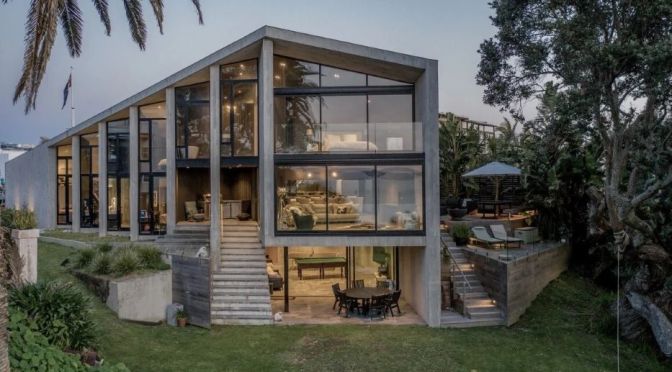
Australia Architecture: House Bondi Beach Tour

House Bondi Beach accurately represents an original design by Carla Middleton Architecture. Inside a home featuring saw-toothed geometry, the interior design is effortlessly unique, incorporating the challenges of distinct, angular architecture.

Video timeline: 00:00 – A Private Retreat in the City 00:21 – Introduction to the Home 00:44 – Entering the Home 01:11 – Bringing the Vision to Life 01:54 – The Concept 02:39 – Creating a Happy Space 03:08 – External Finishes 03:54 – European Oak in the Home 04:14 – Bathroom Tiles 04:34 – What the Architect is Most Proud of

Constructed by M&G Building, House Bondi Beach is a modern suburban home. The design emerges from a rigorous analysis of the brief, which detailed the clients’ desired experience for inside a home, focusing on work, entertainment and retreat.

The design of House Bondi Beach was influenced by its gently sloping site. The bedroom, bathroom and living room – key amenities inside a home – are placed in a specific layout, defined by the act of stepping down into the rear of the property. Stairs delineate the more private areas of the family home. Carla Middleton Architecture manages the interior experience inside a home by using carefully chosen furniture and comforting materials.

In House Bondi Beach, a natural materiality creates the relaxing environment associated within a coastal setting. European oak features in the floor, timber staircase and refined balustrades, forming a point of material consistency throughout the home. To enter House Bondi Beach is to venture inside a home that is conceptually pure. Thoroughly expressing the vision of Carla Middleton Architecture, the residence is a rare feat of residential design.
Cabin Tours: Coromandel Bach In New Zealand (4K)

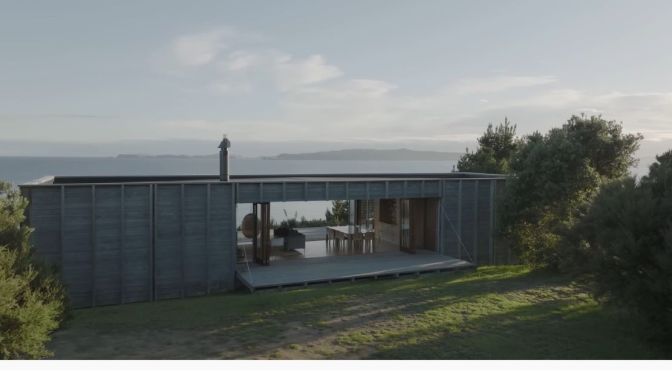
Coromandel Bach, an architect’s own tiny cabin, is designed by Crosson Architects as a functional holiday home. The timber residence is the ideal place of retreat away from busy urban life. Settled on the eastern side of The Coromandel Peninsula, Coromandel Bach is an architect’s own tiny cabin.

Video timeline: 00:00 – The Local Project Print Publication 00:10 – Introduction to the Architect’s Own Tiny Cabin 00:36 – Designing Using Timber 01:35 – The Perfect Holiday House 02:33 – Entering the Tiny Cabin 03:19 – The Bathroom 04:00 – The Kitchen and Dining Spaces 04:23 – An Experimental Home 05:42 – Celebrating Success 06:04

The holiday house sits on a site with no other buildings; no bush, just a north-facing view to white sandy beaches and a series of islands. As an architect’s own tiny cabin, Coromandel Bach expresses a studious approach to form and function. In a manner reminiscent of a suitcase, the architecture of the home can fold open or closed depending on the needs of the occupant, protecting its interior from the natural elements in some instances or embracing the outdoors in others.

The inspiration underpinning Coromandel Bach’s ‘refined camping’ is thoroughly executed, as would be expected in an architect’s own tiny cabin. Crosson Architects omits curtains and drapes from the interior design, enabling occupants to rise with the sun. Nature is celebrated using natural timber and through innovative features such as a bathtub on wheels that allows bathing outdoors in the morning sun or under the stars.

A unique example of an architect’s own tiny cabin, Coromandal Bach is a textural building with an innate sense of dynamism. The residential experience proposed by Crosson Architects is synonymous with the experience of nature.

Architecture: ‘Clifftop House’ On Coromandel Peninsula, New Zealand

A holiday home with a dual focus, Clifftop House maximises coastal views whilst maintaining a sense of privacy. Created by Ponting Fitzgerald Architects with appliances from Fisher & Paykel, the holiday house has a surprising relationship to its context.

Chapters: 00:00 – Introduction to the Holiday House 00:39 – The Client Brief 01:12 – Entering the House 02:16 – Designing the Kitchen 03:09 – The Master Bedroom 03:25 – Design Inspired by Context 04:21 – Connection to Nature 04:59 – A Unique Perspective

Settled into a coastal community on the Coromandel Peninsula, Clifftop House sits on a ledge overlooking Hahei Beach. While the holiday house has access to striking vistas, including views to Mercury Islands, the unusual topography also leaves the home within eyeshot of other properties. To foster a sense of privacy, Ponting Fitzgerald Architects purposefully restricts access to the surrounding context in some parts of the home.

The atmospheric interior of the holiday house distinctly contrasts the coastal scene outside – however, the top floor of the residence sees a large, covered deck flow out to the view, re-establishing the connection to nature in dramatic fashion. As an interior element of the design, the kitchen of Clifftop House contributes to the feeling of retreat from the outdoors. Dark American oak cabinetry establishes a modest and unimposing space, complemented by the seamless insertion of appliances by Fisher & Paykel.

The result sees the internal architecture play a dominant role in the holiday house, guiding occupants through the home and towards the view. A gentle imposition on its context, Clifftop House is defined by its architectural discretion. Ponting Fitzgerald Architects ensures that, despite having access to incredible views, the holiday house appears as a mere canopy from the perspective of the beach.

Architecture: The Gallery House, Toorak, Australia

The exact sum of its parts, The Gallery House features spaces both grand and small, each expressing their own narrative. Crafted by Workroom, the super house stands as an exemplary piece of interior design and architecture. Situated in the well-established suburb of Toorak,

00:00 – The Local Project Print Publication 00:10 – Introduction to the Super House 01:27 – Creating Continuity with Materials 02:30 – Use of Stone in the House 02:47 – Landscape Design 03:21 – Natural Light 03:50 – A Sense of Timelessness 04:27 – What the Architect is Most Proud Of

The Gallery House sits amongst other large family homes and gardens. Despite its spatial openness, the super house is designed in allusion to experiences yet to come, flowing towards other aspects of itself and its context. A house tour of the property reveals the extent of its size. A true super house, the residence contains 4 bedrooms, 2 lounge rooms and vast, double-height voids. Workroom purposely conceals the size of the home from the street, creating anticipation and intrigue, using a curved concrete wall to the entry as a reveal of what is to come. The modern materials of concrete, terrazzo, timber and stone feature consistently in the super house. Subverting expectations, Workroom uses the characteristically heavy concrete to craft an elegant staircase that appears effortlessly lightweight, whilst timber and green stone facilitate an open connection to the lush landscaping. Embracing a raw materiality, Workroom creates a super house that will gracefully express the passage of time. With the capacity to visually evolve with age, The Gallery House is a successful interpretation of modern refinement.

Covers: Architectural Review – June 2022

xindex-magazines-1492-1000x666.jpg

AR June 2022: France

Amelia Tavella Architectes | Kristell Filotico | Atelier Roberta | Patrick Bouchain | Iwona Buczkowska | Barrault Pressacco | NP2F | OFFICE Kersten Geers David …

Australian Architecture: ‘Round Choreography’

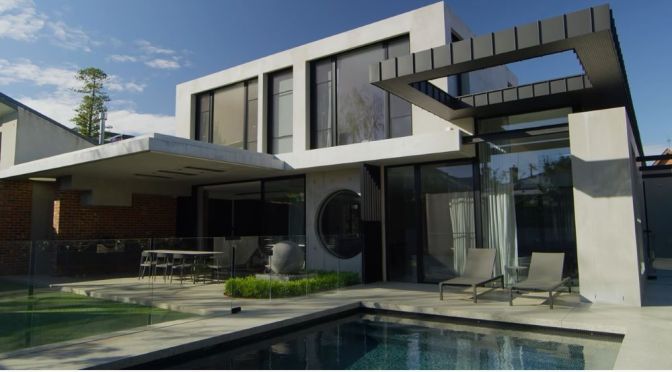
Evolving from a symmetrical design, Round Choreography is a playful geometric home with a familial tenor. With the architecture, interior design and build undertaken by mckimm, the forever house sees a clear design intent rigorously executed.

00:00 – Introduction to the Forever Home 00:38 – Designing with Unique Geometries 01:08 – In-Situ Concrete 01:40 – Intuitive Design 02:14 – Wellness and Gym Area 02:31 – Collaborative Approach to Design 03:28 – The Material Palette 04:07 – What the Architect’s Are Most Proud Of

Settled into the leafy suburb of Malvern, Round Choreography is named in homage to the original floorplan of the home that flourished into the completed forever house. Geometric in nature, the interiors celebrate a circular motif, visible from the kitchen to the ensuite and the internal courtyard of the home’s lower level.

As architect, interior designer and builder, mckimm’s construction team had intimate knowledge of the design intent, enabling efficiency to undertake strenuous tasks to deliver the desired forever house. The unique frameless window in the living area is a particular triumph. The practical nature of the forever house extends to its materiality. mckimm chooses a durable palette comprised of concrete, timber and stone to express a commitment to longevity whilst celebrating aesthetic rawness.

Polished concrete flooring with hydronic heating meets walls of the same material, creating an architecturally consistent envelope. Designed in the knowledge that the clients are growing their family, Round Choreography captures the excitement of embedding oneself in a location. The light-filled forever house marks the beginning of family life.

Blenheim Palace: Britain’s Answer To Versailles

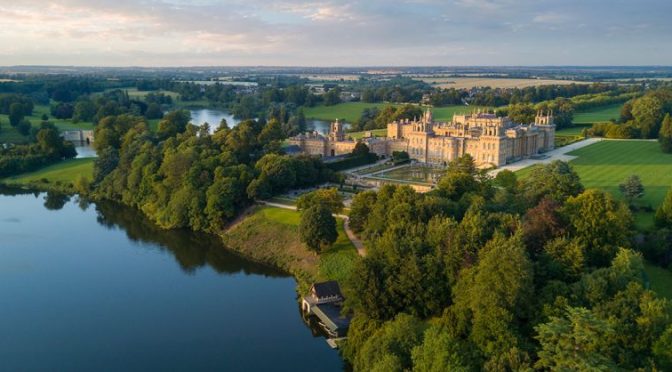
Blenheim Palace, Oxfordshire — the seat of the Duke of Marlborough — is one of the outstanding palaces of Baroque Europe, and was planned as both a residence and national monument.

Towards the end of the day on August 13, 1704, John Churchill, Duke of Marlborough, exhausted by an intense day of fighting near Blindheim, a village on the Danube, famously scrawled a note to his wife on the back of a tavern bill: ‘I have not time to say more but to beg you will give my duty to the Queen and let her know her army has had a glorious victory.’ The battle of Blenheim — as the name has been anglicised — was, in fact, a confrontation between a Franco-Bavarian army and the forces of a grand alliance of European powers, including the Dutch republic, Austria and Britain, over control of Spain and its empire. It was the first major defeat inflicted on a French army in the field for 50 years and was crowned by the capture of Louis XIV’s commander-in-chief, Marshal Talleyrand, who waited in the Duke’s coach as he scribbled his hasty message.

Although the plans of the building changed considerably over time, something close to the final design was published in the first part of Colen Campbell’s Vitruvius Britannicus (1715). As described by Campbell, ‘the manner is grand, the parts noble, and the air majestick of this palace, adapted to the martial genius of the patron…’ This latter quality was celebrated both in the ornament of the building with military trophies and its original title, ‘Blenheim Castle’.

Fig 5: The Saloon is overlooked by figures representing the four Continents and the marble doorcase is ornamented with an imperial eagle. Blenheim Palace, Woodstock, Oxfordshire, photographed for Country Life Magazine by Will Pryce. ©Country Life

Both Vanbrugh and Hawksmoor were well versed in medieval castle architecture and their knowledge of it shines through the spectacular outline of this building, its great angle towers and the rugged articulation of the masonry. Yet this is really a Classical castle suitable for a general of Britain in its newly assumed character as an Imperial power and second Rome. Borrowing Hawksmoor’s description of Castle Howard, as ‘the seat of one of the chief nobles of Britain, it is both a castle and palace conjoined’.

Design: Seymour House In Melbourne, Australia

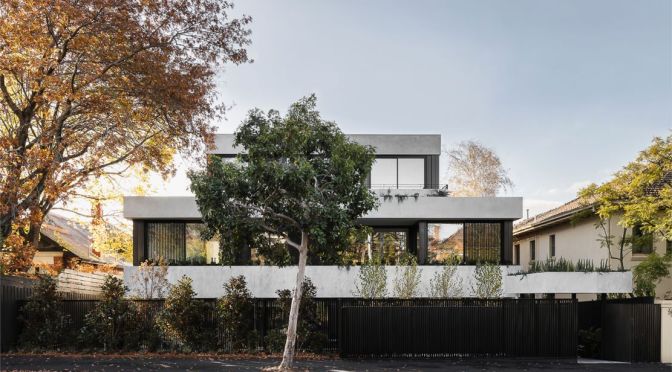
An Architect’s own home, Seymour House is inserted as a respectful addition to its neighbourhood, openly embracing the streetscape lined with heritage-listed properties and modernist gems. In crafting the dwelling, Lani Fixler of Lani Fixler Studio has created a place that is private and personal whilst also engaging in an open conversation with the surrounds.

Timeline: 00:00 – The Local Project Print Publication 00:10 – Creating a Family Home 00:40 – Introduction to the Home 01:25 – Entering the Modernist Home 02:04 – Walking through the Home 02:47 – The Bedrooms and Bathrooms 03:19 – Landscaping 03:40 – Courtyard Sculpture 03:54 – Artwork Throughout the Home 04:29 – What the Architect is Most Proud Of 05:00 – Subscribe to The Local Project Print Publication

Located in a south-eastern suburb of Melbourne, Seymour House is an architect’s own home that draws from Lani Fixler Studio’s long-standing familiarity with the built environment. The project is one that expertly merges personal responses with the contextual. In the construction of Seymour House, a connection to the street was important, as well as embracing the constricted site instead of challenging it. Sitting adjacent to Harleston Park, Seymour House is an architect’s own home crafted to be a continuation of its natural setting, with only two concrete plinths defining the barrier between the public and the private. Throughout the building, modernism is championed through a natural and restrained materiality with the use of concrete, terrazzo, timber and slate. The consistency with which the palette is applied – with blockwork featuring as both an internal and external architectural element – celebrates the environment surrounding an architect’s own home. Expressing considered detail and the characteristics of an architect’s own home, Seymour House is imbued with a sense of personality that uplifts its understated aesthetic. Crafted to complement the history and culture of the surrounding neighbourhood, Lani Fixler Studio graciously allows past narratives to continue as new chapters unfold.

Home Tours: Kelmscott Manor In The Cotswolds

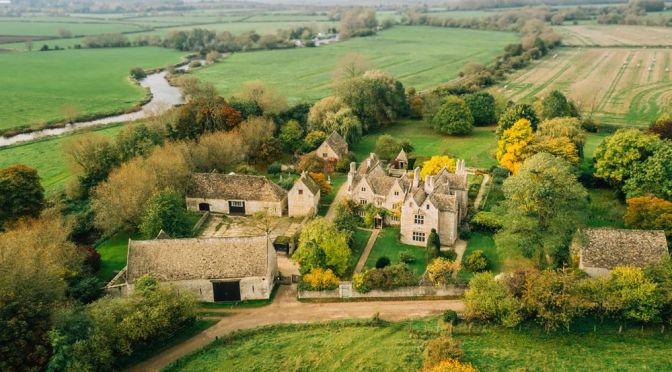
The architecture of Kelmscott Manor is woven into William Morris’s 1890 novel, News from Nowhere, in which a journey exploring utopian ideals in a post-industrial world leads, after much wandering, to a ‘many-gabled old house built by the simple country-folk of the long-past times’. There is no ‘extravagant love of ornament’ here, only a feeling that ‘the house itself and its associations was the ornament of the country life amidst which it had been left stranded from old times’. It is a poignant vision that underlines both a respect for the past and an ideal of a new society based on mutual interest and support.

Jeremy Musson, May 15, 2022

Today, this old stone-built farm house is best known as the Morrises’ country home, from 1871. First leased as a retreat from busy London life, it became a vital point of reference for Morris, as artist, designer and poet; it was his ‘Heaven on Earth’, and a source of profound emotional and artistic inspiration.

Kelmscott Manor, Oxfordshire

Fig 2: The first-floor Tapestry Room, with a carved 1660s chimneypiece, is hung with a late-17th-century Oudenarde tapestry. Kelmscott Manor, Oxfordshire. ©Paul Highnam for Country Life

Concrete Architecture: The Sandcastle In Point Chevalier, New Zealand

As an architectural house, The Sandcastle by Ponting Fitzgerald Architects champions the creative and structural benefits of concrete. Inspired by a sandcastle and built by Bannan Construction, the sculptural building is firmly established within its coastal context.

00:00 – An Introduction to the Architectural House 00:53 – Creating a Sandcastle 01:19 – Entering the House 02:06 – Building for the Coastal Climate 02:32 – A Unique Use of Concrete 03:37 – Materiality 04:07 – Lighting in the House 04:25 – Unique Qualities of the House 05:00 – What the Builder is Most Proud Of

Built within the inner harbour zone of Point Chevalier, The Sandcastle is situated directly above the shore. Sitting on a bluff of land that resembles a sand dune in constitution, the three-storey concrete home is conceived as an architectural house that naturally extends from the surrounding landscape. A house tour of The Sandcastle evidences its status as an architectural house, with the form of the building representing a playful yet sophisticated interpretation of a sandcastle. Concrete plays an important role in realising the shape of the home, offering endless formal possibilities in its pre-set, liquid state. Ponting Fitzgerald Architects crafts a dynamic materiality that withstands the erosive coastal climate. Although the concrete exterior interacts with the salt, wind and water of the environment – gracefully expressing the passage of time through a weather-beaten appearance – The Sandcastle maintains its structural integrity, establishing itself as an architectural house embedded in the landscape. With the help of Bannan Construction, Ponting Fitzgerald Architects creates an architectural house that is both rugged in nature and refined in form and concept. The Sandcastle stands as an enduring aspect of the coast; a solid piece of architecture, made in recognition of place.