Six days deep into the heart of the Sahara (in October-November 2022), into one of the most picturesque parts of the desert: Tassili n’Ajjer National Park of Algeria, near the borders with Libya and Niger.
Located in a strange lunar landscape of great geological interest, this site has one of the most important groupings of prehistoric cave art in the world. More than 15,000 drawings and engravings record the climatic changes, the animal migrations and the evolution of human life on the edge of the Sahara from 6000 BC to the first centuries of the present era. The geological formations are of outstanding scenic interest, with eroded sandstones forming ‘forests of rock’.
Tourister (March 8, 2023) – Thessaloníki, formerly Salonika, historically Thessalonica, city and dímos (municipality), Central Macedonia (Modern Greek: Kendrikí Makedonía), on the western Chalcidice (Chalkidikí) peninsula at the head of a bay on the Gulf of Thérmai (Thermaïkós). An important industrial and commercial centre, second to Athens (Athína) in population and to Piraeus as a port, it is built on the foothills and slopes of Mount Khortiátis (Kissós; 3,940 feet [1,201 metres]), overlooking the delta plains of the Gallikós and Vardar (Axiós or Vardaráis) rivers.
Founded in 316 BCE and named for a sister of Alexander the Great, Thessaloníki after 146 was the capital of the Roman province of Macedonia. As a military and commercial station on the Via Egnatia, which ran from the Adriatic Sea east to Byzantium (i.e., Constantinople), it grew to great importance in the Roman Empire. Two letters written by the Apostle Paul were addressed to its inhabitants (Thessalonians), and its first bishop, Gaius, was one of Paul’s companions. The city prospered in the Byzantine Empire despite repeated attacks by Avars and Slavs in the 6th and 7th centuries. In 732, two years after he prohibited icons, the Byzantine emperor Leo III (reigned 717–741) detached the city from papal jurisdiction and made it dependent on the patriarch of Constantinople. During the iconoclastic regimes of Leo and his successors, the city defended the use of icons in worship and acted to save some of these art treasures.
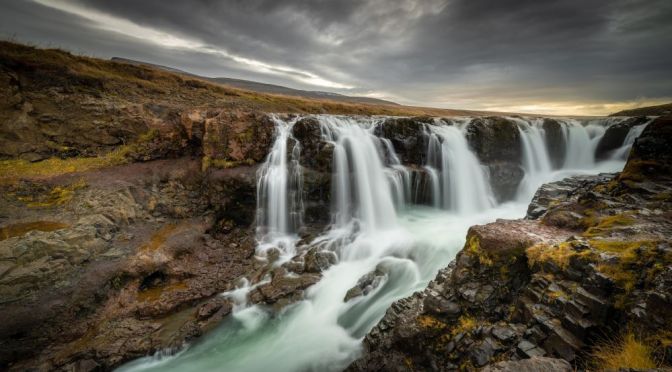
Tales of Justin (February 28, 2023) – Iceland, an island nation in the North Atlantic Ocean, lies between Europe and North America. The country is situated on a strategic location between North America and Europe, about 840 km north west of the United Kingdom and about 460 km south east of Greenland‘s coast. The closest bodies of land in Europe are the Faroe Islands (530 km).
The island lies just south of the Arctic Circle at the northern end of the Mid-Atlantic Ridge (MAR), where the tectonic plate of Eurasia meets the North American Plate, causing a lot of volcanic activity in the region. Iceland’s extraordinary landscape offers hot springs and geysers, icefields and volcanoes, glaciers and wild waterfalls.
Iceland has 30 active volcanic systems, of which 13 have erupted since the settlement of island in AD 874, only about 20 percent of the country is habitable.
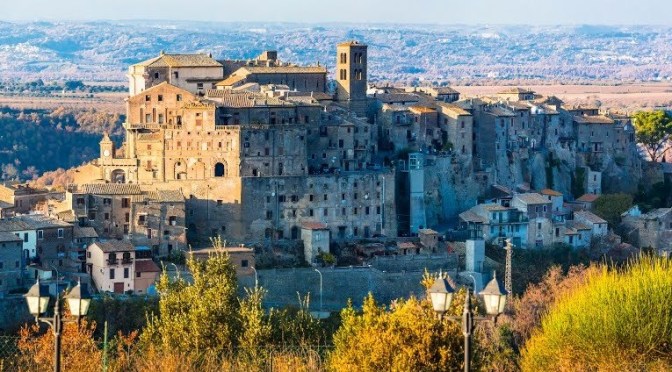
Bomarzo is a town of the province of Viterbo (Lazio, central Italy), in the lower valley of the Tiber. Bomarzo’s main attraction is a garden, usually referred to as the Bosco Sacro (Sacred grove) or, locally, Bosco dei Mostri (“Monsters’ Grove”), named after the many larger-than-life sculptures,
Video timeline: 0:00 – [Drone intro🌐] 1:30 – [Walking tour begins👣 / Via del Castello (Castle Alley)🏰] 2:50 – [Statue of St.Anselmo – [Via del Castello (Castle Alley)] 3:33 – [Porta Nuova (New Gate)🏛] 5:00 – [Entrance to the old town📸] 6:20 – [Via Borghese & Borghese Palace] 7:40 – [Piazza Duomo⛲] 8:30 – [Duomo of Bomarzo / Church of St.Maria Assunta – *tour inside*⛪☀️] 12:33 – […re-used old roman funeral statues?🏺] 13:38 – [Via Regina Elena] 14:38 – [Via della Pace (Alley of Peace)🌹] 15:30 – [Piazza G.Pepe⛲] 15:55 – [Church of St.Anselmo – *tour inside*⛪☀️] 18:34 – [Via Daniele Manin] 19:40 – [Panorama on the valley⛺] 20:50 – [Via Vittorio Emanuele] 21:10 – [Charity Exhibit for less privileged people🎈] 22:30 – [Beware of the cat!🐱] 26:00 – [Piazza Garibaldi⛲] 28:18 – [Very charming narrow passage…📸] 29:50 – [Porta Nuova (New Gate)🏰] 32:30 – […descending to the eastern part of Bomarzo…👟] 35:46 – [Piazza della Repubblica⛲]
some sculpted in the bedrock, which populate this predominantly barren landscape. It is the work of Pier Francesco Orsini, called Vicino (1528–1588), a condottiero or mercenary and a patron of the arts. The park of Bomarzo was intended not to please, but to astonish, and like many Mannerist works of art, its symbolism is arcane; for example, one large sculpture is of one of Hannibal’s war elephants, which mangles a Roman legionary, and another is a statue of Ceres lounging on the bare ground, with a vase of “fruits of the earth” perched on her head. The many monstrous statues appear to be unconnected to any rational plan and appear to have been strewn almost randomly about the area, sol per sfogare il Core (“just to set the heart free”) as one inscription on an obelisk says.
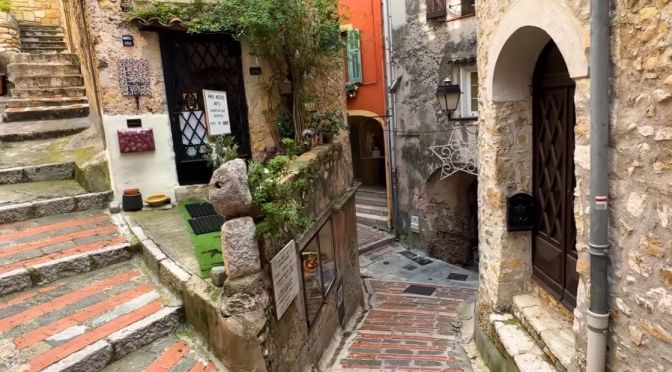
February 2023- A walking tour of Roquebrune-Cap-Martin, a commune in the Alpes-Maritimes department in the Provence-Alpes-Côte d’Azur region, Southeastern France, between Monaco and Menton. In 2018, it had a population of 12,824. The name was changed from Roquebrune to differentiate the town from Roquebrune-sur-Argens in neighbouring Var.
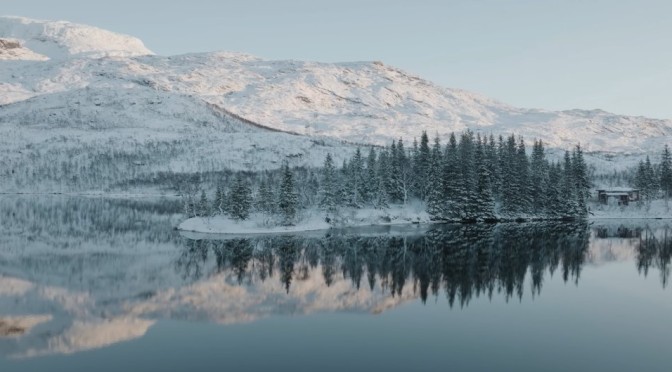
Chad Gerber (February 6, 2023) – The Arctic Circle: a place so far from our reality, yet so close to our dreams. Fellow filmmaker, Jaxon Roberts, and I spent 10 days exploring the north of Scandinavian countries: Norway, Sweden and Finland. Met with freezing blizzards, magical wildlife, and untouched landscapes as far as the eye can see – it’s safe to say it was a life -changing experience.
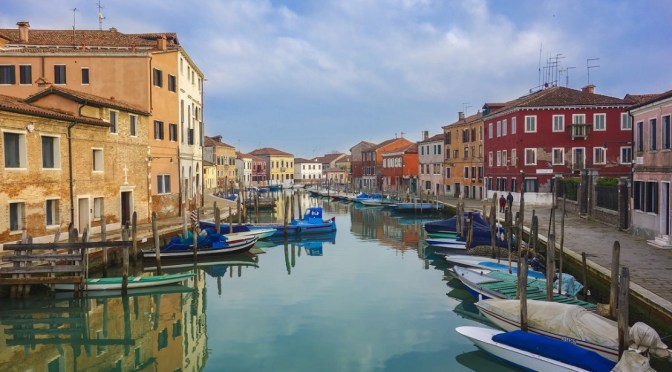
January 30, 2023: Murano Island – a Glassmaker’s Paradise since 1291, is a tiny Venetian island and home to Venice’s glassmaking industry. Murano glass production was moved to this Island from the main island of Venice because its production posed quite a fire hazard (Note: the buildings in Venice were constructed mostly of wood at that time and the extreme heat that is required to make glass liquid so as to mold and shape it obviously caused the Venetians some concern).
Video timeline:0:00:00 – Intro 0:01:06 – MURANO MUSEO 0:01:52 – RIVA LONGA 0:04:25 – PONTE LONGO LINO TOFFOLO 0:05:46 – FONDAMENTA DA MULA 0:07:04 – PONTE SAN PIETRO MARTIRE 0:07:58 – FONDAMENTA MANIN 0:09:40 – CALLE BRESSAGIO 0:10:09 – CALLE BRIATI 0:12:15 – FONDAMENTA PIAVE F. M. 0:13:15 – FARO DI MURANO 0:13:49 – CALLE BRESSAGIO 0:15:05 – FONDAMENTA MANIN 0:15:42 – PONTE DI MEZO 0:16:04 – FONDAMENTA DEI VETRAI 0:17:11 – PONTE S.CHIARA 0:18:03 – PIAZZALE CALLE COLONNA
Soon enough, Murano Island became quite a hot spot for Venetian glass production indeed. Glassmaking has quite an exalted tradition in Venice. It is an art form, after all. In the 14th century, the daughters of Murano’s biggest glassmaking families were allowed to marry Venetian noblemen.
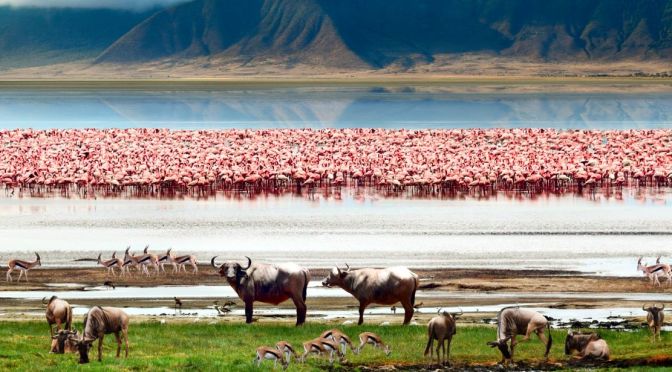
The Ngorongoro Conservation Area spans vast expanses of highland plains, savanna, savanna woodlands and forests. Established in 1959 as a multiple land use area, with wildlife coexisting with semi-nomadic Maasai pastoralists practicing traditional livestock grazing, it includes the spectacular Ngorongoro Crater, the world’s largest caldera.
Video highlights: 00:14 – Giraffes walking on the planes 01:11 – Buffalos walking up the hill 02:28 – Zebras walking near a road 03:44 – Hyeana searching for prey
The property has global importance for biodiversity conservation due to the presence of globally threatened species, the density of wildlife inhabiting the area, and the annual migration of wildebeest, zebra, gazelles and other animals into the northern plains. Extensive archaeological research has also yielded a long sequence of evidence of human evolution and human-environment dynamics, including early hominid footprints dating back 3.6 million years.
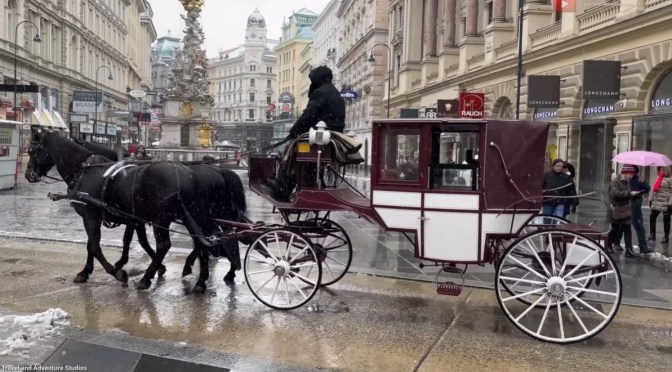
Vienna is a city and Bundesland (federal state), the capital of Austria. Of the country’s nine states, Vienna is the smallest in area but the largest in population.
Modern Vienna has undergone several historical incarnations. From 1558 to 1918 it was an imperial city—until 1806 the seat of the Holy Roman Empire and then the capital of the Austro-Hungarian Empire. In 1918 it became the capital of the truncated, landlocked central European country that emerged from World War I as a republic. From 1938 to 1945 Austria was a part of Adolf Hitler’s “Greater” Germany, and Vienna became “Greater” Vienna, reflecting the Nazi revision of the city limits.
In the decade following World War II, Austria was occupied by British, French, American, and Soviet forces, and Vienna was divided into five zones, including an international zone, covering the Innere Stadt (“Inner City”). In 1955 the State Treaty, by which the country regained independence, was signed with the four occupying powers, and Vienna became once again the capital of a sovereign Austria.
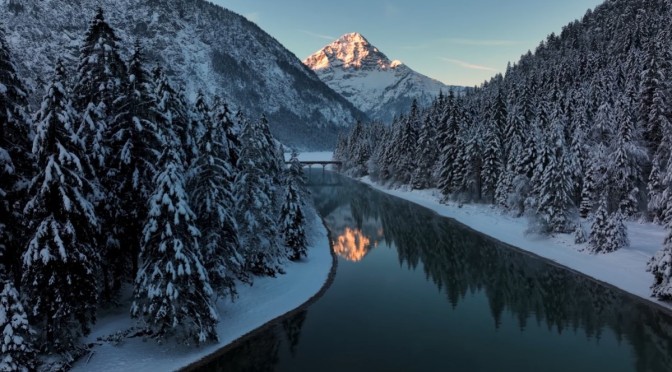
The Alps are the highest and most extensive mountain range system that lies entirely in Europe, stretching approximately 1,200 km across seven Alpine countries: France, Switzerland, Italy, Liechtenstein, Austria, Germany, and Slovenia.
“I went back to one of my favorite areas in the world: the Alps, in winter season this time. Enjoy the best drone shots I took in Germany, Italy, Slovenia, Austria and Switzerland.“





 Boomers Daily