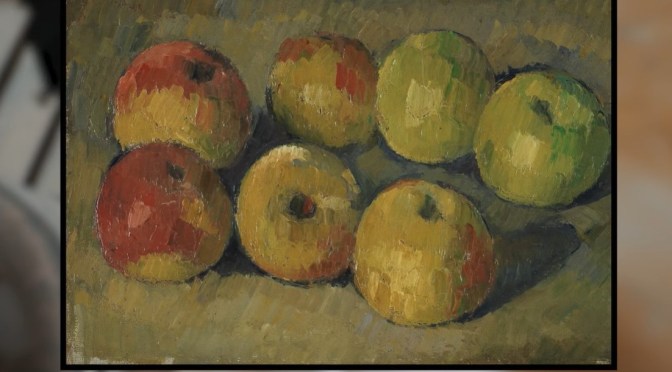
The Fitzwilliam Museum – This painting was executed sometime between 1877, when Cézanne exhibited for the second and last time with the Impressionist painters, and 1878, when he returned to live in Provence. Cézanne himself claimed that he planned to conquer Paris with an apple, and his paintings of this single fruit have in fact proved to be among his most admired works.
Bought by Degas for 100 francs in January 1896, it was acquired in Paris by John Maynard Keynes at the sale of the contents of Degas’s studio in March 1918. It is one of the most celebrated of all his still-lifes, and, through Keynes’s friendship with the painter and writer Roger Fry, and the circle of Bloomsbury writers, came to be crucial in the dissemination of knowledge of Cézanne’s work in England.
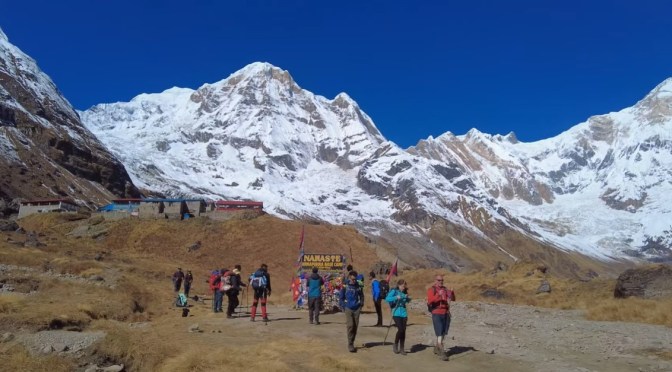
The Annapurna Sanctuary is a high glacial basin lying 40 km directly north of Pokhara. This oval-shaped plateau sits at an altitude of over 4000 metres, and is surrounded by a ring of mountains, the Annapurna range, most of which are over 7000 metres.
Annapurna is a mountain situated in the Annapurna mountain range of Gandaki Province, north-central Nepal. It is the tenth highest mountain in the world at 8,091 metres above sea level and is well known for the difficulty and danger involved in its ascent.
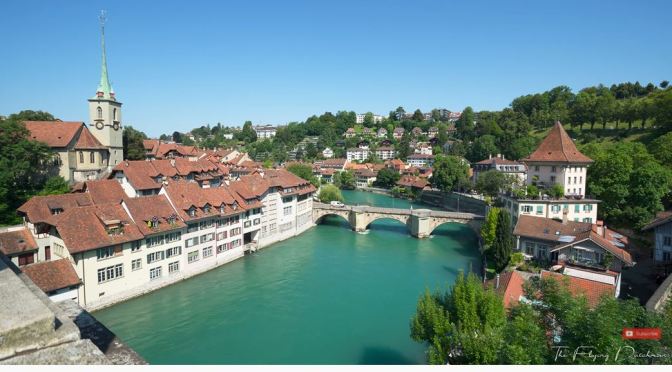
Bern, the capital city of Switzerland, is built around a crook in the Aare River. It traces its origins back to the 12th century, with medieval architecture preserved in the Altstadt (Old Town). The Swiss Parliament and diplomats meet in the Neo-Renaissance Bundeshaus (Federal Palace). The Französische Kirche (French Church) and the nearby medieval tower known as the Zytglogge both date to the 13th century.
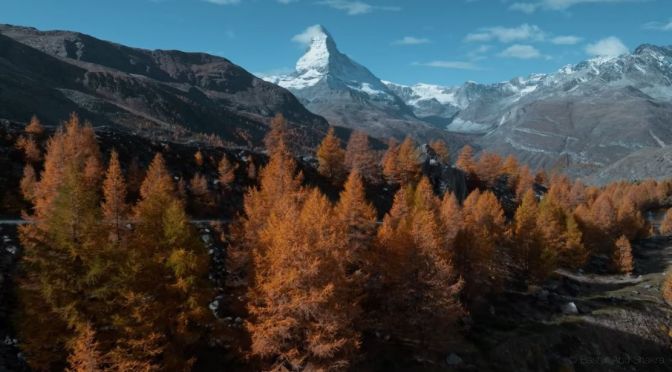
I’ve spent the last 8 days exploring the swiss alps mountains in autumn in Grindelwald, Zermatt, Appenzell, Lauterbrunnen, and Jungfrau area with no breaks, hoping to get as much epic footage as possible, since I was running out of time. Every day there was a hike for at least 5 hours and drive for 2 hours between every spot. I’ve spent 70% of the nights camping in front of these views just to catch the sunset and the sunrise.
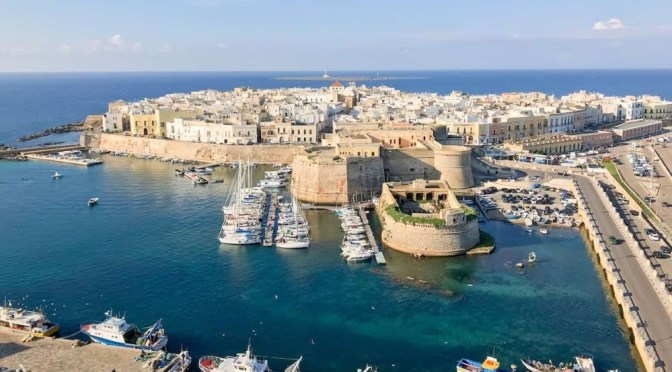
Gallipoli is a coastal town in Apulia, southern Italy. The historic center, on an island off the mainland, shelters churches like St. Agatha’s Cathedral, with its ornate facade. Nearby, the Church of St. Mary of Purity has a maiolica tiled floor. Gallipoli Castle includes the Rivellino tower, standing apart from the main building. Across the bridge, on the mainland, is the Greek Fountain, dating from the Renaissance.
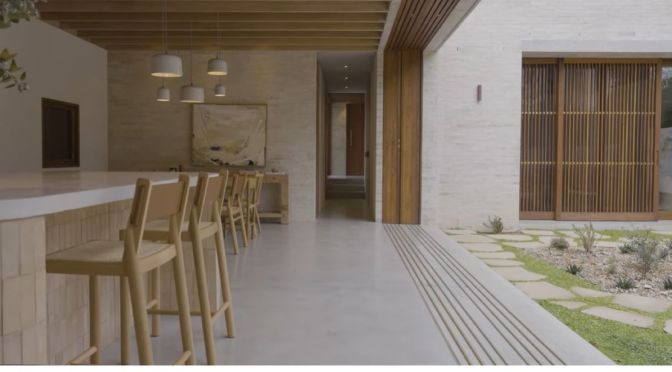
Afforded the freedom of an open design concept, interior design practice Folk Studio crafts Curl Curl House. Showcasing the collaborative work of architectural practice TRIAS, the magical home captures the spirit of the Australian coast.
Video timeline: 00:00 – An Introduction to the Magical Home 00:38 – The Collaboration of Folk Studio and TRIAS 01:51 – Adding Intentional Gestures to the L-Shaped Floor Plan 02:32 – A Beach, Bush and Coastal Palette 02:51 – Watching Visions Come to Life 03:22 – Having the Garden as an Integral Piece of the Design 03:46 – Seeing Green from all Areas 04:11 – The Hit and Miss Brickwork Screens 04:38 – Creating a Sanctuary and an Oasis for the Clients 04:58 – Finding Joy in the Client’s Comfort
Settled into Curl Curl, the coastal suburb of Sydney located just north of the Central Business District, the same-named house reflects its immersive environment. The natural character of the local context sees bush meet coast and a beachside lifestyle cohere with suburban influence. Upon accepting the design project, Folk Studio promptly met with architectural firm TRIAS in order to solidify the creative vision – a residential sanctuary – and ensure that the architecture and interior design of the home work together to form the ideal domestic experience.
Featuring an L-shaped spatial plan, Curl Curl House encloses a collection of communal zones on its ground floor, including a living room on each end. The position of each living room marks a change from the spatial arrangement of a typical house, which sees kitchen, living and dining spaces continue on from one another. Purposefully located, the living rooms function as calming areas within the magical home, removed from the bustle of the communal zones.
Inspired by the Australian beach, bush and coast, the aesthetic palette of Curl Curl House reflects a sense of natural serenity, enhanced by contrasting injections of brickwork that pay homage to the suburban context. Integral to the design of the magical home is the garden space growing along its perimeter. As a result of TRIAS condensing the architecture of the home, the garden space is maximised and enables a natural vista to be accessed from every room of the house.
Hit-or-miss brickwork screens adorn the upper levels of the façade, intercepting the incoming natural light to create shifting visual patterns within the magical home. Achieving a residential oasis, Folk Studio and Trias craft a magical home that serves as an escape from the hectic nature of everyday life. Curl Curl House stands as a residence in which its owners can take pride, rewarded by the sense of careful curation permeating the dwelling.
Mount Ngungun, generally known as “Gun Gun”, is located an hours drive north of the city of Brisbane in south east Queensland, Australia. Mount Ngungun is the sixth tallest of the Glass House Mountains at 253 metres. The summit provides spectacular 360 degree views of nearby Mt Tibrogargan, Mt Tibberoowuccum, Mt Coonowrin and Mt Beerwah.
It is a very popular hike due to its relative ease and fantastic views, and has a well maintained walking trail to the summit. The trail from carpark is not as steep as the other higher mountains and is open to beginners. The south face contains steeper, unmarked but well known rock climbing routes.
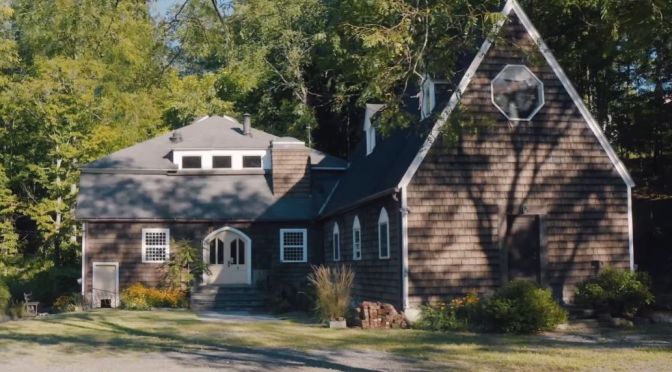
Today on Architectural Digest, contractor Nick Schiffer from NS Builders returns to break down the renovation potential of an abandoned 1800’s-era chapel and museum in New York. Nick takes us through the gutted interior room by room, offering his renovation advice while pointing out the marvelous architectural details worth restoring.
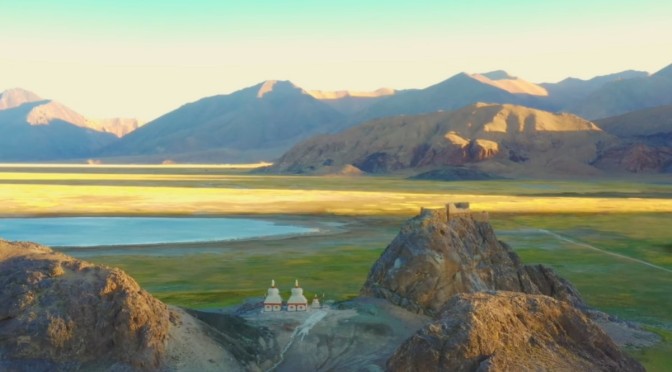
A trip to the most remote area of Tibet, western Tibet, and the small Rutog County that lies on the China National Highway 219 (Xinjiang – Tibet). Located 4300 meters above sea level, Rutog County is 1200 km away from Lhasa. Almost no tourists will come to this place.
However, if you are going to Mount Kailash or plan to have an overland tour from Xinjiang to Tibet (or vice versa), it is a place worth visiting. The highlights of Rutog County include the Pangong Tso Lake, the ancient Rutog Rock Painting, the Rutog Fortress, and the Monastery. You can feel the origin of Tibet here, which is isolated from the outside modern world for a long time.
On the edge of the Himalayas, Rutog County, as well as the whole of western Tibet, is one of the most inhospitable areas on the planet with high altitude, deserted mountains, and a harsh climate. But for many wild animals, it is actually heaven or the Shambala. In uninhabited western Tibet, you could see kinds of wild animals on the way, like the wild yaks, Tibetan wild donkeys, Tibetan antelope, etc.
The Jardin du Luxembourg, known in English as the Luxembourg Garden, colloquially referred to as the Jardin du Sénat, is located in the 6th arrondissement of Paris, France. Creation of the garden began in 1612 when Marie de’ Medici, the widow of King Henry IV, constructed the Luxembourg Palace as her new residence.
News, Views and Reviews For The Intellectually Curious




 Boomers Daily