From a YankoDesign.com online review:
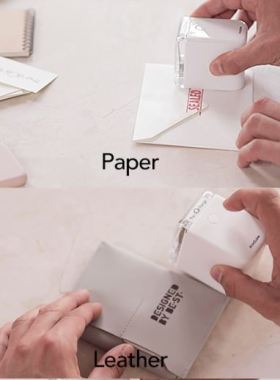 The PrinCube sits on the throne of being the smallest (and the lightest) handheld color-printer. With a swift motion of your hand, the printer rapidly prints out one line at a time, measuring up to 0.56 inches in thickness. PrinCube’s multi-line feature lets you extend your prints by printing up to nearly 10 feet of content line after line. The wireless printer conveniently pairs with any device like your phone, tablet, or even laptop over a Wi-Fi connection, and each individual ink cartridge can handle approximately 415 A4 pages worth of printing before replacing. The battery on PrinCube’s pretty remarkable too, with the ability to print for 6 continuous hours before needing a recharge via the Type-C port in the PrinCube’s size.
https://www.indiegogo.com/projects/princube-the-world-s-smallest-mobile-color-printer#/
It looks like a block roughly half the size of a spray-paint can. In fact, that’s how you would hold the PrinCube too. Grab it with one hand and run it across any surface and the PrinCube performs a neat, seamless, colored inkjet-print on it. The PrinCube isn’t just small, it’s hand-held, wireless, and incredibly versatile. It can print on materials your desktop printer doesn’t even dream of. Paper, cardboard, wood, metal, cloth, working on flat, textured, and even curved surfaces. You could literally give yourself temporary tattoos too because the PrinCube even prints on the skin (it’s safe, if I may add).
To read more: https://www.yankodesign.com/2019/10/24/this-handheld-color-printer-is-literally-the-size-of-a-regular-printers-ink-cartridge/?utm_source=feedburner&utm_medium=feed&utm_campaign=Feed%3A+yankodesign+%28Yanko+Design+-+Form+Beyond+Function%29


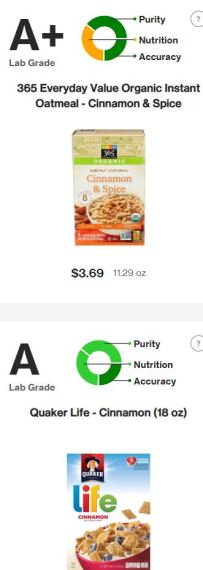 Pure Market is offering consumers a chance to purchase products that have already been pre-graded in an effort to provide transparency and save time. Although the service just launched, it has reviewed the chemical compositions of several thousand products, with 805 in the food category and another 125 in beverages.
 To meet Passive House standards, the Cousins River Residence features an airtight building envelope, triple-glazed windows with a u-value of 0.16, a heat recovery ventilation system with 90% efficiency, and a 4.6 kW south-facing photovoltaic array on the garage roof that makes the house nearly net-zero energy.
 Kiplinger’s vice president of content Sarah Stevens joins our podcast hosts Sandy Block and Ryan Ermey to talk about the advantages, risks, obstacles and other things to consider when having your DNA tested.



 In 2015, the Laser Interferometer Gravitational Wave Observatory (LIGO) facilities in the US directly detected ripples in space-time known as gravitational waves. These waves were produced by the final spiral of two oribiting black holes that smashed into each other, sending ripples across the universe.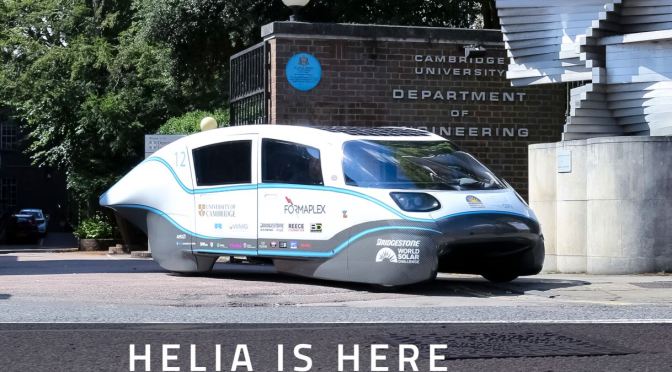
 The ability to cover this distance is aided by Helia’s chassis and body panels made from carbon fibre, which grant it a kerb weight of 550 kilograms.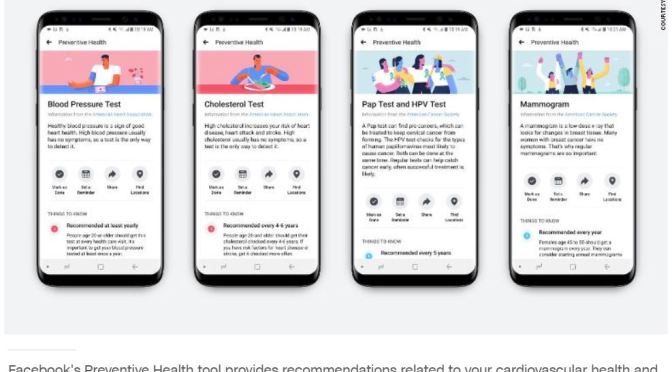
 The tool is simply called Preventive Health, and is now available to Facebook users in the United States. It takes a user’s age and sex from their Facebook profile and provides them with a list of recommended screenings based on those two data points.
 First place prize awarded to MapHabit: This mobile software provides behavior prompts with customizable picture and keyword visual maps to assist memory-impaired people with accomplishing activities of daily living. The care management platform employs different interfaces depending on whether the user is a person with impaired memory, caregiver or long-term care community manager. Caregivers can monitor adherence to medication schedules or track other activities.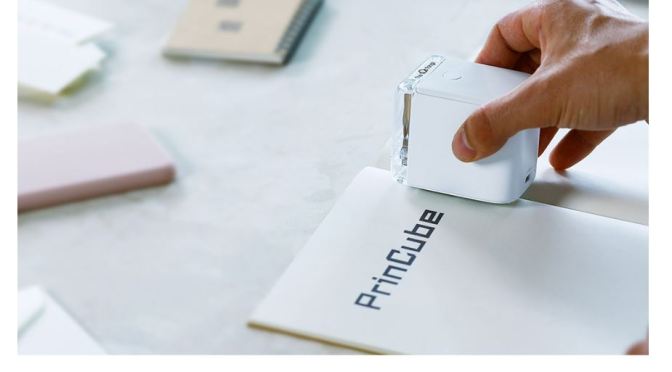
 Boomers Daily