Category Archives: Space

History Of Satellites: NASA’s ‘Landsat’ Program – “Getting Off The Ground”

Every legacy has a compelling origin. The soon-to-be-launched Landsat 9 is the intellectual and technical product of eight generations of Landsat missions, spanning nearly 50 years.

Episode One answers the question “why?” Why did the specific years between 1962 and 1972 call for a such a mission? Why did leadership across agencies commit to its fruition? Why was the knowledge it could reveal important to the advancing study of earth science?

In this episode, we’re introduced to William Pecora and Stewart Udall, two men who propelled the project into reality, as well as Virginia Norwood who breathed life into new technology. Like any worthwhile endeavor, Landsat encountered its fair share of resistance. Episode one explores how those challenges were overcome with the launch of Landsat 1, signifying a bold step into a new paradigm.

Additional footage courtesy of Gordon Wilkinson/Texas Archive of the Moving Image and the US Geological Survey. The Landsat Program is a series of Earth-observing satellite missions jointly managed by NASA and the U.S. Geological Survey (USGS). Landsat satellites have been consistently gathering data about our planet since 1972. They continue to improve and expand this unparalleled record of Earth’s changing landscapes for the benefit of all.

Music: “The Missing Star,” “Brazenly Bashful,” “Light Tense Weight,” “It’s Decision Time,” “Patisserie Pressure,” from Universal Production Music Credit: NASA’s Goddard Space Flight Center Matthew R. Radcliff (USRA): Lead Producer Ryan Fitzgibbons (USRA): Lead Producer Kate Ramsayer (USRA): Lead Producer LK Ward (USRA): Lead Writer Ryan Fitzgibbons (USRA): Lead Editor Jeffrey Masek (NASA/GSFC): Lead Scientist Marc Evan Jackson: Narrator Terry Arvidson (Lockheed Martin): Interviewee Aaron E. Lepsch (ADNET): Technical Support
Astronomy: Saturn’s Moon ‘Titan’ (Nasa Video)

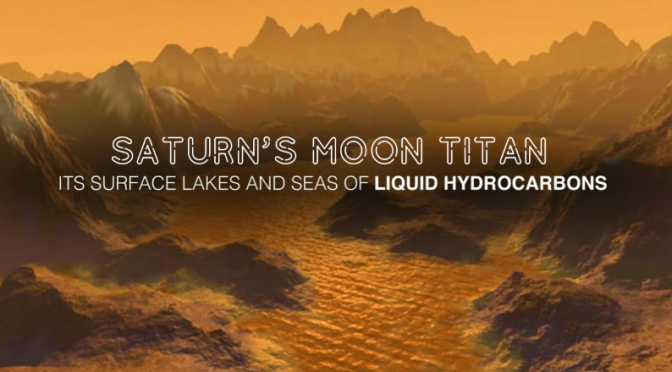
Earth is not the only place in the solar system with rain, rivers, lakes and seas. Saturn’s moon Titan has them, too — not of water, but of liquid methane and ethane. This Earth-like world even hides an ocean of liquid water deep beneath its surface! Find out what you need to know about Titan.

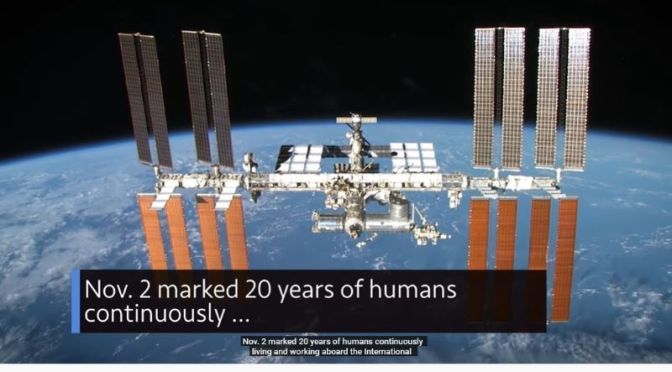
Space Program: November Marks 20 Years Of Humans Abord The Space Station

Marking 20 years of humans aboard the space station, getting out the vote from space, and preparations continue for NASA and SpaceX’s next crew launch … a few of the stories to tell you about – This Week at NASA!

Download Link: https://images.nasa.gov/details-Marki…

Science Podcasts: Radio Bursts In Milky Way, Covid-19 In Schools & Octopuses

Astronomers pin down the likely origins of mysterious fast radio bursts, Covid-19 in schools, octopuses taste with touch and the latest on what the US election means for science.

In this episode:

00:46 The origins of mysterious fast radio bursts

The detection of a brief but enormously-powerful radio burst originating from within the Milky Way could help researchers answer one of astronomy’s biggest mysteries.

Research article: Bochenek et al.News: Astronomers spot first fast radio burst in the Milky Way

07:59 Coronapod

At the start of the pandemic, there were fears that schools could become hotspots for infections. We discuss the evidence suggesting that this is unlikely to be the case, and the rates of infection in children of different ages.

News: Why schools probably aren’t COVID hotspots

18:34 Research Highlights

Octopuses taste with touch, and a tool to watch dangerously-reactive metals grow.

Research Highlight: How octopuses taste with their arms — all eight of themResearch Highlight: How to make violently reactive metals and watch them grow

21:28 An update on the US election

Although the winner of this year’s US election is unclear, we discuss the current situation and what it might mean for science.

28:58 Briefing Chat

We discuss some highlights from the Nature Briefing. This time, ancient genomes reveal the migration of man’s best friend, and a new polio vaccine looks set to receive emergency approval.

News: Ancient dog DNA reveals 11,000 years of canine evolutionNews: New polio vaccine poised to get emergency WHO approval

Innovative Architecture: ‘Stealth Pavillion’ – An Australian Private Gym Blended Into A Garden

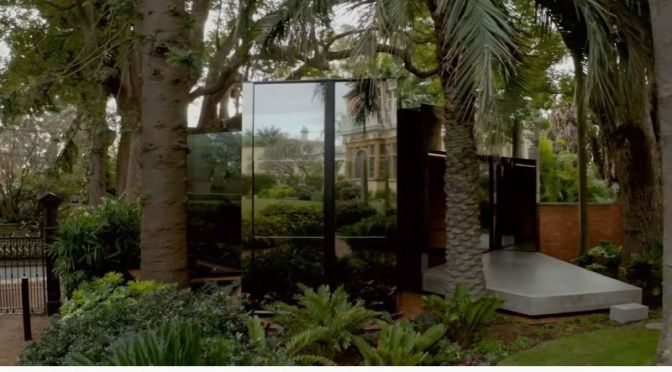
Stealth Pavilion is an architecturally designed private gym which sits suitably disguised in its landscape, concealing its presence through select materiality. Plus Minus Design carefully integrates a multifunction volume into an established heritage-listed garden setting, combining a refined and contemporary approach.

Stealth Pavilion and its location amongst significant listed trees came with its associated challenges, and through a clever approach to concealment, the result combines ingenuity and precision to the architecturally designed private gym which blends into the surrounding landscape.

The brief for the pavilion was for a structure that would house an architecturally designed private home gym and also have the capacity to be adapted to separate guest accommodation as required. After the consideration of a number of locations, the chosen siting was within the drop zone of four of the five listed trees and its surrounding landscape.

Externally, cladding of bronze mirror allows the structure of the architecturally designed private gym to reflect the surrounding foliage and landscape, and seem non-existent to the passer-by while internally the finishes reflect a robust warmth, suitable to its function.

Built by Robert Plumb Build, key to Stealth Pavilion’s integration into the existing was the carefully curated landscape by Dangar Barin Smith.

Architecture by Plus Minus Design.
Build by Robert Plumb Build.
Landscape by Dangar Barin Smith.
Production by The Local Project.
Video by Cheer Squad.

Future Housing: “Mars Habitat” By Hassell Studio

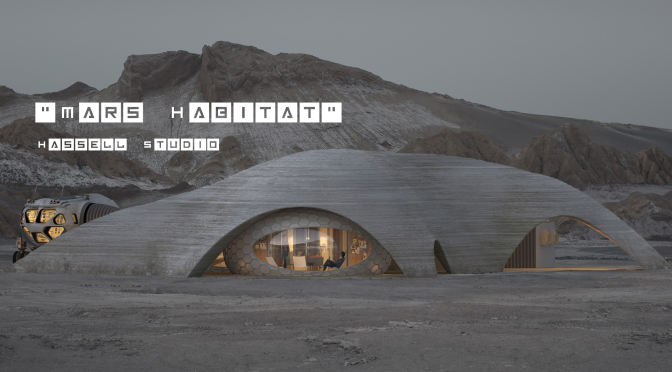
We set out to design the perfect habitat for space explorers on the red planet as part of NASA’s international 3D Printed Habitat Challenge.

Our team, in collaboration with structural engineers Eckersley O’Callaghan (EOC), was shortlisted to design the world’s first human home on Mars. In our design, an external shell made from local Martian regolith would be built in advance by autonomous robots before exploration teams arrived to construct the interior – a series of inflatable ​‘pods’ containing everything for work and life on Mars.

Our aim was to bring a more human element to space design, typically all about maximum efficiency and performance. Our habitat goes far beyond just ticking the boxes for safety and survival. It’s a home away from home where astronauts can carry out the most important work in the history of space exploration.

Website

Earth & Atmosphere Video: NASA Spacecraft Uncover Mystery Of “Aurora Beads”

A special type of aurora, draped east-west across the night sky like a glowing pearl necklace, is helping scientists better understand the science of auroras and their powerful drivers out in space. Known as auroral beads, these lights often show up just before large auroral displays, which are caused by electrical storms in space called substorms.

Until now, scientists weren’t sure if auroral beads are somehow connected to other auroral displays as a phenomenon in space that precedes substorms, or if they are caused by disturbances closer to Earth’s atmosphere. But powerful new computer models, combined with observations from NASA’s Time History of Events and Macroscale Interactions during Substorms – THEMIS – mission, have provided the first direct evidence of the events in space that lead to the appearance of these beads and demonstrated the important role they play in our local space environment.

Read more: https://www.nasa.gov/feature/aurora-m…

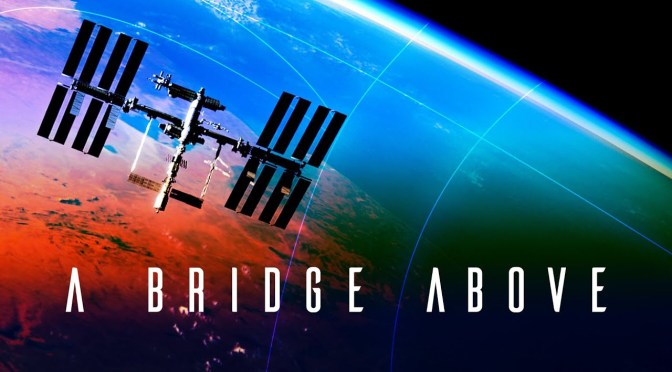
Technology: “A Bridge Above – 20 Years Of The International Space Station” (NASA Video)

“What if we built a bridge, between and above all nations, to jointly discover the galaxy’s great unknowns?” Join us this fall as we prepare to celebrate the 20th anniversary of the the International Space Station. As a global endeavor, 240 people from 19 countries have visited the unique microgravity laboratory, which has hosted more than 2,800 research investigations from scientists in over 100 nations.

The International Space Station is a modular space station in low Earth orbit. The ISS program is a multi-national collaborative project between five participating space agencies: NASA, Roscosmos, JAXA, ESA, and CSA. It is an international collaborative effort between multiple countries.

Top New Science Podcasts: Pluto’s Dark Side Yields Dwarf Planet’s Secrets

Nature PodcastsIn 2015, after a nine-and-a-half-year journey, NASA’s New Horizons spacecraft raced past Pluto, beaming images of the dwarf planet back to Earth.

Five years after the mission, researchers are poring over images of Pluto’s far-side, which was shrouded in shadow during New Horizon’s flypast. They hope that these images will help give a better understanding of how Pluto was born and even whether a hidden ocean resides beneath the world’s icy crust.

This is an audio version of our feature: Pluto’s dark side spills its secrets — including hints of a hidden ocean