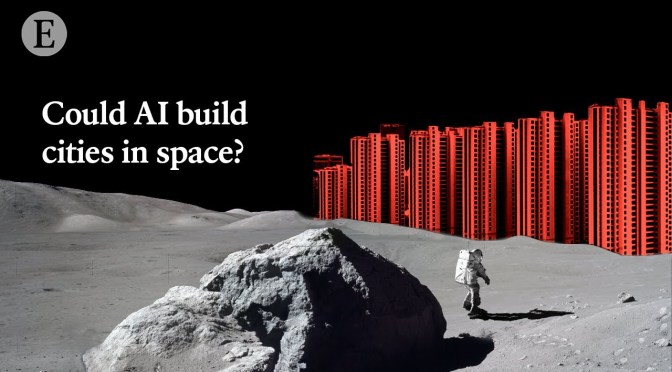
The Economist (December 12, 2024): The EconomistFast forward into the future, when building in space is normal, from huge satellites and spacecraft in orbit, to entire cities on the Moon and Mars. Could robots guided by AI make it happen?
Video timeiine: 00:00 – Future of building in space 00:43 – Machina Labs 02:15 – Could we 3D print in space? 02:44 – Infrastructure on the Moon 03:25 – AI & robotics on Mars 04:41 – History of AI in space 05:41 – Challenges to space technology
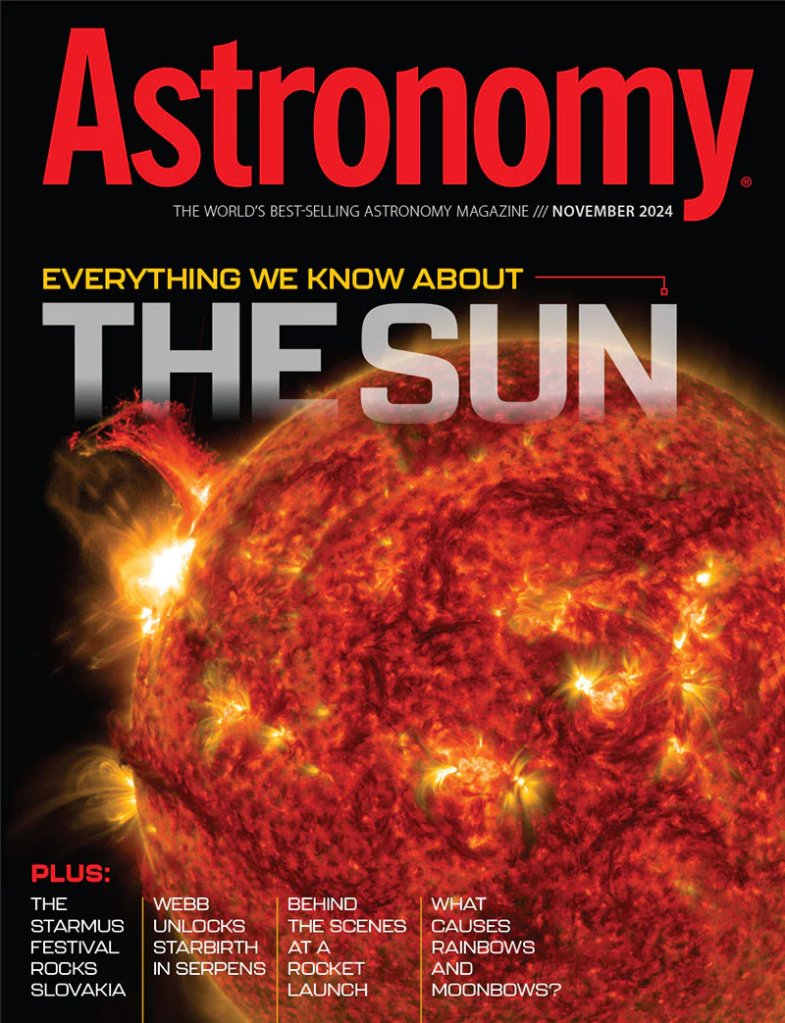
The closest star to Earth is also the best studied, but only recently have we truly begun to uncover its secrets.
For thousands of years, humans have worshipped the Sun. Our ancestors built monuments and temples to it, and used it to mark the annual cycle of seasons. For ancient Egyptians, their most important god, Re, was the personification of the Sun itself.
Today, we are no less in thrall to the wonders and mysteries of our nearest star. We’ve made strides in understanding its major systems and answered many questions about how it produces energy. But the Sun is far from an open book,
November 2024: What’s in the sky this month? Mars and Jupiter are improving, while Uranus reaches opposition
Mars is brightening and the giant planet Jupiter is reaching its best apparition in a decade for Northern Hemisphere observers this month.
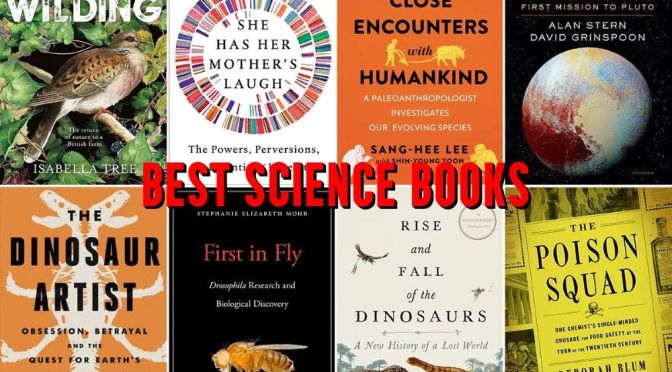
Smithsonian Magazine (December 7, 2023) – From stories on the depths of the ocean to the stars in the sky, these are the works that moved us the most this year
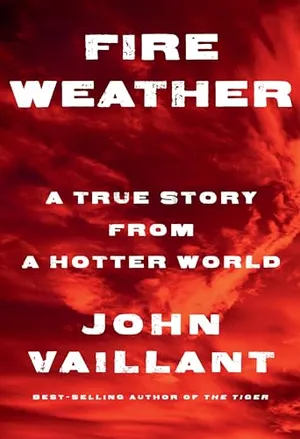
In a year when record-setting forest fires raged across Canada and their smoke clouded the skies across North America, and a Maui forest fire incinerated the town of Lahaina in a deadly blaze, the most harrowing book we read about climate change featured a devastating forest fire. In Fire Weather, author John Vaillant crafts a thriller about a cataclysmic inferno that burned through the town of Fort McMurray, Alberta, in May 2016. (We ran an excerpt of the book here.) The blaze generated hurricane-force winds and lightning, and entire neighborhoods burned to the ground under a type of pyrocumulus cloud usually associated with volcanoes. Roughly 100,000 people evacuated what would become the costliest disaster in Canadian history.
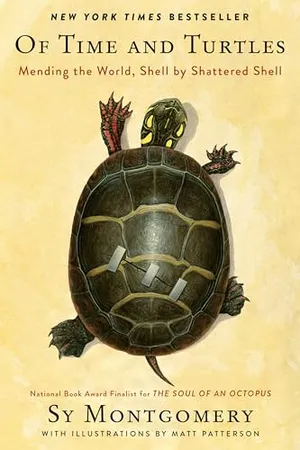
Scuttling Earth for at least 220 million years, turtles have survived more than one mass extinction, including the one that offed dinosaurs. But in a geologic instant, humans have pushed more than half their 360 known species to near-extinction. And in an actual instant, animals slated to live a century or more can be killed—after their shells are crushed by cars, their mouths are snagged by fishhooks or their ponds are drained by developers.
Yet there is hope for some turtles. The Turtle Rescue League in Southbridge, Massachusetts, rehabilitates hundreds of ailing turtles each year. In Of Time and Turtles, author Sy Montgomery joins the small squad in spring of 2020, just as routine life freezes for Covid-19. The book recounts her year with the league, as they incubated eggs, injected antibiotics, mended shattered shells and returned healed patients to nature.
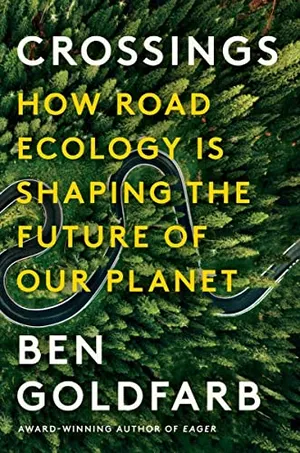
From the start of Ben Goldfarb’s fascinating book on road ecology, Crossings, the reader is peppered with jaw-dropping facts. Some 40 million miles of roadways encircle the Earth. While a half-century ago 3 percent of land-dwelling mammals died on a road, in 2017 that percentage had quadrupled. In 1995, researchers estimated that, in the United States, deer factor into more than a million vehicle crashes annually, injure 29,000 drivers and passengers, and kill more than 200. (We ran an excerpt of the book, with many more surprising facts, here.) And the book is engrossing for other reasons. In it, Goldfarb chronicles roads from California to Canada to Tasmania to show how they have impacted the natural world—and that includes us. He explores how roads have affected everything from butterflies to mountain lions to frogs.
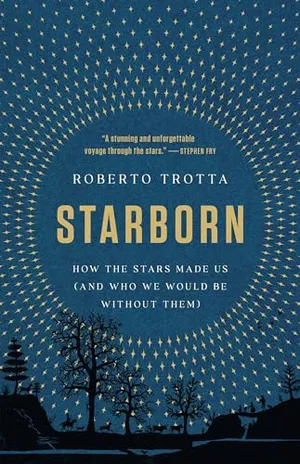
Without the stars, the history of our species would have been very different. That’s the central argument in Roberto Trotta’s engaging homage to the star-studded night sky, Starborn. The stars are more than just pretty: As Trotta shows, our efforts to understand the movements of the stars and planets (and the sun and the moon) played a crucial role in the development of navigation and precision timekeeping. In ancient Egypt, for example, the bright star Sirius was worshipped as a deity, and the start of the new year was signaled when Sirius first became visible in the pre-dawn sky. Seafaring Polynesians, meanwhile, traveled from island to island in the Pacific Ocean by memorizing the positions and movements of some 200 stars—aided by their knowledge of ocean currents, fish, birds and seaweed. Today’s most accurate timekeepers are atomic clocks, which count vibrations of a cesium atom—but even these need to be tweaked based on the sun and stars, because the Earth’s spin is gradually slowing.
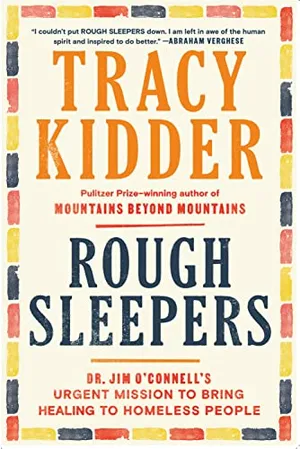
In Rough Sleepers, author Tracy Kidder profiles a dedicated doctor who treats Boston’s homeless. Harvard-educated physician Jim O’Connell is the founder and president of the Boston Health Care for the Homeless Program. “The Program,” as O’Connell calls it, employs roughly 400 workers to treat more than 11,000 homeless people annually. O’Connell, who refers to the unhoused as “rough sleepers,” a 19th-century British term, is called Dr. Jim by his patients. He treats them in a clinic and drives a van to meet them on the streets. He addresses everything from lice and scabies to more advanced problems that patients have following years of neglect, including large tumors and, in one case, a hernia that dropped below a man’s knees. Aside from care, O’Connell sometimes hands out his own money and gift cards.Report this ad
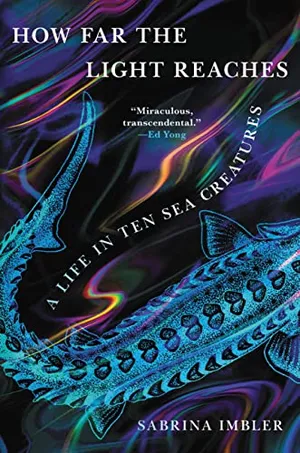
Nature is unabashedly queer. We are surrounded by species that live outside our human experience, points of reflective contrast to our terrestrial lives. Sabrina Imbler’s scientifically steeped memoir How Far the Light Reaches revels in these differences, using an aquarium of undersea creatures as foils for significant moments in the author’s life. The preserved remains of a whale are a foil for dissecting a breakup, and our sometimes leering fascination with a marine worm called the sand striker gives form to a meditation on consent. Imbler’s essay “We Swarm,” especially, is a treasure. Squishy marine organisms called salps, which spend part of their lives in aggregations of hundreds of individuals, open a warm recollection of Pride celebrations along the New York shoreline.
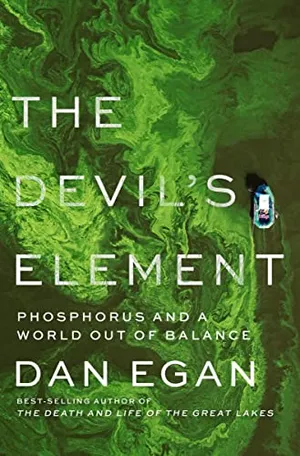
As chemicals go, phosphorus—number 15 on the periodic table—is something of a paradox. In The Devil’s Element, journalist Dan Egan explains how phosphorus is essential for all life; it can be found in every cell in your body. But it is also combustible and explosive. So-called white phosphorus is a waxy substance that spontaneously combusts when exposed to oxygen—and can cause temperatures to hit 2,370 degrees Fahrenheit. White phosphorus was the key ingredient in the bombs dropped by the Allies on Hamburg, Germany, during World War II, unleashing a firestorm that leveled the city and killed some 37,000 people.Report this ad
Alzheimer’s disease robs a person’s memory, yes, but it also causes sweeping behavioral transformations that can include agitation and stubbornness. Those with the condition can become unrecognizable to their loved ones and difficult patients. The slow-acting and irreversible disease “is more feared than death itself,” writes Sandeep Jauhar in My Father’s Brain. After his father starts to show signs of dementia in 2014, Jauhar’s parents move states to be closer to their sons. But the close proximity does little to prevent his father’s Alzheimer’s from upending the lives of family members. Jauhar doesn’t shy away from narrating the ugly and difficult experiences of his father’s irrational behavior, which often leads to sibling fights and frustration for the author.
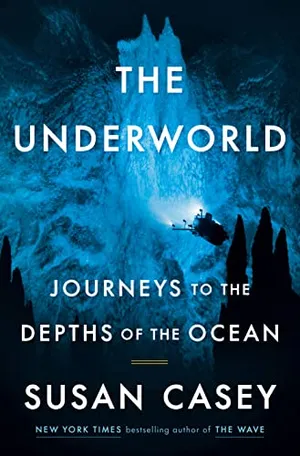
In June, the world paid more attention than usual to deep-sea exploration when OceanGate’s Titan submersible went quiet while exploring the Titanic. Later, the public learned the craft imploded. That was the rare tragic episode of deep-ocean adventures, one years in the making due to the company’s failure to test and heed warnings. But a much more awe-inspiring exploration of the deep has been taking place for decades, and Susan Casey’s enthralling book, The Underworld, documents it in stunning detail. (We ran an excerpt of the book here.) As Casey points out, though you can view maps of Mars on your iPhone, 80 percent of Earth’s seafloor hasn’t been charted in sharp detail.
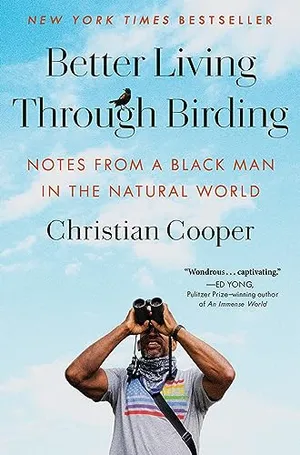
In little more than two minutes captured on video in May 2020, the life of New York City birder Christian Cooper drastically changed. He saw a dog run through a forested section of Central Park and asked its owner, a white woman, to leash her pet in accordance with the law. When she refused, he began to film her with his smartphone, and as he did, she said she would call the police on him and tell them “an African American man is threatening my life.” As the racist incident came to national attention, Cooper quickly became the best-known birder in America. And, amid a hobby that is largely older and white, “the fact that that birder is Black turned heads,” Cooper writes.
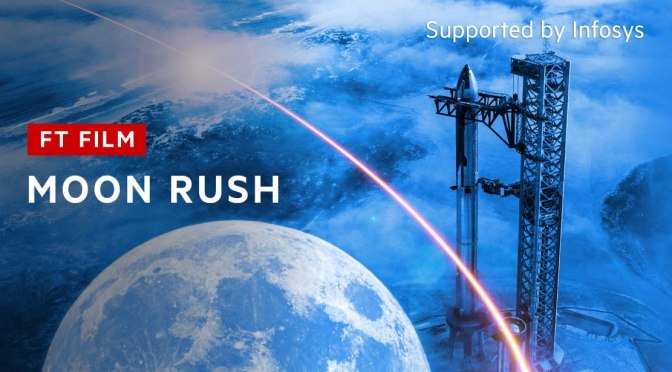
Financial Times (October 18, 2023) – The rush back to the Moon has begun. The US and China are planning permanently crewed bases on the lunar surface. Billions of dollars in contracts are up for grabs as companies are launching ambitious new support projects, from growing food in space to a new lunar internet.
The FT’s Peggy Hollinger asks if the next great leap forward in space is a lunar economy?
Wall Street Journal (October 13, 2023) – NASA launched a spacecraft on Friday to study the Psyche asteroid, which is believed to be made out of metal.
Video timeline: 0:00 NASA’s mission 0:46 The psyche asteroid 1:45 Why metal matters 3:04 What we can learn from the mission
The rocky inner planets of our solar system are thought to have mostly metallic cores. WSJ breaks down why this mission matters and what it could tell us about Earth’s origins.
Wall Street Journal (August 23, 203) – India became the first country to successfully land on the moon’s south pole with its Chandrayaan-3 spacecraft, just days after Russia’s Luna-25 crashed in the same region.
Video timeline:0:00 India lands on the south pole of the moon 0:53 Why the south pole? 2:37 Why Russia and India want to be first 4:32 New space race
Both countries launched rockets in recent weeks, hoping to be the first to successfully complete the mission. Why were they racing to reach the lunar south pole? WSJ explains the significance of both missions for Moscow and New Delhi.
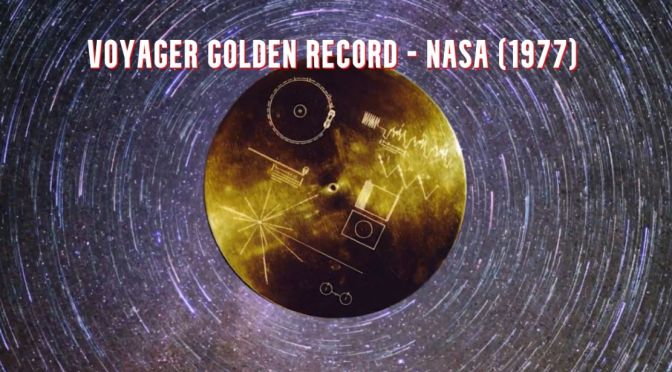
Sotheby’s (July 20, 2023) – The Voyager Golden Record is a unique audio-visual time capsule developed by NASA and affixed to the Voyager 1 and 2 spacecrafts.
Designed to communicate to possible space-faring civilizations something of the diversity of life and culture on our world, the Golden Record consisted of greetings in 59 human languages and those of the humpback whales, 115 images of life here, the sounds of Earth, and 27 pieces from the world’s musical traditions. It has been called the beginning of the concept of “world music.”
It was Voyager 1 that looked homeward from high above Neptune to take, at Carl Sagan’s behest, the iconic Pale Blue Dot photograph. Upon flawlessly completing the first phase of their mission, the NASA Voyagers 1 and 2 made for the open sea of interstellar space, teaching us the actual shape of our solar system as it moves through the galaxy. The Golden Record is an unparalleled document in the history of space exploration and our civilization.
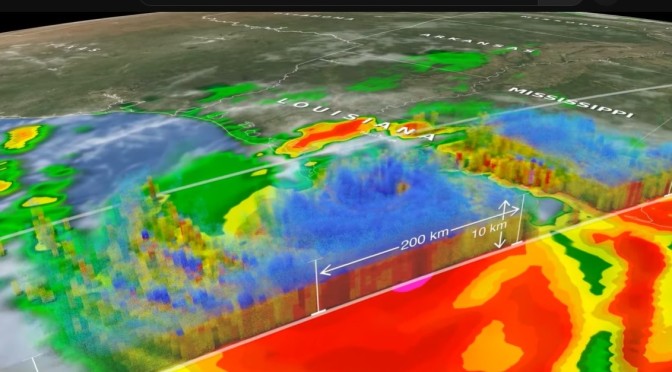
NASA Goddard (December 2022) – NASA is developing the Earth System Observatory, the core of which is five satellite missions providing critical data on climate change, severe weather and other natural hazards, wildfires, and global food production.
These observations will address the most pressing questions about our changing planet. Taken together as a single Observatory, NASA will have a holistic, 3D view of Earth to better understand how our planet’s complex systems work together and improve our capability to predict how our climate may change.
NASA’s Open Source Science strategy is the key to bringing the data from these missions together into a single observatory to help understand the earth as a system and accelerate our ability to use this understanding. These observations will better inform decision-makers on how our planet is changing, with greater precision on previously unimaginable scales – from entire continents down to individual trees, from atmosphere to bedrock.
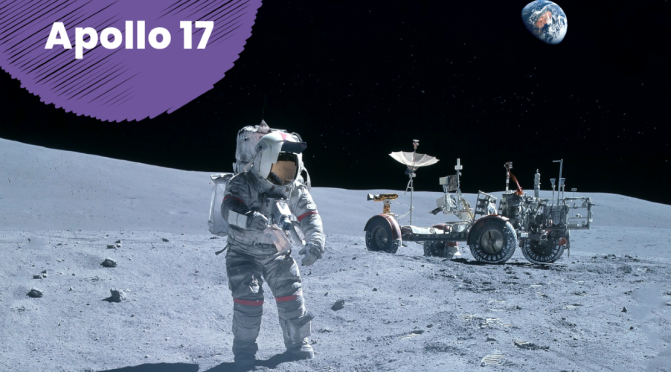
NASA Goddard – This video celebrates the 50th anniversary of Apollo 17 by talking with Lunar Module Pilot Jack Schmitt about the significance of that mission and how it laid the groundwork for future human exploration of the Moon.
Jack also discusses how the Lunar Reconnaissance Orbiter, which launched in 2009, has helped reinterpret Apollo-era data and given us new information about the lunar terrain that will help pave the way for the upcoming Artemis missions.
Apollo 17 was the sixth and final Apollo mission to land on the Moon. Following a 2-hour 40-minute delay, it launched at 11:33 p.m. CST on December 6, 1972, the only night launch of the Apollo program. Prior missions had explored the Moon’s early volcanic history and the role of large impact basins such as Imbrium. Accordingly, Apollo 17 was planned to collect ancient highlands crustal material far from the Imbrium basin and to search for possible young lunar volcanic activity, which would help to constrain our knowledge of the Moon’s thermal evolution.
Video Credit: NASA’s Goddard Space Flight Center
Produced and Edited by: David Ladd (AIMM)
Data Visualizations by: Ernie Wright (USRA)
News, Views and Reviews For The Intellectually Curious



:focal(800x602:801x603)/https://tf-cmsv2-smithsonianmag-media.s3.amazonaws.com/filer_public/54/95/5495bf57-cfac-40d7-a1ac-4fc8f56baa3e/booklist-2023-science.jpg)


 Financial Times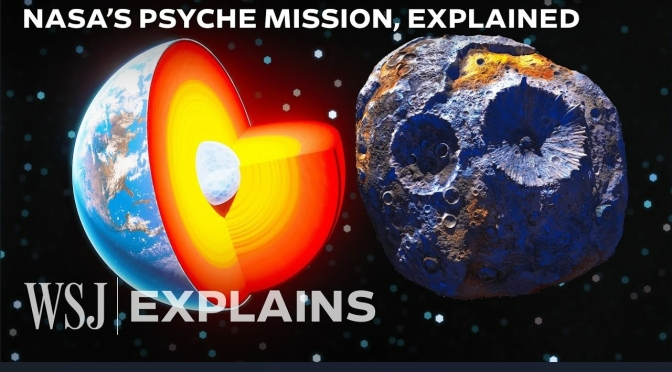


 Sotheby’s

 Boomers Daily