
In this episode, Nature reporter Davide Castelvecchi joins us to talk about the big science events to look out for in 2022. We’ll hear about vaccines, multiple Moon missions, the push to save biodiversity, and more.
Category Archives: Science
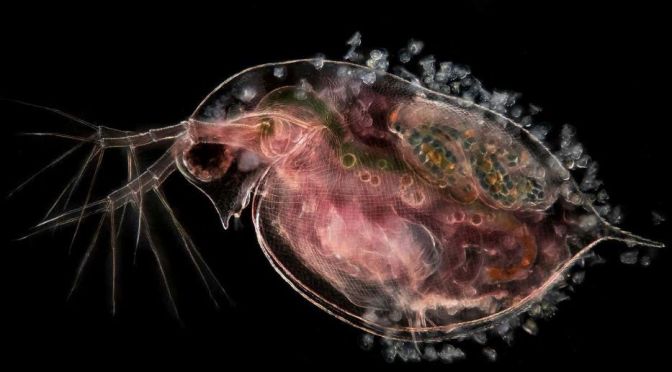
Photography: The ‘Micro-Beauty’ Of Plankton
Plankton form the base of marine and freshwater food webs. They consist of phytoplankton (plants) and zooplankton (animals). Their name derives from the Greek word for “drifter”, since they are too tiny to fight tides or currents. Phytoplankton oxygenate the ocean through photosynthesis, enabling marine animals to thrive, and produce about half the world’s oxygen. Yet despite their abundance and fundamental role for life on Earth, their microscopic nature makes them easy to ignore.
“The most exciting thing of the whole project was the discovery of this parallel, beautiful, strange, complex world, ” says photographer Jan van IJken, “there’s so much beauty around the corner that you’re not aware of”. Inspired by the microscopic beauty of plankton – and their predators, van IJken embarked on a photo and film project called Planktonium. Over a year, he collected a diverse array of species from various Dutch waters, including puddles, lakes and seas, “Every time it was [a] new discovery”, he says. “There’s such a diversity, it makes you humble”.
Back in his studio, Van IJken used various microscope and photography techniques, including dark field microscopy and timelapse photography to capture the “beauty, fine detail and incredible shapes” of his subjects. To add impact to the film, he commissioned Norweigan musician, Jana Winderen to create a soundscape, made using aquatic audio recordings including of fish, icebergs, small crustaceans which made a crackling sound and even the sounds of “fish howling to the moon”.
Read more: https://www.newscientist.com/article/…

Ecology: Importance Of Peatlands In CO2 Capture
As more of the world’s forests are destroyed, it makes you wonder: what’s going to absorb CO2 in their place?! In an ironic twist of fate, one of Earth’s “deadest” habitats might be our best hope for an ongoing supply of breathable air.
Called peatlands, these wetland environments are named for their tendency to accumulate decayed plant matter. Unlike most other ecosystems, like forests, where branches and leaves typically decompose in a matter of months… in peatlands, that plant material can stay intact for millenia. You see, peatlands mostly exist in high altitude places where temps are low and there’s not much water flow. This results in their having extremely low oxygen and high acidity levels.
These harsh conditions aren’t very hospitable to microbes and fungi, which are instrumental to the whole decomposition process. So without them around, the plant material sort of… just sits. Over time, that it globs together to form peat, a thick, spongy material that can soak up 20x its weight in water. Peat also soaks up loads of carbon. Through a process known as the Calvin cycle, living plants absorb CO2 from the air and convert it into organic molecules that they can then use as energy to grow.
Through decomposition, the carbon that’s “fixed” in a plant’s structure gets released but since peat doesn’t decompose, that carbon can stay put! It’s estimated that peatlands contain 550 gigatonnes of organic carbon, which is twice as much organic carbon as all the world’s forests combined. That’s absolutely wild, considering that forests cover about 30% of the world’s land area… and peatlands only account for 3%! Like most of the world’s habitats, peatlands aren’t immune to the threats of human development and exploitation.
Peat is also are a very in-demand resource. Its incredible water holding capacity makes it a favorite amongst horticulturists; If you’ve ever picked up a bag of soil amendment, chances are it’s full of the stuff. Since peat is also a fossil fuel with a long burn, it’s used in some parts of the world. Peatlands are also often drained to accommodate other land use activities, like agriculture.
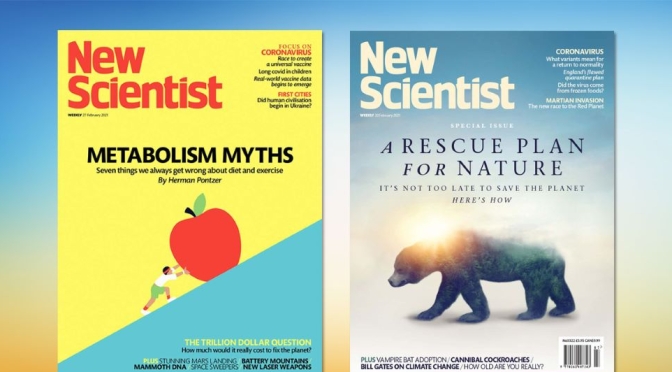
Previews: New Scientist Magazine – January 1, 2022

Science: 2021 Top Stories Of The Year, Marijuana Research, Book Reviews
On this week’s show: The best of our online stories, what we know about the effects of cannabinoids, and the last in our series of books on race and science.
First, Online News Editor David Grimm brings the top online stories of the year—from headless slugs to Dyson spheres. You can find out the other top stories and the most popular online story of the year here.
Then, Tibor Harkany, a professor of molecular neuroscience at the Medical University of Vienna’s Center for Brain Research, talks with host Sarah Crespi about the state of marijuana research. Pot has been legalized in many places, and many people take cannabinoids—but what do we know about the effects of these molecules on people? Tibor calls for more research into their helpful and harmful potential.
Finally, we have the very last installment of our series of books on race and science. Books host Angela Saini talks with physician and science fiction author Tade Thompson about his book Rosewater. Listen to the whole series.
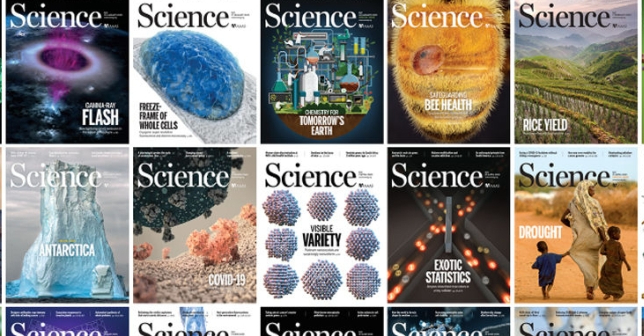
Cover Preview: Science Magazine – December 24

Review: Math & Computer Science Discoveries (2021)
It was a big year. Researchers found a way to idealize deep neural networks using kernel machines—an important step toward opening these black boxes. There were major developments toward an answer about the nature of infinity. And a mathematician finally managed to model quantum gravity. Read the articles in full at Quanta Magazine: https://www.quantamagazine.org/the-ye…

Space Exploration: Year 2021 NASA Highlights
2021 was the busiest year yet for NASA in low-Earth orbit, we also made progress preparing for a flight test around the Moon, and had a very active year exploring space, studying Earth, testing technologies for next generation aircraft, and much more. Here’s a look back at those and other things we did this year at NASA. Download Link: https://go.nasa.gov/3yM3so2
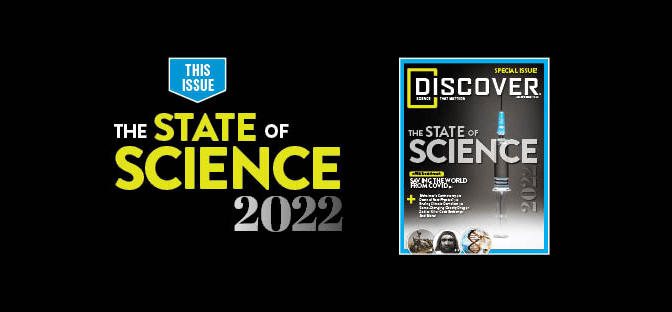
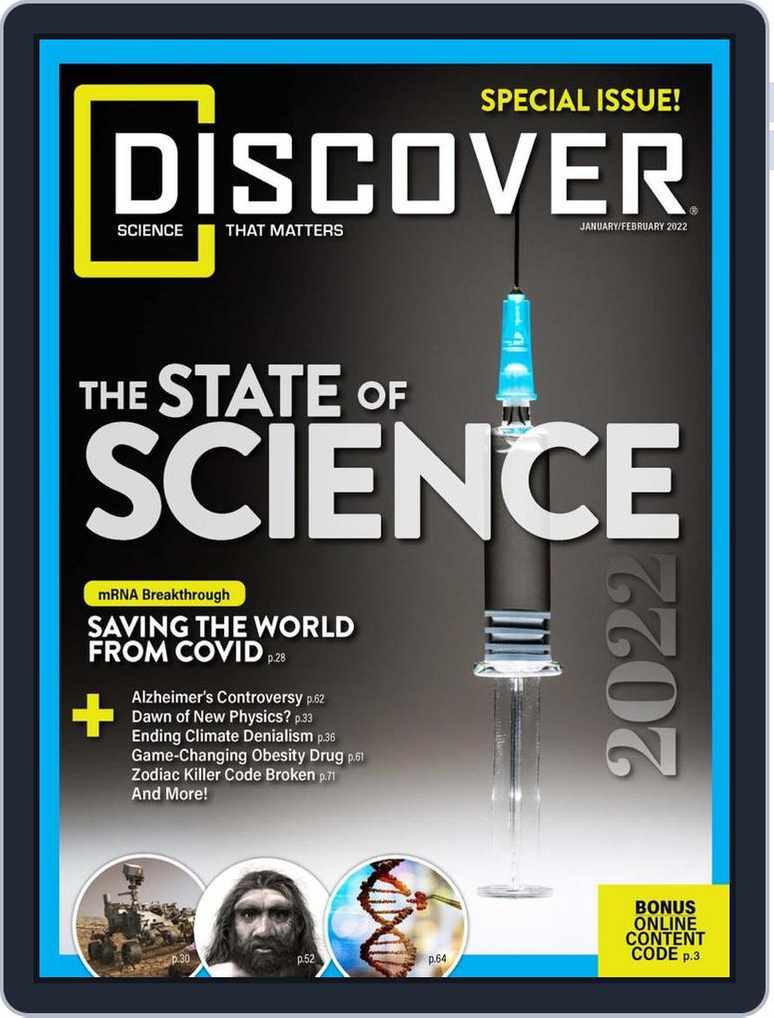
Cover Preview: Discover Magazine – January 2022
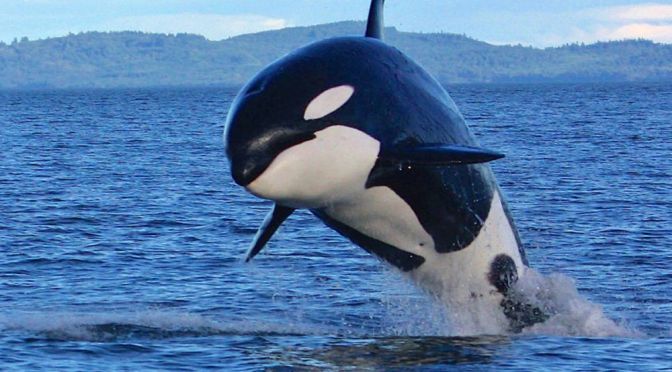
Biology: Killer Whales – The Ocean’s Top Predator
The killer whale or orca is a toothed whale belonging to the oceanic dolphin family, of which it is the largest member. It is recognizable by its black-and-white patterned body.
 Boomers Daily