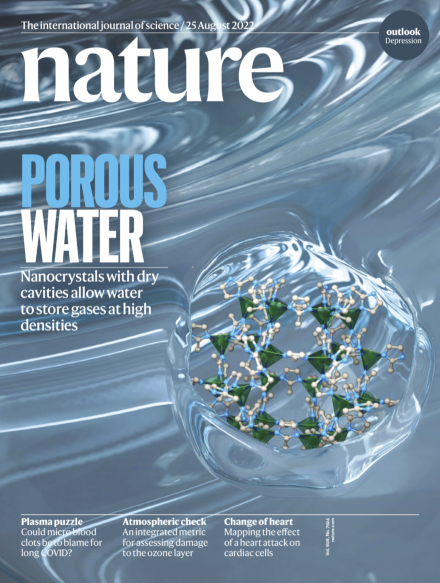
- Which glaciers are the biggest? Scientists finally have an answer – The world’s record holders are in Antarctica, regardless of how ‘glacier’ is defined.
- First space rock found inside Venus’s orbit — and it’s jumbo-sized – An asteroid that travels inside the orbit of Venus probably wandered there from further afield.
- Stretchy synthetic nerve helps mice give ball a mighty kick -Device can bridge a nerve damaged by motor-neuron disease or spinal-cord injury.
- Mosquitoes sniff out humans with super-smelling neurons – The biting insects have an odour-sensing set-up superior to that of many other animals.
- Mount Everest’s harsh heights shelter a rich array of life – Scraps of DNA show that living things of all kinds thrive in the thin air above 4,000 metres.
Category Archives: Research
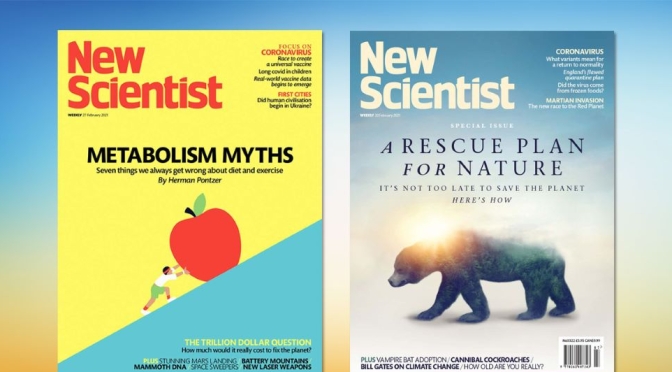
Preview: New Scientist Magazine – August 27, 2022
Research Preview: Science Magazine – August 19, 2022
Small stowaways on new NASA rocket promise big science
Batteries allowing, CubeSats will target lunar ice and more
China rises to first place in one key metric of research impact
Other methods still put the United States somewhat ahead
New law’s big payout for farming has uncertain climate payoff
Measures to capture carbon in soil may be less effective than hoped, scientists say
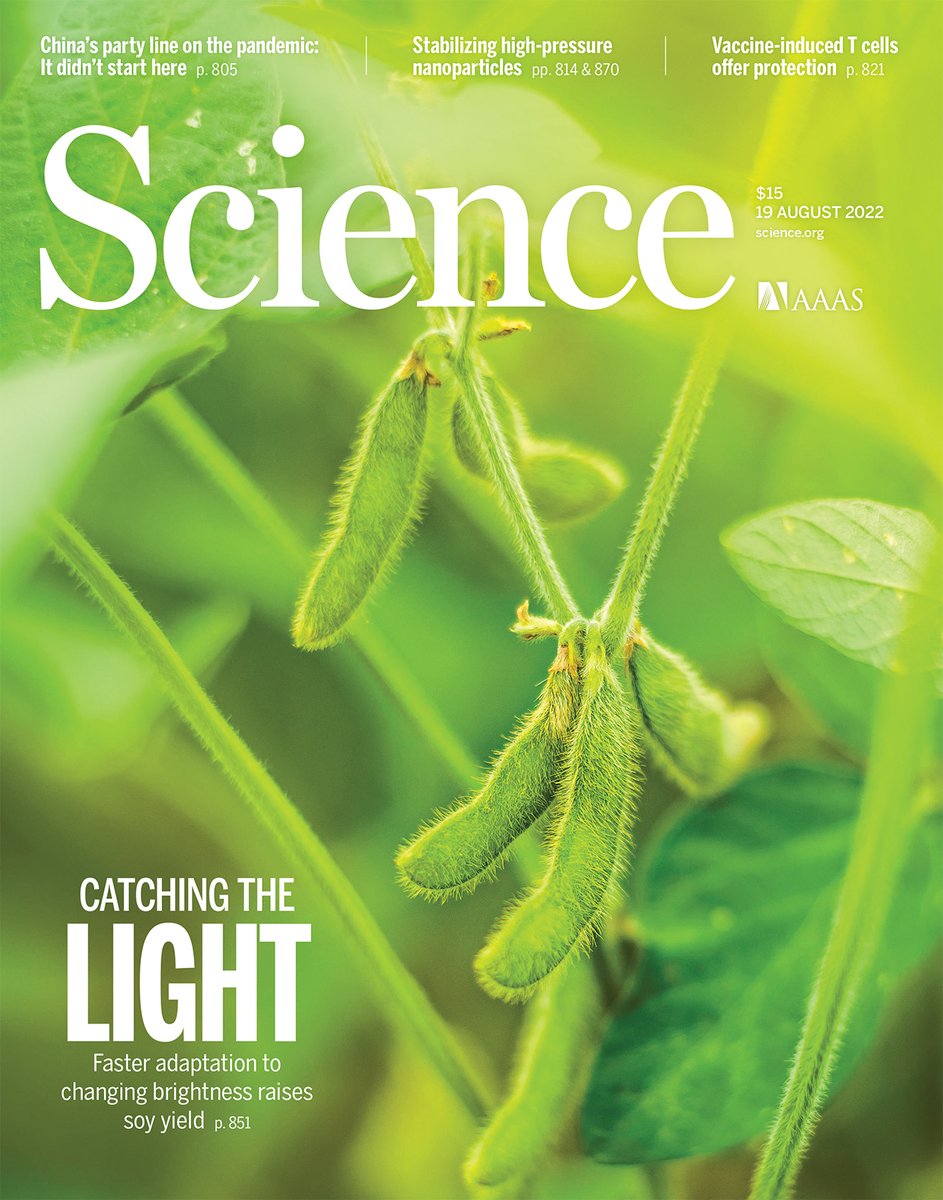
Bioengineering soybean plants to improve regulation of photoprotection—a natural process that enables plants to cope with excess absorbed light energy—improved soybean seed yield by up to 33% in field trials.
Read that study and more this week in Science: https://fcld.ly/r6g2kix
Research Preview: Nature Magazine – August 18, 2022
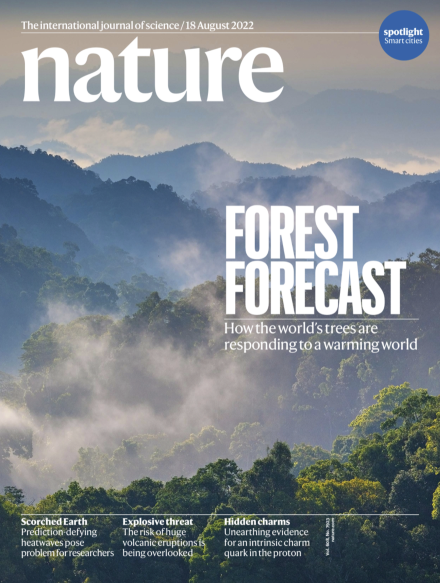
The cover captures the morning mist at Kaeng Krachan National Park in Thailand. Like every other aspect of life on Earth, forests are facing increased challenges posed by climate change. A collection of papers in this week’s issue probes the vulnerabilities and potential resilience of forests in a warming world. Three studies focus on North America: one examining the response of boreal species to warming and drought, another analysing the timing of stem growth in temperate deciduous forests, and a third revealing migration of white spruce (Picea glauca) into the Arctic tundra. In the tropics, one paper investigates the
impact of phosphorus availability in the Amazon, while another assesses the reasons for increased mortality of tropical trees. Finally, a sixth paper shows how satellite imaging can be combined with machine learning to identify declining resilience in the world’s forests.
Preview: New Scientist Magazine – August 20, 2022
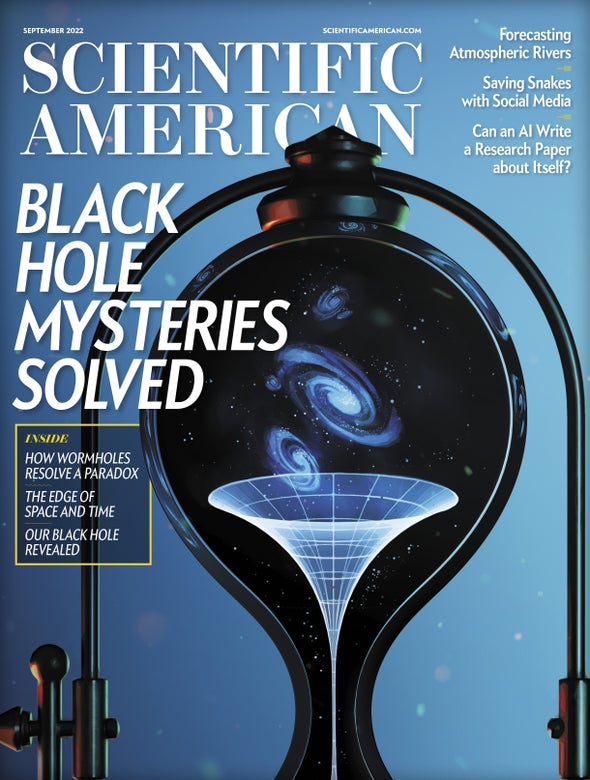
Cover Preview: Scientific American – September 2022

New Solutions to Black Holes, Snake Phobia and Forecasting Atmospheric Rivers
These fun stories show progress from the scale of quantum effects to that of snakes and from Earth to the edge of the universe
Monkeypox Explained: Transmission, Symptoms, Vaccines and Treatment
AI Can Help Indigenous People Protect Biodiversity
What Megafires Can Teach Us about California Megafloods
Preview: New Scientist Magazine – August 13, 2022
In this week’s issue: How the healing power of silence can improve our mental and physical health.
- FEATURES – What Earth’s mysterious infancy tells us about the origins of life
- FEATURES – The power of quiet: The mental and physical health benefits of silence
- FEATURES – 5 mind-bending numbers that could reveal the secrets of the universe
- NEWS – How weevils have become weapons in UK’s fight against invasive plants
Cover Previews: Science Magazine – August 12, 2022
Death’s-head moths correct course based on an internal “compass,” a new study finds, revealing insights into how insects traverse such long distances during seasonal migrations.
Scientists scramble to set up monkeypox vaccine trials
Logistical and ethical challenges are complicating the design of efficacy studies
Harassment researchers decry proposed reporting rule
U.S. Title IX law update requiring mandatory reporting of sexual misconduct would cause harm, they say
Star’s midlife crisis illuminates our Sun’s history—and future
Long magnetic lull mimics Maunder Minimum, when sunspots largely disappeared 400 years ago
Star marine ecologist guilty of misconduct, university says
University of Delaware finding vindicates whistleblowers
Webb reveals early universe’s galactic bounty
Star formation after the big bang appears much faster than models had forecast
Read that research and more this week in Science. https://fcld.ly/zebukkw
Cover Preview: Nature Magazine – August 11, 2022
- World View
- There’s a simple fix for skewed pandemic estimates Demographers must work together so that officials can produce numbers all can trust.
- Elizabeth Wrigley-Field World View 09 Aug 2022
- There’s a simple fix for skewed pandemic estimates Demographers must work together so that officials can produce numbers all can trust.
- Research Highlights
- How jumping up and down in a canoe propels it forwards A watercraft subject to ‘gunwale bobbing’ travels on waves generated by the bobbing itself. Research Highlight 05 Aug 2022
- Sea creatures’ sun shades inspire low-cost ‘smart’ windows Dots of inky pigment spread in branching patterns, allowing close control of shade cover. Research Highlight 04 Aug 2022
- The fungus that entices male flies to mate with female corpses Dead, spore-infested female flies lure males to their doom, perhaps with an attractive odour. Research Highlight 01 Aug 2022
- Cancer cells hijack nerve cells to storm through the brain Cells of the deadly tumour glioblastoma hasten their advance by turning neurons to their advantage. Research Highlight08 Aug 2022
- Ancient graves show plague afflicted Bronze Age Crete Genomic analysis suggests that plague could have played a part in social change on the Greek island around 2000 BC.
Cover Preview: Science Magazine – August 5, 2022
The unrecognized value of grass
Marram grass, or beachgrass, grows on and stabilizes coastal sand dunes on Ireland’s Dingle Peninsula. Grasses, whether terrestrial or submarine, tend to be undervalued but have influenced the trajectory of human history through their domestication as food staples, as well as natural ecosystems worldwide. If restored and conserved appropriately, grasslands can benefit climate change mitigation efforts. See the special section beginning on page 590.
A new special issue of Science explores the unrecognized value of grass: https://fcld.ly/bo80dpr