A.M. Edition for May 14. WSJ’s Rochelle Toplensky discusses Internal Revenue Service attention on cryptocurrency investors. WSJ’s Betsy McKay on the continuing search for clues about the origin of the Covid-19 pandemic.
And, air travelers face new frustrations. Marc Stewart hosts.
A.M. Edition for May 13. WSJ’s Felicia Schwartz discusses what is behind the fighting unfolding in Israel. The Colonial Pipeline restarts operations after a cyberattack.
WSJ’s Caitlin Ostroff has more on Tesla’s decision to suspend bitcoin payments. Marc Stewart hosts.
Dozens are dead as violence between Israelis and Palestinians intensifies. Israel launched more devastating airstrikes in Gaza as Hamas continues to respond with rockets.
House Republicans will meet this morning to vote on whether to remove Wyoming Congresswoman Liz Cheney from her leadership role. And, price hikes for consumer goods are stoking fears of inflation.
Tension in the holy city of Jerusalem has been rising for weeks, amid the attempted eviction of Palestinians and a march by Jewish nationalists. Yesterday it erupted into the worst violence in years, as Hamas rockets fired at Israel from Gaza prompted retaliatory air strikes.
A cyber-attack that shut down one of America’s largest fuel pipelines reflects the growing problem of ransomware. And in China, authorities are clamping down on a spurt of grave robbing.
A.M. Edition for May 10. WSJ’s Heather Haddon discusses the additional fees associated with food delivery. A cyberattack forced the shutdown of America’s largest fuel pipeline. Corn sees its prices pop.
And, Tesla CEO Elon Musk’s debut on “Saturday Night Live”. Marc Stewart hosts.
Tyler Brûlé, Andrew Tuck, Benno Zogg and Christof Münger round up the weekend’s biggest discussion topics. Plus, we check in with our friends and contributors in London, Copenhagen and Tokyo.
A roundup of the weekend’s newspapers, Monocle editor in chief Andrew Tuck’s column and Henry Mance tells us what people can do for animals. Georgina Godwin sets the tone for the weekend.
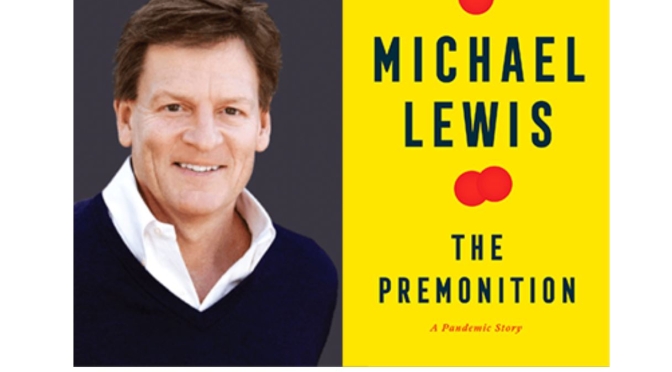
In 2018, Michael Lewis published “The Fifth Risk,” which argued, in short, that the federal government was underprepared for a variety of disaster scenarios. Guess what his new book is about? Lewis visits the podcast this week to discuss “The Premonition,” which recounts the initial response to the coronavirus pandemic.
“It wasn’t just Trump,” Lewis says. “Trump made everything worse. But there had ben changes in the American government, and changes in particular at the C.D.C., that made them less and less capable of actually controlling disease and more and more like a fine academic institution that came in after the battle and tried to assess what had happened; but not equipped for actual battlefield command. The book doesn’t get to the pandemic until Page 160. The back story tells you how the story is going to play out.”
The historian Annette Gordon-Reed visits the podcast to talk about her new book, “On Juneteenth,” which combines history about slavery in Texas and Juneteenth with more personal, essayistic writing about her own family and childhood.
“This is a departure for me, but it is actually the kind of writing that I always thought that I would be doing when I was growing up, dreaming about being a writer,” Gordon-Reed says. “I’ve always been a great admirer of James Baldwin, and Gore Vidal’s essays I thought were wonderful, better than the novels, and that’s the kind of thing that I wanted to do. So it was sort of a dream come true for me to be able to take this form and talk about some things that were very important to me.”
Also on this week’s episode, Tina Jordan looks back at Book Review history during this year of its 125th anniversary; Alexandra Alter has news from the publishing world; and Parul Sehgal and John Williams talk about the latest in literary criticism. Pamela Paul is the host.
Here are the books discussed by the critics this week:
A.M. Edition for May 7. WSJ’s Caitlin Ostroff on investors’ hunt for the next crypto winner. WSJ’s Rochelle Toplensky discusses healthcare stocks after global calls to waive Covid-19 vaccine patents. And, ham-radio enthusiasts are seeking far-off destinations. Marc Stewart hosts.
The social-media giant’s external-review body upheld a ban on former president Donald Trump—for now. We ask how a narrow ruling reflects on far broader questions of free speech and regulation.
America’s young offenders are often handed long sentences and face disproportionate harms; we examine reforms that are slowly taking hold. And the Broadway mental-health musical that is a surprise hit in China.
News, Views and Reviews For The Intellectually Curious



 Boomers Daily