Category Archives: Podcasts

Science: 4000-Year-Old Mummies, Digital-Hygiene Checks, Ancient Snakes

The unexpected origins of a 4000-year-old people, protecting your ‘digital presence’ and what to expect from COP26.

In this episode:

00:48 The origins of the mysterious Tarim mummies

For decades there has been debate about the origins of a group of 4000-year-old individuals known as the Tarim Basin mummies. Their distinct appearance and clothing has prompted scientists to hypothesise they had migrated from the North or West. Now, a team of researchers have used modern genomics to shed new light on this mystery and reveal that migration was not the mummies’ origin.

Research article: Zhang et al.

News and Views: The unexpected ancestry of Inner Asian mummies

08:59 Research Highlights

Making wood mouldable, and how ancient snakes diversified their diets.

Research Highlight: Moulded or folded, this wood stays strong

Research Highlight: Finicky no more: ancient snakes ate their way to success

11:09 How a regular ‘digital-hygiene’ check can protect your reputation

Attaching a researcher’s name to a paper without them knowing is an unscrupulous practice that can have serious repercussions for the unwitting academic. To prevent this, computer scientist Guillaume Cabanac is advocating a once-a-month ‘digital-hygiene’ check, to identify incorrect acknowledgements, and help prevent research malpractice.

World View: This digital-hygiene routine will protect your scholarship

18:51 What to expect from COP26

This week sees the start of the 26th UN Climate Change Conference (COP26), with an estimated 20,000 people — including world leaders, scientists and activists — expected to be in attendance. Jeff Tollefson, senior reporter at Nature, joins us to explain what’s on the agenda for the conference.

News Explainer: COP26 climate summit: A scientists’ guide to a momentous meeting

Morning News: Crisis In Afghanistan, India Goes Hi-Tech, Rental Clothing

Two months after the Taliban’s victory, civilians face a looming disaster. Will Western governments dig their heels in, or turn the aid taps back on? 

India’s government has increasingly turned to high-tech means for delivering government services. But its digital-first solutions are inaccessible to millions of citizens. And we look at the business of renting clothing, as Rent the Runway goes public with a sky-high valuation.

Morning News: Asean Summit, Afghanistan Diplomacy, Fox News

We preview this week’s Asean summit, which arrives at a turbulent time for the region, and discuss the possibility of an EU diplomatic mission in Kabul. Plus, can the weather bring viewers back to Fox News?

News & Analysis: Real-Time Economics, Tumult In Nigeria, Corporations

A selection of three essential articles read aloud from the latest issue of The Economist. This week, the real-time revolution transforming economics, how insurgency, secessionism and banditry threaten Nigeria (10:06) and our Bartleby columnist on why corporate mission statements deserve more than an eye-roll (17:39).

Sunday Morning: Stories From London And Zurich

Monocle’s Emma Nelson and panelists Benno Zogg, Latika Bourke and Stephen Dalziel on the weekend’s biggest news stories. Plus: what’s making headlines on the pages of ‘La Repubblica’?

Morning News: Poland & European Union, Politics In Latin America, Zimbabwe

We get the latest from Brussels as the EU ponders how to hit back at Poland, following Warsaw’s controversial court ruling. Plus: a round-up of the morning papers and the latest retail and fashion news.

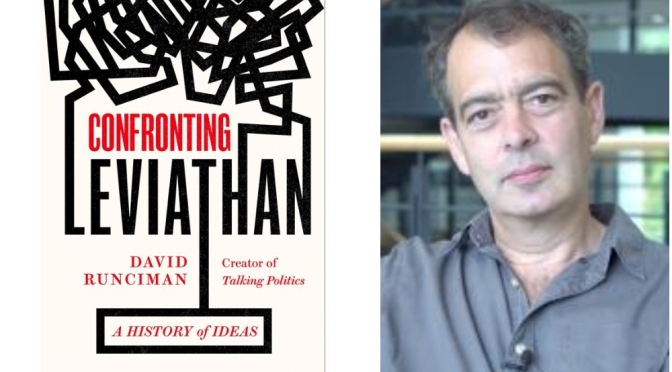
Top Podcast Interviews: ‘Confronting Leviathan’ Author David Runciman

Morning News: Crime & Crisis In Nigeria, South Korea’s Samsung, “Dune”

Criminal gangs in north-western states, jihadists in the north-east, a rebellion in the south-east: kidnappers, warlords and cattle rustlers are making the country ungovernable.

The new head of Samsung Electronics has a legacy to build—and aims to do so by breaking into the cut-throat business of processor chips. And the sci-fi classic “Dune” gets a good cinematic treatment at last.

Science: Vikings In North America, Magnets Moving Non-Magnetic Metals

An ancient solar storm helps pinpoint when Vikings lived in the Americas, and using magnets to deftly move non-magnetic metals.

In this episode:

00:53 Pinpointing Viking presence in North America

It’s well-understood that Vikings went to North America around a thousand years ago. However, working out a precise date has proven difficult. Now, thanks to an ancient solar storm, researchers have been able to identify an individual year when Vikings were definitely living on the continent.

Research article: Kuitems et al.

14:57 Research Highlights

How shoulder muscles gave Pterosaurs an aerodynamic edge, and mysterious radio waves coming from near the centre of the Milky Way.

Research Highlight: How ancient reptiles were streamlined for flight

Research Highlight: A mysterious radio signal object is beaming radio waves into the Milky Way

17:45 Magnets move non-magnetic metals

Scientists have created an array of magnets capable of moving non-metallic objects in 6 dimensions. They hope their new approach could one day be used to clean up debris in space.

Research article: Pham et al.

News and Views: Non-magnetic objects induced to move by electromagnets

27:06 What Francis Collin’s retirement means for the US NIH

After 12 years, Francis Collins announced plans to retire from his role as Director of the United States National Institutes of Health. We discuss his legacy and what this means for the world’s biggest public funder of biomedical research.

Editorial: COVID, racism, China: three tests for the next NIH leader

News: Francis Collins to step down at NIH: scientists assess his legacy