

It is less than 200 days until the rescheduled Tokyo Olympics are due to get under way, but among the Japanese public, fears over the virus and the spiralling cost of the Games mean most would rather see the event postponed or cancelled altogether.
Category Archives: News

Morning News Podcast: Impeachment, Capitol Police & Online Returns
‘Several’ Capitol police officers suspended over pro-Trump riot, Democrats, GOP face defining moments after Capitol riot, and Amazon, Walmart tell consumers to skip returns of unwanted items.

Politics Monday: Tamara Keith And Amy Walter On Capitol Riots (PBS Video)
NPR’s Tamara Keith and Amy Walter of the Cook Political Report join Judy Woodruff to discuss the latest political news, including the violence at the U.S. Capitol, efforts to impeach President Trump, and Trump’s influence on the Republican Party.
Morning News Podcast: Articles Of Impeachment, More Arrests Of Rioters
Democrats demand accountability for President Trump’s actions. If their push to invoke the 25th Amendment fails, they’ll try to impeach him again. But what difference does it make if his term is up in nine days?
Law enforcement officials continue to investigate and arrest rioters, but they’re also preparing for next week’s inauguration. Far-right extremists say they’ll be back. And only about a third of the available coronavirus vaccines have been administered. The incoming Biden administration plans to make nearly all vaccines immediately available.
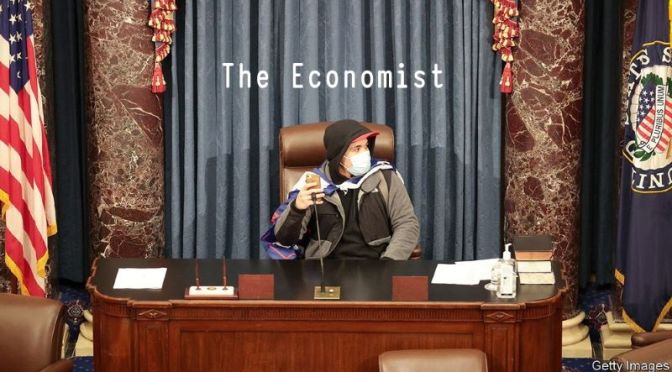
World News: Trump’s Legacy, China Issues & Stock Prices (Podcast)
A selection of three essential articles read aloud from the latest issue of The Economist. This week: the shame and the opportunity of Trump’s legacy, how to deal with China (8:50), and why the crazy upward march in stock prices might just continue (15:45).

Sunday Morning Podcast: Headlines From Zurich, London & Tokyo (2021)
The weekend’s top news with Monocle’s Tyler Brûlé, Urs Bühler, Eemeli Isoaho and Chandra Kurt, with commentary from our editors in London and Tokyo. Plus: what’s on the pages of Greece’s ‘Kathimerini’ newspaper.

World News Podcast: Top Headlines From London
A round-up of the weekend’s newspapers, what’s making news in Latin America and our editor-in-chief Andrew Tuck’s weekend column. Georgina Godwin and guests set the tone for the weekend.

Political News: ‘Brooks & Capehart’ On The Rampage At The Capitol (PBS Video)
New York Times columnist David Brooks and Washington Post columnist Jonathan Capehart join Judy Woodruff to discuss the week in politics, including the rampage at the Capitol, President Trump’s potential impeachment, and the future of the Republican Party.
Morning News Podcast: Fallout From Washington DC Riots, Covid Job Losses
Two members of President Trump’s cabinet resigned on Thursday. Democrats in Congress say it’s not the secretaries who need to go, but Trump himself. Many signs suggested this week’s pro-Trump rally would be a riot.
Why didn’t authorities seem to believe it? And the pandemic continues to drag the job market down. The Labor Department says 19 million Americans are still depending on unemployment benefits.

Science Podcast: Ash Trees At Risk, Organizing Active Matter And Robot Swarms
Freelance journalist Gabriel Popkin and host Sarah Crespi discuss what will happen to ash trees in the United States as federal regulators announce dropping quarantine measures meant to control the emerald ash borer—a devastating pest that has killed tens of millions of trees since 2002.
Instead of quarantines, the government will use tiny wasps known to kill the invasive beetles in hopes of saving the ash. Sarah also talks with Pavel Chvykov, a postdoctoral researcher at the Massachusetts Institute of Technology, about the principles for organizing active matter—things like ant bridges, bird flocks, or little swarms of robots.
 Boomers Daily