
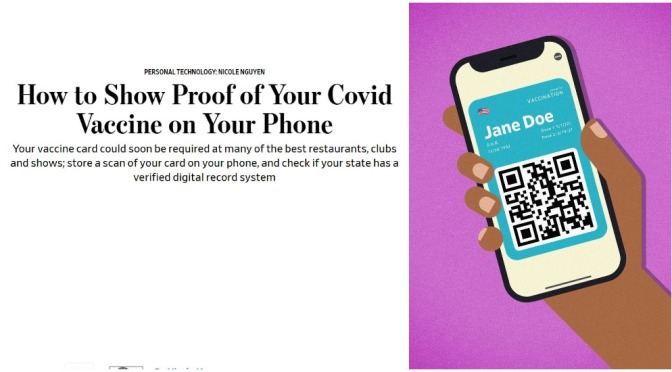
Your vaccine card could soon be required at the best restaurants, clubs and shows. Columnist @nicnguyen explains how to save a digital copy and register with eligible vaccine passport apps. https://t.co/npUuz79wCn
— The Wall Street Journal (@WSJ) August 5, 2021
Category Archives: Medicine
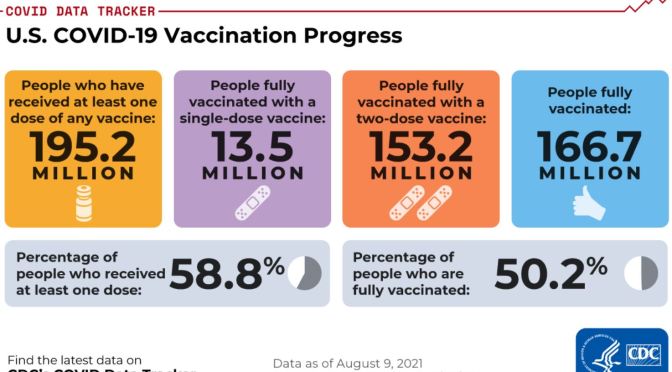
COVID-19 INFOGRAPHIC: U.S. VACCINATION RATES & STATES HOSPITALIZATIONS (AUG 9)
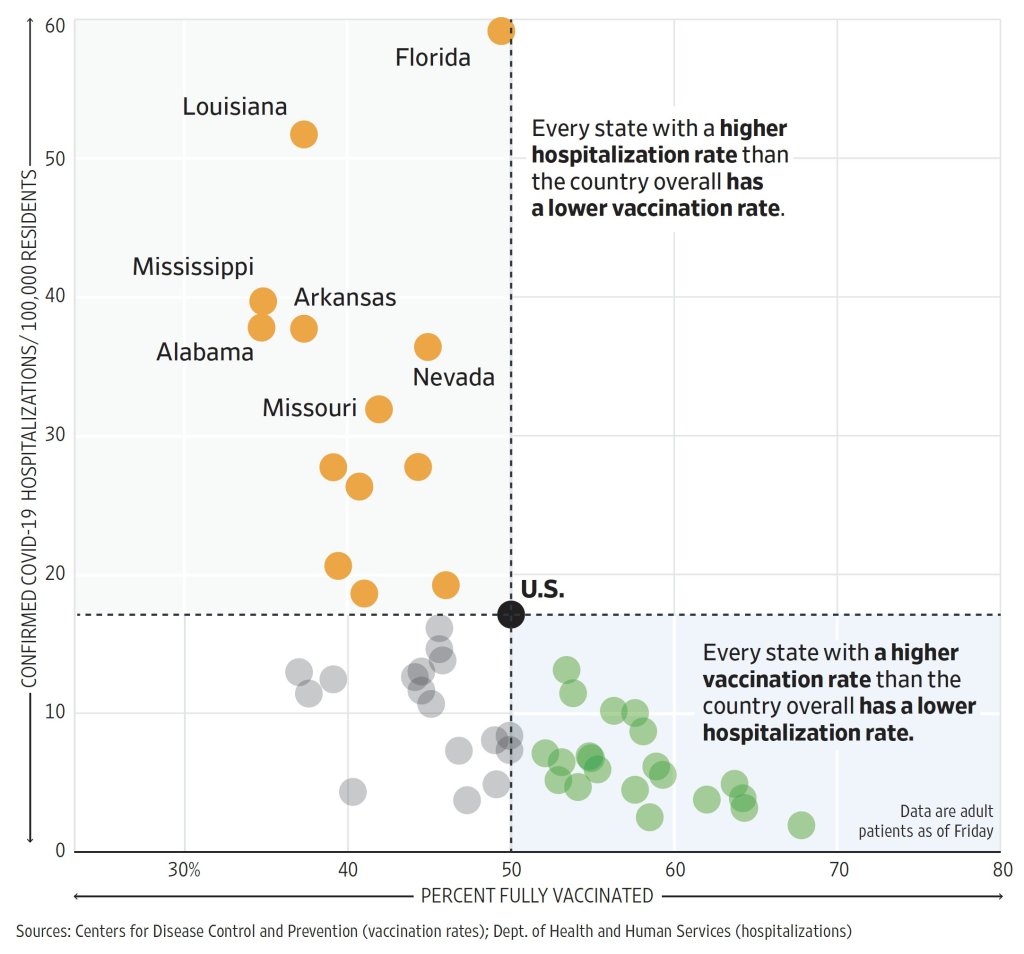
Highly Vaccinated States Keep Worst Covid-19 Outcomes in Check as Delta Spreads, WSJ Analysis Shows

Medicine: Transcatheter Treatments For Valvular Heart Disease (JAMA Video)
Transcatheter valvular repair and implantation has become increasingly common for treating patients diagnosed with valvular heart diseases.
0:00 This video summarizes the three transcatheter valvular therapies currently in use in the United States: transcatheter aortic valve implantation (TAVI), transcatheter valve-in-valve procedures, and transcatheter edge-to-edge mitral valve repair.
0:47 Transcatheter aortic valve replacement (TAVI) for patients with severe aortic stenosis regardless of surgical risk 2:47 Transcatheter valve-in-valve procedures for patients with bioprosthetic valve failure
3:35 Transcatheter mitral valve repair for high surgical risk degenerative mitral regurgitation and for severe functional mitral regurgitation regardless of surgical risk.
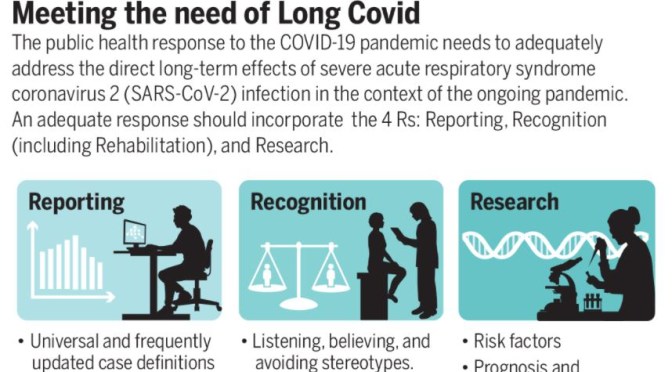
Medicine: Understanding ‘Long Covid’ Syndrome

Depression: How Ketamine Can Help (Yale Medicine)
Depression is one of the most common and most debilitating mental health disorders, affecting some 17 million adults in the US. It also continues to be a misunderstood, often hard-to-treat illness. Researchers have worked for decades to better understand the neurobiology underpinning depression.
For patients with severe, treatment-resistant depression, spending months or even years searching for good treatments can be totally disabling. The prevailing hypothesis for years was that depression was regulated by the neurotransmitter’s serotonin and norepinephrine.
Eventually, data began to suggest that maybe something much larger and more global was involved in the brain to account for depression, which led researchers to begin working with glutamate and GABA, the most abundant neurotransmitters in the brain. These chemicals are involved in neuroplasticity – the brain’s ability to adapt to change and protect itself against stressful events.
Neuroplasticity is a physical thing, too: it manifests itself “in terms of synapses, how these neurons are actually touching each other and communicating with each other,” explains Gerard Sanacora, PhD, MD, Director of the Yale Depression Research Program. “And we know that in depression, the number and strength of these interconnections decreases,” says Rachel Katz, MD, a professor of Clinical Psychiatry at Yale.
Ketamine – originally developed and still used as an anesthetic – works on those two neurotransmitters and was discovered to have rapid antidepressant effects. Some experience an improvement in symptoms in 24 hours or less. “We think that one of the things that Ketamine does, that helps to explain its antidepressant effects, is help the brain to regrow the synapses, the connections between nerve cells,” says John Krystal, MD, Chair of the Department of Psychiatry at Yale.

Infographic: Fighting Fatty Liver Disease


Melanoma: How To Catch Skin Cancer Early (Mayo)
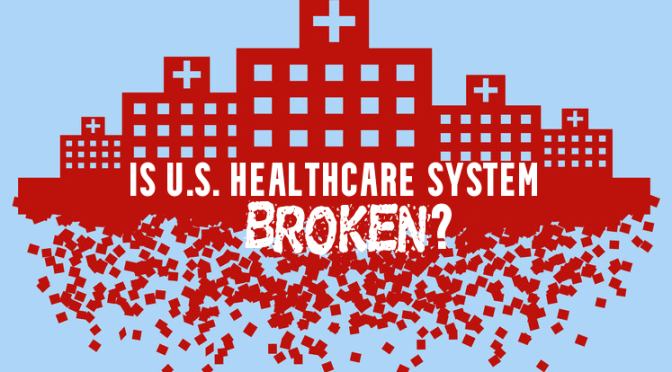
Views: Is U.S. Healthcare System Broken? (Harvard)


Here’s a question that’s been on my mind and perhaps yours: Is the US healthcare system expensive, complicated, dysfunctional, or broken? The simple answer is yes to all.
Below are 10 of the most convincing arguments I’ve heard that our system needs a major overhaul. And that’s just the tip of the iceberg. Remember, an entire industry has evolved in the US just to help people navigate the maddeningly complex task of choosing a health insurance plan.
The cost is enormous
- High cost, not highest quality. Despite spending far more on healthcare than other high-income nations, the US scores poorly on many key health measures, including life expectancy, preventable hospital admissions, suicide, and maternal mortality. And for all that expense, satisfaction with the current healthcare system is relatively low in the US.
- Financial burden. High costs combined with high numbers of underinsured or uninsured means many people risk bankruptcy if they develop a serious illness. Prices vary widely, and it’s nearly impossible to compare the quality or cost of your healthcare options — or even to know how big a bill to expect. And even when you ask lots of questions ahead of time and stick with recommended doctors in your health insurance network, you may still wind up getting a surprise bill. My neighbor did after knee surgery: even though the hospital and his surgeon were in his insurance network, the anesthesiologist was not.
Access is uneven
- Health insurance tied to employment. During World War II, healthcare was offered as a way to attract workers since employers had few other options. Few people had private insurance then, but now a layoff can jeopardize your access to healthcare.
- Healthcare disparities. The current US healthcare system has a cruel tendency to delay or deny high-quality care to those who are most in need of it but can least afford its high cost. This contributes to avoidable healthcare disparities for people of color and other disadvantaged groups.
- Health insurers may discourage care to hold down costs. Many health insurance companies restrict expensive medications, tests, and other services by declining coverage until forms are filled out to justify the service to the insurer. True, this can prevent unnecessary expense to the healthcare system — and to the insurance company. Yet it also discourages care deemed appropriate by your physician.
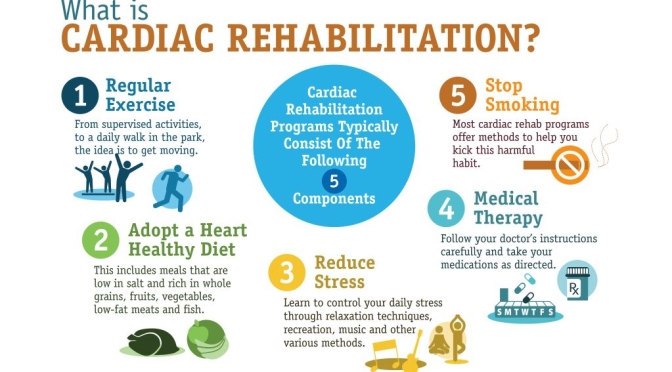
Infographic: What Is Cardiac Rehabilitation?
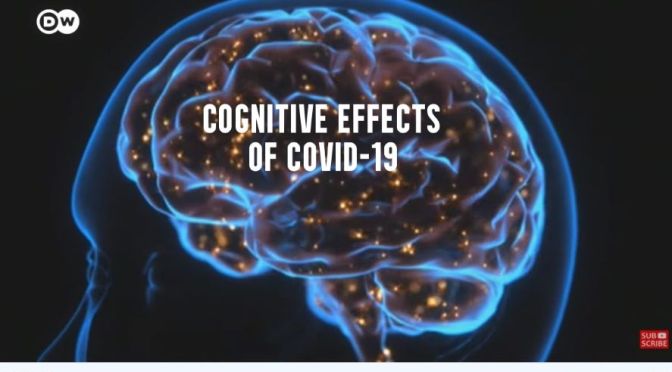
Analysis: The Cognitive Effects Of Covid-19
Covid-19 is complex. It can affect the nervous system, leading to language disorders, strokes and seizures. Scientists are still trying to understand why. 75% of people hospitalised with the virus continue to suffer from secondary symptoms at least six months after they recover. Many find it hard to function in their daily lives. Researchers hope understanding Covid’s impact on the brain could pave a way for treatment.
 Boomers Daily