
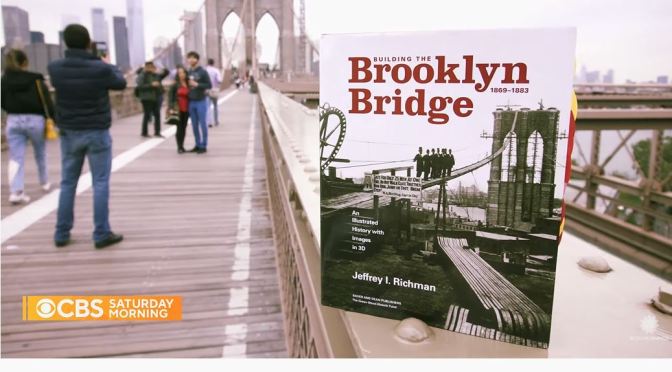
The Brooklyn Bridge has been an indelible part of the New York City skyline for 140 years. When it was completed in 1883, it was hailed as an engineering marvel and called the Eighth Wonder of the World. It also linked what were then two of America’s largest cities — New York and Brooklyn. The story of its construction is a drama in itself and now a new book, “Building the Brooklyn Bridge,” gives readers an inside view of the 14-year construction process that has been largely out of sight, until now. Michelle Miller has the details.
Category Archives: Landmarks
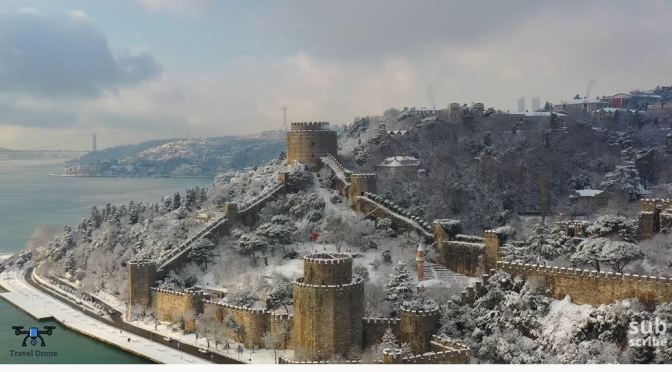
Views: Rumeli Hisari Castle In Istanbul, Turkey (4K)
Rumelihisarı or Boğazkesen Castle is a medieval fortress located in Istanbul, Turkey, on a series of hills on the European banks of the Bosphorus. The fortress also lends its name to the immediate neighborhood around it in the city’s Sarıyer district.
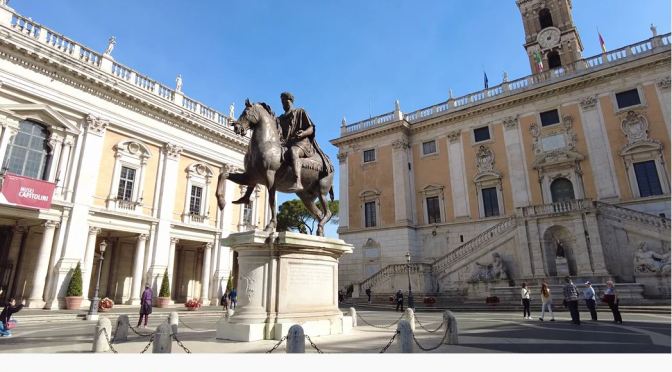
Walks: Campidoglio To Trevi Fountain, Rome (4K)
This Rome tour starts at the Campidoglio which is a hilltop square designed by Michelangelo. This square is lined with museums and offers views of the Roman forum. On our way to the Colloseum we pass the Forum Romanum ruins on both sides of the Via dei Fori Imperiali. Probably the most famous sight in Rome is the Colosseum which we almost circle around. We go uphill after the Parco San Gregorio al Celio. There we look around some more busy areas with cafés and restaurants, where the locals have their lunch. At last we get to the Piazza del Quirinale and Trevi Fountain, which is another famous sight and one of the most popular selfie backgrounds for tourist in this great city.
Video Timeline: 0:00 Campidoglio 2:30 Altar of the Fatherland (Altare della Patria) 6:30 Imperial Fora (Fori Imperiali) 12:30 Forum of Caesar (Foro di Cesare) 15:00 Via dei Fori Imperiali 18:30 Colosseum 25:00 Parco San Gregorio al Celio 27:00 Uphill towards Domus Aurea 32:15 Downhill towards Piazza della Madonna dei Monti 35:30 Towards Piazza del Quirinale 45:00 Towards Trevi Fountain (Fontana di Trevi) 49:00 Trevi Fountain
Filmed in October 2021
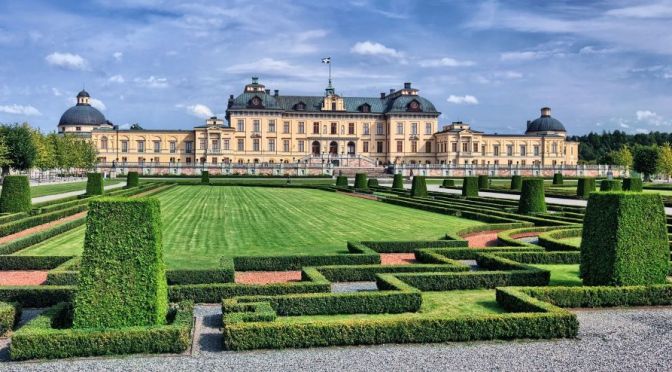
Walks: Drottningholm Palace Gardens, Sweden
The Drottningholm Palace Gardens and Park
Drottningholm’s gardens and park are among Sweden’s most prominent contributions to Europe’s garden design and landscaping. As you stroll around, you’ll explore different artistic ideals from various centuries.
The history of the gardens begins when Drottningholm was taken over by the Dowager Queen Hedvig Eleonora in 1661. To help her develop a new pleasure garden, she commissioned Nicodemus Tessin, who was inspired by the French landscape architect André Le Nôtre’s proposal for the Château of Vaux-le Vicomte in France. Tessin was also heavily inspired by the gardens of the Palace Versailles.
The Baroque parterre garden—closest to the palace—has an intricate embroidery design originally inspired by Vaux-le Vicomte. Walking further into the park, you are greeted by a water parterre with ten pools and cascades. Beyond the cascades, there are four hedge groves surrounded by pine hedges, and the finale: a large bush called “the star.” The garden would later receive an outer frame with four linden tree-lined avenues. The oldest lindens are from Hedvig Eleonora’s time.
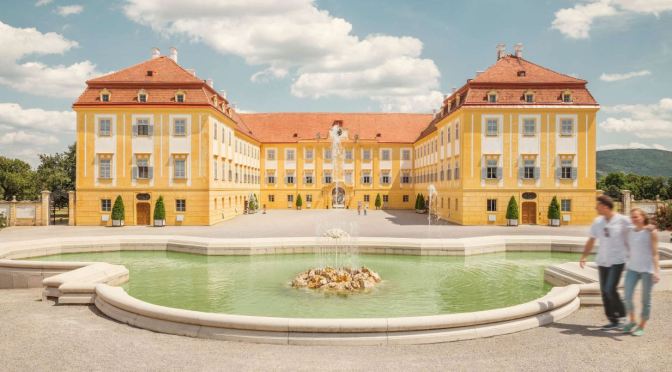
Walking Tour: Schloss Hof Estate, Lower Austria
This walk near Vienna takes place at beautiful Schloss Hof. Schloss Hof extends over more than 70 hectares in eastern Lower Austria. The splendid ensemble, consisting of the two-story castle, the garden and the manor, is of particular importance in terms of art and cultural history. In 1725, Prince Eugene of Savoy acquired a four-winged castle from the 17th century and had it expanded into a magnificent palace complex. At that time the impressive ensemble of palace, garden and manor complex, which can still be seen today, was created.
Video recorded: October 26, 2021
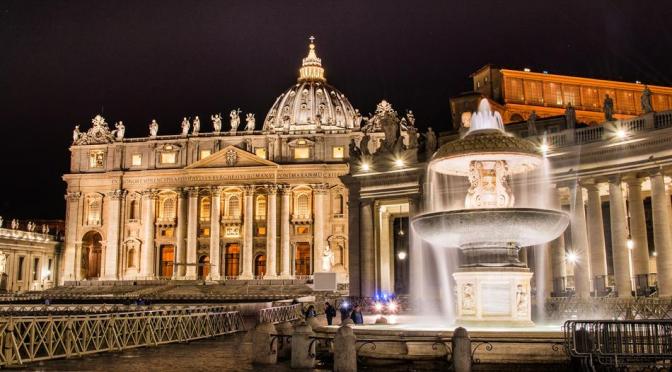
Views: A Tour Of Rome’s ‘Monumental Fountains’
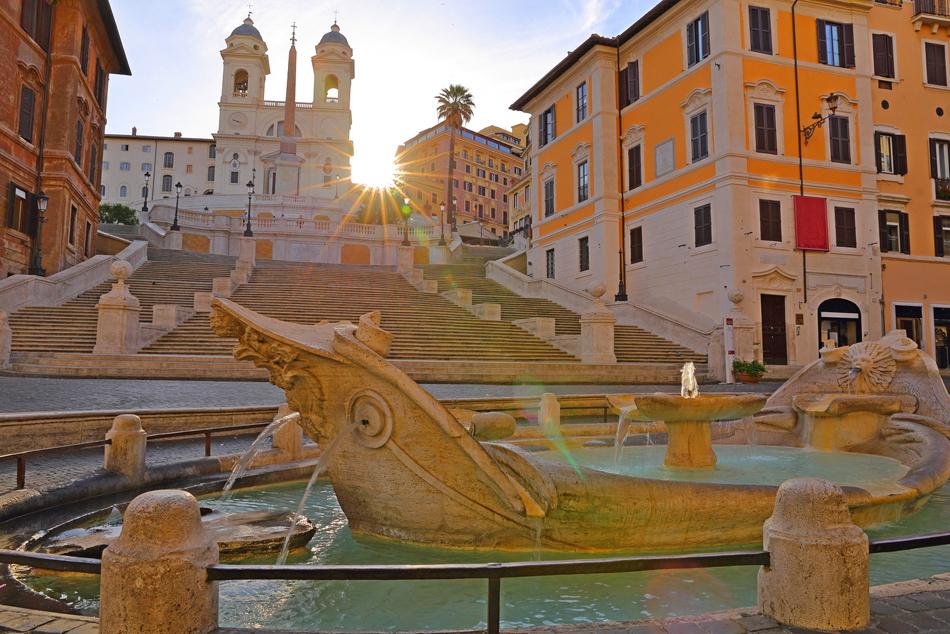
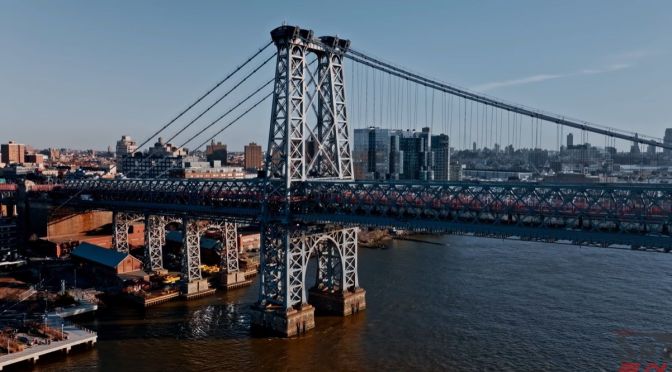
Views: The Williamsburg Bridge In New York City
Aerial footage of Williamsburg Brooklyn. Featuring: Domino Park, Williamsburg Bridge, Downtown Manhattan, 420 Kent Towers, East River, New York City.
The Williamsburg Bridge is a suspension bridge in New York City across the East River connecting the Lower East Side of Manhattan at Delancey Street with the Williamsburg neighborhood of Brooklyn at Broadway near the Brooklyn-Queens Expressway.
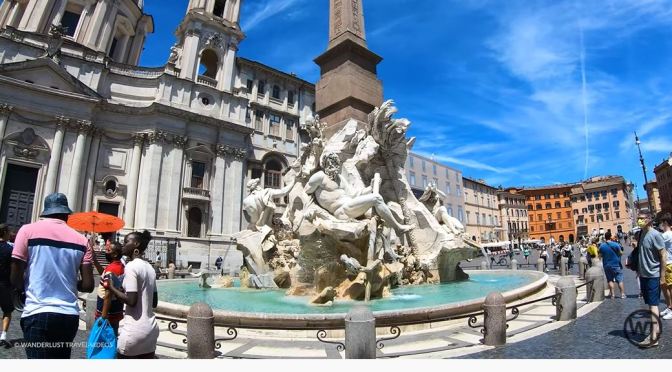
Rome Walks: The Piazza Navona To Pantheon (4K)
Piazza Navona is a public open space in Rome, Italy. It is built on the site of the Stadium of Domitian, built in the 1st century AD, and follows the form of the open space of the stadium. The ancient Romans went there to watch the agones, and hence it was known as “Circus Agonalis”.
The Pantheon is a former Roman temple and since the year 609 a Catholic church, in Rome, Italy, on the site of an earlier temple commissioned by Marcus Agrippa during the reign of Augustus. It was rebuilt by the emperor Hadrian and probably dedicated c. 126 AD.
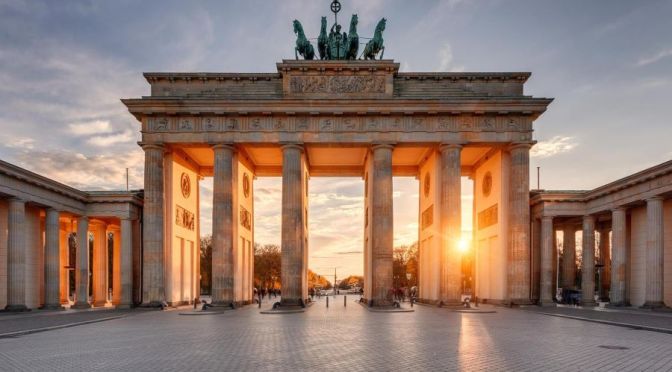
History Of Berlin: The Brandenburg Gate (1790)
The Brandenburg Gate is an 18th-century neoclassical monument in Berlin, built on the orders of Prussian king Frederick William II after the temporary restoration of order during the Batavian Revolution.

Views: Diocletian’s Palace Ruins, Split, Croatia (4K)
Diocletian’s Palace is an ancient palace built for the Roman emperor Diocletian at the turn of the fourth century AD, which today forms about half the old town of Split, Croatia. While it is referred to as a “palace” because of its intended use as the retirement residence of Diocletian, the term can be misleading as the structure is massive and more resembles a large fortress: about half of it was for Diocletian’s personal use, and the rest housed the military garrison.
The complex was built on a peninsula six kilometres southwest from Salona, the former capital of Dalmatia, one of the largest cities of the late empire with 60,000 people and the birthplace of Diocletian. The terrain around Salona slopes gently seaward and is typical karst, consisting of low limestone ridges running east to west with marl in the clefts between them. Today the remains of the palace are part of the historic core of Split, which in 1979 was listed by UNESCO as a World Heritage Site.
 Boomers Daily