 “Houseboats in the ‘Tom Sawyer wooden hut style’ are still widespread in the tourist sector,” architect Chris Finckh explains the idea behind the new development. “We wanted to build a boat that would allow you to experience the changing natural and urban spaces intensively and in a very special way from the water. It should be a powerful touring houseboat with a high standard of aesthetics and functionality.
“The boat-loving architects, Chris Finckh and Tanja Wunderlich-Finckh, teamed up with Haus & Boot Manufaktur Magdeburg, which specializes in advice, planning and building individual houseboats is and implemented the planning of the architects.
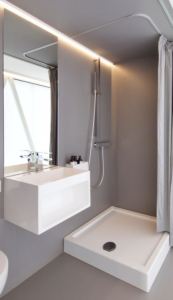
The lounge boat is 44 square meters, has four beds and a small bathroom with all the necessary amenities. It is approved for inland waters (category D), but can also sail larger rivers such as the Elbe or Havel as a version with more motorization. As a spatial extension, there is a U-shaped roof terrace, which is designed as a lounge area and is accessible via a ladder at the rear.
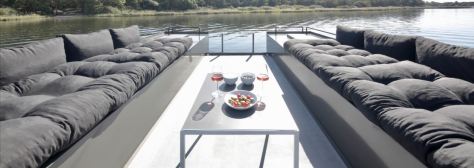
“We have already used the noraplan uni rubber flooring more often in residential construction, it is perfectly suited for the high-quality material concept of the lounge boat,” Finckh continues. “With its silky matt surface and pleasant feel, the material looks extremely classy”.
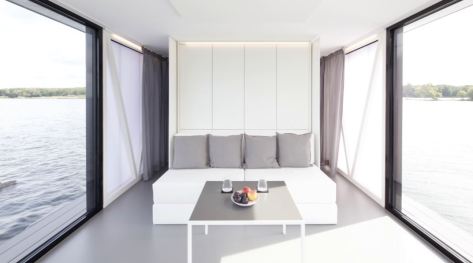
The prototype of the new touring houseboat, which is currently in Werder an der Havel, meets the highest demands in terms of aesthetics and functionality. The color is limited to a minimum, so that there is a lot of space for experiencing nature. The materials also had to match the high-quality ambience and the puristic room concept.
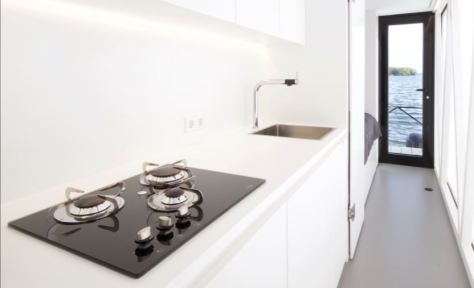
The architect therefore chose the rubber covering noraplan uni from nora systems. The special feature: Not only the floors of the lounge boat, but also the walls were covered with the product. The design classic with its subtle light gray and matt surface ideally underlines the classy, puristic look.
Designer/Architects Website
Read more from Nora.com

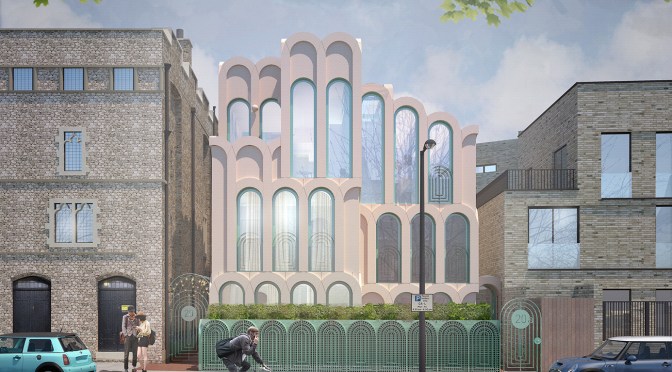
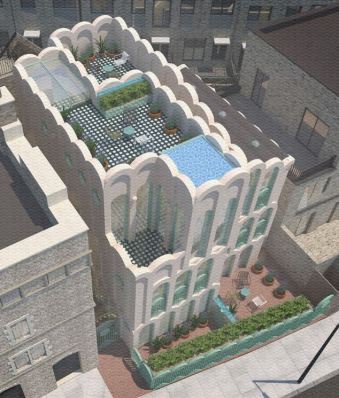
 Coated in a buff render, with a pale pink tone and duck egg blue metalwork, it brings some gentle colour to the street. As one neighbour has kindly put it: ‘The Cloud House introduces a valuable ‘softer’ element to the street’s dressing, with its hoops and curves and decorations. It is just what Vicars Road needs and will lighten and humanise the street’.
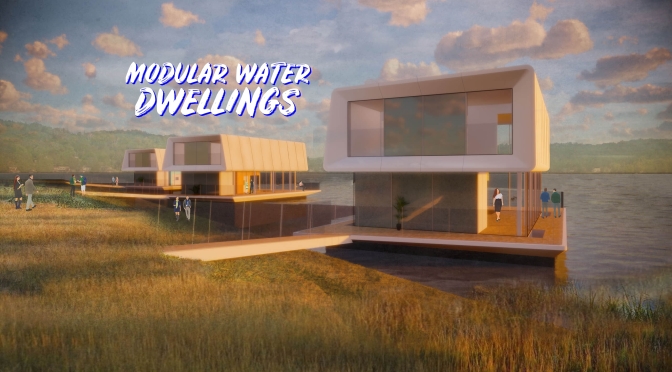


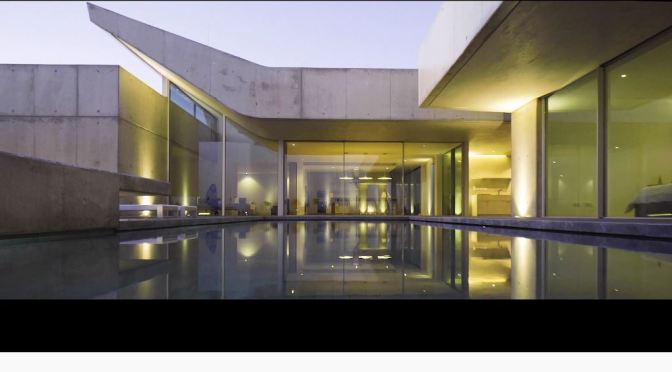
 The Modular Water Dwellings incorporate standardised components that provide efficiency in manufacturing, while still allowing a variety of internal layouts for occupants’ individual requirements. The Dwellings can be orientated and spaced in different ways, responding to varying site contexts, local conditions, light sources and primary views. They also maximise the use of durable and non-corroding materials, such as concrete and glass, ensuring a long design life that anticipates multiple occupants.
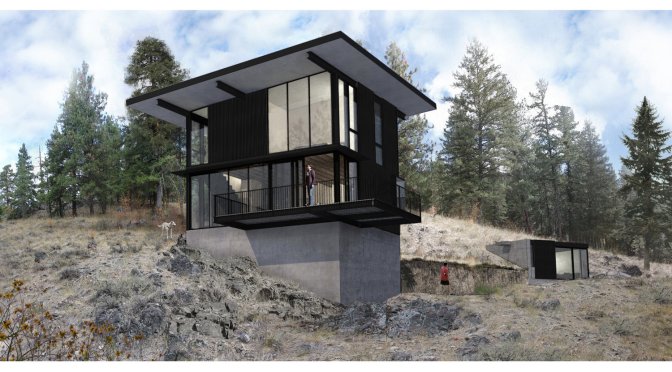
 Located just outside Winthrop in eastern Washington, the site for this small cabin lies in the Methow Valley. Nestled in the foothills of the North Cascade mountains, the dramatic views from the site and opportunity for year round recreation drew our client to this region. A strong relationship to the site topography and varying climate was key to the design.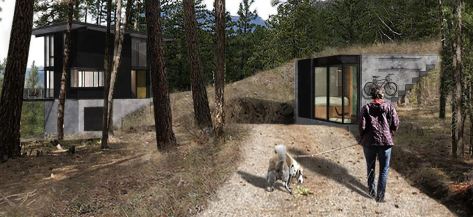
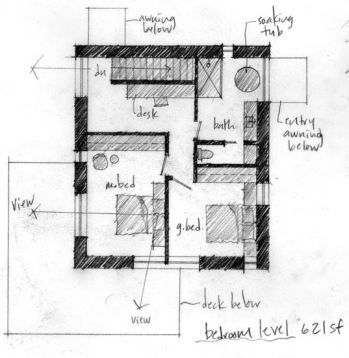 The program for the project was to design a two bedroom cabin which maximized the connection to the surrounding natural environment and outdoor living. This cabin would initially serve as a weekend retreat from the city, and later become a permanent home. Our client wanted to create an efficient floor plan for the house, with open interior/exterior living, bedrooms above, and garage below. It was important to use durable materials throughout the exterior of the cabin due to the extreme climate and fire hazard in the area. The upper levels of the cabin sit on a concrete plinth which forms the garage. Concrete is used to both ground the cabin and retain the natural slope of the site that the cabin sits in. Above, black corrugated metal sheets are used as an efficient and weather resistant siding material. A shed roof with large overhangs on all sides protects the cabin from the heavy winter snowload. A large cantilevered exterior deck opens out from the main level, vastly increasing the living space in the summer months. Views from the deck capture the surrounding mountain ranges and natural beauty of the site.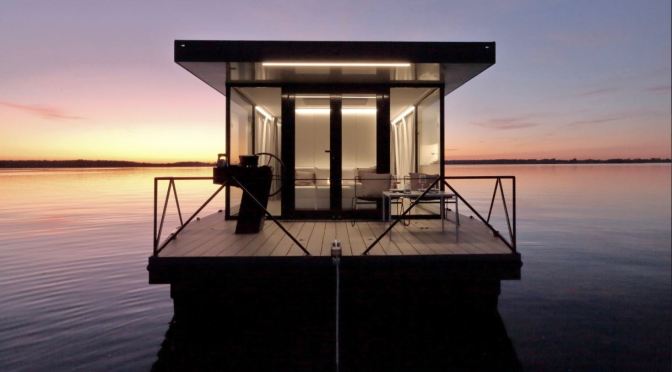

 The SPACE by IO House is a modern living solution requiring absolutely nothing from the “grid.” All the utilities you need are integrated and completely autonomous, including water, electricity, heating and wifi. A smart device is all that is required to monitor and manage your living experience.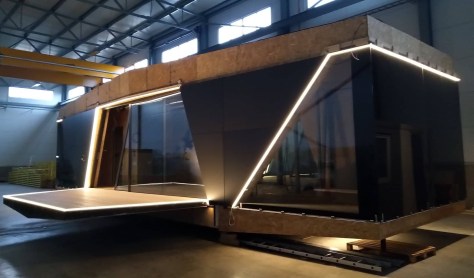
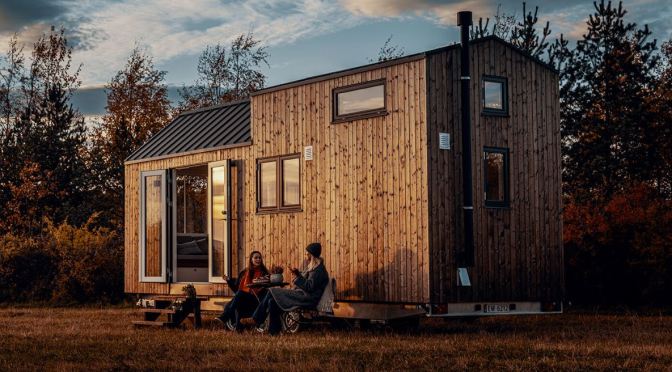
 Norske Mikrohus is a Norwegian tiny home producer focused on the future and the climate. Our micro homes are built from natural materials, have a moderate energy consumption and a minimal footprint. Micro homes show us that it is possible to build small yet maintain a comfortable living standard.
 Our houses comes with electric floor heating as standard, and combined with a small oven or a wood stove, you are guaranteed to stay warm all thought winter. Our biggest model has a total of 22 square meters floor area.
 Boomers Daily