
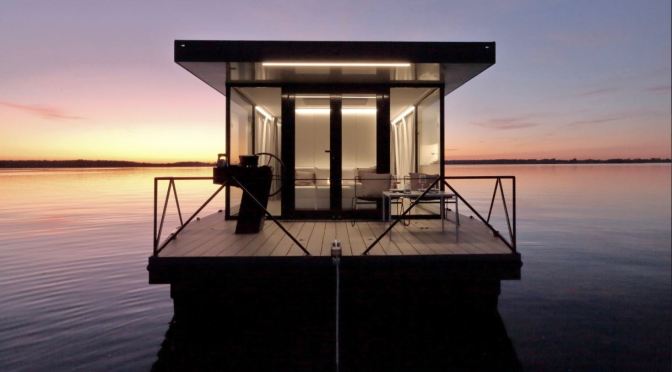
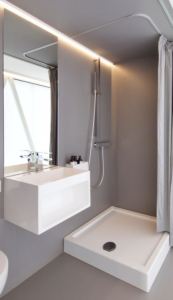
 “Houseboats in the ‘Tom Sawyer wooden hut style’ are still widespread in the tourist sector,” architect Chris Finckh explains the idea behind the new development. “We wanted to build a boat that would allow you to experience the changing natural and urban spaces intensively and in a very special way from the water. It should be a powerful touring houseboat with a high standard of aesthetics and functionality.
“The boat-loving architects, Chris Finckh and Tanja Wunderlich-Finckh, teamed up with Haus & Boot Manufaktur Magdeburg, which specializes in advice, planning and building individual houseboats is and implemented the planning of the architects.
The lounge boat is 44 square meters, has four beds and a small bathroom with all the necessary amenities. It is approved for inland waters (category D), but can also sail larger rivers such as the Elbe or Havel as a version with more motorization. As a spatial extension, there is a U-shaped roof terrace, which is designed as a lounge area and is accessible via a ladder at the rear.
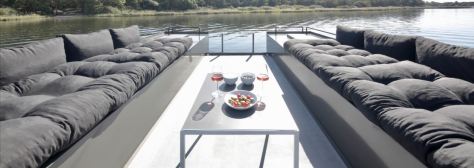
“We have already used the noraplan uni rubber flooring more often in residential construction, it is perfectly suited for the high-quality material concept of the lounge boat,” Finckh continues. “With its silky matt surface and pleasant feel, the material looks extremely classy”.
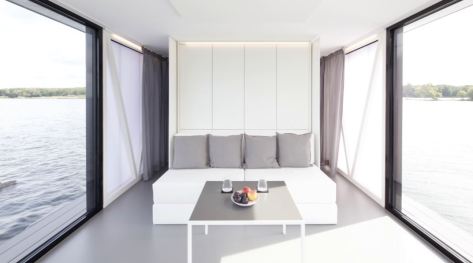
The prototype of the new touring houseboat, which is currently in Werder an der Havel, meets the highest demands in terms of aesthetics and functionality. The color is limited to a minimum, so that there is a lot of space for experiencing nature. The materials also had to match the high-quality ambience and the puristic room concept.
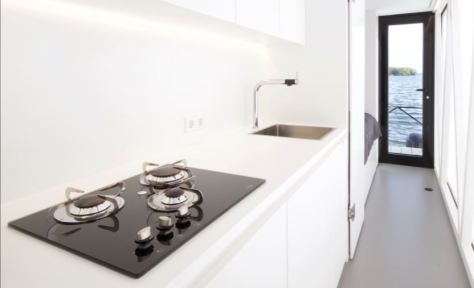
The architect therefore chose the rubber covering noraplan uni from nora systems. The special feature: Not only the floors of the lounge boat, but also the walls were covered with the product. The design classic with its subtle light gray and matt surface ideally underlines the classy, puristic look.
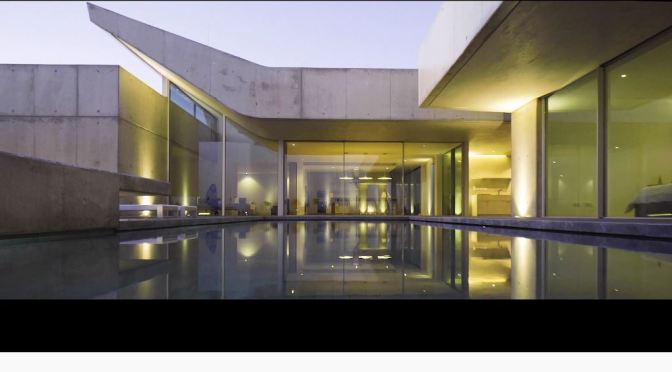

 The SPACE by IO House is a modern living solution requiring absolutely nothing from the “grid.” All the utilities you need are integrated and completely autonomous, including water, electricity, heating and wifi. A smart device is all that is required to monitor and manage your living experience.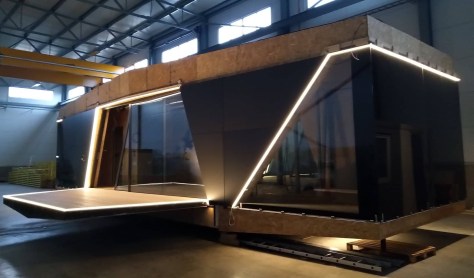
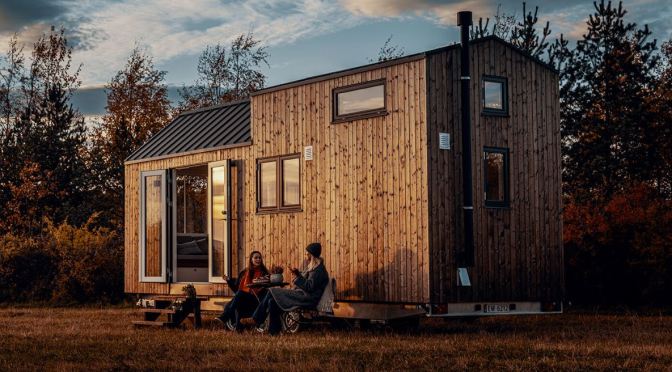
 Norske Mikrohus is a Norwegian tiny home producer focused on the future and the climate. Our micro homes are built from natural materials, have a moderate energy consumption and a minimal footprint. Micro homes show us that it is possible to build small yet maintain a comfortable living standard.
 Our houses comes with electric floor heating as standard, and combined with a small oven or a wood stove, you are guaranteed to stay warm all thought winter. Our biggest model has a total of 22 square meters floor area.
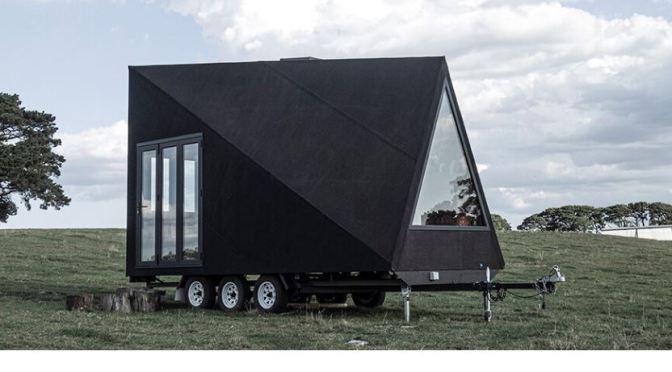
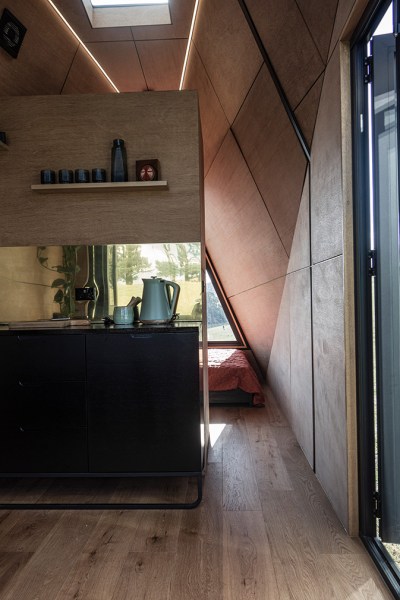 The design is inspired by the A-Frame cabin & iconic airstream trailer. The A-frame structurally efficient & using less material than conventional portal framed buildings. Mute in its appearance & clad in black rubber to blend into its surrounds.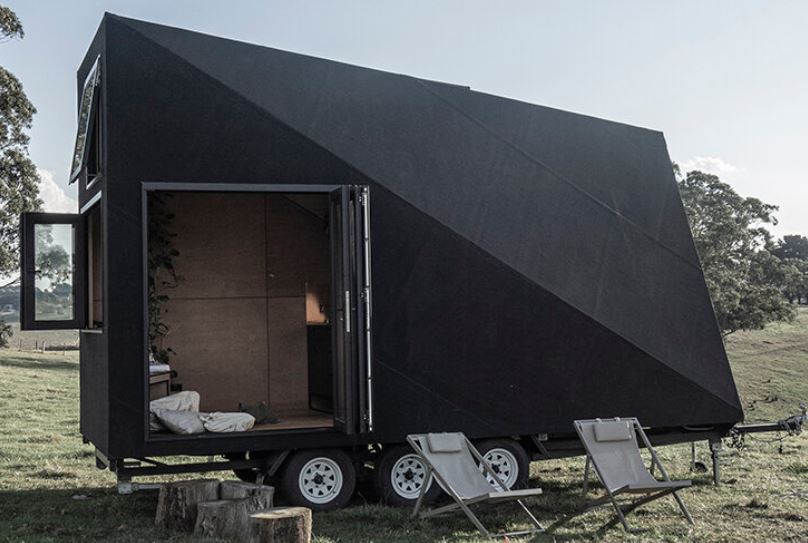
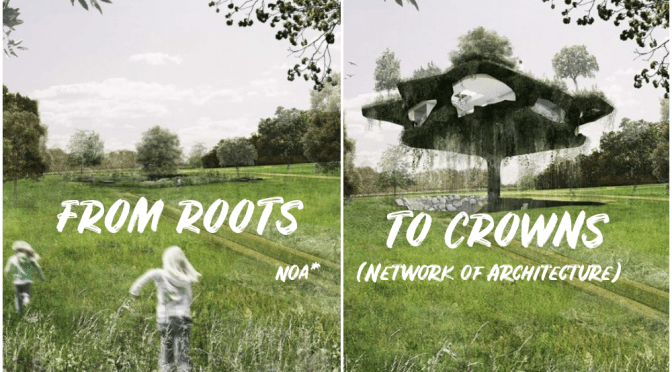
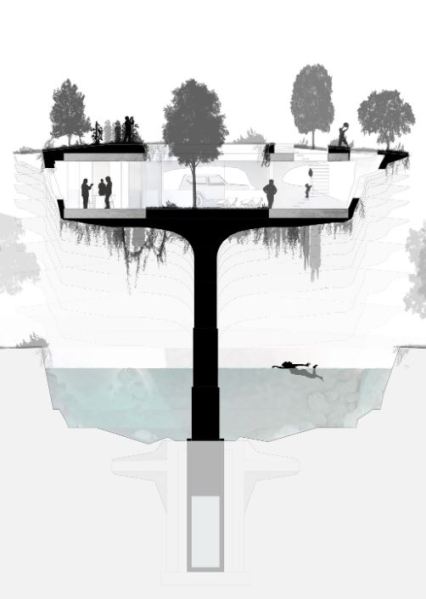 “from roots to crowns” describes the vertical metamorphosis of a hybrid building, moving from below ground through fields and trunks up to the crowns. It is a living shell on the move, able to take on 3 main positions “under the earth”(-1), “on the fields” (0) and “in the tree crowns” (+1+2). The lifting house is a visionary way of adapting the concept of “living and working in nature” to the varying requirements of its inhabitants.
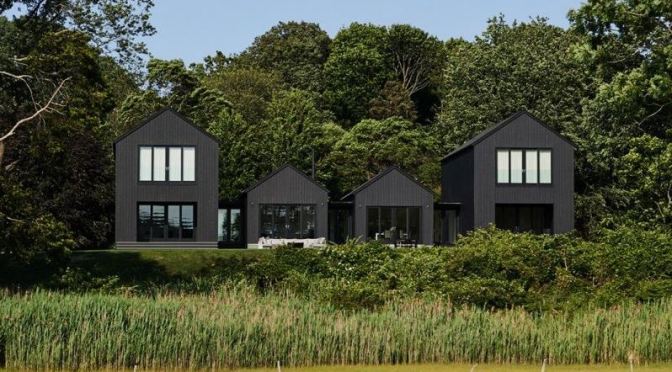
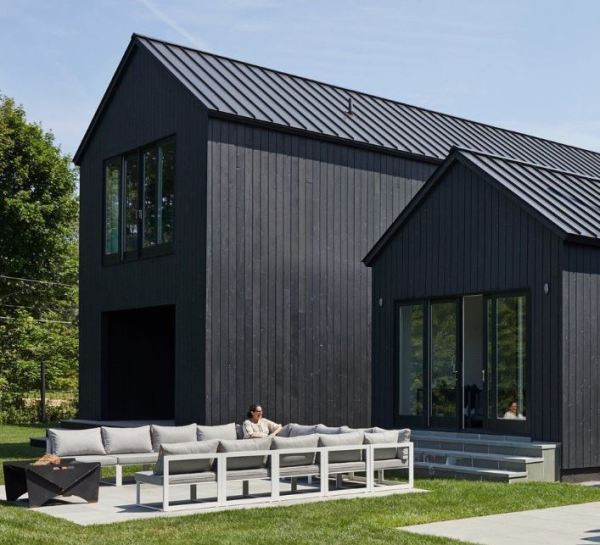 The result is a home with four gabled boxes connected by glass hallways. The two double-story bookend boxes are the private living spaces for each client and the two center boxes house the shared common spaces with one box for the kitchen and dining area and the other for the shared living room.

 Boomers Daily